
Apuntes
Temperature & Heat: Heat Transfer
Contenido del apunte (1)
Página 1
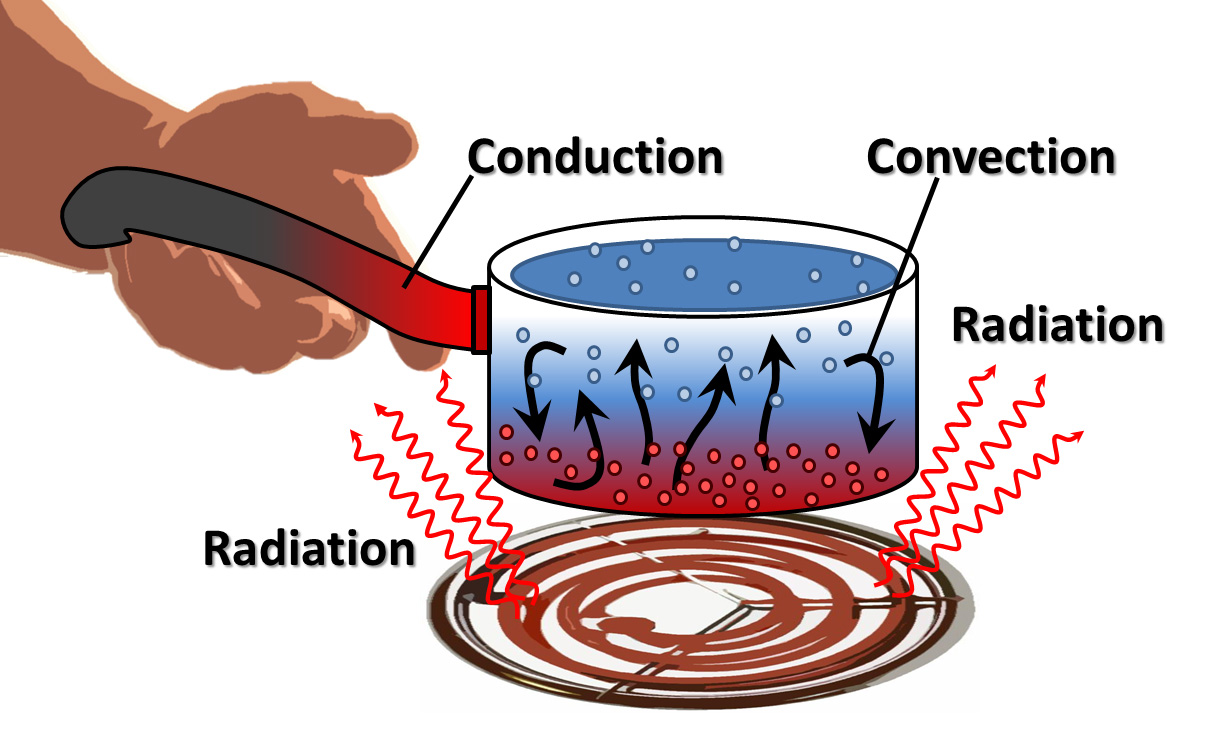
Conduction
Transfer of heat within a substance, molecule by molecule
Occurs through rapid vibration of atoms and molecules
These vibrating molecules interact with neighbouring particles, transferring some of their energy (heat) to them
This vibration travels from the hotter end to the cooler end of the object
Substances in which conduction occurs easily are called thermal conductors (e.g. metals)
Substances in which it only occurs a little are called thermal insulators
U- value
The amount of heat energy conducted per second through 1 metre squared of a structure when a temperature difference of 1 K is maintained between its ends
A good insulator has a low U-value
Convection
The transfer of heat from one place to another by the movement of fluids
When the fluid is heated, it expands and becomes less dense
It rises through the cooler fluid above it
This movement of fluid is called a convection current
Main method of heat transfer in liquids and gases
Radiation
Transfer of heat by means of electromagnetic waves
The higher the temperature, the shorter the wavelengths of emitted waves
Darker surfaces are better at radiating and absorbing heat than bright or shiny ones
Heat from the sun is radiated heat
Solar Irradiance
Average amount of the Sun's energy falling per second perpendicularly on 1 metre squared of the Earth's atmosphere
New Page
Información
- Descripción
- This note covers the three methods of heat transfer: conduction, convection & radiation. It is ideal for someone studying for the Leaving Certificate or someone who has an interest in learning more about the transfer of heat.
- Creado por
- tatemae.honne · ene 2014
- Actualizado
- 27 sep 2016
- Visitas
- 220
- Etiquetas
- Historial
-
- Creado por alex.examtime9373 · 21 ene 2014
- Copiado por tatemae.honne · 21 ene 2014
- Valoración