
Mapa mental
Chemistry (C2)
Contenido del mapa
Chemistry (C2)
C2.1 - Structure and bonding
- Chemical bonding
- Elements react to form compounds by gaining, sharing or losing electrons.
- Elements react to form compounds by gaining, sharing or losing electrons.
- The element is ALWAYS trying to get to a noble gas configuration.
- Atoms involved in chemical bonding are in the OUTER SHELL.
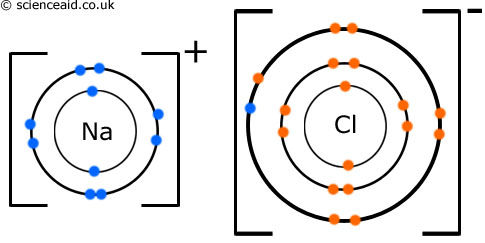
- Ionic bonding
- Held together by strong forces between the oppositely charged ions.
- -Gaining or losing electrons. -When a non-metal and metal react.
- Characteristics
- -Giant structure (or latice) -High melting and boiling point. -Hard and Brittle. -Conduct electricity in water.
- High melting and boiling points
- High temperature required to break the positive and negative attraction.
- Conductors
- In water, dissociated ions are free to conduct an electric charge.
- MOLTEN ionic compounds (salts) also conduct electricity.
- Representation
- Ionic bonding can be shown by: dot and cross diagrams.
- Example
- Formulae of ionic compounds
- The charges on the ions in an ionic compound always cancel each other out.
- Brackets
- Used when we need to multiply ions. An example of this is: Ca(OH)₂ - Need two hydroxide ions.
- Covalent bonding
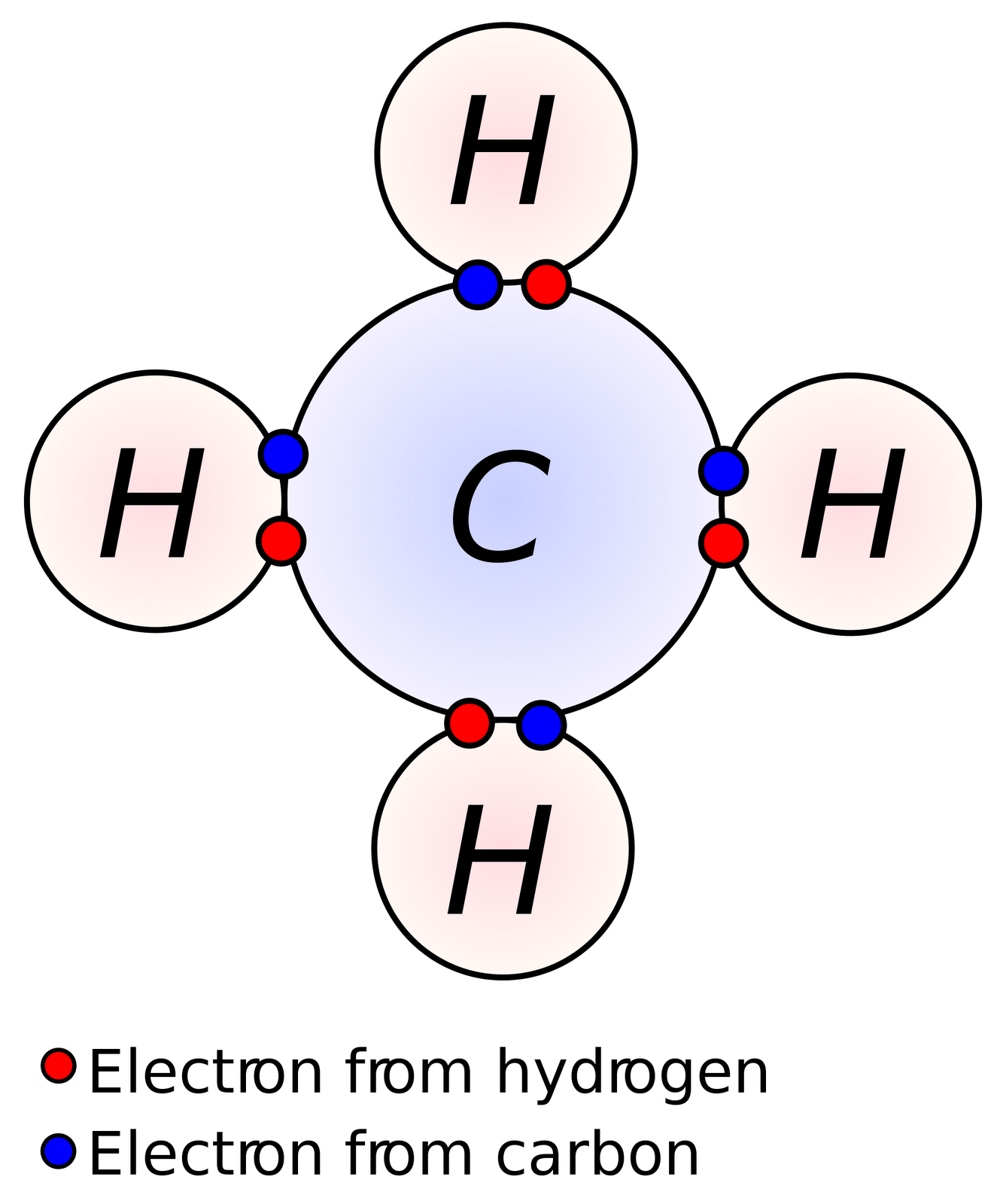
- Sharing electrons
- -Sharing electrons -When two non-metals react.
- Substances containing covalent bonds consist of simple molecules, but some have giant covalent structures.
- Characteristics
- -Low melting and boiling points. -Don't conduct electricity well.
- Low melting and boiling points
- Weak intermolecular forces break down easily.
- Conductors
- They do not have free electrons or an overall electrical charge.
- Representation
- We can use dots and crosses to show where the electrons are shared, on each atom.
- Example
- Metals
- The atoms in metals are: -CLOSELY packed together. -Arranged in REGULAR layers.
- Higher tier
- -Electrons in the highest energy level are delocalized. -They can move FREELY. -Produces a lattice of positive ions in a 'sea' of moving electrons -The DELOCALISED ELECTRONS strongly attract the positive ions and hold the giant structure together.
- Characteristics
- -Good conductors of heat and electricity. -Malleable -Ductile
- Conductors
- Free electrons carry heat or carry a charge throughout the metal.
- Malleable and ductile
- Free electrons allow metal atoms to slide over each other.
- Chemical bonding
C2.2 - Structure and properties
- Giant ionic structures
- -Strong electrostatic forces hold ions together. -Solids at room temperature. -High melting and boiling points
- Melting
- -MELTING = free electrons/ions -Allows them to carry electrical charge. -Therefore conduct electricity.
- Dissolving
- -Some ionic structures dissolve in water. -Water molecules can split up the lattice. -Ions are free to move therefore conduct electricity.
- Simple molecules
- -Held together by strong covalent bonds. -ONLY act between atoms of molecule. -Low melting and boiling points. -No electricity conduction.
- Intermolecular forces (H)
- -Intermolecular forces are the forces of ATTRACTION. -Broken when boiled or melted. -Small molecules (H₂, CH₄) have weakest intermolecular forces, thus they are gases at RT. -Larger molecules (Br₂) have stronger attractions, so may be liquids at room temperature. -I₂ is a solid at room temperature.
- Giant covalent structures
- -Atoms of some elements can form several covalent bonds. -Atoms can join together to make GCS's (macromolecules). -Every atom joined to several other atoms (STRONG bonds). -Therefore, VERY high melting point.
- Diamond
- -Form of carbon that has a regular 3-D giant structure. -Each carbon atom covalently bonded to four others. -Makes diamond hard and transparent. -Silicon dioxide IS SIMILAR.
- Graphite
- -Form of carbon (2-D layers) -One carbon atom is covalently bonded to three others. -No covalent bonds between layers, so they slide over each other. -Graphite is slippery and grey.
- -One electron from each carbon atom is delocalised. -Allows graphite to conduct heat and electricity. -Weak intermolecular forces between layers in graphite, meaning layers can slide over each other easily.
- Fullerenes
- -Large molecules from hexagonal rings of carbon. -Rings join together to form cage-like shapes with different numbers of carbon atoms (some are NANO-SIZED).
- Giant metallic structures
- When we bend and shape metals, the layers of atoms in the giant metallic structure slide over each other.
- Alloys
- -Mixtures of metals or metals mixed with other elements. -Different sized atoms distort layers in metal structure therefore difficult for them to slide. -Alloys are harder than pure metals.
- Shape memory alloys
- -Bent or deformed into a different shape. -When heated, they return to original shape. -Used for many things: e.g. dental braces.
- Metal structures
- -Delocalised electrons (move throughout the giant metallic lattice and transfer energy quickly). -Good conductors of heat and electricity.
- Properties of polymers
- Depends on the monomers used to make them. Could also depend on the reaction conditions.
- Poly(ethene)
- Low density (LD) poly(ethene) and high density (HD) poly(ethene) are made using different catalysists and different reaction conditions.
- Changing reaction conditions can also change the properties of the polymer that is produced.
- Thermosoftening polymers
- -Poly(ethene) is an example. -Made up of individual polymer chains that are tangled together. -Heated - soft. -Cooled - hard. -Can be heated to mould into shapes and remoulded through heating again.
- -Forces between polymer chains are weak. -When heated, these weak intermolecular forces are broken and polymer becomes soft. -When cooling down, intermolecular forces bring polymer molecules back together, thus hardening polymer.
- Thermosetting polymers
- -Do not melt or soften when heated. -Polymers set hard when first moulded. -Due to strong covalent bonds forming cross-links between their polymer chains. -Strong bonds hold polymer chains in position.
- Nanoscience
- The study of small particles that are between 1 and 100 nanometres in size.
- Nanoparticles
- -1 nanometre is 10−⁹m. -Very small sizes give them: --BIG surface area. --New properties which make them very useful materials.
- Nantechnology
- Uses nanoparticles to: --Highly selective sensors. --Very efficient catalysts. --New coatings. --New cosmetics. --Improvement in construction materials.
- The Future
- -VERY EXCITING. -Unpredictable consequences for our health and the environment. -MORE research needed to find out effects.
- Giant ionic structures
C2.3 - How much?
- The mass of atoms
- Protons - 1 Neutrons - 1 Electrons - 0
- Mass number
- Total number of protons and neutrons.
- Atomic number
- (Or the proton number) The number of protons and electrons in an atom.
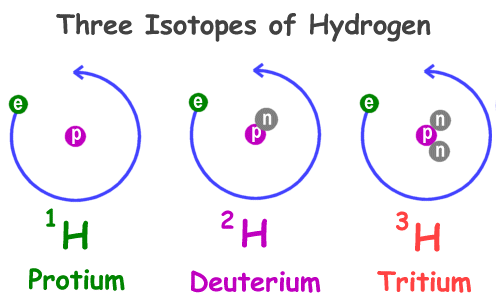
- Isotopes
- Atoms of the same element with DIFFERENT numbers of NEUTRONS.
- Masses of atoms and moles
- We use relative atomic masses to compare the masses of atoms.
- Relative atomic mass
- Relative atomic mass (Ar) is an average value that depends on the isotopes the element contains.
- Relative formula mass
- (Mr) Adding up all the relative atomic masses of the atoms in its formula.
- Moles
- One mole of a substance is its relative formula mass in grams.
- Percentages
- Percentage composition
- Divide the relative atomic mass of the element by the relative formula mass of the compound then multiply by 100.
- Example
- Percentage of C in CO₂: C = 12 , O = 16 Mr of CO₂ is: 12 + 32 = 44 So: 12/44 x 100 = 27.3%
- Empirical formula
- Simplest ratio of atoms or ions in a compound.
- To work out: -Mass in 100g -Mass / Ar -Divide by smallest (mass/Ar) -Convert to Empirical formula -REMEMBER: You can't have a decimal of an atom, so convert to integers.
- Example
- Empirical formula of the hydrocarbon that contains 80% C -Mass in 100g (C=80 , H=20) -Mass/Ar (C=80/12=6.67 , H=20/1=20) -Smallest ratio (C=6.67/6.67 = 1 , H=20/6.67=3) -Empirical formula is CH₃
- Molecular formula
- -Empirical formula not always the same as molecular formula in covalent compounds. -e.g. Ethane's molecular formula is: C₂H₆ BUT its empirical formula is CH₃
- Percentage composition
- Masses from chemical equations
- To work out: -Calculate Mr for all compounds. -Work out how much the product weighs. -(The amount you have / mole amount) x Mr of thing you are trying to work out
- Yield
- The yield of a chemical reaction describes how much product is made.
- The percentage yield tells us how much product is made compared with the maximum amount that could be made.
- Formula
- Formula for Percentage Yield: (amount of product collected / maximum amount of product possible) x 100
- Why?
- It isn't possible to collect the amounts calculated from the chemical equation because: -Incomplete reaction -Other reactions may happen. -Product may be lost when it is seperated or collected from the apparatus.
- High yields
- Good for industry as it: -Conserves resources -Reduces waste.
- Chemical processes should also waste as little energy as possible so that: -There is a reduction in pollution. -It makes production more sustainable.
- Reversible reactions
- In a reversible reaction, the products of the reaction can react to make the original reactants.
- Reversible reactions are shown by this sign: ⇌
- Example
- Ammonium chloride ⇌ ammonia + hydrogen chloride
- Chromotography
- The process whereby small amounts of dissolved substances are separated by running a solvent along a material such as absorbent paper.
- Paper Chromotography
- Used to identify food additives, such as artificial colours.
- The process: -A spot of colour is put onto paper and a solvent can move through it. -The colours move different distances depending on their solubility.
- Gas Chromotography
- Used to separate mixtures so that compounds can be identified.
- The process: -Mixture is carried by a gas through a long column packed with particles of a solid. -Individual compounds travel at different speeds and come out at different times. -Amount of substance leaving column at different times is recorded against time and shows: --Number of compounds --Retention times
- Mass spectrometer
- This is connected to the gas chromatography column to give further data.
- Relative molecular masses
- A GC-MS can give the relative molecular mass of a compound. It can do this by reading off the molecular ion peak, which is furthest to the right on the mass spectrum.
- The mass of atoms
C2.4 - Rates and energy
- Rate of reaction
- Measures the speed of a reaction or how fast it is.
- Equation
- Rate of reaction = amount of reactant used / time
- Rate of reaction = amount of product formed / time
- Gradient
- The gradient of the line on a graph of amount of reactant or product against time tells us the reaction at that time. The steeper the gradient. the faster the reaction.
- The faster the rate, the shorter the time it takes for the reaction to finish. So rate is INVERSELY PROPORTIONAL to time.
- Collision theory
- -Reactions can only happen if particles collide. -Particles must collide with enough energy to create new substances. -This minimum energy is called the activation energy.
- IMPORTANT to learn each node word by word.
- The effect of temperature
- Increasing the temperature increases the kinetic energy of particles therefore they will collide more frequently with enough activation energy and so the rate of reaction will increase.
- A rise of 10°C will roughly double the rate of many reactions, so they go twice as fast.
- The effect of surface area
- The rate of a chemical reaction increases if the surface area of any solid reactant is increased. This increases the frequency of collisions between reacting particles.
- The effect of catalysts
- -Catalysts change the rates of chemical reactions. -Catalysts that speed up reactions lower the activation energy required, therefore more successful collision occur.
- Catalysts do not get used up during a chemical reaction.
- Different catalysts are needed for different reactions.
- The effect of concentration
- Increasing concentration increases the frequency of successful collisions (these are the ones with the activation energy). This therefore will increase the rate of reaction.
- The effect of pressure
- Increasing pressure increases the frequency of collisions because particles are closer together since they occupy a smaller volume. This will increase the frequency of collisions with enough activation energy and so increases the rate of reaction.
- Catalysts in action
- -Catalysts are used in industry to increase the rate of reactions and reduce energy costs. -This means that less fossil fuels are burned. therefore conserving resourcing and reducing pollution
- Traditional catalysts
- Often transition metals or their compounds. However, some of these are toxic and may cause harm to the environment.
- Modern catalysts
- Being developed in industry which result in less waste and are safer for the environment.
- Exothermic and endothermic reactions
- In a reaction, energy may be transferred to or from the reacting substances.
- Exothermic
- Reactions that transfer energy to the surroundings.
- Examples
- -Combustion (burning fuels) -Oxidation reactions (respiration) -Neutralization reactions (involving acids and bases)
- Uses
- Used in hand warmers and self-heating cans.
- Endothermic
- Reactions which take in energy from the surroundings.
- Examples
- Some cause a decrease in temperature and others require a supply of energy.
- Solid compounds that are mixed with water cause temperature decrease because endothermic changes happen as they dissolve
- Thermal decomposition reactions need to be heated continuously to keep the reaction going.
- Uses
- Used in instant cold packs for sports injuries.
- Energy and reversible reactions
- In reversible reactions, the reaction in one direction is exothermic and in the other, endothermic.
- Example
- Hydrated copper sulfate ⇌ anhydrous copper sulfate CuSO₄⋅5H₂O ⇌ CuSO₄ + 5H₂O
- The hydrated copper sulfate must be heated continuously for the reaction to complete, because it is an endothermic reaction.
- Adding water to the anhydrous copper sulfate causes the mixture to get hot, because it is an exothermic reaction.
- Rate of reaction
C2.5 - Salts and electrolysis
- Acids and Alkalis
- Acids are substances that produce H⁺(aq) ions, when they are added to water.
- Alkalis are bases that dissolve in water to make alkaline solutions. They produce OH⁻ ions.
- Bases
- React with acids and neutralizes them.
- pH scale
- Potential Hydrogen scale - it shows how acidic or alkaline a solution is.
- Salts from metals or bases
- Acids will react with metals that are above hydrogen in the reactivity series.
- Equation
- Acid + Base → Salt + Hydrogen
- When this happens, a neutralisation reaction take place.
- Crystals
- Salts can be crystalllised from solutions by evaporating off water.
- Examples
- HCl → Chlorides HNO₃ → Nitrates H₂SO₄ → Sulfates
- Salts from solutions
- We can make soluble salts by: Acid + Alkali → Salt + Water
- Neutralisation
- H⁺(aq) + OH⁻(aq) → H₂I(l)
- Insoluble salts
- Mixing solutions of soluble salts that contain the ions needed, in order to form a precipitate (insoluble salt).
- Precipitation
- An important way of removing some metal ions from industrial waste water.
- Electrolysis
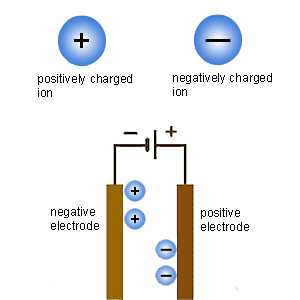
- -Electricity is used to break down ionic compounds into elements. -When electricity is passed through molten ionic compounds or a solution containing ions, electrolysis takes place. -Substance broken down is an electrolyte.
- Electrodes
- -Made of an inert substance that doesn't react with the products. -Ions which move to either electrode are discharged to produce elements.
- Anode
- Negatively charged ions are attracted to the anode, losing their charge and forming non-metallic elements.
- Cathode
- Positively charged ions are attracted to the cathode, losing their charge and forming either hydrogen or metals, depending on the electrolyte.
- Changes at the electrodes
- When an ion reaches an electrode, they lose or gain electrons to become neutral atoms.
- OILRIG
- Oxidation Is Loss Reduction Is Gain
- Oxidation
- Negative ions lose electrons to become neutral atoms, with some non-metals forming molecules.
- Reduction
- Positive ions gain electrons.
- Half equations
- Anode: 2Br⁻ → Br₂ + 2e⁻ Cathode: Pb²⁺ + 2e⁻ → Pb Anode - Losing electrons. Cathode - Gaining electrons.
- Aqueous solutions
- Water contains hydrogen and hydroxide ions.
- Negative electrode
- Hydrogen may be produced at the negative electrode if the positive ions in the solution are those of a metal more reactive than hydrogen.
- Positive electrode
- Oxygen is usually produced. If the solution has a high concentration of a halide ion, then a halogen will be produced.
- Extraction of aluminium
- Aluminium oxide is electrolysed, because aluminium is more reactive than carbon. We do this to manufacture aluminium.
- Cryolite
- Added to aluminium oxide to reduce the melting temperature (from 2000°C to 850°C)
- Electrodes
- Different products are formed at either electrode.
- Anode
- Oxide ions are oxidised to oxygen atoms by losing electrons and these oxygen atoms form oxygen molecules.
- Substances
- -Anode is made of carbon. -At high temperatures, the oxygen reacts with the carbon to form carbon dioxide. -All the carbon electrodes gradually burn away, therefore they must be replaced regularly.
- Cathode
- Aluminium ions are reduced to aluminium atoms by gaining electrons. The molten aluminium is collected from the bottom of the cell.
- Electrolysis of brine
- Brine is a solution of sodium chloride in water.
- Brine ions
- Brine contains: -Na⁺ sodium ions -H⁺ hydrogen ions -Cl⁻ chloride ions -OH⁻ hydroxide ions
- Electrodes
- Anode
- Chlorine is produced from the chlorine ions. 2Cl⁻ → Cl₂ + 2e⁻
- Cathode
- Hydrogen ions. 2H⁺ + 2e⁻ → H₂
- Leaving
- A solution of sodium ions and hydroxide ions.
- Anode
- Products
- Sodium hydroxide is a strong alkali and has many uses: -Soap -Paper -Bleach -Neutralising acids -Controlling pH
- Chlorine is used to: -Kill bacteria in drinking water and swimming pools. -Make bleach. -Make disinfectant. -Make plastics.
- Hydrogen is used to: -Make margarine. -Make hydrochloric acid.
- Electroplating
- Uses electrolysis to put a thin coating of metal onto an object.
- Uses
- Electroplating is used to: -Make the object look more attractive. -Protect a metal object from corroding. -Increase the hardness of a surface. -Reduce costs by using a thin layer rather than pure metal.
- Process
- Object to be electroplated is made the negative electrode.
- Electrolyte
- A solution containing ions of the plating metal.
- Electrodes
- Anode
- -Made from the plating metal. -Atoms of the plating metal lose electrons to form metal ions which go into the solution.
- Cathode
- Metal ions from the solution gain electrons to form metal atoms which are deposited on the the object to be plated.
- Anode
- Acids and Alkalis
Imágenes y archivos del mapa
Información
- Descripción
- A mindmap for the Chemistry Unit 2 (C2) Exam for the AQA.
- Creado por
- Usuario eliminado · sep 2016
- Actualizado
- 1 dic 2016
- Visitas
- 121
- Etiquetas
- Historial
-
- Creado por Ben C · 10 may 2015
- Copiado por Samonia Raynar · 10 may 2015
- Copiado por Catalina Roncal · 4 sep 2016
- Valoración