
Test
1. The Foundations of Chemistry
Preguntas del test (29)
1It is the science that describes matter - its properties, the changes it undergoes, and the energy changes accompanying those processes.
- AChemastry
- BChemestry
- CChemistry
- DChemostry
2It is anything that has mass and occupies space.
- AEnergy
- BInertia
- CMatter
- DChemical Engineering
3It is defined as the capacity to do work or to transfer heat.
- AEnergy
- BInertia
- CMatter
- DChemical Engineering
4It is the energy possessed by an object by virtue of its motion.
- AInternal energy
- BKinetic energy
- CPotential energy
- DMr. Pure Energy, Gary V.
5It is the energy possessed by an object because of its position, condition, or composition.
- AInternal Energy
- BKinetic Energy
- CPotential Energy
- DMr. Pure Energy, Gary V.
6There is no observable change in the quantity of matter during a chemical reaction or during a physical change.
- AThe Law of Conservation of Matter
- BThe Law of Conservation of Energy
- CThe Law of Conservation of Matter and Energy
- DThe Law of Definite Proportions
7Energy cannot be created or destroyed in a chemical reaction or in a physical change. It can only be converted from one form to another.
- AThe Law of Conservation of Matter
- BThe Law of Conservation of Energy
- CThe Law of Conservation of Matter and Energy
- DThe Law of Definite Proportions
8The combined amount of matter and energy available in the entire universe is fixed.
- AThe Law of Conservation of Matter
- BThe Law of Conservation of Energy
- CThe Law of Conservation of Matter and Energy
- DThe Law of Definite Proportions
9A compound may also be defined as a pure substance consisting of two or more different elements in a fixed ratio. This observation is called __.
- AThe Law of Conservation of Matter
- BThe Law of Conservation of Energy
- CThe Law of Conservation of Matter and Energy
- DThe Law of Definite Proportions
10He suggested that all matter is composed of tiny, discrete, indivisible particles that he called atoms.
- AJohn Dalton
- BDemocritus
- CNiels Bohr
- DAlbert Einstein
11He tried to explain why matter behaves in such systematic ways as those expressed in the Law of Conservation of Mass, and the Law of Definite Proportions.
- AJohn Dalton
- BDemocritus
- CNiels Bohr
- DAlbert Einstein
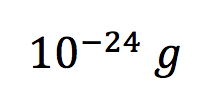
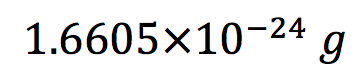
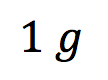
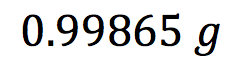
121 amu =
- A
- B
- C
- D
- A
13It is the number of protons in the nucleus of an atom (symbol Z).
- AAtomic Number
- BMass Number
- CAtomic Mass
- DNucleon Number
14These are properties that depend on the amount of material examined.
- AIntensive Properties
- BExtensive Properties
- CBoth Intensive and Extensive Properties
- DNone of the above
15These are properties that do not depend on the amount of material examined.
- AIntensive Properties
- BExtensive Properties
- CBoth Intensive and Extensive Properties
- DNone of the above
16All chemical properties are __.
- Aintensive properties
- Bextensive properties
- Cboth intensive and extensive properties
- DNone of the above
17It is a combination of two or more pure substances in which each substance retains its own composition and properties.
- ACompound
- BMixture
- CTincture
- DCarbuter
18The most easily recognized mixture in which different proportions of the sample have recognizably different properties is called a __.
- Ahomogeneous mixture
- Bheterogeneous mixture
- Ccompound
- Delement
19A/An __ is a substance that can be decomposed by chemical means into simpler substances, always in the same ratio by mass. Meanwhile, a/an __ is a substance that cannot be decomposed into simpler substances by chemical changes.
- Acompound
element - Belement
compound - Csolution
element - Dsolution
compound
- Acompound
20IUPAC stands for __.
- AIntergovernmental Union of Pure and Applied Chemistry
- BIntergovernmental Union for Pure and Applied Chemistry
- CInternational Union of Pure and Applied Chemistry
- DInternational Union for Pure and Applied Chemistry
21Which of the following common prefixes used in the SI and Metric systems is incorrect?
- A
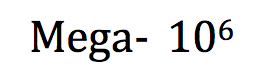
- B
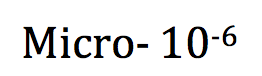
- C
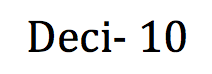
- D
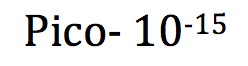
- A
22It relates to how closely a measured value agrees with the correct value.
- AAccuracy
- BPrecision
- CSignificant Figures
- DNone of the above
23It refers to how closely individual measurements agree with one another.
- AAccuracy
- BPrecision
- CSignificant Figures
- DNone of the above
24The __ of a substance (for solids and liquids) is the ratio of its density to the density of water, both at the same temperature.
- AApparent Specific Gravity
- BSpecific Gravity
- CSpecific Density
- DSpecific Volume
25He was a Swedish astronomer who developed the Celcius temperature scale, formerly known as the centigrade temperature scale.
- AAnders Celcius
- BAndrew Celcius
- CAnderson Celcius
- DAdrian Celcius
26He was a german instrument maker who developed the Fahrenheit temperature scale.
- AGarry Fahrenheit
- BGerard Fahrenheit
- CGabriel Fahrenheit
- DGordon Fahrenheit
27It is the amount of heat required to raise the temperature of one gram of a substance by one degree Celcius with no change in phase.
- AHeat Capacity
- BSpecific Heat
- CSpecific Energy
- DEnthalpy
28It is the amount of heat required to raise its temperature by one degree Celcius.
- AHeat Capacity
- BSpecific Heat
- CSpecific Energy
- DEnthalpy
29When two objects at different temperatures are brought into contact, heat flows from high temperature to low, until the two are at the same temperature. The two objects are then in __.
- Abalance
- Bkinetic equilibrium
- Csteady state
- Dthermal equilibrium
Información
- Descripción
- The Foundations of Chemistry
- Autor
- Usuario eliminado
- Idioma
- English
- Visitas
- 302
- Historial
- Creado el 30 nov 2016 · actualizado el 18 ene 2017
- Etiquetas
- Valoración
- Aún sin valoraciones Valora este test