
Apuntes
Industrial Revolution Part 2
Contenido del apunte (2)
Página 1
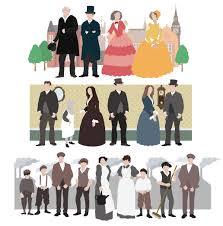
Class society: a growing middle class
During the Industrial Revolution a class society developed, where people's social status depended on the wealth, job and power. We divide this society in 3 classes:
The upper class: considered the richest businesspeople (factory owners, nobles)
The middle class: grew very quickly during the Industrial Revolution (merchants, lawyers, doctors, civil servants, farmers and small business owners)
The working class: they were wage labourers (factory workers, servants and agricultural labourers)
It was difficult to move between classes but not impossible: working class could reach high positions by earning money.
Not everyone in the same class have the same status
A GROWING MIDDLE CLASS
The growth of industry, banking, transport and trade led to a need for more managers, lawyers...
These middle class people were:
They were the new consumers (they had more money than they needed)
They had leisure time because they did not need to work long hours
They employed servants in their homes
They thought that educantion was very importants
In their free time they went to musical evenings at theatres. Many sports became popular (rugby, cricket and tennis)
They also took an annual holiday (to abroad or to seaside resorts)
Spa towns were also popular
Página 2
The working class
They moved from de countryside to cities during the Industrial Revolution because there were new jobs adn wages were higher. This led to rapid urbanisation.
Most of the people in this class lived in slums in extreme poverty and high rates of crime and alcoholism.
HOUSING
Most people lived in small terraced houses.
Several families lived in each houses and the outdoor toilets were shared between many houses.
Sewage was dumped in rivers or near houses
The contaminated water led to diseases like typhus and cholera
They used coal which created terrible pollution. This led to respiratory diseases
WORKING CONDITIONS
Specialisaton made it easier to replace workers
Working conditions were generally bad:
The working day lasted 12-14 hours
The work was often dangerous
Workers could be fined for talking
If they didn't go to work they were not paid and they could lose their jobs
Some factory owners provided good housing and schools for their workers because they belived that for this they will work harder
UNEMPLOYMENT
It was a big problem in cities.
Some people who came from the country side and they were unable to find jobs
Other lost their jobs when factories closed or when machines were introduced
There was no unemployment benefit so it often resulted in extreme poverty.
The government provided workhouses for people who had no money but they had to work the whole day.
Some poor people turned to crime or prostitution
Información
- Descripción
- d
- Creado por
- Arturo López · ene 2017
- Actualizado
- 16 ene 2017
- Visitas
- 288
- Etiquetas
- Valoración