
Test
Infant Perceptual Development
Este test tiene tipos de pregunta que se abren en el reproductor de siempre.
Preguntas del test (80)
1Empiricists saw newborns as:
- ATabula rasa
- BInnately born with traits and characteristics
- CShaped by their parents' traits and characteristics
- DYet to be shaped by the social environment that they would live in
2Empiricists believe that children learn their behaviours, traits and characteristics, and don't inherit them. Is this true or false?
- AVerdadero
- BFalso
3Nativists saw newborns as:
- ATabula rasa
- BInnately born with traits and characteristics
- CYet to be shaped by the social environment in which they will live
- DBorn with the traits and characteristics from their parents
4For infant children in their early perceptual development, sensation is:
- AExploring themselves and their environment with their senses
- BExploring their own emotions and sensations from what they feel
- CUnderstanding how objects exist and the sensations that they get from interacting with them
- DAll of the above
- ENone of the above
5For infant children in their perceptual development, perception is:
- AInterpretation through their brain's sensory input
- BWhat they see and can do with themselves to interact with it
- CUnderstanding the world that they inhabit
6Which lobe of the brain is responsible for an infant's sensory processing?
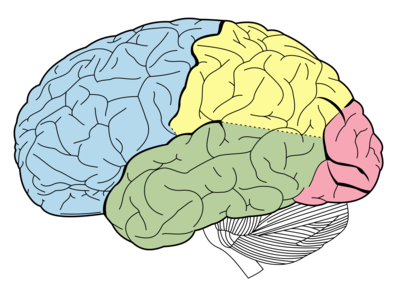
- AFrontal
- BParietal
- COccipital
- DTemporal
7When are infants' vision the least developed?
- AAt birth
- BAt 2 months old
- CAt 6 months old
- DAt 12 months old
- EAt 18 months old
8According to Fantz (1961) infants prefer:
- APatterned shapes
- BUnpatterned shapes
- CBoth
- DNeither
9According to Fantz, infants prefer:
- ASymmetrical lines
- BAssymetrical lines
10According to Fantz (1961), infants prefer:
- ACurved lines
- BStraight lines
- CBoth
- DNeither
11Neonates can differentiate between different types of patterns. Is this true or false?
- AVerdadero
- BFalso
12Habituation is when an infant stares at an object for a period of time. When they are bored, they look away. Is this true or false?
- AVerdadero
- BFalso
13How long does it take for newborns to habituate to new stimuli?
- ALess than a minute
- BBetween one and two minutes
- CTwo minutes
- DSeveral minutes
14When infants reach around 4 or 5 months, their information processing reduces by how much?
- A10 seconds
- B20 seconds
- C30 seconds
- D1 minute
- E2 minutes
15Why do newborns take longer, at 2 months old, to habituate?
- ABecause they are cognitively slower than they have ever been
- BBecause they are more easily distracted
- CBecause there is less novelty about the stimuli that they are presented with
- DTheir visual processing has improved significantly and there is more information to process
16In operant conditioning, reinforcement [blank_start]increases the chances of[blank_end] behavioural recurrence. Punishment [blank_start]reduces the chances of[blank_end] behavioural recurrence.
- Aincreases the chances of
- Bdecreases the chances of
- Creduces the chances of
- Dimproves the chances of
17Rovee-Collier (1999) attached a mobile ribbon to a 3-month old baby's ankle during her research experiment. The baby quickly found out that by repeatedly kicking, the mobile would move.
What does this say about operant conditioning?- AInfants understand operant conditioning before they are 6 months old. By kicking, it shows that, in context-dependent situations, they can perform behaviours relative to previous events
- BHer findings were inconclusive as they were too often found to be shown in some infants, but not in others
- CInfants still need a few more months before they can understand behaviours related to operant conditioning. Even when the baby kicked the first time, it didn't necessarily correlate to activating the mobile, context-dependent or otherwise
- DNone of the above
18Rovee-Collier's (1999) research showed that:
- ABabies can learn through their own behaviour quickly the consequences of their actions
- BSome babies can learn through their own behaviour quickly the consequences of their actions
- CVery few babies can obtain the understanding of operant conditioning as quickly as others, takes a longer time
- DShe didn't find anything significant
19Which of the following areas of the eyes in babies is the least developed as they grow?
- AFovea
- BCone cells
- CRetina
- DOptic nerve
- EAll of the above
20At what point do infants obtain vision comparable to adults?
- ABefore 6 months old
- BBefore 12 months old
- CAt 2 years old
- DAt 3 years old
21In pattern perception, infants only a few weeks old:
- AFocus on single, high contrast patterns and features
- BFocus on many, high contrast patterns and features
- CFocus on single, low contrast patterns and features
- DFocus on many, low contrast patterns and features
22A baby would be able to recognise their mother in their second day of life. However, would they be able to if her face was partially occluded?
- AYes
- BNo
23In facial recognition, one-month old infants will naturally focus on:
- AFacial edges (e.g. hair, chin)
- BDistinctive features (e.g. scars, blemishes)
- CAll natural facial features
24In facial recognition, two-month-old infants will have had better contrast sensitivity and ocular-motor control. This means that they now focus on:
- AThe facial edges (e.g. hair, chin)
- BDistinctive features (e.g. scars, blemishes)
- CAll parts of the face, particularly eyes and mouth
25At 3 weeks old, an infant's pattern perception:
- AHas poor contrast sensitivity and prefer large, simple patterns
- BCan detect detail in complex patterns and their internal features
- CCan detect patterns, even if boundaries are not present
- DCan detect objects, even if two-thirds of the image is missing
26At 2 months old, an infant's pattern perception:
- AHas poor contrast sensitivity, and prefers large simple patterns
- BCan detect the detail in complex patterns and scan their internal features
- CCan detect boundaries in patterns, even if they are not really present
- DCan detect objects, even if two-thirds of the image is missing
27At 4 months old, an infant's pattern perception:
- AHas poor contrast sensitivity and prefers large, simple patterns
- BCan detect the detail in complex patterns and scan them for internal features
- CCan detect pattern boundaries, even if they are not really present
- DCan detect objects, even if two-thirds of the image is missing
28At 12 months old, an infant's pattern perception
- AHas poor contrast sensitivity and prefers large, simple patterns
- BCan detect the detail in complex patterns and scan them for internal features
- CCan detect patterns even if the boundaries are not really present
- DCan detect objects, even if two-thirds of the image is missing
29A baby is presented with a standard, natural face, and a jumbled face. When the faces are moved across their visual fields, which do they follow longer?
- AThe normal face
- BThe jumbled face
30Why, according to Morton and Johnson, might a baby follow a normal face for longer than one that is jumbled?
- AThey prefer, attentionally, those that are the same as them (evolutionary perspective)
- BThey have been habituated to the stimuli for longer
- CThey are just looking and not really paying too much attention
- DThey want to know what happens next
31According to Farroni, Menon and Johnson (2006), what types of faces do babies prefer?
- AFaces with a direct gaze, upside-down
- BFaces with a direct gaze, the right way up
- CFaces looking away, upside down
- DFaces looking away, the right way up
32When presented with a visual cliff, would 6-month-old babies crawl to their mothers?
- AYes
- BNo
33For depth perception, one-month-old babies show sensitivity to:
- AKinetic cues
- BBinocular cues
- CPictorial cues, wariness of height
34For depth perception, two to three-month-old babies show sensitivity to:
- AKinetic cues
- BBinocular cues
- CPictorial cues, wariness of height
35For depth perception, five to 12-month-old babies show sensitivity to:
- AKinetic cues
- BBinocular cues
- CPictorial cues, wariness of height
36Size constancy is:
- APerception of a true object's size
- BPerception of your own true size
- CPerception of the environment around you and its size at any time
37Shape constancy is:
- APerception of an object's true shape
- BPerception of your own true shape
- CPerception of the shape of the environment
38Slater (2001) found that newborns have an early understanding of size constancy. Is this true or false?
- AVerdadero
- BFalso
39At what point do human children stop being at risk of the adverse effects of visual deprivation?
- A2-4 years old
- B3-5 years old
- C4-6 years old
- D5-7 years old
- E7 years old and above
40Is visual perception in 1-month-old kittens permanent when deprived of light for only a few days? (Crair, Gillespie & Stryker, 1998)
- AYes
- BNo
41If visual deprivation in newborn children is left untreated for the first 6 months of life, the effects are permanent. Is this true or false?
- AVerdadero
- BFalso
42When does the critical period of binocular functioning begin for newborns and peak?
- A3 months - 1-2 years
- B5 months - 1-2 years
- C6 months - 1-2 years
- DNever
43In terms of perceptual vision, newborns:
- ACan see clearly close-up and across wide ranges
- BCannot see clearly, but can across wide ranges
- CCan see clearly close-up, but not across wide ranges
- DCannot see clearly or across wide ranges
44Is infant memory for operant responses context-dependent?
- AYes
- BNo
45Habituation refers to a gradual reduction in the strength of a response due to repetitive stimulation. Recovery refers to:
- AEven greater reductions in the strength of a response
- BNew stimuli (eg, a change in environment) causing for habituated responses to return at a high level
46Is infant learning, when assessed through habituation, context-dependent?
- AYes
- BNo
47According to research (Bartocci, et al., 2006; Slater, et al., 2010), do preterm and male babies show intense or relaxed activation of sensorimotor areas in the cerebral cortex?
- AIntense
- BReduced
48According to research (Axelin, Salanterä & Lehtonen, 2006; Gormaly, et al., 2001), physical touch releases what painkilling chemicals in the brain?
- AEndorphins
- BDopamine
- CSerotonin
- DACh
- EATP
49Allowing a baby to endure severe pain ________ the nervous system with stress hormones, which can disrupt a child's capacity to handle common everyday stressors (eg, sleep disturbances, feeding problems, difficulty calming down) (Mitchell & Boss, 2002).
- AOverwhelms
- BUnderwhelms
50An adult's soft caresses induces infants to be _____ attentive towards an adult's face (Stack & Muir, 1992).
- Amore
- Bless
51Can babies readily learn to have positive responses to tastes that were previously neutral or negative (eg, bitter-tasting formula substitute to cow's milk that they are allergic to)?
- AYes
- BNo
52Babies show early improvements in vision during their development stages. At 2 months old, they achieve [blank_start]focus and colour vision[blank_end]. At 6 months old they gain [blank_start]acuity, scanning, and tracking[blank_end]. Then, at 6 or 7 months old, they obtain [blank_start]depth perception[blank_end].
- Afocus and colour vision
- Bmotion
- Cstereopsis
- Dacuity, scanning, and tracking
- Emotion parallax
- Fbinocular disparity
- Gdepth perception
- Haccommodation
- Iparalysis
53There is a development of visual acuity in infants. At [blank_start]3 months old[blank_end], they can detect the contrast in Mickey Mouse's ear. At [blank_start]6 months old[blank_end], they have 20:80 visual acuity. At [blank_start]3 years old[blank_end], they develop full vision.
- A3 months old
- B2 months old
- C1 month old
- D6 months old
- E5 months old
- F4 months old
- G3 years old
- H2 years old
- I4 years old
54As babies grow, cone cells in the retina:
- AElongate
- BShrink
55At [blank_start]3 weeks old[blank_end], babies have poor contrast sensitivity and prefer large, simple patterns. At [blank_start]2 months old[blank_end], they can detect the detail in complex patterns and scan for internal features of patterns. At [blank_start]4 months old[blank_end], they can detect patterns that may not really be there. And at [blank_start]12 months old[blank_end], they can detect objects even when two-thirds of the image are missing.
- A3 weeks old
- B2 weeks old
- CA week old
- D2 months old
- EA month old
- F3 months old
- G4 months old
- H5 months old
- I6 months old
- J12 months old
- K18 months old
- L24 months old
56At birth, babies are sensitive to [blank_start]kinetic[blank_end] cues. Between 2 and 3 months old, they become sensitive to [blank_start]binocular[blank_end] cues. Finally, as they reach a year old (5 - 12 months), they become sensitive to [blank_start]pictorial[blank_end] cues.
- Akinetic
- Bbinocular
- Cpictorial
57There are three cues that babies attend to in their depth perception development. The first is [blank_start]motion[blank_end]. The second is [blank_start]stereopsis[blank_end]. The third are [blank_start]pictorial[blank_end].
- Amotion
- Bstereopsis
- Cpictorial
58In the first cue that babies begin to attend, at what point do they understand that 3D objects are not flat?
- AA month old
- B2 months old
- C3 months old
59According to Campos (et al., 2000), are infants more or less likely to refuse to cross the deep side of a visual cliff?
- AMore likely to refuse
- BLess likely to refuse
60According to research (Bai & Bertenthal, 1992; Campos, et al., 2000), who is better at remembering object locations and finding hidden objects?
- ASeasoned crawlers
- BInexperienced crawlers
61According to Bell and Fox (1996), does crawling promote a new level of brain organisation, as indicated by more organised EEG brainwave activity in the cerebral cortex?
- AYes, it does
- BNo, it does not
62According to Banks and Ginsburg (1985), contrast refers to:
- AThe difference in the amounts of light between adjacent regions in a pattern
- BThe similarities of light between adjacent regions in a pattern
63Hatton (et al., 1997) observed infants with visual acuity issues (eg, 20/800) throughout their preschool years. They found that the infants:
- AWere far behind their peers in all areas of their development
- BWere much further behind their peers in only perceptual development, but fine everywhere else
64Research has found infants who have severe visual impairments also struggle with motor exploration and spatial understanding (Levtzion-Korach, et al., 2000). What do they have to rely on?
- ASound
- BParents
- CFriends
65Has research (eg, Preisler, 1991; Bigelow, 2003) found that infants who see poorly also struggle with caregiver interaction? Do they have difficulties reciprocating interactions?
- AYes, they do
- BNo, they do not
66Some have asserted that infant facial perception is due to a built-in capacity to orient towards members of one's own species (Johnson, 2001; Slater & Quinn, 2001). However, others suggest that this is because:
- AThey prefer any stimulus in the periphery of their visual field (Cassia, Turati & Simon, 2004)
- BThey are socially conditioned to believe that this is what they need to be observing (Jones, et al., 1996)
67When a baby is 2 months old, they can scan an entire stimulus and combine pattern elements into an organised whole. Because of this, can they recognise (and do they prefer) their mother's face to another woman's, according to Bartrip, Morton, and De Schonen (2001)?
- AYes, they do
- BNo, they do not
68Do babies prefer their own race according to research (eg, Bar-Haim, et al., 2006; Kelley, et al., 2007)?
- AYes
- BNo
69Can own-race preferences be erased according to Sangrigoli (et al., 2005)?
- AYes, they can
- BNo, they cannot
70At first, do infants rely heavily on motion and spatial arrangement to identify objects, according to Jusczyk (et al., 1999) and Spelke and Hermer (1996)?
- AYes
- BNo
71"As infants become more familiar with many objects and can integrate each object's diverse features into a unified whole, they rely more on shape, colour, and pattern and less on motion (Slater, et al., 2010)" (Berk, 2012, pp. 165). Is this true or false?
- AIt's true
- BIt's false
72According to Johnson and Shuwairi (2009) does experience enhance a young infant's predictive eye tracking?
- AYes, it does
- BNo, it does not
73Novelty prefernece refers to:
- AThe tendency to prefer paying attention to new objects or people that have never been seen before
- BThe tendency to prefer paying attention to old objects that have been previously used
74According to Berk (2012), do infants from 4 to 11 months increasingly rely on featural information to detect the identity of an object?
- AYes, they do
- BNo, they do not
75At first, do infants attend to form (eg, size and shape) and then surface features (eg, pattern, colour) according to Woods and Wilcox (2009)?
- AYes, they do
- BNo, they do not
76According to Berk (2012), intermodal perception is:
- AUnderstanding our senses and perceiving them as a whole
- BUnderstanding our senses, and perceiving them as separate and individual
77According to Berk (2012), amodal sensory properties are:
- AInformation that is not specific to a single modality, but overlaps with others
- BInformation that is specific to single modality
78Newborns can recognise visual objects and distinguish them from others (Sann & Streri, 2007). However, do they only require on exposure to learn the association between the sight and sound of a toy, according to Morrongiello, Fenwick, and Chance (1998)?
- AYes, they do
- BNo, they need more
79According to Bahrick, Hernández-Reif and Flom (2005), are babies biologically primed to focus on amodal information?
- AYes, they are
- BNo, they are not
80According to Woods and Wilcox (2009), which do children attend to first?
- AForm (eg, size, shape)
- BSurface features (eg, pattern, colour)
Información
- Descripción
- El usuario ha eliminado su información de asignaturas Test sobre Infant Perceptual Development, creado por Usuario eliminado el 09/03/2017.
- Autor
- Usuario eliminado
- Idioma
- English
- Visitas
- 50
- Historial
- Creado el 9 mar 2017 · actualizado el 9 mar 2017
- Etiquetas
- Valoración
- Aún sin valoraciones Valora este test