
Apuntes
Oils and Emulsions
Contenido del apunte (3)
Página 1
Plant Oils
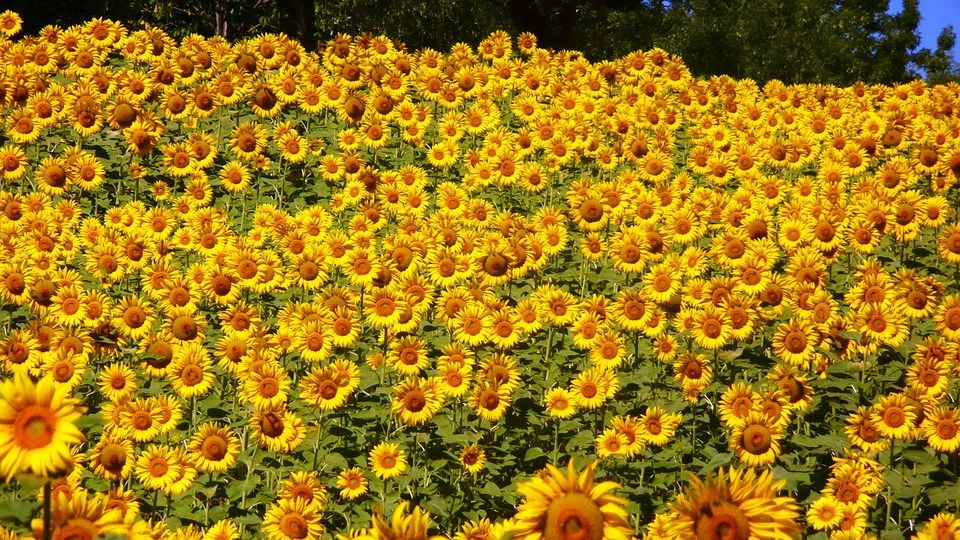
Many plants produce useful oils that can be converted into consumer products including processed foods.
Vegetable oils are natural oils found in seeds, nuts and some fruit. These oils can be extracted. The plant material is crushed and pressed to squeeze the oil out. Water and other impurities are removed.
Vegetable oils have higher boiling points than water. This means that foods can be cooked or fried at higher temperatures than they can be cooked or boiled in water.
This allows the food to cook faster, but also gives it a different taste.
Generally, these oils are healthier than animal fats because plant oils contain unsaturated fat.
They do, however, have a high energy content which can have a negative impact on our health.
Página 2
Saturated and unsaturated fats
Fats are made up of fatty acids. There are two types of fat- saturated and unsaturated fat. Saturated fats have no double bond in their fatty acid molecules, which unsaturated fats do contain carbon- carbon double bonds. These can be detected by reacting with bromine water. Saturated fats are usually solid at room temperature and unsaturated fats are usually liquid at room temperature.
Vegetable oils that are unsaturated can be hardened by reacting them with hydrogen in the presence of a nickel catalyst at about 60 °C.
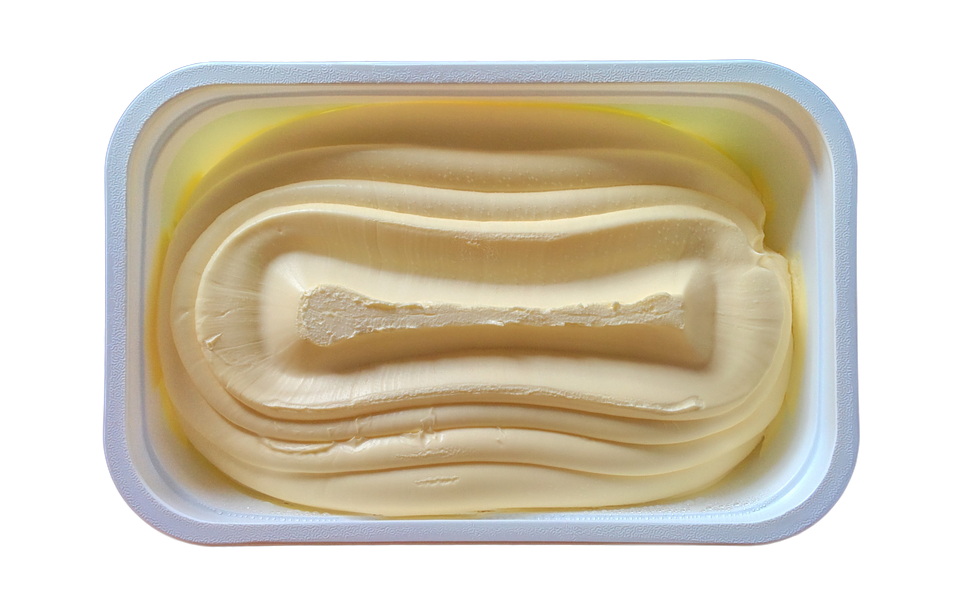
Hydrogen adds to the carbon–carbon double bonds. The hydrogenated oils have higher melting points so they are solids at room temperature, making them useful as spreads and in cakes and pastries.
Margarine is made out of plant oils but it is hydrogenated so that it will be solid at room temperature.
Página 3
Emulsions
Oils do not dissolve in water. If oil and water are shaken together, tiny droplets of one liquid spread through the other liquid, forming a mixture called an emulsion.
Emulsions are thicker than oil or water and have many uses that depend on their special properties.
They provide better texture, coating ability and appearance, for example in salad dressings, ice creams, cosmetics and paints.
There are two main types of emulsion:
Water droplets in oil - margarine, butter, skin cream, moisturising lotion
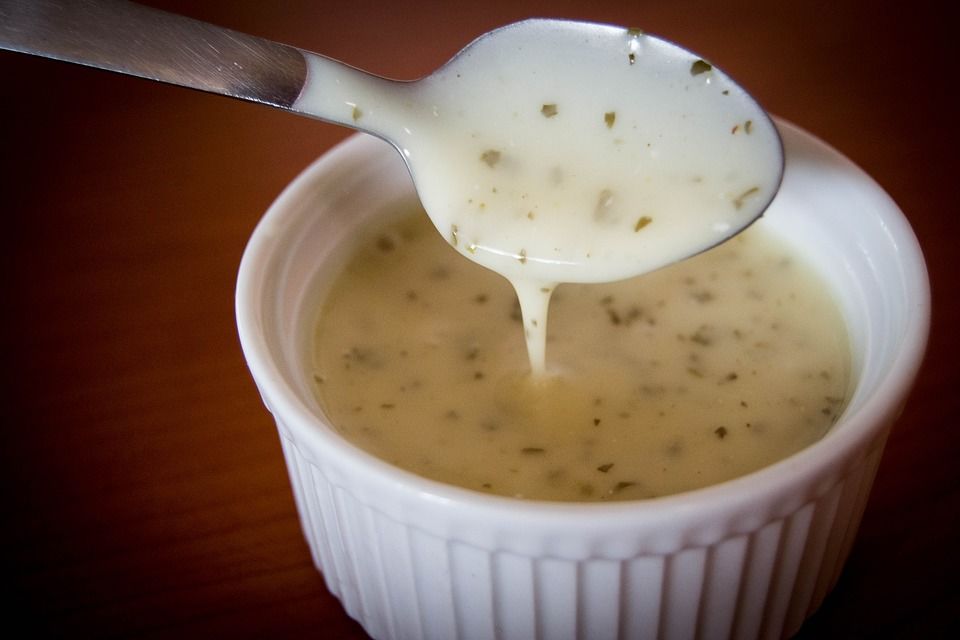
Oil droplets in water -milk, ice cream, salad cream, mayonnaise
If an emulsion is left to stand, it will separate into an oil layer and a water layer. Emulsifiers are added to emulsions to prevent them from separating out in this way
Egg yolk contains a natural emulsifier. Mayonnaise is a stable emulsion of vegetable oil and vinegar with egg yolk.
Emulsifier molecules have two different ends:
a hydrophilic end - 'water-loving' - that forms chemical bonds with water but not with oils
a hydrophobic end - 'water-hating' - that forms chemical bonds with oils but not with water.
The hydrophilic 'head' dissolves in the water and the hydrophobic 'tail' dissolves in the oil. In this way, the water and oil droplets become unable to separate out.
Lecithin is an emulsifier commonly used in foods. It is obtained from oil seeds and is a mixture of different substances
Información
- Descripción
- El usuario ha eliminado su información de asignaturas Apunte sobre Oils and Emulsions, creado por Usuario eliminado el 06/07/2017.
- Creado por
- Usuario eliminado · jul 2017
- Actualizado
- 6 jul 2017
- Visitas
- 204
- Historial
-
- Creado por Niamh Ryan · 4 jul 2017
- Copiado por Niamh Ryan · 6 jul 2017
- Valoración