
Different Types of Liberalism
Diapositivas del conjunto (10)
-
-
- Early liberalism in a sense led to the throwing off of the chains of feudalism to establish rights that were due to each human. Natural rights theory was supported by intellectuals such as John Locke and Jean Jacques Rousseau. They highlighted a few important things:
- Citizens have particular inalienable rights (life, liberty and property)
- These rights need to be protected by the state; for Locke this was an important aspect of the social contract
- The government is not allowed to interfere with people's rights, unless there is a valid reason to do so
- If the government infringes on the rights of people, then the people have the right to dissolve the government
- People are the ones that give permission to the government before it can exercise power
- This is central to the idea of liberal democracy
- Early liberalism sought to maximise the actions of the individual by not constraining them
- Moreover, this relies often on minimal state approach and a belief in the power of market economics
-
-
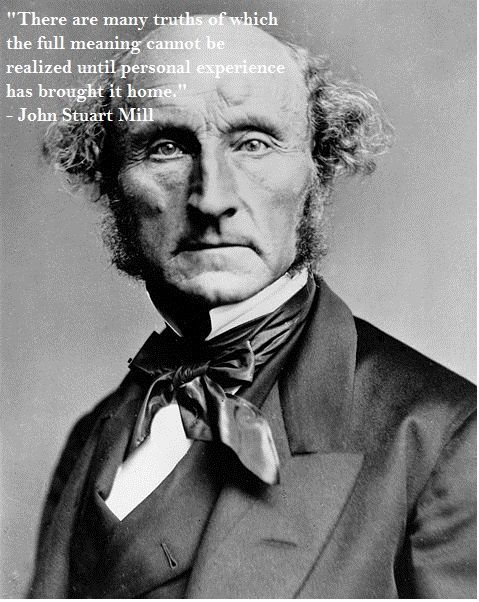
- Classical Liberalism is founded on the idea of freedom. This was mainly promoted by John Stuart Mill. With the maximum availability of freedom, human progress would advance as people would be able to access the full capability of their faculties regarding innovation, creativity and self-fulfilment.
- Mill argued this occurred through minimal state intervention and allowing the individual complete "sovereignty over mind and body"
- Mill contended that there needed to be political tolerance in order that everyone may enjoy freedom
- Classical liberals did not believe that democracy was the answer to these problems of freedom as it could lead to the tyranny of the majority
- Mill believed that the more intelligent in society should have more votes over others
- Classical liberals also believed in the importance of a free market and expected the government to intervene to prevent monopolies
-
-
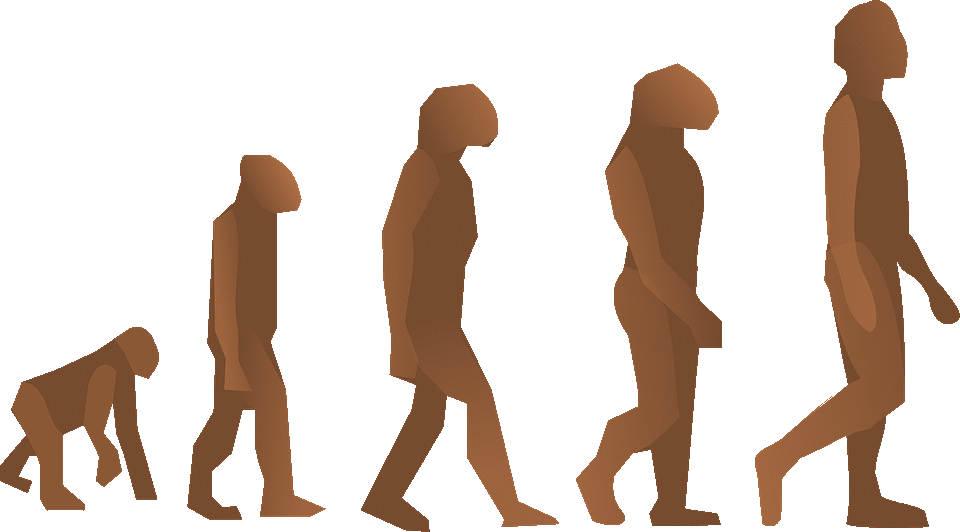
- This involved collecting the views of Darwin on evolution and then applying them to social theory. This was headlined by Herbert Spencer who first utilised the phrase 'survival of the fittest'.
- Spencer did not think society needed improving or correcting, as societies were bound to change automatically
- Spencer took the process of evolution and applied it to societies; society is like an organism that progresses through changes like a living species was his argument
- This views that people are unequal in terms of their abilities
- Spencer believed in the idea of the individual being able to freely pursue whatever they wanted and those who could not or were unwilling would fall away
- Spencer believed that the rich and powerful people in society came to be because they were better acclimatised to the social and economic conditions of the time
-
-
- New Liberalism began to develop in the 1870s, it fought to be the dominant idea of the time where selfishness and the pursuit of the individual were of utmost importance.
- Thomas Hill Green called for a social conscience; arguing that we are not completely free to obtain our own interests and self-realisation
- People need to understand what their impact on society is
- The systems of capitalism and industrialisation left in their wake a host of social problems that needed addressing
- Large parts of society were in need of the economic ideas of classical liberalism
- New liberals, Lloyd-George, Churchill and Asquith campaigned for change through ideas of pension provision and National Insurance
- This made a move away from minimal state to a system where the government had a positive influence on people's lives in an attempt to give people greater equality
-
-
- As part of a coalition government in 1940, William Beveridge was a Liberal put in charge of creating a Welfare State.
- For Beveridge, liberty was the removal of deprivations such as unemployment, poverty and lack of education
- The aim of this system was to expand the equality of opportunity to people in Britain
- It tackled what were known as 'the five evil giants'
- This enabled positive freedoms by maximising people's potential within the state
- The use of Keynesian economic ideas allowed the individual to gain more control over the benefits of the state, furthering people's opportunities



Información
- Descripción
- El usuario ha eliminado su información de asignaturas Diapositivas sobre Different Types of Liberalism, creado por Usuario eliminado el 04/08/2017.
- Creado por
- Usuario eliminado · ago 2017
- Actualizado
- 4 ago 2017
- Visitas
- 9
- Historial
-
- Creado por Andrew Burke · 28 jul 2017
- Copiado por Andrew Burke · 4 ago 2017
- Valoración