
Socialism and Anarchism
Diapositivas del conjunto (4)
-
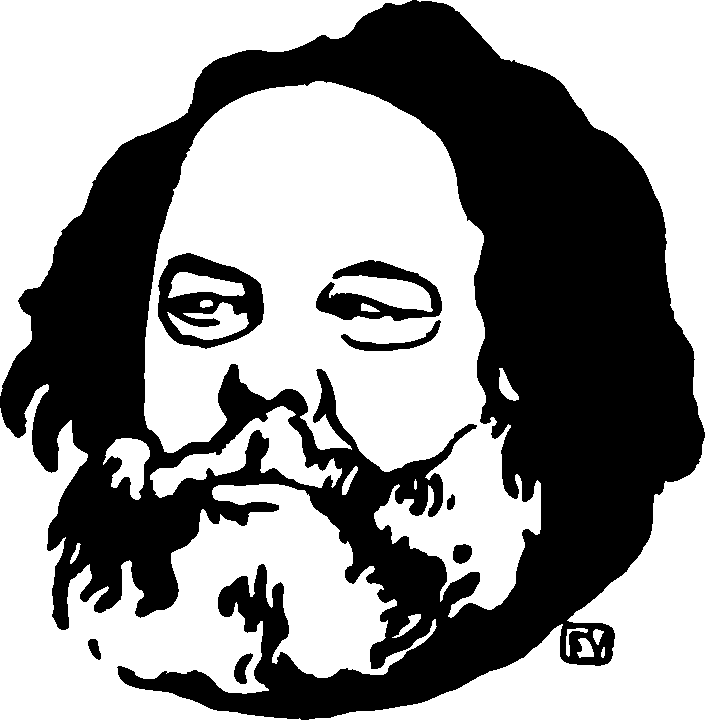
- Pie de imagen: Influential anarchist, Mikhail Bakunin
- Anarchism was a political movement that opposed all forms of organised government. This was a result of social and economic problems across Europe that led to the development of revolutionary political campaigns. Anarchism is just one of these movements.
- Mikhail Bakunin was a leading Russian anarchist, who encouraged anarchist workers' unions to fight for greater freedoms.
-
- 1871 - anarchists momentarily took over control of Paris, but most attempts of the revolution failed
- When this revolution happened, many of the leaders of these groups fled to Britain as they found it to be a more politically tolerant society
- East London, for some, was seen as a refuge for the terrorists of other nations
- 1893 - Special Branch was a body that began a secret operation of monitoring Eastern European revolutionaries and their activities
- Anyone with an Eastern European name or accent was automatically suspected of being a potential anarchist
-
- Socialists were seen as another potential revolutionary groups:
- The Social Democratic Federation (SDF), Britain's first socialist party, was established in 1881
- This party represented the agricultural and industrial labourers, and the rights of women
- The leadership of the party, sometimes termed the Radicals, wanted to bring down the existing capitalist system
- SDF was involved in the Trafalgar Square demonstration that resulted in Bloody Sunday
- They did not respect the police service in London and campaigned for the government to care for poor people during times of economic depression

-
- High unemployment and housing shortages in the East End in 1888 led the police to focus on national immigration. Two parliamentary committees were set up at the time to look into immigration.
- Tensions developed between immigrant and local populations over housing, language and work
- Anti-Semitic (prejudice against Jews) views developed and Jews were commonly beaten
- Police considered the East End to be a violent area due to these tensions
- The murders by Jack the Ripper created further violence; sensationalist newspapers portrayed Jack the Ripper as a stereotypical Jew in terms of physical appearance
- No English people believed one of their fellow citizens could commit these murders and decided to blame either a Jewish or Irish immigrant
- Racial hatred was strong in the Whitechapel area
- Whitechapel was full of police reinforcements during the times of the Ripper murders in the possibility of outbreaks of riots by the Jewish community
Información
- Descripción
- El usuario ha eliminado su información de asignaturas Diapositivas sobre Socialism and Anarchism, creado por Usuario eliminado el 24/08/2017.
- Creado por
- Usuario eliminado · ago 2017
- Actualizado
- 24 ago 2017
- Visitas
- 81
- Historial
-
- Creado por Andrew Burke · 22 ago 2017
- Copiado por Andrew Burke · 24 ago 2017
- Valoración