
International Response to Climate Change

Diapositivas del conjunto (6)
-
Intergovernmental Panel on Climate Change
- The IPCC was created by the United Nations Environment Programme and World Meterological Organisation in 1988.
- The goal of the IPCC is to provide objective reports on climate change and its impacts and to give an understanding of the possible risks associated with human-induced climate change.
- Currently 195 countries are Members of the IPCC.
- The IPCC releases an Assessment Report every several years to serve as methodologies and guidelines to help Parties to the UNFCCC prepare their national greenhouse gas inventories.
-
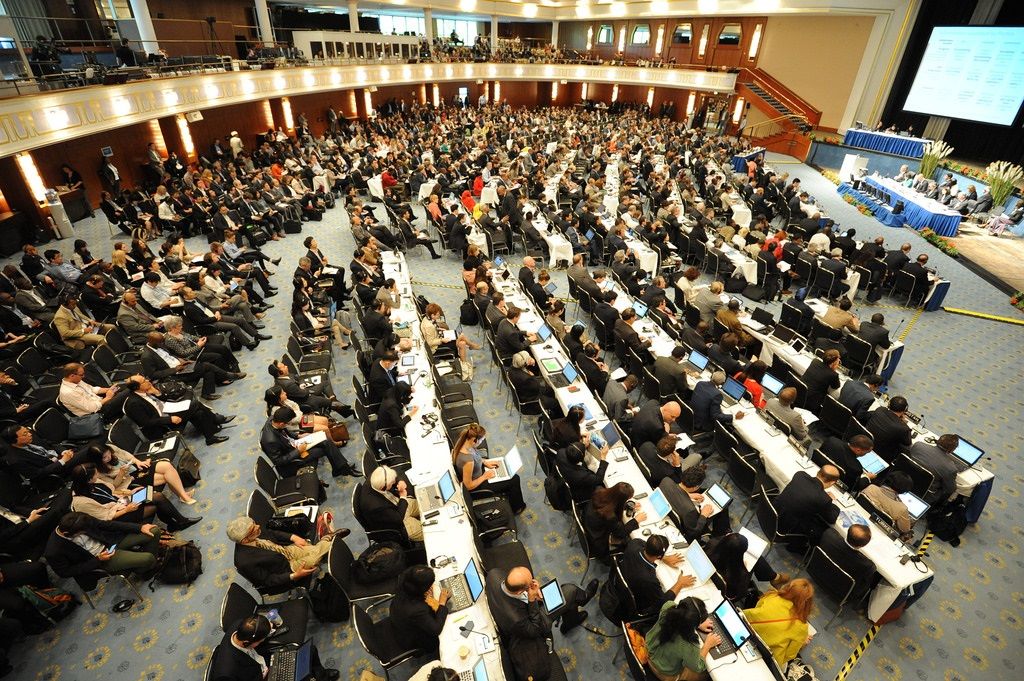
- The Kyoto Protocol is an international treaty which extends the 1992 United Nations Framework Convention on Climate Change (UNFCCC).
- A total of 192 countries have signed and ratified the Kyoto Protocol.
- The main goal of the treaty is to reduce greenhouse gas emissions.
- The Kyoto Protocol also introduced the concept of emissions (carbon) trading.
- When it was written, the treaty was not legally binding. The protocol didn't become international law until more than halfway through the 1990–2012 period.
-
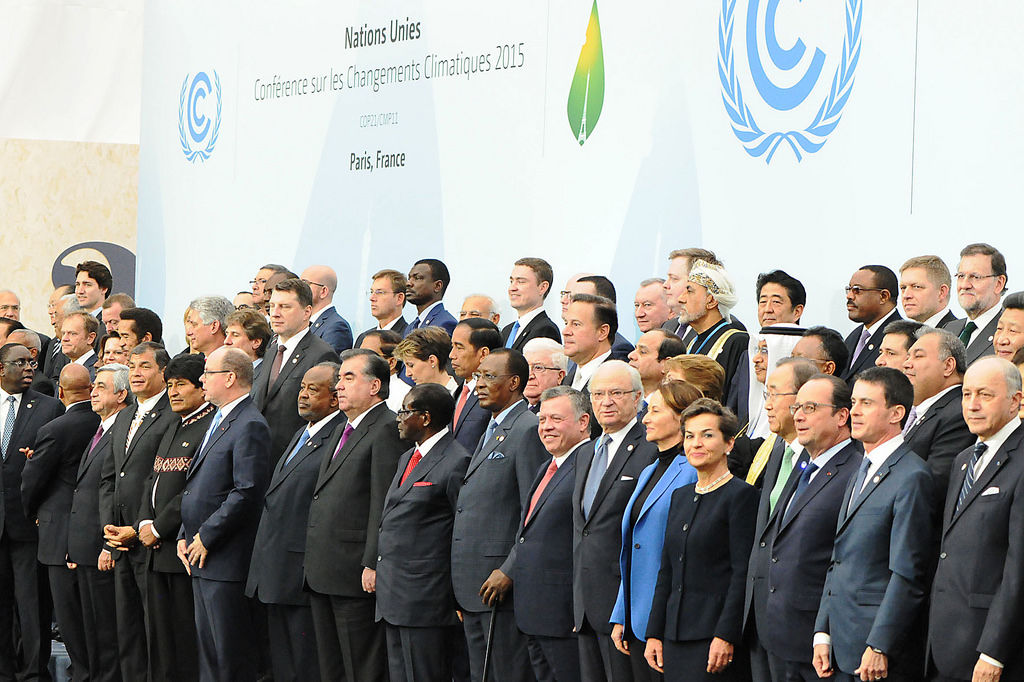
- The Paris Climate Agreement is an agreement within the UNFCCC, dealing with greenhouse gas emissions mitigation, adaptation and finance starting in the year 2020.
- The Paris Agreement was adopted in December 2015 during the 21st Conference of the Parties (COP21).
- The main goal of the agreement is to keep the increase in global average temperatures below 2 °C.
- Additionally, the agreement aims to strengthen the ability of countries to deal with the impacts of climate change.
-

- The EU is currently at the forefront of international efforts to reduce greenhouse gas emissions.
- The EU has set targets for emissions reductions in all of its member states, along with standards for renewable energy development and carbon trading.
- Some member states have been very slow in adopting policies, however, and energy efficiency has been limited.
-
Carbon Trading and Carbon Credits
- The Story of Cap & Trade (2009) (Enclavar)
- The EU Emissions Trading System (EUETS) is the largest emissions trading scheme in the world.
- The EUETS is a "cap and trade" system that aims to reduce emissions through financial incentives.
- Emissions are monitored each year by the EU and fines are put in place for those who do not stay within limits.
- A full explanation of the cap and trade system can be seen in the video on the right.
-
National and Sub-National Policy: Denmark
- National Policies:
- Denmark's climate policy is not only determined by EU measures, it also has its own targets for reducing emissions, aiming for a 40% reduction of 1990 levels by 2020.
- Denmark is also aiming to completely switch to renewables by 2050.
- Denmark aim to reduce emissions through carbon taxes and funds for renewable developments.
- Most of Denmark's focus is turned towards mitigation strategies for the future.
- Sub-National Policies:
- The capital city, Copenhagen, has turned its focus towards adaptation rather than mitigation.
- Because the city is at sea level, it aims to create "climate-proof" neighbourhoods to protect the city from heavy rainfall and storm surges.
- New protection plans such as storm barriers are planned for the near future.
Información
- Descripción
- El usuario ha eliminado su información de asignaturas Diapositivas sobre International Response to Climate Change, creado por Usuario eliminado el 25/08/2017.
- Creado por
- Usuario eliminado · ago 2017
- Actualizado
- 25 ago 2017
- Visitas
- 57
- Historial
-
- Creado por Antonia Blankenberg · 25 ago 2017
- Copiado por Antonia Blankenberg · 25 ago 2017
- Valoración