
Test
Forensic Science Unit 1
Este test tiene tipos de pregunta que se abren en el reproductor de siempre.
Preguntas del test (30)
1This person popularized physical detection methods in a crime scene and developed the character Sherlock Holmes.
- AMathieu Orfila
- BSir Arthur Conan Doyle
- CAlphonse Bertillon
- DCalvin Goddard
2What is forensic science?
- AThe study of crime scenes.
- BThe study of insects.
- CThe building of body farms.
- DThe application of science to those criminal and civil laws that are enforced by police agencies in a criminal justice system.
3Who is Mathieu Orfila?
- AUsed a comparison microscope to determine if a bullet was fired from a specific gun
- BConducted the first definitive study of fingerprints and their classification
- CFather of Forensic Toxicology
- DPopularized physical detection methods in a crime scene
4Who is Edmond Locard?
- AWas responsible for the acceptance of documents as scientific evidence by the courts
- BStated that once contact is made between two surfaces a transfer of material(s) will occur
- CUsed a comparison microscope to determine if a bullet was fired from a specific gun
- DConducted the first definitive study of fingerprints and their classification
5What does (OIC) stand for?
- AOriginal incident cover
- BOptional Incident Container
- COfficer in common
- DOfficer in charge
6Who should have access to a crime scene?
- ADistrict attorney so he/she can build a criminal case
- BOnly those people responsible for the immediate investigation of the crime, the securing of the crime scene, and the processing of the crime scene should be present
- CImmediate family members
- DAnyone who is interested, including news reporters
7Select 3 things used to record a crime scene?
- ASketches
- BFriends
- CPhotographs
- DDetailed notes
- EWord of mouth
8A rough sketch should include which of the following 5 things?
- ALocation of objects by use of measurements
- BThe possible location of where the perpetrator was
- CIdentification of all items by use of identifying numbers or letters which match with the investigator’s evidence property log.
- DWhere the Officer in Charge and other personnel are standing
- EAll other important items of the crime scene
- FAll recovered items of physical evidence
- GAn overall view including the relationship of items to each other
- HAny additional furniture that would make the house look better
9What is Locard's Principle?
- AHolds that the perpetrator of a crime will bring something into the crime scene and leave with something from it, and that both can be used as forensic evidence
- BHolds that increasing the amount of detective stories will increase funding to Forensic Science research
- CStates that the exact bullet fired can be matched through striations to the original firing gun
- DProves that using DNA Fingerprinting, we can match the exact perpetrator to the crime
10What are the 5 basics of crime scene processing?
- APut the scene on Instragram so witnesses will come forward
- BInterview witnesses
- CDiscuss with friends and family
- DExamine
- ESketch
- FProcess
- GDescribe to reporters
- HPhotograph
11What are the five basics of death?
- ATime
- BTemperature
- CMeaning
- DLocation
- EManner
- FCause
- GMechanism
12What does (MOD) stand for?
- AManner of Death
- BMechanism of Death
- CMeaning of Death
- DCause of Death
13The specific body change that brought about cessation of life
- AManner of Death
- BCause of Death
- CMechanism of Death
- DMeaning of Death
14The following are symptoms of what:
* RBC break down & spill contents
* Hemoglobin turns purple when it spills
* Purplish color visible wherever blood pools (lividity)- ALivor Mortis
- BAlgor Mortis
- CRigor Mortis
- DNothing
15The use of the insects and other arthropods that feed on decaying remains to aid legal investigations, is known as:
- AInsectology
- BEntomology
- CForensic Science
- DCrime Scene Investigation
16What are the two major insects used in entomology?
- AFlies and Beetles
- BWorms and Maggots
- CSpiders and Flies
- DStink Bugs and Roaches
17What is Postmortem Interval (PMI)?
- AThe amount of time a corpse was in a freezer
- BThe time between when the body was attacked and when it died
- CThe time between corpse discovery and delivery to the morgue
- DThe time between death and corpse discovery
18Forensic Entomology can be used to determine all of the following, except:
- APostmortem Interval (PMI)
- BIf the corpse was moved
- CManner and Cause of Death
- DAssociation of Suspects with the Death Scene
- EDetection of toxins, drugs, or even the DNA of the victim through analysis of insect larvae.
- FHow long a corpse was stored in a freezer
19A forensic entomologist does all of the following, except:
- ACalculates the growth of the insects and passage through stages of the life cycle in laboratory
- BIdentifies the immature insects
- CCompares the growth against weather conditions to estimate time of oviposition
- DInterviews witnesses
- EDetermines the size and development of the insects
20All of the following are part of the 5 Stages of Decomposition Fueled by Insect Activity, except:
- ABloat
- BFresh
- CFrozen
- DDecay
- EDry (skeletal)
- FPost-decay
21 Finding a corpse in the woods that was kept in a freezer for some time would alter the Time of Death from the PMI (Post-Mortem Interval).
- AVerdadero
- BFalso
22The Post Mortem Interval is restricted to the time that the corpse or body has been exposed to an environment which would allow insect activity to begin.
- AVerdadero
- BFalso
23A corpse swells due to gases produced by bacteria during the Fresh Stage of Decomposition.
- AVerdadero
- BFalso
24What stage is this?
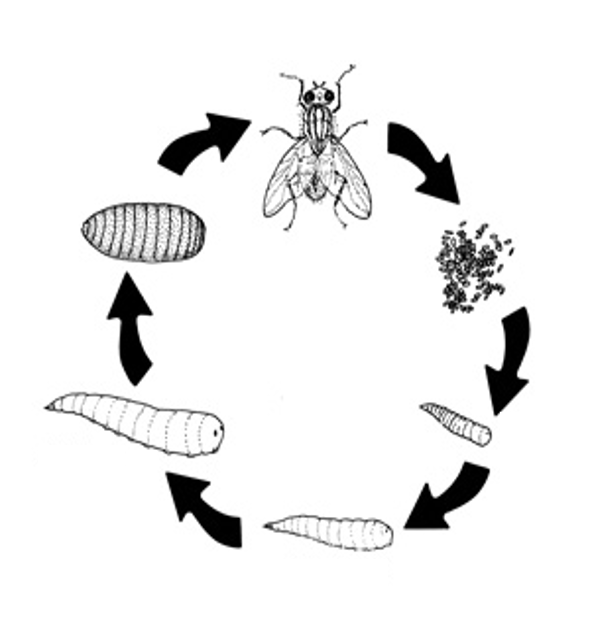
- AEgg
- BAdult
- CLarva
- DPupa
25What stage is this?
- AAdult
- BEgg
- CLarva
- DPupa
26What stage is this?
- AAdult
- BLarva
- CEgg
- DPupa
27What stage is this?
- AAdult
- BEgg
- CPupa
- DLarva
28Temperature, access by insects and the depth of burial can all affect the Rate of Decay.
- AVerdadero
- BFalso
29A body was found with rigor present in the legs, but no rigor in the upper torso. What is the ToD?
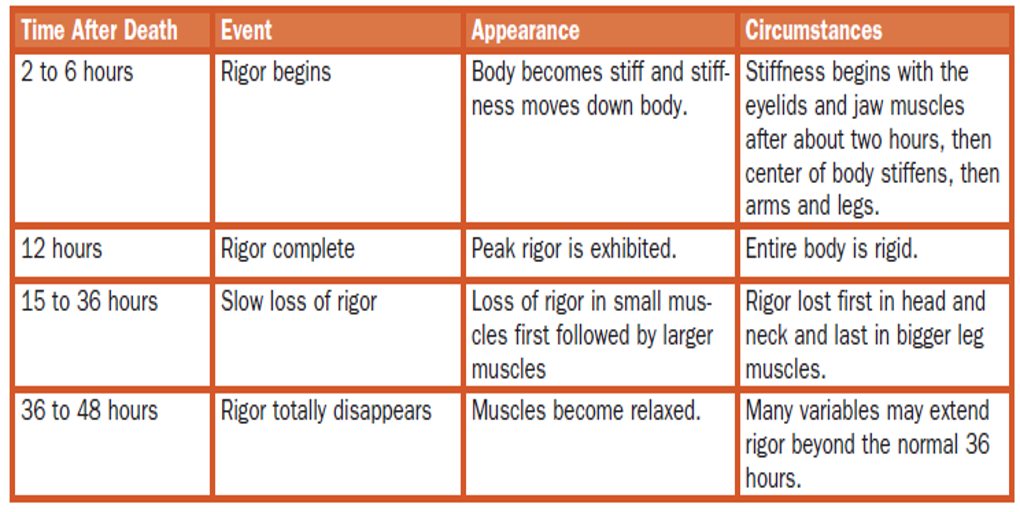
- A2 to 6 hours
- B12 hours
- C15 to 36 hours
- D36 to 48 hours
30Calculating the ToD (Time of Death) by the amount of heat lost by the corpse, is known as:
- ARigor Mortis
- BAlgor Mortis
- CLivor Mortis
- DHeat Indexing
Información
- Descripción
- 9th grade Forensic Science Test sobre Forensic Science Unit 1, creado por Jennifer Tuxford el 12/10/2017.
- Autor
- Jennifer Tuxford
- Idioma
- English
- Visitas
- 200
- Etiquetas
- Valoración
- Aún sin valoraciones Valora este test