
Test
GIT Anatomy Lecture 1
Este test tiene tipos de pregunta que se abren en el reproductor de siempre.
Preguntas del test (23)
1Label the following image
Answers: uvula, palatopharyngeal arch, palatoglossal arch, palatine tonsil, vallate tonsil, fungiform papollae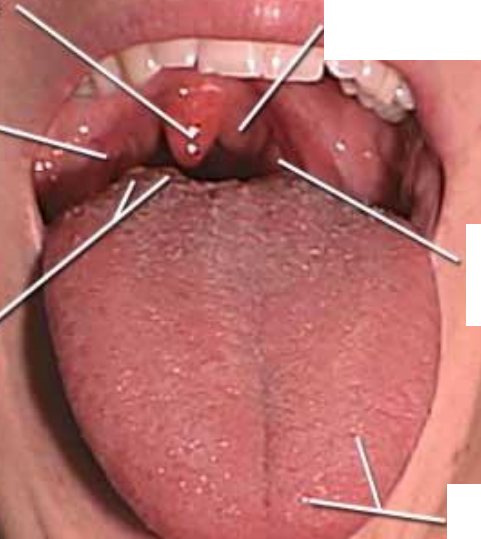
- Auvula
- Bpalatopharyngeal arch
- Cpalatine tonsil
- Dfungiform papillae
- Evallate papillae
- Fpalatoglossal arch
2What is the name for the posterior opening of the face
- Aoropharyngeal isthmus
- Boropharyngeal foramen
- Coropharyngeal vestibule
- Doropharyngeal hiatus
- Eoropharyngeal aperture
3Label the following image
Answers: philtrum, superior and inferior labial artery, facial artery, vermillon border of lip, oral fissure, buccinator muscle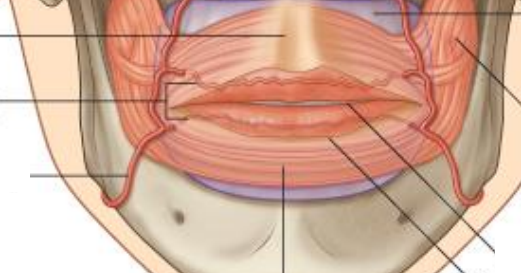
- Aphiltrum
- Bsuperior and inferior labial artery
- Cfacial artery
- Dorbicularis oris muscle
- Evermilion border of lip
- Foral fissure
- Gbuccinator muscle
- Hvestibule
4Which of the following is not a function of the lips?
- AOral competence
- BDeglutition
- CExpression of emotions
- DDigestion
5Oral vestibule is the area between the lips and the front
of the teeth- AVerdadero
- BFalso
6Label the following image
Answers; Oral vestibule, oral cavity proper, oral fissure, soft palate, oropharyngeal isthmus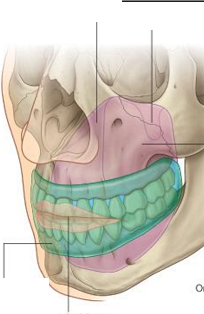
- Aoral cavity proper
- Bsoft palate
- Coropharyngeal isthmus
- Doral fissure
- Eoral vestibule
7Label the following image
Answers; intermaxillary suture, foramne lacerum, posterior nasal spine, jugular foramen, pyramidal process of palatine bone, mastoid process, greater wing of sphenoid, styloid process of temporal bone, pterygoid hamulus, opening to bony part of pharyngotympanic, foramen ovale, foramen spinosum, spine of sphenoid, petrous part of temporal bone, carotid canal, scaphoid fossa, stylomastoid foramen, lateral plate of pterygoid process, medial plate of pterygoid process, attachment of levator veli palatini, lesser palatine foramen, greater palatine foramen, horizontal plate of palatine bone, alveolar process of maxilla, palatine process of maxilla, incisive fossa, cartilaginous part of pharyngotmpanic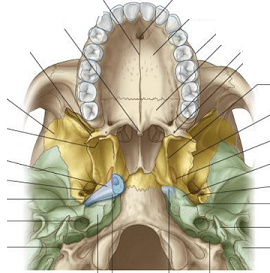
- Aincisive fossa
- Bpalantine process of maxilla
- Calveolar process of maxilla
- Dhorizontal plate of palatine bone
- Egreat palatine foramen
- Flesser palatine foramen
- Gmedial plate of pterygoid process
- Hlateral plate of pterygoid process
- Iscaphoid fossa
- Jpetrous part of temporal bone
- Kforamen spinosum
- Lopening to bony part of pharyngotympanic
- Mstyloid process of temporal bone
- Nmastoid process
- Ojugular foramen
- Pforamen lacerum
- Qcartilaginous part of pharyngotympanic
- Rattachment of levator veli palatini
- Sstylomastoid foramen
- Tcarotid canal
- Uspine of sphenoid
- Vforamen ovale
- Wpterygoig hamulus
- Xgreater wing of sphenoid
- Ypyramidal process of palatine bone
- Zposterior nasal spine
- AAintermaxillary suture
8What is the hard palate lined by?
- Aserous membrane
- Bmesentry
- Cmucoperiosteum
- Doroperiosteum
- Emucous
9Label the following image
Answers; incisive papilla, palatine rugae, soft palate, hard palate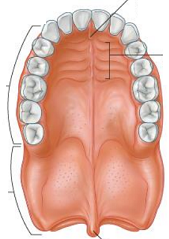
- Aincisive papilla
- Bpalatine rugae
- Chard palate
- Dsort palate
- Euvula
10Which of the following statements is false?
- AThe anterior fauces is also known as the
palatoglossal arch - BThe posterior fauces is also known as the
palatopharyngeal arch - CBetween these lie the palatine tonsil
- AThe anterior fauces is also known as the
11Which of the following is not innervated by the vagus nerve?
- ATensor veli palatini
- BLevator veli palatini
- CPalatoglossus
- DPalatopharngeus
12Which of the following are types of papillae?
- AFungiform
- Bfiliform
- Cvallate
- Dfillate
- Efusiform
- Ffoliate
13Label the following image
Answers; oral part, inferior surface, terminal sulcus, mandible, pharyngeal part, geniohyoid muscle, root of tongue, mylohyoid muscle, hyoid bone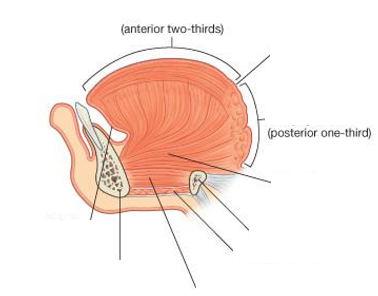
- Aoral part
- Bterminal sulcus
- Cpharyngeal part
- Droot of tongue
- Ehyoid bone
- Fmylohyoid muscle
- Ggeniohyoid muscle
- Hmandible
- Iinferior surface
14Label the following image
Answers; septum, palatoglossus, superior longitudinal, genioglossus, vertical, styloglossus, inferior longitudinal, hyoglossus, vertical, transverse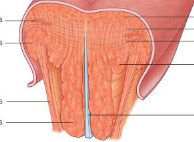
- Apalatoglossus
- Bstyloglossus
- Chyoglossus
- Dgenioglossus
- Esuperior longitudinal
- Fvertical
- Gtransverse
- Hinferior longitudinal
- Iseptum
15Which of the following statements about palatoglossus are true?
- AIt's function is elevation of the back of the tongue
- BIt moves the palatoglossal arches towards the midline and depresses the soft palate
- CFacilitates closing of the oropharyngeal isthmus
- DInnervated by the vagus nerve
16The muscles of the oral floor are sheets of parallel fibers that run from the hyoid bone to the mandible
- AVerdadero
- BFalso
17The Parotid gland produces so-called [blank_start]watery[blank_end] serous saliva rich in amylase, proline-rich proteins. It's also called [blank_start]Stenson[blank_end]’s duct
Submandibular gland produces more [blank_start]mucinous[blank_end] saliva. Also called [blank_start]Wharton[blank_end]’s duct
Sublingual produces [blank_start]viscous[blank_end] saliva. Also called ducts of [blank_start]Rivinus[blank_end]; duct of [blank_start]Bartholin[blank_end]- Awatery
- BStenson
- Cmucinous
- DWharton
- Eviscous
- FRivinus
- GBartholin
18label the following image
Answers; chorda tympani, sublingual gland, postganglionic parasympathetic, mylohyoid, superficial part of submandibular, submandibular ganglion, preganglionic parasympathetic, lingual nerve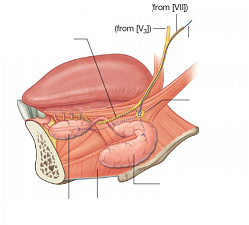
- Achorda tympani
- Blingual nerve
- Cpostganglionic parasympathetic
- Dsublingual
- Emylohyoid
- Fsuperficial part of submandibular
- Gsubmandibular ganglion
- Hpreganglionic parasympathetic
19Label the following image
Answers; interarytenoid notch, prominence over cricoid cartilage, superior concha, pharyngeal tonsil, pharyngeal recess, fold of the laryngeal nerve, piriform recess, lateral pterygoid muscle, mastoid process, inlet of larynx, aryepiglottic fold, torus tubarius, choana, salpingopharyngeal fold, buccopharyngeal fascia, vallecula, pharyngoepiglottic fold, stylopharyngeus muscle, parotid gland, epiglottis, lingual tonsil, posterior belly of digastric, soft palate, foramen cecum, middle concha, inferior concha, medial pterygoid muscle, circumvallate papillae, uvula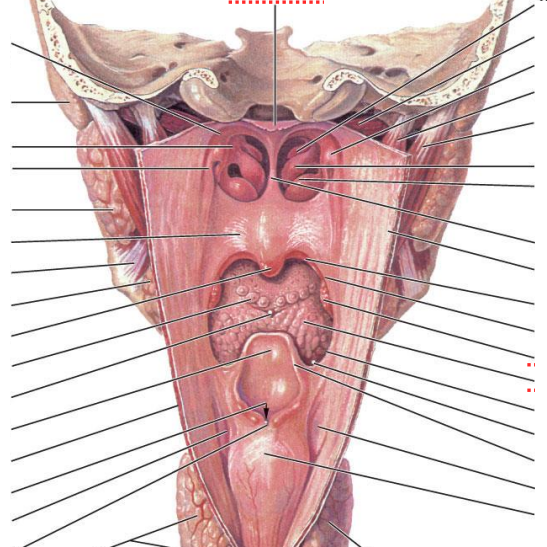
- Apharyngeal recess
- Bpharyngeal tonsil
- Csuperior concha
- Dmastoid process
- Elateral pterygoid muscle
- Ftorus tubarius
- Gstylopharyngeus muscle
- Hposterior belly of digastric
- Ichoana
- Jsalpingopharyngeal fold
- Kmiddle concha
- Linferior concha
- Mparotid gland
- Nsoft palate
- Omedial pterygoid muscle
- Psubmandibular gland
- Quvula
- Rcircumvalllate papillae
- Sforamen cecum
- Tepiglottis
- Ubuccopharyngeal fascia
- Vinlet of larynx
- Wfold of the laryngeal nerve
- Xinterarytenoid notch
- Yprominence over cricoid cartilage
- Zpiriform recess
- AAaryepiglottic fold
- ABvallecula
- ACphayngoepiglottic fold
- ADlingual tonsils
20Label the following image
Answers; frontonasal prominence, nasal placode, maxillary prominence, stomodeum, mandibular prominence, cardiac bulge, second and third pharyngeal arches, mandibular arch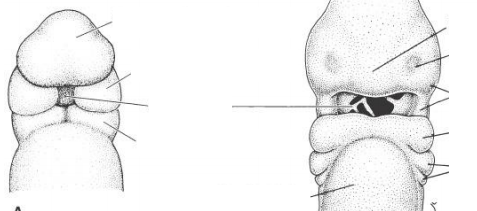
- Afrontonasal prominence
- Bmaxillary prominence
- Cstomodeum
- Dmandibular prominence
- Estomodeum
- Ffrontonasal prominence
- Gnasal placode
- Hmaxillary prominence
- Imandibular arch
- Jsecond and third pharyngeal arches
- Kcardiac bulge
21Label the following image
Answers; nasal pit, maxillary prominence, mandibular prominence, frontonasal prominence, lateral nasal prominence, medial nasal prominence, nasolacrimal groove, stomodeum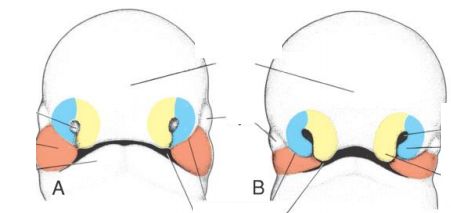
- Afrontonasal prominence
- Bnasal pit
- Cmaxillary prominence
- Dmandibular prominence
- Eeye
- Fnasolacrimal groove
- Gstomodeum
- Hmedial nasal prominence
- Ilateral nasal prominence
22Amniotic Bands fibrous bands which occur due to early rupture of the amnion. They may cause constriction around the developing embryo
- AVerdadero
- BFalso
23What are facial clefts though to occur due to
- Aamniotic bands
- Bembryotic constrictions
- CFoetal malnutrition
- DGenetic mutations
- EAll of the above
Información
- Descripción
- GIT Anatomy Test sobre GIT Anatomy Lecture 1, creado por Rachel O' Flynn el 05/03/2018.
- Autor
- Rachel O' Flynn
- Idioma
- English
- Visitas
- 263
- Historial
- Creado el 5 mar 2018 · actualizado el 19 abr 2018
- Etiquetas
- Valoración
- 4,0 de 5 · 1 valoración Valora este test