
Test
The hepatobiliary system
Este test tiene tipos de pregunta que se abren en el reproductor de siempre.
Preguntas del test (35)
1the hepatobiliary overview
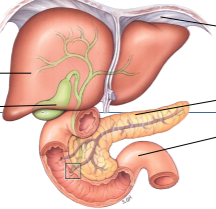
- Adiaphragm
- Bduodenum
- Cpancreas
- Dgallbladder
- Eliver
2label everything
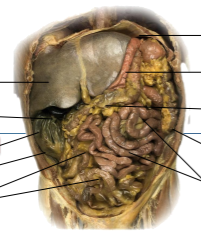
- Adiaphragm
- Bstomach
- Ctransverse colon
- Ddescending colon
- Ejejunum
- Fileum
- Gcecum
- Hascending colon
- Igallbladder
- Jliver
3think about why the blood flow here is unusual and take time to label each vein and artery.

- Ahepatic artery
- Bportal vein
- Chepatic vein
4wehat are some of the basic functions of the liver ?
- Aphagocytosis of bacteria via kupffer cells
- Bexcreting biliruben
- Cstoring vitamins
- Dconverts glycogen to glucose
- Emaking bile salts
- Fconserving water
- Gglucogon storage
- Hpumps blood to intestine via hepatic artery
5label the liver
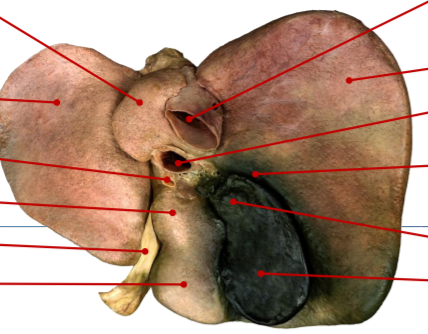
- Acaudate lobe
- Bquadrate lobe
- Cgall bladder
- Dcystic bile duct
- Ehepatic bile duct
- Fround ligament
- Gcommon bile duct
- Hhepatic artery
- Ihepatic portal vein
- Jleft lobe
- Kright lobe
- Linferior vena cava
6which of the followinga re liver faces ?
- Aanterior
- Bposterior
- Cright
- Dsuperior
- Einferior
7what is the functional units of a liver called?
- Alobule
- Bhepatocytes
- Clivercephiliac cell
8what is a liver sinusoid ?
- Aa capillary that mixes oxygenated blood from the hepatic artery with nutrient rich blood from portal vein
- Ba functional unit of the liver
- Ca group of hepatocytes
- Dthe group of kupffer cells
9whats a canaliculi ?
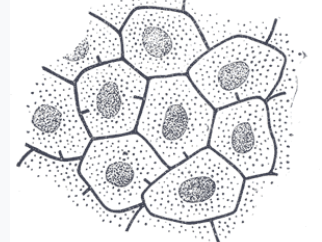
- Aa thin tube that collects hepatocyte bile
- Bthe tube that mixes oxygenated blood with nutrient blood
- Ca micro capillary attached to the hepatic artery
10where are kupffer cells found ?
- Ahepatic sinusoids
- Bhepatocytes
- CRBC's
11why are there small ducts between hepatocytes ?
- Ato allow formed bile to collect and pass into bile ducts
- Bto allow better blood flow from the hepatic portal vein
- Cto allow for a basement membrane that surround them like gums do teeth to hold them in place better.
12smaller bile ducts merge to become the left and right hepatic duct which then join to become the common bile duct.
- AVerdadero
- BFalso
13a portal triad consists of 1 artery 2 veins
- AVerdadero
- BFalso
14circulation of blood through the liver to the heart:
1) [blank_start]Oxygenated blood from hepatic artery[blank_end] & [blank_start]nutrient blood from portal vein[blank_end]
2) [blank_start]blood mixes in liver sunusoids[blank_end]
3) [blank_start]mixed blood goes to central vein[blank_end]
4) [blank_start]goes through liver to hepatic vein[blank_end]
5) [blank_start]is taken up by the inferior vena cava[blank_end]
6) [blank_start]enters the right atrium of the heart[blank_end]- AOxygenated blood from hepatic artery
- Bnutrient blood from portal vein
- Cblood mixes in liver sunusoids
- Dmixed blood goes to central vein
- Egoes through liver to hepatic vein
- Fis taken up by the inferior vena cava
- Genters the right atrium of the heart
15label the key features associated with drainage from the liver and pancreas
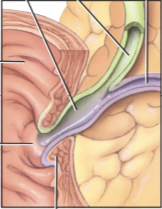
- AMajor duodenal papilla
- BSphincter of oddi (hepopanc ampulla)
- Cpancreatic duct (duct of wirsung)
- Dcommon bile duct
- EAmpulla of vater
- Fmucosa of duodenum
16The [blank_start]common bile duct[blank_end] joins with the [blank_start]pancreatic dict[blank_end] which makes the [blank_start]hepatopancreatic ampulla[blank_end]. This is [blank_start]proximal[blank_end] ( "close to") the second part of the [blank_start]duodenum[blank_end]. the ampulla will open out into the [blank_start]duodenal papilla[blank_end] ( nipple) to deliver the contents.
- Acommon bile duct
- Bcystic duct
- Cpancreatic dict
- DHepatic duct
- Ehepatopancreatic ampulla
- Fproximal
- Gdistal
- Hduodenum
- Ijejunum
- Jlarge intestine
- Kduodenal papilla
17between meals the hepatopancreatic ampulla sphincter is open.
- AVerdadero
- BFalso
18between meals the bile is backed up into the gall bladder where it is stored and concentrated
- AVerdadero
- BFalso
19complete the complete drainage path of bile below
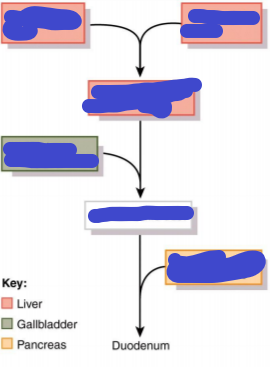
- ARight hepatic duct
- BPancreatic duct from pancreas
- Ccommon bile duct
- Dcystic duct from gallbladder
- Ecommon hepatic dict from liver
- Fleft hepatic duct
20what hormone stimulates the release of bile in the duodenum and jejunum?
- ACholecystokinin
- BAcetly choline
- CCortisol
- DAmino transferase
21what does the hormone release from the hallbladder do ?
- Astimulates the release of bile
- Bm
22what can the bile from the gall bladder do ?
- Aemulsifies fat to aid in digestion and prevent aggregation (things forming a cluster)
- Bsaturate cholesterol or biliruben to make gallstones
- Cmix with the bile from the liver to form a more potent bile
- Ddeposit bile clumps into the intestine as a prerequisite for food. (begins process early for better digestion)
23label the associated organs of the pancreas
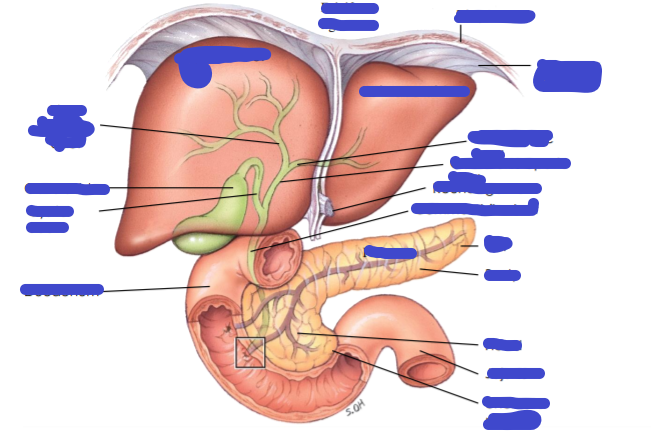
- AFalciform ligament
- Buncinate process
- Cjejunum
- Dhead
- Eduodenum
- Fbody
- Gpancreas
- Htail
- Icystic duct
- Jcommon bile duct
- Kround ligament
- Lcommon hepatic duct
- Mleft hepatic duct
- Ngallbladder
- Oright hepatic duct
- Pleft lobe of liver
- Qright lobe of liver
- Rcoronary ligament
- Sdiaphragm
24label the following organs in situ
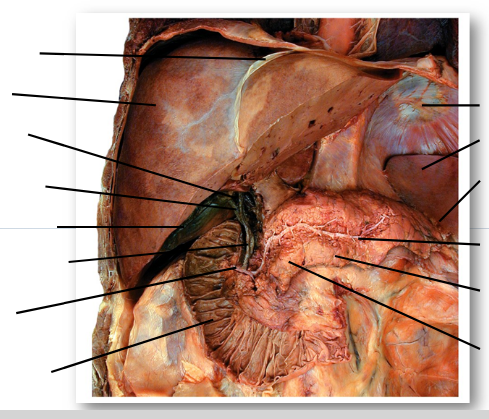
- Afalciform ligament
- Bduodenum
- Chead of pancreas
- Dmajor duodenal papilla
- Ebody of pancreas
- Fpancreatic duct
- Gtail of pancreas
- Hcommon bile duct
- Igallbladder
- Jcystic bile duct
- Kspleen
- Lhepatic bile duct
- Mdiaphagm
- Nliver
25the pancreas lies..
- Aposterior to the greater curvature of the stomach
- Bsuperior to the greater curvature of the stomach
- Canterior to the greater curvature of the stomach
26the tail of the pancreas abuts (touches/leans on) ..
- Athe spleen
- Bthe stomach
- Cthe liver
- Dthe duodenum
27the secretions of the [blank_start]pancreas[blank_end] pass into small ducts that form two larger ducts known ad the [blank_start]duct of wirsung[blank_end] (pancreatic duct) and the accessory duct known as the dict of [blank_start]santornini[blank_end].
- Apancreas
- Bspleen
- Cliver
- Dduct of wirsung
- Educt of washing
- Fduct of wursong
- Gsantornini
- Hcaledra
- Iakrotiri
28the accessory duct is larger than the pancreatic duct
- AVerdadero
- BFalso
29choose the correct order:
1)duct of wirsung is the larger of the two ducts
2) Forms an ampulla ( sac like enlargement of a canal)
3)joins the common bile duct
4) opens into duodenum via major papilla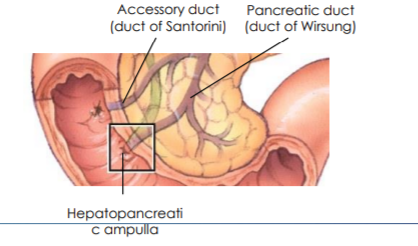
- A1,3,2,4
- B1,2,3,4
- C1,4,3,2
- D1,3,4,2
30whats the difference between santorini duct and the duct of wirsung?
- Asmaller and usually non functional
- Bempties direct into duodenum
- Csuperior to ampulla
31the pancreas gets it blood supply primarily from ...
- Asuperior and inferior pancreaticduodenal arteries
- Bsplenic and superior meseneteric arteries
- Chepatic portal vein
32is the pancreas exocrinic ( hormone to cavity of another organ) or endocrinic ( to the bloodstream)
- Aendocrine
- Bexocrine
- Cboth
33the exocrine pancreas secretes ..
- Apancreatic juice into GI system
- Binsulin
- Csomatostatin
- Dglucagon
34the endocrine pancreas secretes..
- Apancreatic juice into the GI system
- Binsulin
- Cglucagon
- Dsomatostatin
35pancreatic juice is mostly [blank_start]water[blank_end] [blank_start]salt[blank_end] and [blank_start]sodium bicarbonate[blank_end]. it is used to neutralise high acidity and inactive [blank_start]gastric pepsin[blank_end]. it is also made up of the following enzymes: [blank_start]amylase[blank_end] (carbs to sugars) , [blank_start]trypsin[blank_end] [blank_start]elatase[blank_end] and [blank_start]chymotrypsin[blank_end] (digest proteins) and lastly [blank_start]lipase[blank_end] ( triglycerides to fatty acids.)
- Awater
- Bsalt
- Csodium bicarbonate
- Dgastric pepsin
- Egastic acid
- Famylase
- Gtrypsin
- Helatase
- Ichymotrypsin
- Jlipase
Información
- Descripción
- images of in situ organs are property of and copyrighted by UWE
- Autor
- Ryan Cornwell
- Idioma
- English
- Visitas
- 7
- Valoración
- Aún sin valoraciones Valora este test