
Test
ГОС по БД #2
Preguntas del test (77)
1Retrieve the lowest experience from tutor. Tables: OFFICE {id (PK), locations, name}, TUTOR {id (PK), name, officeid (FK references office (id)), experience}, STUDENTS {id (PK), name, scholarship, registereddate, tutorid (FK references tutor (id))
- Aselect min (experience) from tutor;
- Bselect max (experience) from tutor;
- Cselect max (t.experience) from tutor t group by t.name;
- Dselect min (t.experience) from tutor t group by t.name;
2Retrieve book name, number of books, price and publisher, for those books which have more than 20 copies. Tables : BOOK {bookid, title, publisher_name, price}. BOOKCOPIES {bookid, libraryid,noOfCopies [references Book (bookid)]}
- Aselect count (b.bookid),b.title, b.price, b.publisher_name from book b join book_copies bc on b.bookid=bc.bookid where bc.no_of_copies>20 group by b.title, b.price, b.publisher_name;
- Bselect count (b.bookid),b.title, b.price, b.publisher_name from book b join book_copies bc on b.bookid=bc.bookid where bc.no_of_copies>20;
- Cselect count (b.bookid),b.title, b.price, b.publisher_name from book b join book bc on b.bookid=bc.bookid where bc.no_of_copies>20 group by b.title, b.price, b.publisher_name;
- Dselect b.bookid,b.title, b.price, b.publisher_name from book b join book_copies bc on b.bookid=bc.bookid where bc.no_of_copies>20 group by b.title, b.price, b.publisher_name;
3Retrieve card number, book name, borrower name, who have borrowed in 12 July, bookid (references Book (bookid)), libraryid (references Library (libraryid)), cardno 2013. Tables: BOOK {bookid, title, publisher_name, price}. BOOKLOANS {bookloans, cardno(references Borrower (cardno)),bookid (references Book (bookid)) dateout, duedate}. BORROWER {cardno, c_name, b_address, phoneno}
- Aselect bl.cardno, b.title, br.c_name from book b join bookloans bl on bl.bookid=b.bookid join borrower br on br.cardno=bl.cardno where bl.dateout='12-07-2013'
- Bselect bl.cardno, b.title, br.c_name from book b join bookloans bl on bl.bookid=b.bookid join borrower br on br.cardno=bl.cardno where bl.duedate='12-07-2013'
- Cselect bl.cardno, b.title, br.c_name from book b join bookloans bl on bl.bookid=b.bookid where bl.dateout='12-07-2013'
- Dselect bl.cardno, b.title, br.c_name from book b join borrower br on br.cardno=bl.cardno where bl.dateout='12-07-2013'
4Retrieve max price for Fariza's publication. BOOK {bookid, title, publisher_name, price}.BOOK_AUTHORS {author_name, bookid (references Book (bookid))}
- Aselect max (b.price)from book b join book_authors ba on b.bookid=ba.bookid where ba.author_name = 'Fariza';
- Bselect max (b.price)from book b join book_authors ba on b.bookid=ba.bookid where ba.author_name = Fariza;
- Cselect max (b.price)from book b join book_authors ba b.bookid=ba.bookid where ba.author_name = 'Fariza';
- Dselect max (b.price)from book b join book_authors ba on b.bookid=ba.bookid; #subToPewDiePie
5Retrieve book name, total number of book copies. BOOK {bookid, title, publisher_name, price}. BOOKCOPIES {bookid, libraryid,noOfCopies [references Book (bookid)]}
- Aselect b.title, sum (no_of_copies) from book b join book_copies bc on b.bookid=bc.bookid group by b.title;
- Bselect b.title, sum (no_of_copies) from book b join book_copies bc b.bookid=bc.bookid group by b.title;
- Cselect b.title, count(no_of_copies) from book b join book_copies bc on b.bookid=bc.bookid group by b.title;
- Dselect b.title, count(no_of_copies) from book b join book_copies bc b.bookid=bc.bookid group by b.title;
6Retrieve book title and total number of book copies, which has id 1. BOOK {bookid, title, publisher_name, price}. BOOKCOPIES {bookid, libraryid,noOfCopies [references Book (bookid)]}
- Aselect b.title, sum (no_of_copies) from book b join book_copies bc on b.bookid=bc.bookid where b.bookid=1 group by b.title;
- Bselect b.title, sum (no_of_copies) from book b join book_copies bc on b.bookid=bc.bookid where b.bookid=1;
- Cselect b.title, count (no_of_copies) from book b join book_copies bc on b.bookid=bc.bookid where b.bookid=1 group by b.title;
- Dselect b.title, count (no_of_copies) from book b join book_copies bc on b.bookid=bc.bookid where b.bookid=1;
7Retrieve borrower name and number of books that each borrower has. BOOKLOANS {bookloans, bookid (references Book (bookid)), libraryid (references Library (libraryid)), cardno (references Borrower (cardno)), dateout, duedate}. BORROWER {cardno, c_name, b_address, phoneno}
- Aselect br.c_name, count(bl.bookid) from borrower br join bookloans bl on br.cardno = bl.cardno group by br.c_name;
- Bselect br.c_name, count(bl.bookid) from borrower br join bookloans bl on br.cardno = bl.cardno;
- Cselect br.c_name, sum(bl.bookid) from borrower br join bookloans bl on br.cardno = bl.cardno group by br.c_name;
- Dselect br.c_name, sum(bl.bookid) from borrower br join bookloans bl on br.cardno = bl.cardno;
8Retrieve books name and prices. Increase price twice more for books, which have more than 20 copies;BOOK {bookid, title, publisher_name, price}. BOOKCOPIES {bookid, libraryid,noOfCopies [references Book (bookid)]}
- Aselect b.title, b.price, b.price *2 as increasedprice from book b join book_copies bc on bc.bookid=b.bookid where bc.no_of_copies > 20;
- Bselect b.title, b.price book b join book_copies bc on bc.bookid=b.bookid where bc.no_of_copies > 20;
- Cimpossible to solve
- Dselect b.title, b.price, b.price *2 as increasedprice from book b join book_copies bc on bc.bookid=b.bookid;
9Retrieve library name, book name, number of copies, which have more than 25 copies. BOOK {bookid, title, publisher_name, price}. BOOKCOPIES {bookid, libraryid,noOfCopies [references Book (bookid)]}. LIBRARY (libraryid)), cardno (references Borrower (cardno)), dateout, duedate}.
- Aselect l.libraryname, b.title, bc.no_of_copies from book b join book_copies bc on b.bookid=bc.bookid join library l on l.libraryid = bc.libraryid where bc.no_of_copies>25;
- Bselect l.libraryname, b.title, bc.no_of_copies from book b join book_copies bc on b.bookid=bc.bookid where bc.no_of_copies>25;
- Cselect l.libraryname, b.title, bc.no_of_copies from book join library l on l.libraryid = bc.libraryid where bc.no_of_copies>25;
- Dselect l.libraryname, b.title, bc.no_of_copies from book b join book_copies bc on b.bookid=bc.bookid join library l l.libraryid = bc.libraryid where bc.no_of_copies>25;
10Retrieve the number of departments in the department table. Tables: DEPARTMENT {id, name}. EMPLOYEE {id, name, salary, dep_id (references Department (id))}
- Aselect count(id) from department
- Bselect sum (id) from department;
- Cselect coun(id) from department
- Dselect id from department
11Retrieve total salaries payable to employee. Tables: DEPARTMENT {id, name}. EMPLOYEE {id, name, salary, dep_id (references Department (id))}
- Aselect sum (salary) from employee;
- Bselect count (salary) from employee;
- Cselect sum (id) from employee;
- Dselect max (salary) from employee;
12Retrieve office name and tutor name, who have experience equal or more than five years. Tables: OFFICE {id (PK), locations, name}, TUTOR {id (PK), name, officeid (FK references office (id)), experience}, STUDENTS {id (PK), name, scholarship, registereddate, tutorid (FK references tutor (id))
- Aselect o.name, t.name from office o join tutor t on o.id=t.officeid where t.experience >=5;
- Bselect o.name, t.name from office o join tutor t on o.id=t.officeid where t.experience >5;
- Cselect o.name, t.name from office o join tutor t o.id=t.officeid where t.experience >=5;
- Dselect o.name, t.name from office join tutor on o.id=t.officeid where t.experience >=5;
13Retrieve tutor name and their office locations, who refer to CSSE and Management. Tables: OFFICE {id (PK), locations, name}, TUTOR {id (PK), name, officeid (FK references office (id)), experience}, STUDENTS {id (PK), name, scholarship, registereddate, tutorid (FK references tutor (id))
- Aselect t.name, o.locations from office o join tutor t on o.id=t.officeid where o.name in ('CSSE', 'Management');
- Bselect t.name, o.locations from office o join tutor t on o.id=t.officeid where o.name in ('CSSE' or 'Management');
- Cselect t.name, o.locations from office o join tutor t o.id=t.officeid where o.name in ('CSSE', 'Management');
- Dselect t.name, o.locations from office o join tutor t on o.id=t.officeid where o.name in ('CSSE') or ('Management');
14Retrieve student's name, which starts from A. Tables: OFFICE {id (PK), LOCATIONS, name}, tutor {id (PK), name, officeid (FK references office (id)), experience}, STUDENTS {id (PK), name, scholarship, registereddate, tutorid (FK references tutor (id))
- Aselect name from students where name like 'A_%';
- Bselect name from students where name like 'A';
- Cselect name from students where name like 'a%';
- Dselect name from students where name like '%A%'
15Retrieve all students name with the department name, but excluding department CSSE. Tables: OFFICE {id (PK), locations, name}, TUTOR {id (PK), name, officeid (FK references office (id)), experience}, STUDENTS {id (PK), name, scholarship, registereddate, tutorid (FK references tutor (id))
- Aselect s.name, o.name from students s join tutor t on t.id=s.tutorid join office o on o.id=t.officeid where o.name <> 'CSSE';
- Bselect s.name, o.name from students s join tutor t on t.id=s.tutorid join office o on o.id=t.officeid;
- Cselect s.name, o.name from students s join tutor t on t.id=s.tutorid join office o on o.id=t.officeid where o.name = 'CSSE';
- Dselect s.name, o.name from students s join tutor t on t.id=s.tutorid join office o on o.id=t.officeid group by o.name, s.name;
16Which of the following query is incorrect for retrieving all students name with the department name, but excluding department CSSE. Tables: OFFICE {id (PK), locations, name}, TUTOR {id (PK), name, officeid (FK references office (id)), experience}, STUDENTS {id (PK), name, scholarship, registereddate, tutorid (FK references tutor (id))
- Aselect s.name, o.name from students s join tutor t on t.id=s.tutorid join office o on o.id=t.officeid where o.name <= 'CSSE';
- Bselect s.name, o.name from students s join tutor t on t.id=s.tutorid join office o on o.id=t.officeid where o.name <> 'CSSE';
- Cselect s.name, o.name from students s join tutor t on t.id=s.tutorid join office o on o.id=t.officeid where o.name not like 'CSSE';
- Dselect s.name, o.name from students s join tutor t on t.id=s.tutorid join office o on o.id=t.officeid where o.name not in ('CSSE');
17Retrieve students name, scholarship and their office name, who have scholarship ranging from 3200 to 4500.Tables: OFFICE {id (PK), locations, name}, TUTOR {id (PK), name, officeid (FK references office (id)), experience}, STUDENTS {id (PK), name, scholarship, registereddate, tutorid (FK references tutor (id))
- Aselect s.name, s.scholarship, o.name from students s join tutor t on t.id=s.tutorid join office o on o.id=t.officeid where s.scholarship between 3200 and 4500;
- Bselect s.name, s.scholarship, o.name from students s join tutor t on t.id=s.tutorid where s.scholarship between 3200 and 4500;
- Cselect s.name, s.scholarship, o.name from students join office o on o.id=t.officeid where s.scholarship between 3200 and 4500;
- Dselect s.name, s.scholarship, o.name from students s join tutor t on t.id=s.tutorid join office o on o.id=t.officeid where s.scholarship 3200 and 4500;
18What kind symbol is used to find one character in wildcards?
- A-
- B?
- C$
- Din
19Find an average scholarship of students. Tables: STUDENTS {id (PK), name, scholarship, registereddate, tutorid }
- Aselect avg (scholarship) from students ;
- Bselect averg (scholarship) from students ;
- Cselect avrg (scholarship) from students ;
- Dselect av (scholarship) from students ;
20Retrieve average scholarship of students for each department. Tables: OFFICE {id (PK), locations, name}, TUTOR {id (PK), name, officeid (FK references office (id)), experience}, STUDENTS {id (PK), name, scholarship, registereddate, tutorid (FK references tutor (id))
- Aselect avg (scholarship), o.name from students s join tutor t on t.id=s.tutorid join office o on o.id=t.officeid group by o.name;
- Bselect avg (scholarship), o.name from students s join tutor t on t.id=s.tutorid join office o on o.id=t.officeid ;
- Cselect avg (scholarship), o.name from students s join tutor t on t.id=s.tutorid group by o.name;
- Dselect avg (scholarship), o.name from students s d join office o on o.id=t.officeid group by o.name;
21Retrieve student number in each department. Tables: OFFICE {id (PK), locations, name}, TUTOR {id (PK), name, officeid (FK references office (id)), experience}, STUDENTS {id (PK), name, scholarship, registereddate, tutorid (FK references tutor (id))
- Aselect count (s.id), o.name from students s join tutor t on t.id=s.tutorid join office o on o.id=t.officeid group by o.name;
- Bselect sum (s.id), o.name from students s join tutor t on t.id=s.tutorid join office o on o.id=t.officeid group by o.name;
- Cselect o.name from students s join tutor t on t.id=s.tutorid join office o on o.id=t.officeid group by o.name;
- Dselect count (s.id), o.name from students s join tutor t on t.id=s.tutorid join office o on o.id=t.officeid;
22Retrieve student number in each department. Tables: OFFICE {id (PK), locations, name}, TUTOR {id (PK), name, officeid (FK references office (id)), experience}, STUDENTS {id (PK), name, scholarship, registereddate, tutorid (FK references tutor (id))
- Aselect count (s.id), o.name from students s join tutor t on t.id=s.tutorid join office o on o.id=t.officeid group by o.name;
- Bselect sum (s.id), o.name from students s join tutor t on t.id=s.tutorid join office o on o.id=t.officeid group by o.name;
- Cselect o.name from students s join tutor t on t.id=s.tutorid join office o on o.id=t.officeid group by o.name;
- Dselect count (s.id), o.name from students s join tutor t
- Eon t.id=s.tutorid join office o on o.id=t.officeid;
23Retrieve total amount of scholarship of each department. Tables: OFFICE {id (PK), locations, name}, TUTOR {id (PK), name, officeid (FK references office (id)), experience}, STUDENTS {id (PK), name, scholarship, registereddate, tutorid (FK references tutor (id))
- Aselect sum (scholarship), o.name from students s join tutor t on t.id=s.tutorid join office o on o.id=t.officeid group by o.name;
- Bselect count (scholarship), o.name from students s join tutor t on t.id=s.tutorid join office o on o.id=t.officeid group by o.name;
- Cselect sum (scholarship), o.name from students s join tutor t on t.id=s.tutorid join office o on o.id=t.officeid;
- Dselect count (scholarship), o.name from students s join tutor t on t.id=s.tutorid join office o on o.id=t.officeid;
24SQL stands for
- ASequence Question Language
- BStructured Query Language
- CStructured Querty Language
- DSelection Query Language
25You can add a row using SQL in a database with which of the following
- AADD
- BCREATE
- CINSERT
- DUPDATE
26The command to remove rows from a table “Customer”
- ARemove from Customer
- BDelete from Customer
- CDrop from Customer
- DUpdate row from Customer
27The SQL WHERE clause
- ACondition that limits the column data that are returned
- BCondition that limits the row data are returned
- CClause that returns all rows
- DClause that returns nothing
28The command to eliminate a table from a database
- ADrop
- BDelete
- CRemove
- DUpdate
29Which of the following is correct order of keywords for SQL Select statement?
- ASELECT, FROM, WHERE
- BWHERE, FROM, SELECT
- CFROM, WHERE, SELECT
- DSELECT, WHERE, FROM
30SQL data definition commands make up a(n)
- ADDC
- BDML
- CDDL
- DDDD
31In a relation, the columns are also called attributes
- AVerdadero
- BFalso
32Find the SQL statement that is equal to: SELECT NAME FROM CUSTOMER WHERE STATE = 'VA';
- ASELECT NAME IN CUSTOMER WHERE STATE IN 'VA';
- BSELECT NAME IN CUSTOMER WHERE STATE = 'VA';
- CSELECT NAME FROM CUSTOMER WHERE STATE IN 'VA';
- DSELECT NAME IN CUSTOMER WHERE STATE = 'V';
33In E\R diagrams, we will represent Entities as
- ABoxes with rounded corners
- BLinks between two entities
- COvals
- DDiamond box
34In E\R diagrams, we will represent Relationships as
- ABoxes with rounded corners
- BLinks between two entities
- COvals
- DDiamond box
35In E\R diagrams, we will represent Attributes as
- ABoxes with rounded corners
- BLinks between two entities
- COvals
- DDiamond box
36Many to many relationships are difficult to represent in database, so we need to
- ASplit many to many relationship into two one to many relationships
- BSplit one to many relationship into two one to many relationships
- CSplit many to many relationship into one to many relationships
- DSplit many to many relationship into three one to many relationships
37The result of a SQL SELECT statement is a(n)
- AReport
- BTable
- CForm
- DFile
38Which of the following are the five built-in functions provided by SQL?
- ACOUNT, SUM, AVG, MAX, MULT
- BSUM, AVG, MIN, MAX, NAME
- CSUM, AVG, MULT, DIV, MIN
- DCOUNT, SUM, AVG, MAX, MIN
39In a relation, the order of the rows matters
- AVerdadero
- BFalso
40Given the functional dependency R → (S,T) , then it is also true that R → S
- AVerdadero
- BFalso
41Given the functional dependency R → (S,T) , then it is also true that R → T
- AVerdadero
- BFalso
42SQL can be used to
- Acreate database structures only
- Bquery database data only
- Cmodify database data only
- DAll of the these can be done by SQL
43The SQL statement that queries or reads data from a table is _
- AREAD
- BQUERY
- CSELECT
- DNONE
44A subquery in an SQL SELECT statement
- Acan only be used with two tables
- Bhas a distinct form that cannot be duplicated by a join
- Ccan always be duplicated by a join
- Dcannot have its results sorted using ORDER BY
45The SQL keyword BETWEEN is used
- Afor ranges
- Bas a wildcard
- Cto limit the columns displayed
- DNone of the above
46Sometimes you want to change the structure of an existing table, what are your options?
- AChange table
- BDrop Table
- CAlter Table
- DCreate Table
47how to Add a new column into existing table?
- AALTER TABLE Student MODIFY COLUMN sDegree CHAR(64) NOT NULL
- BALTER TABLE Student ADD COLUMN sDegree VARCHAR(64) NOT NULL
- CALTER TABLE S ADD COLUMN s VACHAR(64) NOT NULL
- DALTER TABLE Student DROP COLUMN sDegree VARCHAR(64) NOT NULL
48how to rename a column in existing table?
- AALTER TABLE Student MODIFY COLUMN sDegree CHAR(64) NOT NULL
- BALTER TABLE Student ADD COLUMN sDegree VARCHAR(64) NOT NULL
- CALTER TABLE Student RENAME COLUMN s to SS VACHAR(64) NOT NULL
- DALTER TABLE Student DROP COLUMN sDegree VARCHAR(64) NOT NULL
49how to change the row(s) in a table
- Ainsert
- Bupdate
- Cchange
- Ddelete
50how to remove the row(s) from a table
- Ainsert
- Bupdate
- Cchange
- Ddelete
51A SELECT statement can be nested inside another query to form a
- ASubselect
- BSubresults
- CSubquery
- DQuery in query
52SQL uses privileges to control access to tables and other database objects, so which is NOT?
- ASelect privilege
- BUpdate privilege
- CInsert privilege
- DDrop privilege
53To convert any relation into _______, split any nonatomic values
- AFirst normal form
- BSecond normal form
- CThird normal form
- DFourth normal form
54A functional dependency (FD) is a
- Alink between three sets of attributes in a relation
- Blink between all sets of attributes in a relation
- Clink between four sets of attributes in a relation
- Dlink between two sets of attributes in a relation
55which if the following does not refer to redundancy problems?
- AINSERT anomalies
- BCREATE anomalies
- CUPDATE anomalies
- DDELETE anomalies
56To convert any relation into _______, remove transitive dependency
- AFirst normal form
- BSecond normal form
- CThird normal form
- DFourth normal form
57What is it ?
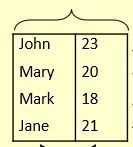
- ARelation
- BTuples
- CAttributes
- DRelationships
58What is it ?
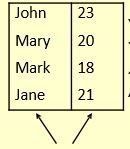
- ARelation
- BTuples
- CAttributes
- DRelationships
59What is it ?
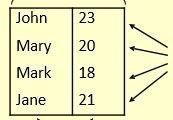
- ARelation
- BTuples
- CAttributes
- DRelationships
60Choose the correct relational algebra operation
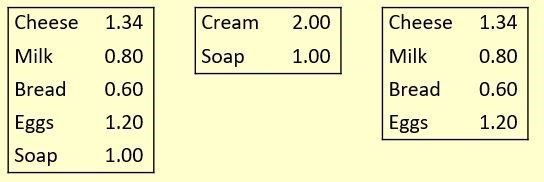
- AUnion
- BDifference
- CItersection
- DProduct
61Choose the correct relational algebra operation
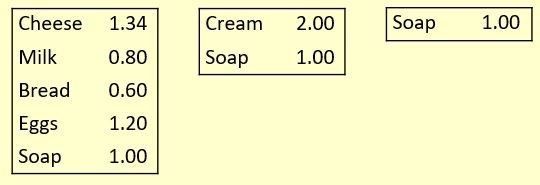
- AUnion
- BDifference
- CIntersection
- DProduct
62Choose the correct relational algebra operation
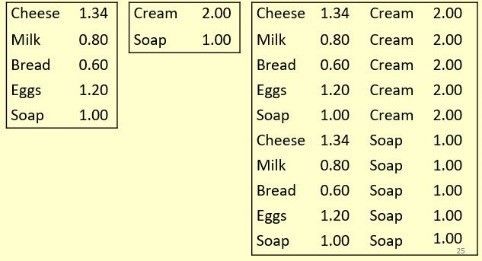
- ADifference
- BUnion
- CIntersection
- DProduct
63Choose the correct relational algebra operation
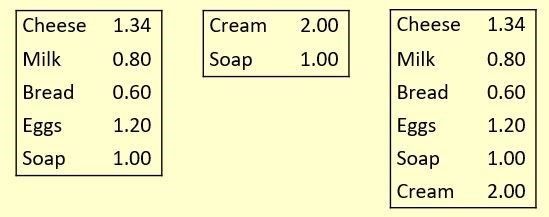
- AUnion
- BDifference
- CIntersection
- DProduct
64Are given table union compatible ?
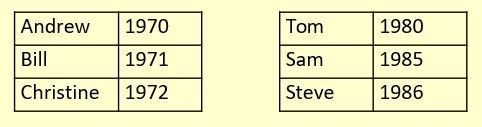
- Ayes
- Bno
65Which of the following is not correct?
INSERT INTO Employee(ID, Name, Salary) VALUES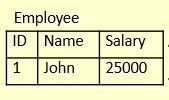
- AINSERT INTO Employee(ID, Name, Salary) VALUES(2,‘Mary’,26);
- BINSERT INTO Employee (Name,ID) VALUES (‘Mary’,2);
- CINSERT INTO Employee VALUES (2, ‘Mary’,26000);
- DINSERT INTO Employe VALUES(26, ‘Mary’,26);
66Please increase salary for 10%?
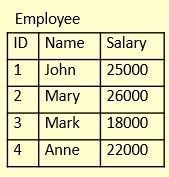
- AUPDATE Employee SET Salary = Salary*0.5
- BUPDATE Employee SET Salary = Salary * 0.1
- CUPDATE Employee SET Salary = Salary * 1.1
- DUPDATE Employee Update Salary = Salary*0.1
67Please remove staff, who earns more than 22000?
- ADELETE FROM Employee WHERE Salary >=22000
- BDELETE FROM Employe WHERE Salary => 22000;
- CREMOVE FROM Employee WHERE Salary >22000;
- DDELETE FROM Employee WHERE Salary = 22000;
68πsName,sAddress(Student) is equal to?
- ASELECT Sname FROM Students
- BSELECT Sname, SAddress FORM Students
- CSELECT Sname and SAddress FROM Students
- DSELECT Sname, SAddress FROM Student
69SQL query to find a list of the ID numbers and Marks for students who have passed IAI
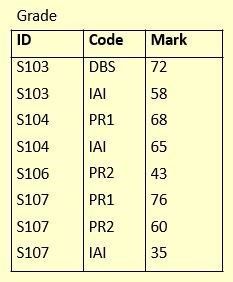
- ASelect ID, Mark from Grade Where code = 'IAI' and Mark > 50;
- BSelect ID, Mark from Grade Where code = 'AIA' and Mark > 50;
- CSelect ID, Mark, Code from Grade Where code = 'IAI';
- DSelect ID, Mark from Grade Where code = 'IAI' and Mark >=50;
70Find students who studying any Programming module
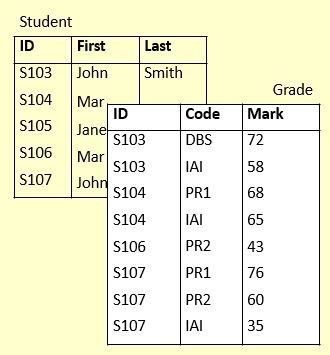
- ASelect First,Last from Student,Grade Where Code='PR1'OR'PR2'
- BSelect First,Last from Student Natural Join Grade Where Code like'PR%'
- CSelect First Last from Student Natural Join Grade Where Code like'PR%'
- DSelect First from Student Natural Join Grade Where Code = 'PR%'
71How to use privileges in SQL?
- AON<objects> TO<users> GRANT<privileges>
- BGRANT<privileges> ON<objects> TO<users>
- CGRANT<privileges> TO<users> ON<objects>
- DGRANT<tables> ON<objects> TO<users>
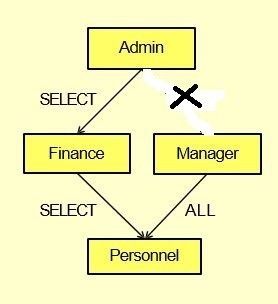
72If Admin’ grants ALL privileges to ‘Manager’, and SELECT to ‘Finance’ with grant option, So..
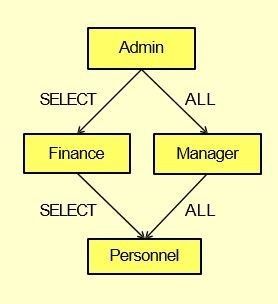
- A‘Manager’ grants ALL to ‘Personnel’
- B‘Manager’ grants SELECT to ‘Personnel’
- C‘Finance’ grants SELECT to ‘Manager’
- D‘Finance’ grants ALL to ‘Manager’
73If Admin’ grants ALL privileges to ‘Manager’, and SELECT to ‘Finance’ with grant option, So..
- A‘Finance’ grants SELECT to ‘Personnel’
- B‘Manager’ grants SELECT to ‘Personnel’
- C‘Finance’ grants SELECT to ‘Manager’
- D‘Finance’ grants ALL to ‘Manager’
74If ‘Manager’ revokes ALL from ‘Personnel’
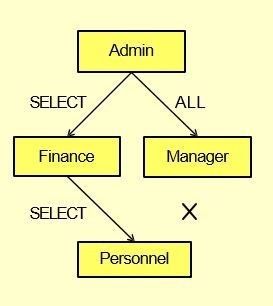
- A‘Personnel’ still has ALL privileges from ‘Finance’
- B‘Finance’ still has SELECT privileges from ‘Personnel’
- C‘Personnel’ still has SELECT privileges from ‘Finance’
- D‘Admin’ still has ALL privileges from ‘Finance’
75If ‘Finance revokes SELECT from ‘Personnel’
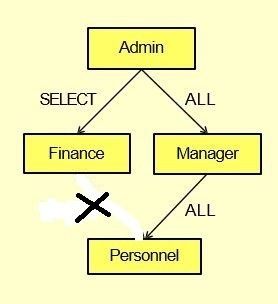
- A‘Personnel’ still has ALL privileges from ‘Finance’
- B‘Finance’ still has SELECT privileges from ‘Personnel’
- C‘Personnel’ still has ALL privileges from ‘Manager’
- D‘Admin’ still has ALL privileges from ‘Finance’
76If ‘Admin’ revokes Select from ‘Finance’
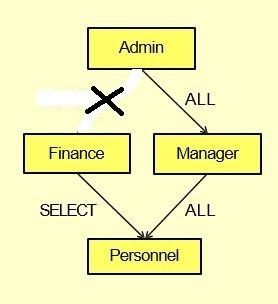
- A‘Personnel’ still has ALL privileges from ‘Finance’
- B‘Finance’ still has SELECT privileges from ‘Personnel’
- C‘Personnel’ still has ALL privileges from ‘Manager’
- D‘Admin’ still has ALL privileges from ‘Finance’
77If ‘Admin’ revokes ALL from ‘Manager’
- A‘Personnel’ still has ALL privileges from ‘Finance’
- B‘Finance’ still has SELECT privileges from ‘Personnel’
- C‘Finance still has SELECT privileges from ‘Admin’
- D‘Admin’ still has ALL privileges from ‘Finance’
Información
- Descripción
- God Philosophy Test sobre ГОС по БД #2, creado por хомяк убийца el 23/03/2019.
- Autor
- хомяк убийца
- Idioma
- English
- Visitas
- 1.039
- Etiquetas
- Valoración
- Aún sin valoraciones Valora este test