
Test
Managing Information Systems
Este test tiene tipos de pregunta que se abren en el reproductor de siempre.
Preguntas del test (51)
1What are the four major threats to information security? (as discussed by Pfleeger and Pfleeger)
- AInterception, Interruption, Modification, and Fabrication
- BInterception, Interruption, Modification, and Environmental threats
- CInterception, Interruption, Viruses, and Fabrication
- DTheft, Interruption, Modification, and Environmental Threats
2Label the Hierarchy of Data with the options below.
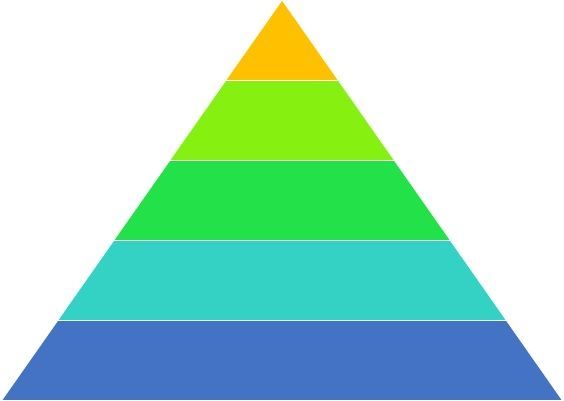
- AWisdom
- BUnderstanding
- CKnowledge
- DInformation
- EData
3[blank_start]IT[blank_end] - the technology involved in capturing and manipulating data. This includes the hardware, software, peripherals, communications media, and business systems protocols.
[blank_start]IS[blank_end] - the united set of business systems designed to achieve a certain purpose. Comprised of IT as well as people, business processes, and context.- AIT
- BIS
4Label the diagram of the 6 Stages of Growth with the correct option from the drop down menu.
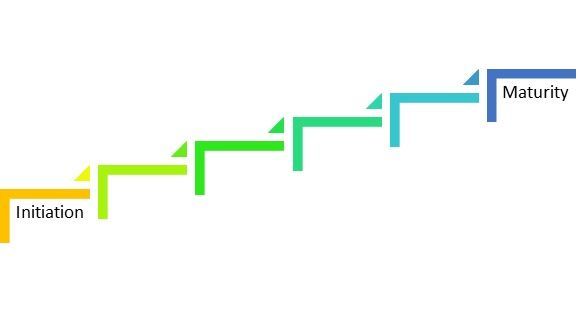
- AContagion
- BControl
- CData Administration
- DIntegration
- EContagion
- FControl
- GData Administration
- HIntegration
- IContagion
- JControl
- KData Administration
- LIntegration
- MContagion
- NControl
- OData Administration
- PIntegration
5The technology involved in capturing and manipulating data, including the hardware, software, peripherals, communications media and protocols of computer systems is______.
- AInformation systems
- BValue Creation
- CInformation Technology
- DSystem specification
6
Which of the following is not True about IT investment pyramid model?- AReduce Marginal cost of BU’s IT.
- BThe model allows organisations to identify the relative percentage of their IS budget.
- CFour IT spending categories —infrastructure, transactional, informational and strategic.
- DNeed to focus on the Business integration and Business flexibility.
7________________ is a specific type of software for creating, storing, organizing, and accessing data from a database
- AObject Oriented Approach
- BDatabase Management System
- CEntity Relationship Diagram
- DRelational Database
8A IS Development methodology consist of phases, themselves consisting of sub-phases, which will guide the systems developers in their choice of the techniques that might be appropriate at each stage of the project and also help them to __________________ information systems projects.
- ADefine ,Create ,Update and Implement
- BProcedure ,technique, tool and Implement
- CChange, Update, Modify and Evaluate
- DPlan, Manage ,Control and Evaluate
9What is a relational database?
- AA place to store relational information
- BA database that is related to other databases
- CA database to store human relations
- DSoftware for accessing data from a database
10In a relational model, relations are termed as
- ATuples
- BAttributes
- CTables
- DRows
11The property of a database is ______ EXCEPT :
- AIt is an integrated collection of logically related records.
- BA group of interacting, interrelated, or interdependent elements forming a complex whole.
- CIt consolidates separate files into a common pool of data records.
- DData stored in a database is independent of the application programs using it.
12What are the key features of a primary key? Choose the best options
i) One field in each table
ii) Cannot be duplicated
iii) Provides unique identifier for all information in any row
iv) store data representing an attribute- Ai,ii,iii
- Bi,ii,iv
- Ci,iii,iv
- Dii,iii,iv
13Firms invest in information systems in order to, EXCEPT:
- AAchieve operational excellence
- BDevelop new products and services
- CAttain customer intimacy and service
- DLower market entry costs
14i) Strategic information systems (SIS) offers organization ___________ and can extend the use of IS outside boundaries of the organization.
ii)__________is a high-level declaration that describes an organization's reason for being ( it embodies organizational objectives)- AExternal focus ,Vision statement
- BInternal focus , Mission statement
- CCost Leadership ,Company Objective
- DDependency ,Strategy Making
15Porter's five forces model includes all of the following, EXCEPT:
- AThreats of substitute products
- BThreats of new entrance
- CMeasure actual performance
- DCompetition among existing firms
16The total margin for a value chain comes from:
- Athe cost of the primary activities only.
- Bthe values and cost of the primary activities only
- Cthe values plus cost of all the activities.
- Dthe values minus the cost of all the activities
17This approach seeks to use IS and IT to change the way in which an organisation is internally operated and managed, by:
i) changing how decisions are made
ii) offering more communication options for individuals
iii) providing tools for improving coordination, such as conferencing systems
In the above explanation which approach is mentioned?- AWorking inward Approach
- BWorking across Approach
- CWorking outward Approach
- DWorking over Approach
1815) Which of the following are barriers to Effective IT Strategy Development?
i) A governance structure for enterprise wide projects.
ii) Enterprise wide funding models.
iii) Degree of competitive advantage.
iv) Parallel and linked resources for developing IT and business strategies.
- Ai,ii,iv
- Bii.iii,iv
- Ci,iii,iv
- Di,ii,iii
19Business organizations are hierarchies consisting of principal levels, where Scientists and knowledge workers often work with/as __________
- AOperational Management
- BMiddle Management
- CSenior Management
- DIndividual Contributors
20i) An _________________in a very broad way is the collection of information technology, procedures and people responsible for the capture, movement, management and distribution of data and information.
ii) ______________is the hardware and software a business uses to achieve its objectives- AInformation Database, Business Process
- BInformation Process ,Management Information System
- CInformation System ,Information Technology
- DInformation Management ,System analysis
21State whether True or False.
i) Balancing IT solutions with business strategy will not position organizations to respond to rapidly changing business environments.
ii) Any information system that encourages the sharing of knowledge across business units enhances competency- AFalse, True
- BFalse, False
- CTrue, False
- DTrue ,True
22Businesses invest in IT to achieve six important business objectives. Which of the following is NOT one of them ?
- ASharing of knowledge.
- BImproved decision making
- CCustomer and supplier intimacy
- DNew products, services, and business models
23In which stage of the organisational learning curve does management succeeds in achieving a balance between looseness and control by succeeding in integrating technology into the organizations business processes.
- AIntegration
- BData Administration
- CMaturity
- DControl
24Which of the following is not a motivating factors for organisations to enter the network economy.
- AStrategic opportunity and advantage
- BEstablishing or expanding brand awareness
- CThe desire to obtain more timely and accurate information
- DExpanding the range of products and services
25Which of the following is NOT one of the elements of a business model in network economy?
- AThe business process required to make and deliver the products and services
- BThe resources required and the identification of which ones are available, which will be developed in house, and which will need to be acquired
- CThe most efficient store in world as result of digital links between suppliers and stores
- DThe organization’s supply chain, including suppliers and other business partners
26Mobile e-commerce is the fastest growing type of:
- AConsumer-to-consumer (C2C)
- BConsumer-to-business (C2B)
- CBusiness-to-business (B2B)
- DBusiness-to-consumer (B2C)
27Which of the following is not relevant to marketing via the internet?
- ABrick and Mortar
- BMobile Marketing
- CPure Plays
- DClick and mortar
28Which of the following is not true about digital marketing?
- AMarketing costs remain the same
- BCost of producing first unit almost entire cost of product:
- CCosts of delivery over the Internet remains the same.
- DIndustries with digital goods are undergoing revolutionary changes
29The ________________suggests that an organisation with a significant resource base can absorb risks and sustain more losses than its competitors, resulting in short-term advantage.
- A‘Hypercompetitive Model
- B’Limited resources’ Model
- C'Unlimited resources' model
- D'Shareholder value' model
3075 percent of businesses fail to align their IT with their business objectives, leading to lower profitability,which of the following is Not a strategy to align IT with business objective?
- AIdentify business goals and strategies
- BBreak strategic goals into concrete activities and processes
- CIdentify metrics for measuring progress
- DAdopt multiple approaches to justify project funding
31Which of the following is not true about e-commerce?
- AE-commerce: the use of the Internet and Web to transact business
- BBegan in 1995 and grew exponentially
- CRetail e-commerce revenues grew 15–25 % per year until the recession of 2008–2009
- DIn 2011, e-commerce revenues are growing again at an estimated 25% annually
32Which of the following are the unique features of the E-Commerce Technology?
i) One set of technology standards: Internet standards
ii) The technology reaches across national boundaries, around Earth
iii) It produce the product and service
iv) The technology works through interaction with the user- Ai,ii,iii
- Bii,iii,iv
- Ci,ii,iv
- Di,iii,iv
33Which of the following is NOT a step-by-step IS strategic-planning process?
- ACreating strategic, high-level IS mission
- BDeveloping IT architecture to support that vision
- CCreating explicit, high-level IS vision
- DDeveloping strategic and operational plans to make the vision and architecture a reality.
34 _______is the name given to the organisation of the interrelationships of all IS throughout the entire organisation , It will include establishing standards for processes, deliverables and people.
- AOperational Plan
- BEnterprise architecture
- CStrategic Plan
- DDeveloping Information system
35Long-term planning is nowadays considered to be___________, and focuses on selecting and prioritising specific projects or strategic initiatives that will be undertaken to realise the IS strategy and objectives.
- AOne to three years
- BFour to Six years
- CThree to five years
- DThree to Seven years
36 ____________is a one-year plan that sets out the specific tasks that will be completed that year. It is linked to the business priorities of the organisation through the annual budget.
- ABusiness Management Plan
- BShort-term operational plan
- CLong –term operational Plan
- DStrategic Plan
37_________________ is a piece of software that manages a collection of data.
- ADatabase Management System
- BUtility Software
- CInformation System
- DData
38 ______________works with the computer's operating system to store and modify data and to make data accessible to users in a variety of ways.
- AProcessing data
- BElectronic commerce
- CDBMS
- DDigital economies
39Managing external data include unstructured data: Which among the following is not one among them?
- ANational and international news of events that impact the business
- BVideos & Voice recording of news or weather reports
- CStock Exchange Reports
- DReports market entry costs
40Fields (columns) store data representing an/a _________. Rows store data for separate ____________.
- AFiles, Primary key
- BEntity ,Tables
- CAttributes, Tuples
- DEntity, Primary key
41_________________typically consolidates information from many departments into one database. Then, _____________are used to perform sophisticated searches to discover new data patterns and relationships.
- AInformation System, Data Repository
- BData-warehousing tools, Data mining tools
- CRelational Database, Database Management System
- DPrimary Key, Data Mart
42The different ERP vendors tend to target different markets based on their business model, wherein SAP and JD Edwards are based on ____________
- AInformation System Management
- BRetail Industry
- CWhole Sale industry
- DSupply Chain Management
43 ________ provide high-level graphical user interfaces to databases that enable management to obtain high-level summary data at any time, in graphical form.
- AEnterprise Resource Planning
- BExecutive Information Systems
- CKnowledge Management System
- DEnterprise System
44Which of the following is not a typical organisation database systems ?
- AData-warehousing systems
- BEnterprise resource planning (ERP) Systems
- CExecutive Information Systems (EIS)
- DTransaction processing systems
45In the Hierarchy of Data ,what is called as the ‘ difference between increasing efficiency and increasing effectiveness’ or evaluates understanding.
- AWisdom
- BInformation
- CKnowledge
- DUnderstanding
46Which of the following is required in managing internal data more than just using a DBMS?
- ACommitting management to share data resources
- BStock Exchange Reports
- CKeep track of basic activities
- DInformation system accepts data inputs
47Choose the best example of Database Management Systems.
- AMicrosoft Access
- BMS-Word
- CExcel
- DMATLAB
48 ____________ is the liaison between the database and its users
- ASystem administrator
- BData Administrators
- CDatabase Administrator
- DSoftware Administrator
49Executive Information Systems offer drill-down _________, which enables an executive manager to work down from a ____________summary to obtain more detailed information at successively lower and lower levels, and ultimately to pinpoint low-level operational detail.
- ATransparency, lower level
- BCollaboration, high level
- COperationality, lower level
- DFunctionality, high level
50In Enterprise system life-cycle ________________is led by a manager / team leader and a team of specialists and advisors to manage the enterprise systems over its life using a strategy to ensure the well-being of the system technical, business, data and users aspect of the system.
- Aa) Evaluation phase
- Bb) Implementation
- Cc) Post-Implementation
- Dd) Pre Implementation
51The following E-R diagram is interpreted as follows:
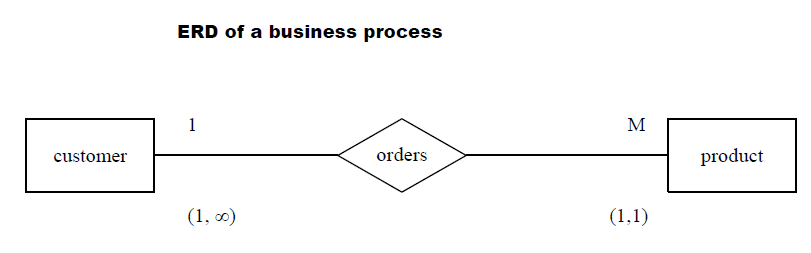
- AConnectivity
- BTransaction
- CRelationship
- DCardinality
Información
- Descripción
- Test sobre Managing Information Systems, creado por Clair Hat el 20/11/2015.
- Autor
- Clair Hat
- Idioma
- English
- Visitas
- 103
- Historial
- Creado el 20 nov 2015 · actualizado el 13 nov 2016
- Etiquetas
- Valoración
- Aún sin valoraciones Valora este test