
Test
USA - Prosthetics - Exam 2
Preguntas del test (51)
1Which amputation is described as "Excision of any part of one or more toes."?
- APhalangeal
- BTransphalangeal
- CMetatarsal Ray Resection
- DTrans-metatarsal
- EChopart
2A prosthesis is not necessary for toe amputations.
- AVerdadero
- BFalso
3Which amputation is described as "Disarticulation at the metatarsalphalgeal joint."?
- APhalangeal
- BTransphalangeal
- CMetatarsal Ray Resection
- DLisfranc
- EChopart
41st digit amputation results in severe hallux valgus/ lateral deviation
- AVerdadero
- BFalso
5Phalangeal amputation actually refers to a partial toe amputation, not necessarily a full toe disarticulation.
- AVerdadero
- BFalso
6There are no toe prosthetics because toe amputations do not require prosthetics.
- AVerdadero
- BFalso
7Which amputation is described as "Amputation through the mid-section of all metatarsals."?
- ATrans-metatarsal Amputation
- BLisfranc
- CChopart
8Which amputation is described as "A disarticulation through the midtarsal joint leaving only the calcaneus and talus."?
- AChopart
- BLisfranc
- CTrans-metatarsal Amputation
- DSyme
9Limb length discrepancy may be a problem in which of the following amputations?
- AChopart
- BLisfranc
10Which of the following are Rigid or Semi-Rigid prosthetics?
- ALaminate Partial Foot
- BRigid Plate
- CCustom Molded Insole with Toe Filler
- DSlipper Type Elastomer Prosthesis (STEP)
- EReinforced Silicone Cosmetic Prosthesis
- FDynamic Response Footplates
11Which of the following are Flexible or Semi-Flexible prosthetics?
- ASlipper Type Elastomer Prosthesis (STEP)
- BReinforced Silicone Cosmetic Prosthesis
- CDynamic Response Footplates
- DLaminate Partial Foot
- ERigid Plate
- FCustom Molded Insole with Toe Filler
12Which of the following may incorporate a patellar-tendon-bearing (PTB) design to reduce weight bearing to the foot?
- ALaminate Partial Foot
- BRigid Plate
- CCustom Molded Insole with Toe Filler
- DSlipper Type Elastomer Prosthesis (STEP)
- EReinforced Silicone Cosmetic Prosthesis
- FDynamic Response Footplates
13Which of the following is used with patients with equines deformity that can be passively corrected?
A plate supports the residual foot and attaches to a shank piece which is formed around the calf.- ALaminate Partial Foot
- BRigid Plate
- CCustom Molded Insole with Toe Filler
- DSlipper Type Elastomer Prosthesis (STEP) –
- EReinforced Silicone Cosmetic Prosthesis
- FDynamic Response Footplates
14Which of the following is a simple foam filler with plastic insert for transverse arch and rear foot stability.
- ACustom Molded Insole with Toe Filler
- BRigid Plate
- CLaminate Partial Foot
- DSlipper Type Elastomer Prosthesis (STEP)
- EReinforced Silicone Cosmetic Prosthesis
- FDynamic Response Footplates
15In which of the following prosthetses are semi-flexible urethane elastomers modeled to provide a foot-shape prosthesis with a soft socket that conforms to the foot.
- ASlipper Type Elastomer Prosthesis (STEP)
- BReinforced Silicone Cosmetic Prosthesis
- CDynamic Response Footplates
- DCustom Molded Insole with Toe Filler
- ERigid Plate
- FLaminate Partial Foot
16Which of the following is a life-like foot designed of soft, flexible mold silicone which is cosmetically appealing and functional?
- AReinforced Silicone Cosmetic Prosthesis
- BSlipper Type Elastomer Prosthesis (STEP)
- CDynamic Response Footplates
- DCustom Molded Insole with Toe Filler
- ERigid Plate
- FLaminate Partial Foot
17Which of the following is made from carbon fiber composite materials and has a footplate that offers flexibility, creating a more responsive prosthesis?
- ADynamic Response Footplates
- BReinforced Silicone Cosmetic Prosthesis
- CSlipper Type Elastomer Prosthesis (STEP)
- DCustom Molded Insole with Toe Filler
- ERigid Plate
- FLaminate Partial Foot
18How much of the tibial length remains in a Long Transtibial Amputation?
- A>50%
- B20-50%
- C<20%
- D<10%
- E>75%
19How much of the tibial length remains in a Conventional Transtibial Amputation?
- A>75%
- B>50%
- C20-50%
- D<20%
- E<10%
20How tibial length remains in a Short Transtibial Amputation?
- A>75%
- B>50%
- C20-50%
- D<20%
- E<10%
21What are the advantages & disadvantages of a Trans-Tibial amputation relative to a Trans-Femoral amputation?
- ALower mortality
- BBetter rehab prognosis
- CDecreased incidence of phantom pain
- DFaster walking speed
- EGreater gait efficiency
- FHigher mortality
- GLess need for rehab
- HPhantom pain is quite common
- ILonger stride length
- JCommonly leads to lower K-Level (K1 or K2)
22Which of the following feet are appropriate for a typical patient at K1?
- ASACH
- BSymes
- CSingle Axis
- DMulti-Axial
- ESAFE
- FGreissinger
- GEnergy-Storing
- HSeattle
- IMulti-Axial + Energy Storing
- JCeterus
23Which of the following feet are appropriate for a typical patient at K2?
- AMulti-Axial
- BGreissinger
- CSAFE
- DEndolite Multiflex (non-energy storing version)
- ESACH
- FSymes
- GSingle Axis
- HEndolite Multiflex (energy storing version)
- IRunway
- JCeterus
24Which of the following feet are appropriate for a typical patient at K3?
- AEnergy-Storing
- BSeattle
- CEndolite Multiflex (energy storing version)
- DRunway
- EMulti-Axial + Energy-Storing
- FCeterus
- GFlex
- HPathfinder
- IFree Flex
- JSymes
25Which of the following feet are appropriate for a typical patient at K4?
- AMulti-Axial + Energy-Storing
- BFlex
- CCeterus
- DSpringlite
- ERunway
- FEndolite Multiflex (energy storing version)
- GDynamic Foot
- HSingle Axis
- ISACH
- JGreissinger
26What type of foot is this and to which K-Level does it belong?
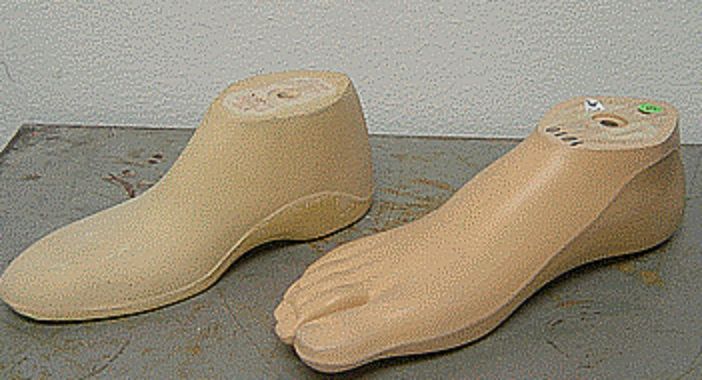
- ASACH
- BK1
- CSingle-Axis
- DMulti-Axis
- EK0
- FK2
- GEnergy-Storing
- HK3
27What type of foot is this and to which K-Level does it belong?
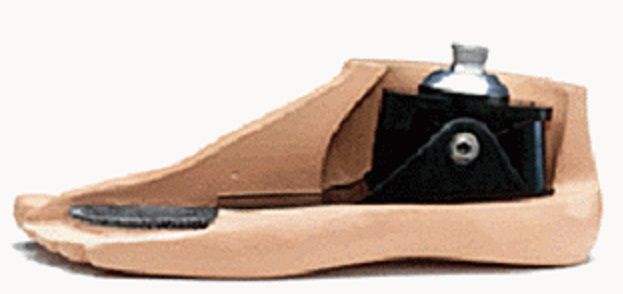
- ASingle-Axis
- BK1
- CK0
- DSACH
- EK2
- FK3
- GK4
- HEnergy-Storing
- IMulti-Axial
28What type of foot are these and to which K-Level do they belong?
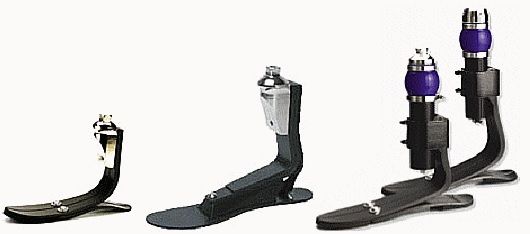
- AMulti-Axial + Energy-Storing
- BK4
- CK3
- DK2
- EK1
- FEnergy-Storing
- GSACH
- HMulti-Axial
- ISingle-Axis
29What type of foot is this and to which K-Level does it belong?
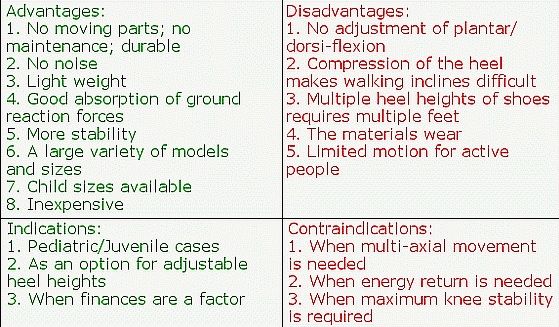
- ASACH
- BK1
- CK0
- DK2
- ESingle-Axis
- FMulti-Axial
30What type of foot is this and to which K-Level does it belong?
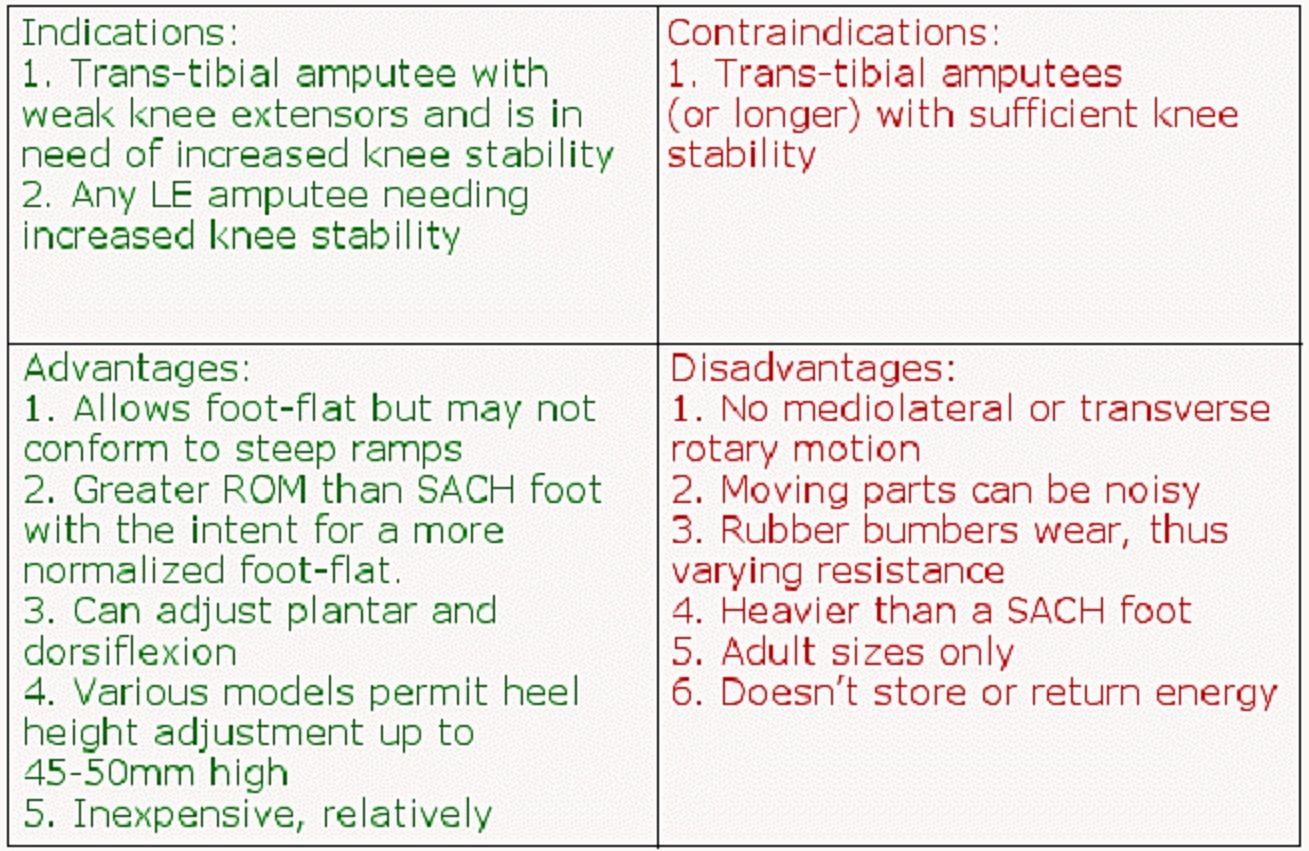
- ASingle-Axis
- BK1
- CK0
- DK2
- ESACH
- FMulti-Axial
31What type of foot is this and to which K-Level does it belong?

- AK1
- BK2
- CK3
- DK4
- EEnergy-Storing
- FSingle-Axis
- GSACH
- HMulti-Axial
32Walking in sand requires which of the following accessories?
- ATorque Absorber/Torsion Adapter
- BAnkle Unit
- CRotator
33How much of the femoral length remains in a Long Transfemoral Amputation?
- A>60%
- B>75%
- C>50%
- D35-60%
- E<35%
- F20-50%
- G<20%
34How much of the femoral length remains in a Standard Transfemoral Amputation?
- A>60%
- B>50%
- C35-60%
- D20-50%
- E<35%
- F<20%
35How much of the femoral length remains in a Short Transfemoral Amputation?
- A>75%
- B>60%
- C35-50%
- D20-60%
- E<35%
- F<20%
36What are the advantages of a transfemoral amputation relative to the more distal amputations?
- AGreater Healing Rate
- BEasier socket fit
- CShorter hospital stay
- DLess incidence of Phantom Pain
- ELess incidence of surgical complications
- FLower mortality
- GGait training is easier
37The quadrilateral socket for a transfemoral amputation allows for muscle contractions.
- AVerdadero
- BFalso
38The Quadrilateral socket (TFA) is characterized by reliefs and bulges.
- AVerdadero
- BFalso
39The Ischial Containment Socket is characterized by narrow medial / lateral diameter with greater width in the anterior / posterior dimensions
- AVerdadero
- BFalso
40The Quadrilateral Socket (TFA) is characterized by narrow medial / lateral diameter with greater width in the anterior / posterior dimensions.
- AVerdadero
- BFalso
41The Ischial Containment socket (TFA) is characterized by reliefs and bulges.
- AVerdadero
- BFalso
42Stability of a Knee Unit is accomplished by which of the following?
- AResidual limb exerting a backward force within the socket
- BResidual limb exerting a forward force within the socket
- CKnee axis aligned posterior to the weight line
- DKnee axis aligned anterior to the weight line
- EStance, braking or locking mechanism
- FMovement of the residual limb and pelvis
- GGravity
43Swing Control of a Knee Unit is accomplished by which of the following?
- AMovement of the residual limb and pelvis
- BMomentum
- CMechanical extension
- DGravity
- EResidual limb exerting a backward force within the socket
- FKnee axis aligned anterior to the weight line
- GLocking mechanism
44Which of the following Swing-Phase Control Mechanisms are appropriate for K1 and K2?
- AMechanical Friction
- BPneumatic Control
- CMicroprocessor Controlled Fluid Friction
- DHydraulic Control
45Which of the following Swing-Phase Control Mechanisms are appropriate for K3 and K4?
- AMechanical Friction
- BPneumatic Control
- CMicroprocessor Controlled Fluid Friction
- DHydraulic Control
46C-Leg and Genium are which type of Swing-Phase Control Mechanisms?
- AMicroprocessor Controlled Fluid Friction
- BHydraulic Control
- CPneumatic Control
- DMechanical Friction
47The Weight-Activated Stance Brake Knee (WASB) imparts a characteristic gait deviation and limits cadence to a single speed.
- AVerdadero
- BFalso
48The Weight-Activated Stance Brake Knee (WASB) imparts a characteristic gait deviation, but is otherwise appropriate for K3.
- AVerdadero
- BFalso
49Which Hip Joint Mechanism is described below?
At toe off, knee flexion pulls the hip joint against the posterior extension stop. As the knee rotates forward the weight and slight pelvic posterior rotation flexes the hip. Because the prosthesis is at full length during mid swing the prosthesis must be significantly shortened to permit toe clearance, however, most amputees tend to vault with the contralateral leg.- ACanadian Hip
- BHip Flexion Bias System
- CLittig Hip Strut
50Which Hip Joint Mechanism is described below?
As weight passes over the prosthesis during stance the coiled spring is compressed. At toe off the spring is released.- ACanadian Hip
- BHip Flexion Bias System
- CLittig Hip Strut
51Which Hip Joint Mechanism is described below?
A carbon fiber strut is fabricated to the anterior portion of the socket. Weight bearing during stance compressed the strut and as the body weight is reduced going into swing the prosthetic thigh is deflected forward. No additional pelvic motion is required.- ACanadian Hip
- BHip Flexion Bias System
- CLittig Hip Strut
Información
- Descripción
- USA - Prosthetics Test sobre USA - Prosthetics - Exam 2, creado por Ben Williams el 25/10/2017.
- Autor
- Ben Williams
- Idioma
- English
- Visitas
- 125
- Etiquetas
- Valoración
- Aún sin valoraciones Valora este test