
Test
Industrial Inorganic Chemistry
Este test tiene tipos de pregunta que se abren en el reproductor de siempre.
Preguntas del test (32)
1What metals are in the reactivity series?
[blank_start]Potassium[blank_end],sodium,lithium,[blank_start]calcium[blank_end],magnesium,[blank_start]aluminium[blank_end],[blank_start]carbon[blank_end],[blank_start]zinc[blank_end],iron,[blank_start]tin[blank_end],[blank_start]lead[blank_end],[blank_start]hydrogen[blank_end],copper,[blank_start]silver[blank_end],gold,platinum- APotassium
- Bcalcium
- Caluminium
- Dcarbon
- Esilver
- Ftin
- Glead
- Hhydrogen
- Izinc
2What are the two methods of extracting metals from their ores?
- AReduction with carbon
- BOxidation
- CElectrolysis
3The method chosen to extract metals are determined by the reactivity of the metal being extracted.
- AVerdadero
- BFalso
4What happens in a displacement reaction?
- AA more reactive metal displaces a less reactive metal.
- BA less reactive metal displaces a more reactive metal.
5Carbon is used to reduce metals from their ores. Is it because they are less reactive than the moderately reactive metals?
- AVerdadero
- BFalso
6What are the raw materials needed for the extraction of iron?
[blank_start]Haematite[blank_end],[blank_start]limestone[blank_end],coke and [blank_start]oxygen[blank_end]- AHaematite
- Blimestone
- Coxygen
71.) Coke and [blank_start]haematite[blank_end] are continuously added to the [blank_start]top[blank_end] of the furnace.
2.) [blank_start]Hot-air[blank_end] is [blank_start]blown[blank_end] into the base of the furnace.
3.) Coke reacts with [blank_start]oxygen[blank_end] at the base to produce carbon dioxide.
4.) The [blank_start]carbon dioxide rises up[blank_end] the furnace and reacts with even more coke to produce the main reducing agent - [blank_start]carbon monoxide[blank_end].
5.) Carbon monoxide [blank_start]reduces[blank_end] the haematite.
7.) Limestone is added to [blank_start]remove impurities[blank_end]. It [blank_start]thermally decomposes.[blank_end]
8.) Calcium oxide reacts with the [blank_start]impurities of haematite[blank_end] to produce slag.
9.) [blank_start]Molten[blank_end] iron and [blank_start]slag[blank_end] sinks to the base of the furnace.- Ahaematite
- Btop
- CHot-air
- Dblown
- Eoxygen
- Fcarbon dioxide rises up
- Gcarbon monoxide
- Hreduces
- Iremove impurities
- Jthermally decomposes.
- Kimpurities of haematite
- Lslag
- MMolten
8What is the chemical equation of the reduction of haematite?
- AC(s) + O2 (g) -> CO2 (g)
- BC (s) + CO2 (g) -> 2CO (g)
- CFe2O3 (s) + 3CO (g) -> 2Fe (s) + 3CO2 (g)
9This is the thermal decomposition of limestone.
CaO (s) + SiO2 (s) -> CaSiO3 (l)- AVerdadero
- BFalso
101.) The tilting furnace is charged with [blank_start]scrap steel[blank_end] (for recycling) and pig iron ([blank_start]iron produced in a blast furnace[blank_end]).
2.) Oxygen is blown through an [blank_start]oxygen lance[blank_end].
3.) The molten steel and impurities are poured out of the furnace when the furnace tilts in [blank_start]different directions.[blank_end]- Ascrap steel
- Biron produced in a blast furnace
- Coxygen lance
- Ddifferent directions
11Which of the below are alloy steels?
- AMild steel
- BMedium steel
- CHigh-carbon steel
- DStainless steel
- ETungsten steel
- FManganese steel
12When iron rusts, it is actually being oxidized.
- AVerdadero
- BFalso
13Which method of prevention of rust other than galvanising, requires a more reactive metal than iron to corrode?
- ASacrificial Protection
- BElectroplating
- CElectrolytic Protection
141.) [blank_start]Zinc blende[blank_end] (ore of zinc) is heated strongly in [blank_start]air[blank_end]. It [blank_start]oxidizes[blank_end] the ore into [blank_start]zinc oxide[blank_end].
[blank_start]Sulfur dioxide[blank_end] is also produced.
2.) Zinc oxide burns with [blank_start]coke in a blast furnace[blank_end]. The ore is [blank_start]reduced[blank_end] and gives [blank_start]zinc vapor[blank_end] and [blank_start]carbon monoxide.[blank_end]
3.) Zinc vapor passes out of the furnace and is [blank_start]cooled[blank_end] and [blank_start]condensed[blank_end] into a liquid.- AZinc blende
- Bair
- Coxidizes
- Dzinc oxide
- ESulfur dioxide
- Fcoke in a blast furnace
- Greduced
- Hzinc vapor
- Icarbon monoxide
- Jcooled
- Kcondensed
15Copper must be purified by reduction because wires need impure copper to conduct electricity.
- AVerdadero
- BFalso
16What is the difference between bauxite and alumina?
- ABauxite is impure aluminium oxide while alumina is pure.
- BBauxite is pure aluminium oxide while alumina is impure.
171.) Bauxite is treated with [blank_start]sodium hydroxide[blank_end] to obtain alumina.
2.) [blank_start]Alumina[blank_end] is dissolved in molten cryolite.
3.) [blank_start]Molten[blank_end] alumina and cryolite is electrolysed in a cell fitted with [blank_start]graphite electrodes.[blank_end]- Asodium hydroxide
- BAlumina
- Cgraphite electrodes.
- DMolten
18Properties of ammonia?
- AColourless
- BDistinctive smell
- CLess dense than air
- DSoluble in water
- EAcidic solution
191.) Nitrogen is obtained from [blank_start]air[blank_end], while hydrogen is obtained from [blank_start]natural gases[blank_end] by reaction with [blank_start]steam[blank_end] - raw materials
2.) The 2 gases are mixed in a ratio of [blank_start]1:3[blank_end]
3.) Compressed at a pressure of [blank_start]200atms[blank_end] and passed over many catalyst beds containing [blank_start]iron[blank_end]. The temperature of the converter is [blank_start]450'C[blank_end].
4.) A mixture of gases leaves the converter. To separate the mixture, it is cooled down. Ammonia has a much [blank_start]higher[blank_end] point so it [blank_start]condenses[blank_end].
5.) The mixture of nitrogen and hydrogen is sent back to the converter to be [blank_start]recycled[blank_end].- Aair
- Bnatural gases
- Csteam
- D1:3
- E200atms
- Firon
- G450'C
- Hhigher
- Icondenses
- Jrecycled
20What type of fertiliser is 'nitram' and 'urea'?
- AStraight nitrogen fertilisers
- BNPK compound fertilsers
21What are the three essential nutrients required by plants - provided by fertilisers?
- ANitrogen
- BHydrogen
- CPhosphorous
- DPotassium
221.) Sulfur burns in air to produce [blank_start]sulfur dioxide[blank_end].
2.) Gases are [blank_start]mixed[blank_end] and [blank_start]cleaned[blank_end] by [blank_start]electrostatic precipitation[blank_end]
3.) Sulfur dioxide reacts with oxygen to form [blank_start]sulfur trioxide[blank_end]
4.) Sulfur trioxide is [blank_start]dissolved[blank_end] in [blank_start]98% sulfuric acid[blank_end] - [blank_start]oleum[blank_end] is produced
5.) [blank_start]Water[blank_end] is added to oleum to produce [blank_start]dilute sulfuric acid[blank_end]- Asulfur dioxide
- Bmixed
- Ccleaned
- Delectrostatic precipitation
- Esulfur trioxide
- Fdissolved
- G98% sulfuric acid
- Holeum
- IWater
- Jdilute sulfuric acid
23Properties of oleum (concentrated sulfuric acid)?
- APowerful dehydrating agent
- BPowerful oxidising agent
- CNot corrosive
24Dehydration is the removal of water or at least elements of water from a substance.
- AVerdadero
- BFalso
25What are the three different types of electrolytic cells used in the electrolysis of concentrated brine?
- AMercury Cathode Cell
- BDiaphragm cell
- CGraphite electrdes
- DMembrane cell
26Chlorine is produced at the anode.
Hydrogen is produced at the cathode.
Sodium ions (from NaCl) and hydroxide ions (from the water) combine together to form sodium hydroxide.- AVerdadero
- BFalso
27Powdered limestone is used to [blank_start]neutralise[blank_end] acidic soils and lakes acidified by [blank_start]acid rain[blank_end]. It is [blank_start]cheaper[blank_end] than lime.
In the blast furnace, limestone is used to [blank_start]remove impurities[blank_end].
Limestone is also used to manufacture [blank_start]cement, concrete and sodium carbonate[blank_end].- Aneutralise
- Bacid rain
- Ccheaper
- Dremove impurities
- Ecement, concrete and sodium carbonate
28Lime ([blank_start]quicklime[blank_end]) is [blank_start]calcium oxide[blank_end] and is produced by [blank_start]thermally decomposing[blank_end] limestone [blank_start](calcium carbonate[blank_end]) in a [blank_start]lime kiln[blank_end].
Lime is used in agriculture to neutralise soils and improve [blank_start]drainage[blank_end] in soils that consists of a large amount of [blank_start]clay[blank_end].
It is also used with sand and sodium carbonate in making [blank_start]glass[blank_end].
Lime can also be converted into [blank_start]slake[blank_end] lime ([blank_start]hydrated[blank_end] lime) which is [blank_start]calcium hydroxide[blank_end]. Equal amounts of lime and water are mixed to produce this substance. Hydrated lime is used to make [blank_start]bleaching powder[blank_end], for making glass, and for [blank_start]water purification[blank_end].- Aquicklime
- Bcalcium oxide
- Cthermally decomposing
- Dlime kiln
- Edrainage
- Fclay
- Gglass
- Hslake
- Ihydrated
- Jcalcium hydroxide
- K(calcium carbonate
- Lbleaching powder
- Mwater purification
29When limestone thermally decomposes to produce quick-lime, what is required?
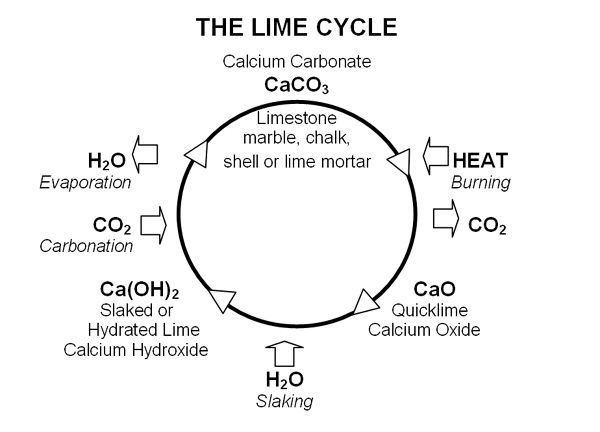
- AHeat - 1500'F
30How many things need to be taken into consideration when building a chemical processing plant?
- A5
- B4
- C3
31What are the environmental problems for chemical plants?
- AChemical plants need to treat the polluted gases which are produced in production, because it causes acid-rain and health problems for human beings. This creates an additional costs for industries.
- BChemical plants need to treat the water and liquids which comes out of production because they go into water-bodies, or else they will get large fines by water-boards and river authorities.
- CSolid waste products have to be treated to make them less harmless and have to be disposed safely, to ensure minimum land pollution. This also create additional costs for industries.
- DAll of the above.
32Is recycling good for the environment?
- AVerdadero
- BFalso
Información
- Descripción
- A Quiz to learn and revise everything necessary of Ch - 9 of the syllabus, in Chemistry.
- Autor
- Fardia Chowdhury
- Idioma
- English
- Visitas
- 305
- Etiquetas
- Valoración
- Aún sin valoraciones Valora este test