
Test
BIOL2022 L24 Rarefaction and Diversity
Este test tiene tipos de pregunta que se abren en el reproductor de siempre.
Preguntas del test (7)
1The process of comparing different sized subsamples to determine whether enough information has been collected is called:
- ARarefaction
- BSIMPER
- CParsimony
- D‘Strength of Evidence’
2True or false: Rarefaction standardises unequal sample sizes by effectively bringing the largest down to the smallest.
- AVerdadero
- BFalso
3True or false: Rarefaction standardises unequal sample sizes by effectively bringing the smallest up to the largest.
- AVerdadero
- BFalso
4Differentiating between accumulation and rarefaction curves (individual and sample-based):
- Accumulation: total # of spp during process of data collection
- Rarefaction: repeatedly subsampling [blank_start]________[blank_end] replacement from the data (progressive data reduction)- AWithout
- BWith
5Chao estimators are [blank_start]____________[blank_end] estimators for species richness.
- AParametric
- BNon-parametric
- CMetric
- DNon-metric
6What does this table describe?
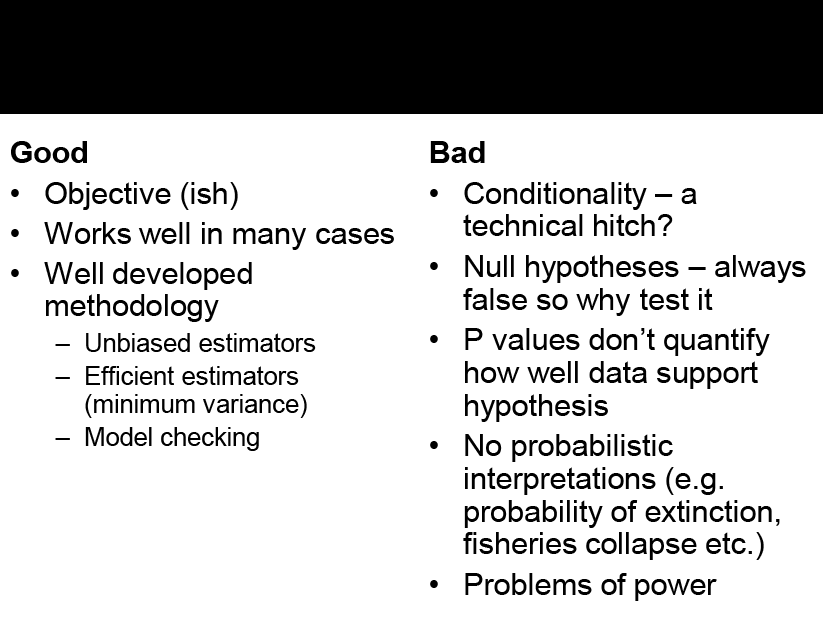
- AA Classical approach
- BA Bayesian approach
7What does this table describe?
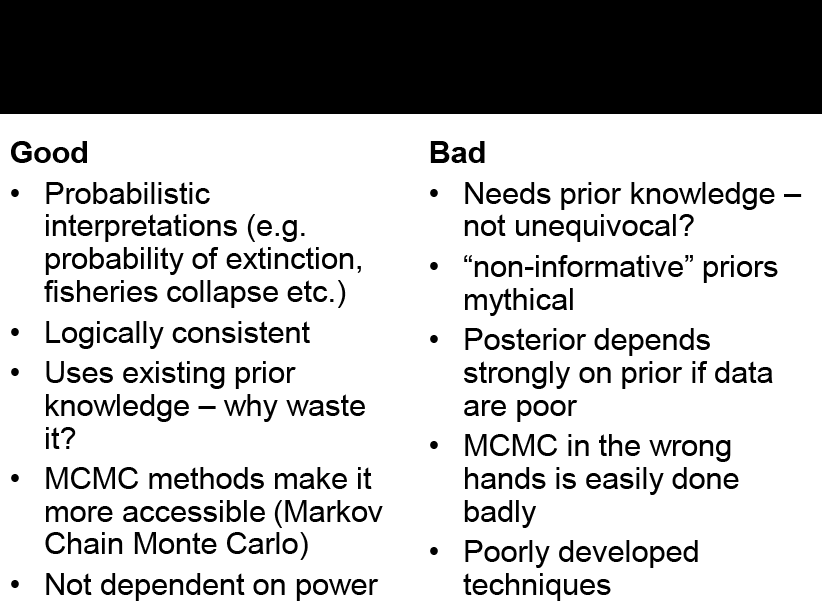
- AA Classical approach
- BA Bayesian approach
Información
- Descripción
- Module 3, Lecture 6 Headings: • Rarefaction • Bayesian approaches • Frequentists vs Bayesians
- Autor
- Michael Jardine
- Idioma
- English
- Visitas
- 72
- Etiquetas
- Valoración
- Aún sin valoraciones Valora este test