
Test
functional anatomy of the spine
Este test tiene tipos de pregunta que se abren en el reproductor de siempre.
Preguntas del test (31)
1what are the cervical vertebrae
- AC1-C7
- BC1-C8
- CC1-C9
- DC1-C10
2what is the C1 vertebrae also known as
- Aaxis
- Baxial
- Catlas
- Datla
3what is the C2 vertebrae also known as
- Aaxis
- Batla
- Catlas
- Daxial
4what joint joins the C1 and C2
- Aatlanto-axial joint
- Bzygopophysial joint
- Catlanto-occipital joint
- Dinter-vertebrae joint
5which of the following are known as atypical cervical vertebrae
- AC1
- BC2
- CC3
- DC4
- EC5
- FC6
- GC7
6what joint is located between the superior and inferior articular processes
- Azygopophysial joint
- Batlanto-occipital joint
- Cinter-vertebrae joint
- Datlanto-axial joint
7which of the following makes C1 an atypical cervical vertebrae
- Ait has no body but instead lateral masses that bear the superior articular surfaces
- Bit has no transverse processes
- Cit doesn't have a bifid spinous process
- Dit has no inferior articular surfaces due to the fact that there is a dens
8which joint facilitates movement of the head resulting in a nodding motion
- Aatlanto-axial joint
- Batlanto-occipital joint
- Cinter-vertebrae joint
- Dzygopophysial joint
9what joint facilitates the movement of the neck to allow shaking of the head in a 'no' motion
- Aatlanto-axial joint
- Batlanto-occipital joint
- Cinter-vertebrae joint
- Dzygopophysial joint
10which of the following makes C2 a atypical cervical vertebrae
- Ait has a dens
- Bit doesn't have a body but instead lateral masses
- Cit has no transverse processes
- Dit has a facet on the anterior arch
11how many thoracic vertebrae are there
- A10
- B11
- C12
- D13
12where does the rib articulate with on the thoracic vertebrae
- Ainferior demi facets and inverse costal facets
- Bsuperior demi facets and transverse costal facets
- Csuperior demi facets and inverse costal facets
- Dinferior demi facets and transverse costal facets
13how many lumbar vertebrae are there
- A4
- B5
- C6
- D7
14which of the following is the largest vertebrae
- Alumbar
- Bcervical
- Cthoracic
15pedicles on vertebrae face posterior
- AVerdadero
- BFalso
16pedicles only have a superior surface that forms vertebral notches
- AVerdadero
- BFalso
17what makes up the intervertable discs
- Aannulus fibrosus and nucleus pulposus
- Bannulus fibrosis and nucleus pulposus
- Conly the annulus fibrosis
- Donly the nucleus pulposus
18what is the role of the nucleus pulposus
- Ashock absorbing
- Bweight bearing
- Cweight transfer
- Dprotective inner core
19complete the diagram of a typical cervical veterbrae
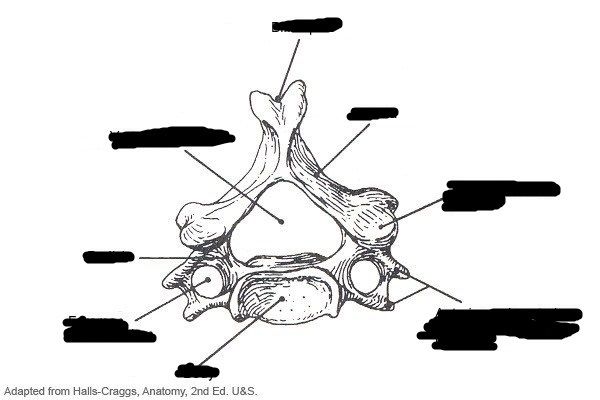
- Abifid spinous process
- Bbody
- Ctransverse foramen
- Dpedicle
- Etransverse process
- Fsuperior articular process
- Glamina
- Hvertebral foramen
20complete the diagram and select which cervical vertebrae it is (top circle)
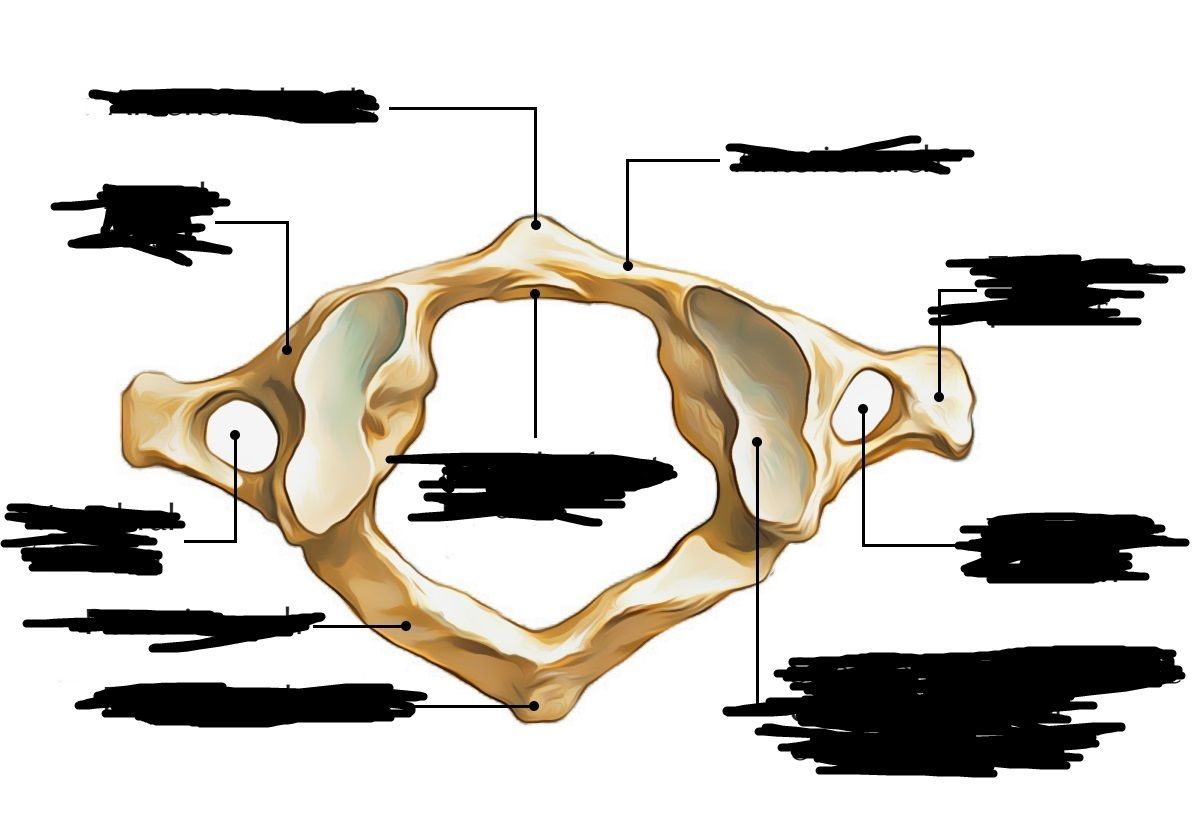
- AC1 (axial vertebrae)
- BC1 (atlas vertebrae)
- CC2 (axial vertebrae)
- DC2 (atlas vertebrae)
- Eanterior tubercle
- Fsuperior articular facet
- Gposterior tubercle
- Hposterior arch
- Itransverse foramen
- Jarticular facet of dens
- Klateral mass
- Lanterior arch
- Mtransverse process
21complete the image of a cervical vertebrae and
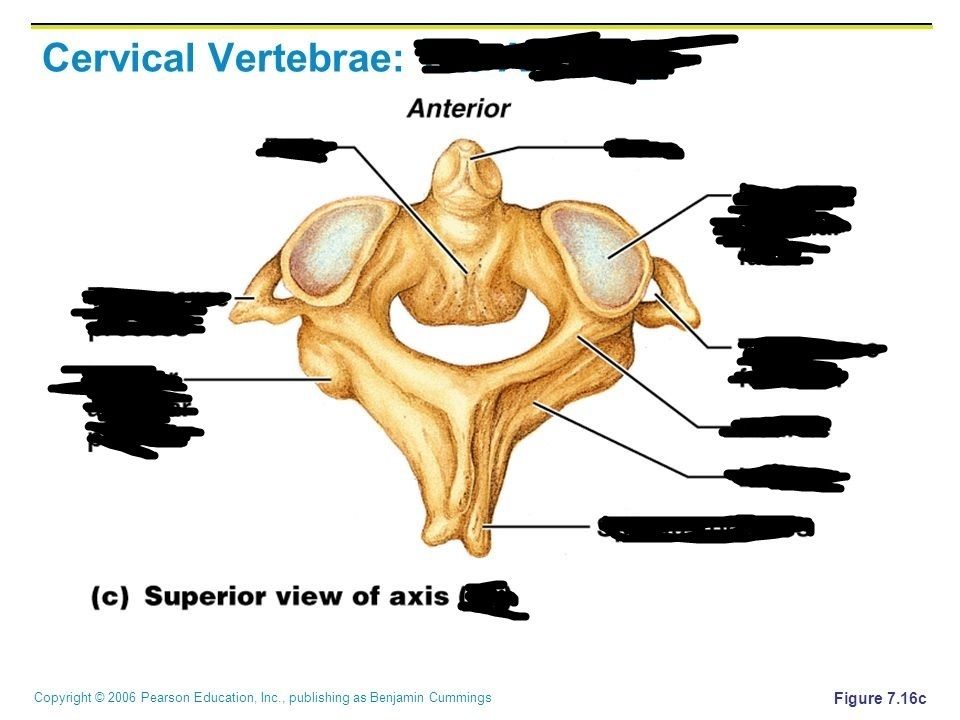
- AC1(axial)
- BC2(axial)
- CC1(atlas)
- DC2(atlas)
- Edens
- Fbody
- Gspinous process
- Hinferior articular process
- Ilamina
- Jpedicle
- Ktransverse process
- Ltransverse foramen
- Msuperior articular facet
22complete the image and label which type of vertebrae it is (top circle)
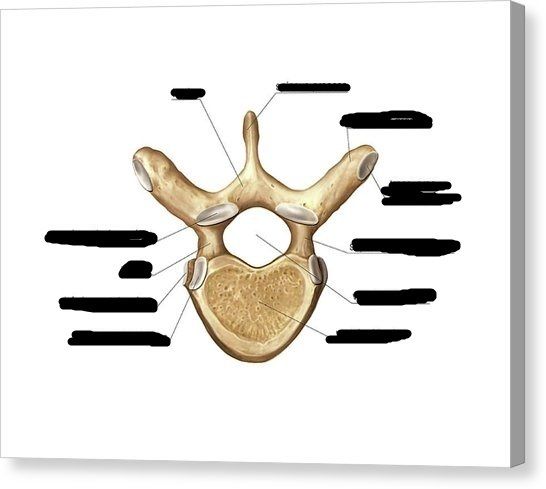
- Athoracic vertebrae
- Bcervical vertebrae
- Clumbar vertebrae
- Dlamina
- Ebody
- Fvertebral foramen
- Gsuperior costal surface
- Hinferior costal surface
- Ipedicle
- Jsuperior articular facet
- Ksuperior vertebral notch
- Ltransverse costal facet
- Mtransverse process
- Nspinous process
23complete the image
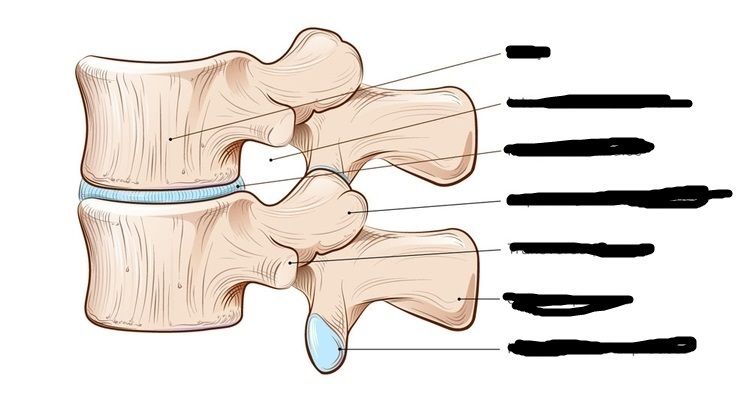
- Abody
- Binferior articular process
- Cspinous process
- Dtransverse process
- Esuperior articular process
- Finter-vertebral discs
- Ginter-vertebral foramen
24which of the following ligaments carry out stabilization of the spine during extension
- Aanterior longitudinal ligament
- Bposterior longitudinal ligament
- Cligamentum flavum
- Dsupraspinous and interspinous ligaments
- Eligamentum nuchae
25which of the following ligaments carry out stabilization of the spine during flexion
- Aanterior longitudinal ligament
- Bposterior longitudinal ligament
- Cligamentum flavum
- Dsupraspinous and interspinous ligament
- Eligamentum nuchae
26which of the following ligaments limit the seperation of spinous processes during flexion
- Aanterior longitudinal ligament
- Bposterior longitudinal ligament
- Cligamentum flavum
- Dsupraspinous and interspinous ligament
- Eligamentum nuchae
27which of the following ligaments Provides an attachment for Trapezius and Splenius capitis and limits flexion
- Aanterior longitudinal ligament
- Bposterior longitudinal ligament
- Csupraspinous and interspinous ligaments
- Dligamentum flavum
- Eligamentum nuchae
28which of the following ligaments assists the vertebral column in reserving its shape after flexion
- Aanterior longitudinal ligament
- Bposterior longitudinal ligament
- Csupraspinous and interspinous ligament
- Dligamentum nuchae
- Eligamentum flavum
29complete the diagram of the neck region
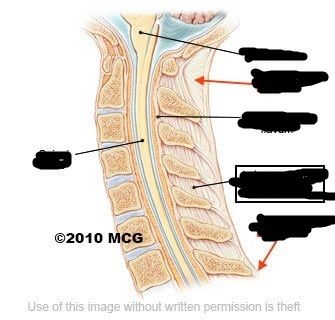
- Aspinal chord
- Bsupraspinous ligament
- Cinterspinous ligament
- Dligamentum flavum
- Eligamentum nuchae
- Fbrain stem
30complete the diagram below
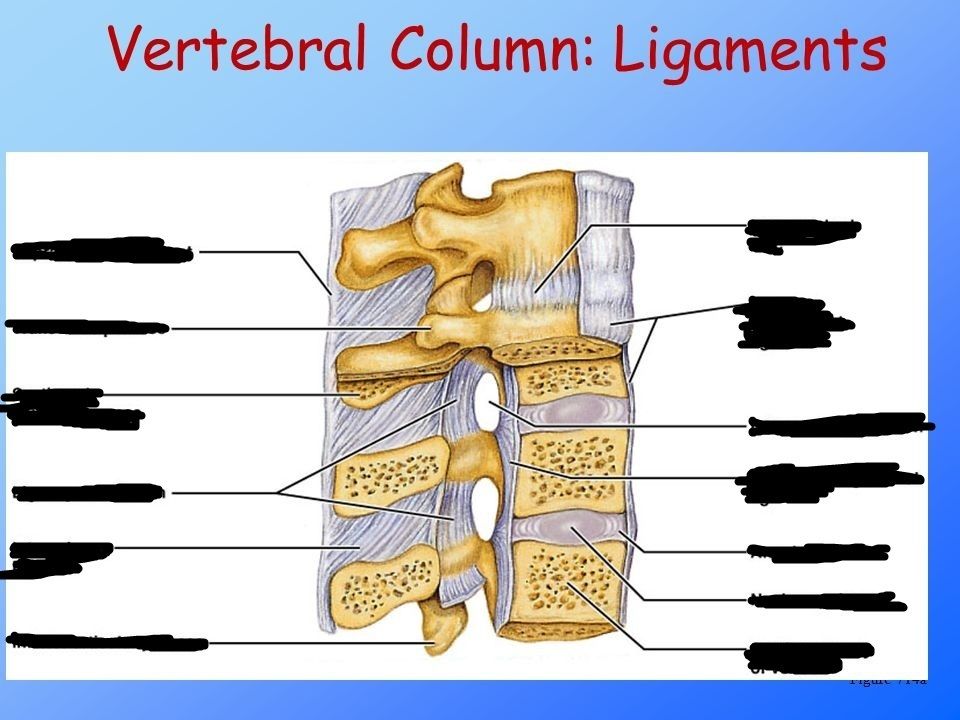
- Asupraspinous ligament
- Binferior articular process
- Cinterspinous ligament
- Dligamentum flavum
- Ebody of vertebrae
- Fnucleus pulposus
- Gannulus fibrosus
- Hposterior longitudinal ligament
- Iintervertebral foramen
- Janterior longitudinal ligament
- Kintervertabral disc
- Lspinous process
- Mtransverse process
31complete the image
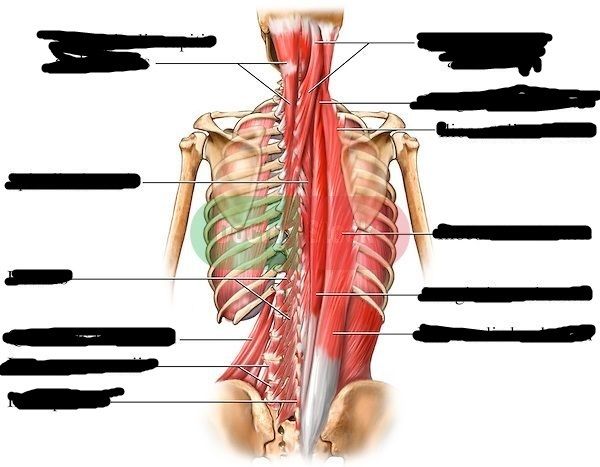
- Ainterspinalis
- Bintertransversarii
- Cquadratus lumborum
- Drotares
- Eiliocostalis lumborum
- Flongissimus thoracis
- Giliocostalis thoracis
- Hspinalis thoracis
- Iiliocostalis cervicis
- Jlongissimus cervicis
- Ksplenius capitis and cervicis
- Lsemispinalis capitis and cervicis
Información
- Descripción
- Quiz on functional anatomy of the spine , created by David alibhai on 13/04/2019.
- Autor
- David alibhai
- Idioma
- English
- Visitas
- 5
- Etiquetas
- Valoración
- Aún sin valoraciones Valora este test