
Test
IB Biology: Photosynthesis HL and SL
Preguntas del test (20)
1Photosynthesis involves the conversion of light into what?
- AChemical energy
- BKinetic energy
- CLight energy
2What wavelengths of light are in sunlight?
- ARed, green and blue
- BRed, orange and blue
- CGreen, orange and purple
3The main pigment which absorbs light is called Chloroplast
- AVerdadero
- BFalso
4Which wavelengths of light are absorbed most?
- ARed and blue
- BGreen and blue
- CGreen and red
- DYellow and red
5Light energy absorbed by the pigments are used to do what two things?
- AProduce ATP and form carbon dioxide
- BProduce ATP and split water molecules
- CProduce ATP and form oxygen only
6Select 3 methods of measuring rates of photosynthesis
- AProduction of oxygen
- BProduction of Carbon Dioxide
- CUptake of Oxygen
- DUptake of Carbon Dioxide
- EDecrease in biomass
- FIncrease in biomass
7What is this an image of?
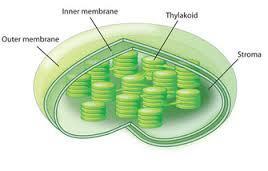
- AChlorophyll
- BChlorophile
- CChloroplast
- DPigment in a plant which absorbs light energy
8The light-independent reactions produce intermediate compounds which are used in the light-dependent reactions
- AVerdadero
- BFalso
9The Calvin cycle is part of the light-independent reactions
- AVerdadero
- BFalso
10What is a photosystem?
- AA group of hundreds of chlorophyll molecules located on the inner membrane of the chloroplast
- BA group of hundreds of chlorophyll molecules located in the stroma of the chloroplast
- CA group of hundreds of chlorophyll molecules located in thylakoid membranes
- DA group of hundreds of chlorophyll molecules located in the cytoplasm of the plant cell
11How does chlorophyll become photoactivated?
- AThe light energy absorbed by the chlorophyll raises an electron in the molecule to be raised to a higher energy level
- BThe light energy absorbed by the chlorophyll moves an electron in the molecule to a lower energy level
12Once the excited electron in a chlorophyll molecule has been passed from molecule to molecule, where does it go?
- ATo the stroma
- BTo a series of electron carriers in the thylakoid membranes
- CTo a series of electron carriers in the mitochondrial membrane
13Each time the electron passes to a new electron carrier, it gives up some of its energy. This keeps happening until, at some stage, enough is made to form a molecule of ATP. This process is called what?
- AOsmosis
- BFacilitated Diffusion
- CActive transport
- DChemiosmosis
14The production of ATP using the energy from an excited electron from photosystem II is called what?
- Acyclic photophosphorylation
- Bnon-cyclic photophosphorylation
15Where do the light independent reactions take place?
- AThe stroma of the chloroplast
- BThe stroma of the mitochondrion
- CThe thylakoid membrane
- DThe cytoplasm
16Which of the following is an essential substrate for the light independent reactions?
- Aoxygen
- Bcarbon dioxide
- Cwater
- Da proton
17What is the enzyme which catalyses the fixation of carbon to ribulose bisphophate?
- ARibulase
- BRibulose biphosphase
- CRubisco
- DRubasco
18What is the product of carbon fixation?
- A6-carbon compound which is then split into two molecules of glycerate 3-phosphate
- B5-carbon compound which is then split into two molecules of glycerate 3-phosphate
19Which of the following structural features make chloroplasts appropriate for their function?
- Alarge surface area
- Bsmall space inside thylakoids
- Cfluid stroma
20Light intensity, carbon dioxide concentration and temperature are all limiting factors in the rate of photosynthesis
- AVerdadero
- BFalso
Información
- Descripción
- International Baccalaureate (TOPIC 8: Cell respiration and photosynthesis) Biology Test sobre IB Biology: Photosynthesis HL and SL, creado por grenouilleverte3 el 29/03/2015.
- Reseña de GoConqr
- 20 questions focused on the process of photosynthesis.
- Autor
- grenouilleverte3
- Idioma
- English
- Visitas
- 5.319
- Etiquetas
- Valoración
- 4,5 de 5 · 2 valoraciones Valora este test