
Test
Train driver rules and regulations Quiz
Crea una cuenta gratis para terminar este test
Guarda tu progreso y consulta tu resultado final.
¿Ya tienes cuenta? Inicia sesión
Preguntas del test (53)
1Module G1 refers to which subject area ?
- AGeneral safety responsibilities and personal track safety
- BDealing with a train accident
- CSingle line working
- DWrong directions moves
2What must be placed on a defective rail vehicle in a siding/depot?
- ANOT TO BE MOVED BOARD
- BWET FLOOR SIGN
- CSTOP BOARD
- DWARNING BOARD
3If a overhead electric power cable were to fall on to a line who must be contacted immediately ?
- ASignaller, then the ECO
- BECO, then signaller
- COperations control
- DECO
- ESignaller
4You must not go closer than ____ metres to the fallen power line or anything in contact with it, until it has been confirmed by the electricity company that it is safe to do so.
- A5
- B1.25
- C2
- D3
5How far must you stand from detonators placed on a line you expect a train to pass over?
Other recommended actions:
- tell anyone else standing close by to also keep this distance away
- as the train passes over them, turn away- A30m
- B10m
- C20m
- D15m
6If you have to stop a train in an emergency, how would you do so during daylight?
- AHand danger signal, both arms raised above your head
- BRed Light
- CRed flag at arms length
- DHand danger signal, both arms extended horizontally
- EHand danger signal, one arm raised above the head
7You are on or near the line in a position of safety, a train is approaching and sounds its horn, in order to acknowledge the train you must ?
- AFace the train, Raise one arm above the head
- BRaise both arms above your head
- Cwave
- Dcontinue with what you are doing
8If you have to stop a train in an emergency during darkness or in poor visibility, you must?
- AYou must show a red light to the driver or wave any light violently
- BRaise a red flag
- Craise both arms above your head
- Ddisplay a flashing light of any colour
9How must you start an emergency conversation ?
- A"this is an emergency call"
- B"help"
- Cstate your name and company
- Ddescribe the accident
10To avoid confusion, difficult names and locations can be spelt using which technique?
- AThe phonetic alphabet
- BSound the letters
- Ccode
- Danagrams
11How should the signal number 'B107' be communicated ?
- ABravo one zero seven
- BBeta one zero seven
- CBravo one hundred and seven
- DBeta one hundred and seven
12The terms 'clear' and 'NOT clear' when describing the status of a line are accepted railway terms ?
- AVerdadero
- BFalso
13You have received instructions from the signaller regarding passing a certain signal at danger, in order to ensure the signaller knows you have understand the instructions, you must ?
- ARepeat the essential information
- Bsay "confirmed'
- Ctell him you have taken notes
- Dmake the assumption he knows
14When a driver communicates with signaller, who takes the lead responsibility ?
- ASignaller
- BDriver
15Phrases to use when using a radio or telephone: 'I have finished my message and am expecting a reply' =
- AOver
- BOut
- Cthanks
- Dgoodbye
16Phrases to use when using a radio or telephone: 'I have finished my message no reply is expected' =
- AOut
- BOver
- Cgoodbye
- Dthanks
17Phrases to use when using a radio or telephone: 'This message provides information which needs immediate action to prevent death, serious injury or damage' =
- AThis is an emergency call
- BHelp
- CDanger
18Phrases to use when using a radio or telephone: 'I have made a mistake and will now correct the word or phrase just said' =
- ACorrection
- BMistake
- Coops
- DI meant
19Skill Test: spell your name or another using the phonetic alphabet.
- AComplete
- BSkip, -1
20You are located on the lineside if ?
- Ayou are between the railway boundary fence and the area called on or near the line, and you can be seen by the driver of an approaching train
- Bon the line itself.
- Cwithin 3 metres (10 feet) of a line and there is no permanent fence or structure between you and the line
- Dyou are on a station platform
21You are located on or near the line if ?
- Awithin 3 metres (10 feet) of a line and there is no permanent fence or structure between you and the line or on the line itself
- Bcrossing the line, at a level crossing
- Con a station platform
- Dyou are between the railway boundary fence and the area called on or near the line
22You are not on or near the line if you are on a station platform unless you are carrying out engineering or technical work within 1.25 metres (4 feet) of the platform edge?
- AVerdadero
- BFalso
23If the maximum speed is 100 mph or less, you are in a position of safety if you are at least ______ metres from the nearest line on which a train can approach.
- A1.25m
- B3
- C5
- D6 Foot
24If the maximum speed of a line is over 100 mph, you must be stood how many metres from the live line to be in a position of safety?
- A2m
- B1.25m
- C3m
- D5m
25When on or near the line, when is it acceptable to use a mobile phone ?
- AWhen in a position of safety
- Bwhen facing on coming traffic
- Cwhen there is a look out or site warden on site
- Dwalking along a position of safety
26(See image) The sign indicates what ?
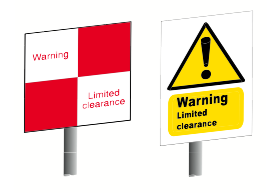
- AThere is no position of safety on this all side of the railway for the length of concerned the structure
- BThere is a limited clearance between two running lines
- Cnecessary clearance must be obtained before entering the area
27This is an example of what type of sign?
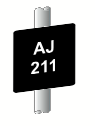
- AControlled
- BAutomatic
- CDistant
- DSemi-automatic
28This is an example of which type of signal?
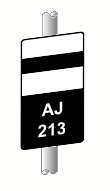
- ASemi-automatic
- BControlled
- CDistant
- DCo-acting
29This is an example of which type of signal?
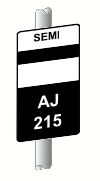
- ASemi-automatic
- BControlled
- CAutomatic
- DDistant
30This is an example of which type of signal?
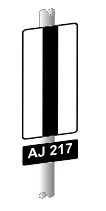
- AIntermediate block
- BControlled
- CDistant
- DAutomatic
31This is an example of which type of signal?
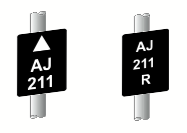
- ADistant
- BAutomatic
- CCo-acting
- DSemi-automatic
32This is an example of which type of signal?
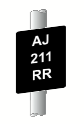
- AOuter distant
- BDistant
- CBanner repeater
- DControlled
33This is an example of which type of signal?
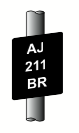
- ABanner repeater
- BCo-acting
- CSemi-automatic
- DDistant
34This is an example of which type of signal?
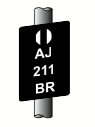
- A3 state banner repeater
- Bbanner repeater
- Ccontrolled
- Dsemi-automatic
35This is an example of which type of signal?
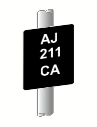
- ACo-acting
- BSemi-automatic
- CControlled
- DDistant
36The normal sequence of a four-aspect signalling is:
- AGreen, Double yellow, yellow, Red
- BGreen, Double yellow, flashing single yellow, Red
- CGreen, yellow, double yellow, Red
37A double yellow signal aspect indicates what?
- AProceed: Be prepared to stop at the next signal
- BProceed: Be prepared to find the next signal displaying a single yellow aspect
- CNext signal displaying proceed aspect
38A single yellow signal aspect indicates what ?
- AProceed: Be prepared to stop at the next signal
- BProceed: Be prepared to find the next signal displaying a single yellow aspect
39Junction indicators: When the straight route is obvious, there is normally no junction indicator provided for this route.
- AVerdadero
- BFalso
40Junction indicators: Where there is no obvious straight route, a junction indicator will be provided for all signalled routes.
- AVerdadero
- BFalso
41Junction indicators: Where the straight route is not the highest-speed route, the junction indicator will normally apply to the lower-speed route.
- AVerdadero
- BFalso
42Where the diverging routes ahead are both of equal speed, a junction indicator will not be provided for each route.
- AVerdadero
- BFalso
43Junction indicators will always be illuminated, even if the straight route is obvious?
- AVerdadero
- BFalso
44A flashing yellow aspect means facing points at a junction ahead are set for a diverging route and the speed of the train must be reduced.
- AVerdadero
- BFalso
45A single yellow aspect displayed together with a junction indictor may indicate what?
- AThat the next signal along the chosen route may be at Danger
- BThe next signal along the chosen route will be showing a proceed aspect
46The normal sequence of four-aspect flashing yellow signalling is:
- AGreen, Double flashing yellow, single flashing yellow, steady yellow, Red
- BGreen, double flashing yellow, steady yellow, Red
- CGreen, double flashing yellow, single flashing yellow, Red
47Which colour light aspects indicated STOP on a ground position light?
- ATwo horizontal red
- BOne white, one red
- CNo lights illuminated
- DSingle red
- EYellow and white, when proceeding onto a running line
- FYellow and white, when proceeding to a shunt neck
48The driver may pass a ground position signal in the ‘stop’ position when the movement is being made towards the shunt neck or siding and not the running line.
- AVerdadero
- BFalso
49Position-light shunting signals that display a yellow aspect are stop signals applying only to movements in the direction to which the signal can be cleared. Other movements can pass the signal without it being cleared.
- AVerdadero
- BFalso
50A ground position light is displaying a single white light in the bottom right hand corner, this gives the driver authorisation to pass the signal and enter a siding
- AVerdadero
- BFalso
51An unlit position light associated with a main signal indicates what?
- Aobey the main signal
- BThe position light is faulty
- CProceed aspect to the line the position light is associated with
52The position light in the picture shown indicates what?
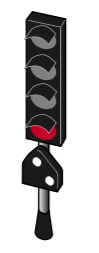
- AThe train or movement may proceed past the signal as the position-light signal shows proceed.
- BThe main aspect is displaying Red, therefore the movement is not yet authorised
- CThe signal is faulty
53When not in use, main and position-light signals are covered up with?
- ALarge black bag displaying a white X
- BHigh visibility bag
- CLarge white bag displaying a black X
Información
- Descripción
- Test sobre Train driver rules and regulations Quiz, creado por Adam Mackie el 05/05/2015.
- Autor
- Adam Mackie
- Idioma
- English
- Visitas
- 320
- Valoración
- 5,0 de 5 · 1 valoración Valora este test