
Test
Endocrinology Exam Questions
Este test tiene tipos de pregunta que se abren en el reproductor de siempre.
Preguntas del test (161)
1Which hormones regulate the levels of calcium in the blood?
- ATSH, fT4, fT3
- BCortisol, ACTH
- CIncrease lunch dose of rapid acting insulin
- DIncrease dinner dose of rapid acting insulin
- EDecrease dose of basal insulin
- FDecrease breakfast dose of rapid acting insulin
- GDecrease lunch dose of rapid acting insulin
- HDecrease dinner dose of rapid acting insulin
- INo treatment adjustment required
- JAdd Metformin 850 mg/d
225 y/o pregnant female (26 weeks gestation, 1 pregnancy) complains of low energy, No feeling of thirst. Mother is diagnosed with diabetes mellitus, type 2. Physical evaluation: height - 168cm, weight - 86kg, BP - 116/76 mmHg, HR - 88/min. Blood tests (fasting in the morning, in venus plasma): complete blood count - in normal range, K - 4.4 mmol/l, Creatinine - 70 mmmol/l, glucose - 5.0 mmol/l, urine test - no pathology. What test should be done to confirm the diagnosis?
- A75 g oral glucose tolerance test at 0, 60 and 120 min
- BNo further evaluation is needed. The information is sufficient for diagnosis of gestational diabetes
- CGlucose levels 2 hours after meal should be assessed
- DFasting plasma glucose should be repeated
- E75 g oral glucose tolerance test at 0 and 120min
3A 4 year old girl is seen in clinic for fatigue, insomnia, increase appetite, nervousness. Review of symptoms includes "eyes buldging", a growth spurt, tachycardia and diffusely enlarged thyroid gland. The hormone analyses are TTH < 0.01 mU/l, FT4 55pmol/l, thyroid peroxidase antibody 20kU/l (normal range 0-12), antithyroglobulin antibody 60kU/l (normal range 9-199), anti-TSH receptor antibodies 35 (normal range <9). What is the treatment of this hyperthroidism?
- ADiazepam
- BMetisol
- CLevothroxine
- DMetroprolol
- EIodine supplements
4What can induce hyperprolactinemia?
- ANo correct answer
- BAll answers are correct
- CPhysical activity
- DPregnancy
- ESalty food
- FAlcohol use
5What are the clinical features of diabetes in children?
- AAnuria
- BPolyuria
- CWeight loss
- DPolydipsia
- EOedema
- FVaginal candidiasis in girls
6Patient has T2 breast cancer and axillary lymph nodes are not palpable. Before the surgery, we need to:
- AMark a sentinel lymph node with a radioisotope-bound protein
- BThere is no need of marking because all axillary lymph need to be removed
- CMark a sentinel lymph node with a dye
- DMark a sentinel lymph node with a radiosotope bound protein and dye
7Which surgical procedures increase incretin secretion inside the intestine?
- AGastric sleeve resection
- BGastric band
- CAll answers are correct
- DBiliopancreatic diversion
- EGastric bypass
8Which test would you recommend if the patient complains of dysphagia and the pressure to the neck organs is suspected?
- AThe ultrasound of the throid
- BFNA of the nodule of the thyroid
- CCT of the neck
- DOesophagus X-ray with contrast
9The average age of puberty to begin in girls is between .....
- A8-13
- B10-15
- C7-12
- D9-14
10Breast cancer mortality among women in Lithuania are approximately 20 cases/100000 habitants. As compared to the world average morbidity, it is
- ALower
- BHigher
- CEqual
11What is the cause of hypoglycemia with diabetes?
- AOvereating
- BInfection
- CExercise
- DMissed insulin injection
12A 14-year old overweight male (no other complaints/pathological findings) was referred to pediatric endocrinologist for evaluation of OGTT (oral glucose tolerance test) results.
OGTT results:
Fasting glucose 6.5 mmol/l
2-hour plasma glucose 7 mmol/l
What is your diagnosis?- AType 2 diabetes
- BImpaired fasting glyceamia
- CImpaired glucose tolerance
- DNormal OGTT results
13What are the cardiovascular complications of acromegaly?
- AAll answers are correct
- BThe dilatation of peripheral vessels due to high levels of IGF-1
- CThere is no correct answer
- DArterial hypertension
- EAcute heart failure
- FArterial hypotension due to decreased blood circulation
- GCardiomegaly
14A patient is being investigated for suspected endocrine hypertension (BP ranges from 150/95 mmHg to 180/110 mmHg). The morning serum hormone levels are: Cortisol - 450 nmol/L (n. 289-600 nmol/l), Aldosterone - 1260 pmol/l, Metaneferin - 0.3 nmol/; (n. <0.5nmol/l), Normetanefrin - 0.6 nmol/l (n. <0.9 nmol/l).
What dynamic test needs to be performed for further evaluation?- ANo further tests needed - possible endocrine hypertension has been excluded
- BSalt infusion test
- CCatheterization of v. cava inferior
- DAbdominal CT to evaluate for possible adrenal adenoma
- ENo further tests needed - oversecretion of Aldosterone has been confirmed
15Which of the investigations is the best to diagnose thyroid toxic adenoma.
- AThyroid scintigraphy
- BFine needle aspiration of the node
- CBarium swallow
- DUltrasound examination
- EFree thyroxine investigation
16Which of these help prevent foot injuries?
- ARegular footwear and foot inspection
- BTraining the patients and their family to properly maintain feet and nails
- CNone of the above
- DSpecial soles in the shoes
- EProper footwear selection
17Which metabolic features are specific to cortisol hypersecretion?
- ANo correct answer
- BHyperkalemia, hypoglycemia, hypercalcemia
- CGlucose intolerance, dyslipidemia, hypercalcemia
- DHypotension, hypoglycemia, hypercalcemia
- EAll answers are correct
- FHypercalcemia, hypotension, weight loss
18Which visual radiological examinations will the surgeon guide before removing the right inferior parathyroid gland adenoma:
- ANeck ultrasound
- BNeck plain X-ray with barium contrast in the oesophagus
- CNeck plain X-ray
- DSestamibi (MIBI) scan
- EJ131 scan
19Situation: The 14 y.o boy comes to your office for short stature. Mother notes that the boy's growth according to lower percentile has been observed since early childhood. Father's height caught up and puberty was delayed. Currently, the height and weight of the boy is between 3-10 percentiles, growth rate is 5 cm/year, sexual maturity P1G1. Your suspected diagnosis:
- ASex hormones deficiency
- BGrowth hormones deficiency
- CSHOX gene mutation
- DConstitutional growth and puberty delay
20What is the impact of hypokalemia on aldosterone secretion?
- ARecuces the synthesis of aldosterone because of the inhibition of ACTH-Aldosterone axis
- BSuppresses
- CStimulates
- DNo impact
21What are the clinical signs and symptoms of primary hyperaldosteronism?
- AResistant hypertension, hyperkalemia, hyperpigmentation
- BHypertension, irregular cycle, hyperkalemia
- CHypotension, hypokalemia, headache
- DHypotension, hyperkalemia, headache
- EResistant hypertension, headache, hypokalemia
22Clinical manifestation of motor neuropathy?
- AInnervation of the foot muscles are disturbed resulting in the atrophy of the foot muscles and alteration of the foot architecture - new support points are formed resulting in cracks and calluses
- BPain, temperature, tactile sensations are damaged which increases the chance to damage the foot
- CDehydrates the skin, cracks appear and soft tissue infection can occur
23The first sign of puberty for girls is usually?
- AAcne
- BFirst period
- CBreast budding
- DGrowth of Pubic hair
24What macrovascular complications of diabetes mellitus do you know?
- ANephropathy
- BNeuropathy
- CAll the answers are correct
- DRetinopathy
- EIschemic heart disease
25A Patient undergoes an oral glucose tolerance test:
Fasting glycemia - 6.8 mmol/L
2 hours post-challenge with 75 g glucose solution - 7.4 mmol/L
Which glucose metabolism impairment are such results indicative of?- ANormal glucose tolerance
- BImpaired fasting glycemia
- CImpaired glucose tolerance
- DDiabetes mellitus
26How long does it take to develop the diabetic ketoacidosis in case of technical failure in a patient with type 1 diabetes if he is on insulin pump therapy?
- ANever
- BSeveral months
- CSeveral minutes
- DSeveral days
- ESeveral hours
27What are the clinical features of hypothyroidism?
- Acreased blood pressure
- BThirst, rashes in the skin
- CWeight gain, cold tolerance
- DHeart beats
- EHyperpigmentation of the skin
28What microvascular complications of diabetes mellitus do you know?
- AIschemic heart disease
- BPeripheral artery disease
- CRetinopathy
- DMyocardial infarction and stroke
- EAll the answers are correct
29The most common pharmacological growth hormone stimulation tests
- AClonidine
- BArginin
- CInsulin tolerance test (ITT)
- DSynacten
- EGlucagon
30Patients underwent lab tests for a suspected thryroid disease - these are the results: TSH - 0.24 (n. 0.5-4.75) mIU/l, fT4 - 7.3 (n. 10-20) pmol/l, fT3 - 1.6 (n. 2-6) pmol/l; anti-TPO - 21.9 (n. <34), anti-TG - 82.4 (n. <100), antiTSH (stimulating) - 9.5 (n. <10). What disease is the most probable based on such results?
- AGrave disease
- BHypothyroid phase of Hashimoto thyroiditis
- CEuthyroid phase of Hashimoto thyroiditis
- DHyperthyroid phase of Hashimoto thyroiditis
- ETSH producing pituitary adenoma
- FCentral hypthroidism
- GThyroxin producing pituitary adenoma
- HDeviation of lab results is clinically irrelevant
31According to clinical data, the patient is suspected to have Cushing's syndrome. What test is a screening dynamic test used for outpatients?
- AOral glucose tolerance test
- B24 h urinary free cortisol
- CCircadian rhythm of Cortisol
- DSalt infusion
- EOvernight 1 mg Dexamethasone suppression test
- FSynacthen test
32Which medication/s can increase the level of prolactin?
- ANo correct answer
- BMetformin
- CMetoclopramide
- DAll answers are correct
- EDigestive enzymes
- FLevothyroxine
33You are seeing a patient in the ER who complains of nausea, vomiting aand general malaise. The tests are performed: blood glucose 21.9 mmol/L, blood ketones 3mmol/L (n. 0.4mmol/L), arterial blood gas pH - 7.18. What condition is most likely?
- ADiabetic keoacidosis
- BDiabetic ketonaemia
- CUncomplicated hyperglycemia
- DAcidosis of unknown origin
34What is the type of obesity of a woman whose waist circumference is 107 cm and hip circumference is 109.5cm.
0.97716894977169- APeripheral
- BCentral
35The patient was diagnosed with type 1 diabetes 4 years ago. He is currently on insulin Glargine 22 IU daily at bedtime, Insulin Humalog 9 IU for breakfast, 10 IU for lunch, 6 IU for dinner.
HbA1c - 7.5%. His SMBG values: fasting - up to 2.2 mmol/L, post lunch - 6.5 mmol/L, post dinner - 5.1 mmol/L.
How should you proceed with treatment adjustment?- AIncrease dose of basal insulin
- BIncrease breakfast dose of rapid acting insulin
- CIncrease lunch dose of rapid acting insulin
- DIncrease dinner dose of rapid acting insulin
- EDecrease dose of basal insulin
- FDecrease breakfast dose of rapid acting insulin
- GDecrease lunch dose of rapid acting insulin
- HDecrease dinner dose of rapid acting insulin
- INo treatment adjustment required
- JAdd Metformin 850 mg/d
36A patient has been diagnosed with type 2 diabetes 3 years ago. He is currently on Metformin 850 mg tid, Gliclazide MR 120 mg daily and Liraglutide 1.8 mg daily. HbA1c - 7.5%.
His self monitoring blood glucose results are: fasting - up to 5.9 mmol/L; 2 hours post meal - 11.3 mmol/L.
Based on these results, what is the next step in adjusting the treatment?- AStart basal insulin
- BDiscontinue Gliclazide and Liraglutide and start rapid acting insulin for the meal resulting in the highest glycemia
- CDiscontinue Gliclazide and start basal, as well as rapid acting insulin
- DDiscontinue all current medications and start basal insulin
- EDiscontinue all current medications and start rapid acting insulin
37A 46 year old female complains of general weakness, headaches, weight gain, irregular menses, mood swings. Weight is increasing for about 2 years, she has gained 22 kg.
Amenorrhea for the past 9 months. Her work is sedetary. Parents are not obese. She does not use any medications. Physical examination: Height - 166 cm, weight - 102 kg. Temperature - 36.6°C, skin is normally moist with hyperpigmentation, "acanthosis nigricans" in the neck. Thyroid is invisible, enlarged when palpable. HR 94/min, regular, BP 180/100 mmHg. Central obesity with purple striate in abdomen and hips is observed. Mild lower leg edema bilaterally. Lab tests: oral glucose tolerance test: fasting 6.3 mmol/l; 2 hours after 75 g, glucose - 7.8 mmol/l; lipidogram: total cholesterol 6.8 mmol/l. FT4 - 10.5 pmol/l (9-19), TSH - 3.6 mIU/l (0,4-4), 8 A.M. Cortisol - 760nmol/l (240-580), ACTH 0.8 nmol/l (2-10). What is the most probable cause of obesity?- AHyperglycemia
- BHypothalamic dysfunction
- CReduced physical activity, gentic predispostion
- DACTH dependent Cushing syndrome
- EACTH independent Cushing syndrome
- FSecondary hypothyroidism
3861 years old patient complains of dryness in the mouth, general weakness, somnolence. Father was diagnosed with arterial hypertension, his mother has a history diabetes mellitus. Physical examination: Height 182 cm, weight 118kg, waist circumference 120cm, hip circumference 110cm. Temperature - 36.7°C. Skin and mucous membranes are normal color, dry. BP - 160/94 mmHg, HR - 88/min. Blood test: fasting in the morning in venus plasma; Complete blood count: in normal range, K - 4.4 mmol/l, creatinine - 70 mkmol/l, glucose - 6.9 mmol/l, urine test - no pathology. 75 g oral glucose test was performed: 0 min - 6.8 mmol/l, 120 min - 9.8 mmol/l. Do you hae enough data to confirm the diagnosis of diabetes mellitus?
- ANo. Fasting glucose is below 7 mmol/l
- BYes, the glucose is over 6.1 mmol/l for 2 times
- CNo. The diagnosis of diabetes mellitus can be made if the glucose 2 hours after oral glucose is ≥ 11.1 mmol/l
- DYes. The patient has complains of diabetes mellitus and the levels of glucose are increased
- EYes. Plasma glucose 2 hours after
39Patient has been on antiresorptive drugs for a couple of years of osteoporosis without fratures treatment. The bone mineral density on DXA in spine and hip has since decreased. Serum Calcium is elevated. What further evaluation is needed?
- ADiscontinue the use o calcium and vitamin D and repeat the blood test after a few days
- BAssess the level of parathyroid hormone
- CCheck serum phosphorous
- DPerform ultrasound examination of the neck
- EAll answers are correct
40The patient is admitted with a wound on the plantar surface of his right foot. An ankle branchial index is 0.54. What should be the next step?
- AAngiography and angioplasty is needed to restore arterial blood flow
- BThe index is nomal, check inflammatory markers and consider antibacterial treatment
- CPossibly a non-compressible calcified vessel, further testing required
- DNone applicable
- ESevere ischemia, consider urgent amputation
41The diagnosis of pheochromocytoma was confirmed. What is the first line of treatment.
- AObservation
- BPreoperative preparation and surgical resection of the dominant adrenal gland
- Cα1-arenoreceptor blockers
- DPreoperative preparation and pituitary adenomectomy
- Eβ-adrenegnic blockers
42What enzymes deficiencies are relevant to CAH?
- A11β-hydroxylase
- B5α-reductase
- CAromatase
- D17β-hydroxysteroid dehydrogenase
- E17α-hydroxylase
- F21-hydroxylase
- G3β-hydroxysteroid dehydrogenase
43What are the main features of Graves' ophthalmopathy?
- AAll answers are correct
- BSystolic murmur in the upper eyelid
- CPainful movements of the eyes
- D"Moon face"
- EThere is no correct answer
- FFrequent blinking
44What are the clinical features of hyperthyroidism?
- AWeight gain, cold intolerance
- BBradycardia, increased blood pressure, weight loss
- CHyperpigmentation of skin and mucous membranes, thirst
- DTachycardia, arrhythmias
- ENo symptoms are present, this is an asymptomatic disorder
45Patient had a fever (up to 38.5°C) and sore throat two weeks ago. He got well since but a few days later; heart palpitations, general weakness and pain in the neck occurred. Physical examination: Body temperature - 37.2°C, HR - 96/min, tremor in the fingers. Thyroid is IB, rigid and painfuk in the right side on palpitation. What disease would you suspect?
- AHashimoto's thyroiditis
- BAcute thyroiditis
- CSubacute thyroiditis
- DNone of the mentioned diseases is suspected
- EAutoimmune thyrioditis
- FRiedel thyrioditis
46What can induce hypopituitarism?
- AMacroadenoma - due to compression to the surrounding tissues
- BThis may be a chronic complication of diabetes mellitus
- CAntipsychotic drugs as they increase the levels of of prolactin
- DThere is no correct answer
- EHyperthyrosis - overactive thyrod "wears-out" the pituitary
- FAll responses are correct
47What is a macroadenoma of the pituitary?
- AAdenoma >5 mm in size
- BWhen adenoma suppresses the chiasma opticum
- CAdenoma >10 mm in size
- DAdenoma that can be detected by a pituitary scintigraphy
- EAdenoma that manifests in macrosome
48Deficiency of which hormones is observed in adrenal insufficiency?
- AAldosterone
- BAdrenaline
- CCortisol
- DAll answers are correct
- EParathormone
- FSeratonine
- GACTH
49What investigations are characteristics for Primary adrenal insufficiency in children?
- AACTH low
- BLow sodium
- CHigh potssium
- DSynacten test: low or absent cortisol rise
- ELow potassium
- FLow cortisol
- GACTH raised
- HHigh sodium
50Differentiated thyroid cancers are:
- APapillary and medullary
- BFollicular and papillary
- CFollicular and medullary
- DPapillary, follicullar and medullary
- EMedullary and anaplastic
51A 2.8 cm tumour was detected in the left adrenal during ultrasound testing. Yhe patient is using antihypertensive agents. The endocrinologist did not detect any changes in the hormonal activity. CT scan was done and adenoma of the left adrenal gland is suspected. The patient was assigned to:
- AHigh risk of adrenal cancer - left adrenalectomy through laparatomy is needed.
- BHigh risk of adrenal cancer - diagnostic laparoscopy is needed
- CHigh risk of adrenal cancer - laparoscopic adrenalectomy is needed
- DConduct control tests after 1 year
- EPerform positron emission tomography and compare with CT scan data
52Patient complains of general weakness, constipation, hair loss, weight gain. Physical evaluation: Body temperature - 36.4°C, Height - 168cm, weight - 82kg, dry skin, HR - 68k/min. Thyroid II°. The ultrasound of the thyroid: Thyroid is enlarged, normoechogenic, non-homogeneus, with numerous hypoechoic areas. What disease is it, most likely?
- ASubacute thyroiditis, hyperthyroidism
- BAutoimmune thyroiditis, hypothyroidism
- CChronic fibrosing thyroiditis
- DRiedel thyroiditis, hypothyroidism
- ESubacute thyroiditis, hypothyroidism
53What is the treatment for hypothyroidism?
- AThyroidectomy
- BLevothyroxine replacement therapy
- CBetablockers are the first line of treatment option
- DSteroids are necessary for the treatment
- EAntithyroid drug replacement therapy
54What are the possible causes for the hyperthyroidism?
- AToxic adenoma
- BAll answers are correct
- CGrave's disease
- DHyperfunction phase of autoimmune thyroiditis
- EToxic multinodular goiter
55The patient was diagnosed with type 1 diabetes 3 years ago. He is currently on insulin Glargine 20 IU daily at bedtime, insulin Humalog 6 IU for breakfast, 9 IU for lunch, 4 IU for dinner.
HbA1c - 7.4%. His SMBG valaues: fasting - up to 6.7 mmol/L; 2 hours post breakfast - 4.4 mmol/L, post lunch - 8.7 mmol/L, post dinner - 7.9 mmol/L.
How should you proceed with treatment adjustment?- AIncrease dose of basal insulin
- BIncrease breakfast dose of rapid acting insulin
- CIncrease lunch dose of rapid acting insulin
- DIncrease dinner dose of rapid acting insulin
- EDecrease dose of basal insulin
- FDecrease breakfast dose of rapid acting insulin
- GDecrease lunch dose of rapid acting insulin
- HDecrease dinner dose of rapid acting insulin
- INo treatment adjustment required
- JAdd Metformin 850 mg/d
56What can induce hypoglycemia for patient with diabetes mellitus?
- APhysical activity
- BInsufficient dose of basal insulin
- CInsufficient dose of insulin for a meal
- DHyperglycemia
- EThere is no correct answer
57A patient has been diagnosed with type 2 diabetes 6 years ago.
He just underwent routine tests and these are the results: estimated glomerular filtration rate - 23 mL/min; Urinary Albumin - 317 mg/L. Amount of urine - 2L/24 hrs.
What is the stage of diabetic nephropathy?- AStage 1
- BStage 2
- CStage 3
- DStage 4
- EStage 5
58What is the target of fasting glucose in gestational diabetes?
- A≤6.1 mmol/l
- B≤5.3 mmol/l
- C≤6.7 mmol/l
- D≤6.5 mmol/l
59How can ankle/brachial index be checked?
- AThe measurements are performed during angiography
- BThe diastolic blood pressure is measured in the lower calf and in the upper arm. The ratio is calculated
- CThe pulses of a. dorsalis pedis and a. radialis are assessed, the ratio is calculated
- DThe systolic blood pressure is measured in the foot and in the upper arm. The ratio is calculated
- Ef. The systolic blood pressure is measured in the lower calf and in the upper arm. The ratio is calculated
60Patient is diagnosed with diabetes mellitus type 2 for the first time. The following changes on fundoscopy is found: abnormal growth of new blood vessels. What diabetic retinopathy can be diagnosed?
- AMakulopathy
- BPreproliferative retinopathy
- CProliferative retinopathy
- DNon-proliferative retinopathy
- EThe changes are clinical insignificant, there is no enough data to diagnose diabetic retinopathy
61A patient has been diagnosed with type 2 diabetes 4 years ago. He is currently on Metformin 850 mg tid, Gliclazide MR 120 mg daily, Insulin Glargine 33 IU daily.
After downloading his recent self-montoring blood glucose readings you see that in the past week his SMBG results are: fasting - up to 7.4 mmol/L; 2 hours post meal - 6.9 mmol/L.
Based on these results, how should the treatment be adjusted?- AIncrease the dose of basal insulin
- BDiscontinue gliclizade, add rapid acting insulin for the meal that results in the highest glycemia
- CResults are acceptable, no treatment adjustment required
- DAdd a Sulphonylurea class medication
62What are the target organs of parathyroid hormone?
- AThere is no correct answer
- BLiver, Kidney
- CBones, Kidney, Intestine
- DMuscles, bones
63Which part of the bone is responsible for the bone formation?
- ACollagen
- BOsteocyte
- COsteoblast
- DMinerals: Calcium, Phosphorous, Strontium
- EOsteoclast
64What is the type of obesity of a man whose waist circumference is 111.5 cm and hip circumference is 109.5 cm. 1.0182648401826
- APeripheral
- BCentral
65Which of the diseases of endocrine ophthalmopathy is most specific?
- ASecondary hyperthyroidism
- BMultinodula toxic goiter
- CGrave's disease
- DIt is not a specific feature, it is a sign of hypothyrosis
- EIt is not a specific feature, it is a sign of thyrotoxicosis
66Patient complains of discomfort in the throat when swallowing. Physical evaluation: Thyroid is III°, rigid, palpable nodules. The ultrasound of the thyroid: Thyroid is enlarged, normal echogenicity, homogenous. There are multiple nodules up to 2.5 cm in both sides of the thyroid. What tests would show if there is any pressure to the neck organs induced by the nodules of the thyroid?
- AX-ray of the esophagus using contrast
- BThe ultrasound of the thyroid
- CMRI of the neck
- DCT scan of the neck
- EAll answers are correct
- FThyroid scan
67What is the first stage (screening) test of primary hyperaldosteronism is clinically suspected?
- AAldosterone/renin ratio
- BDetermination of aldosterone concentration
- CCortisol/aldosterone ratio
- DAldosterone level in 24 hrs urine
- ERenin/cortisol ratio
- FSalt infusion test
68Primary adrenal insufficiency is characterized by:
- ADeficiency of mineralcorticosteroids
- BHyperpigmentation
- CSigns of failure of other endocrine glands
- DNo correct answer
- EOrthostatic hypotension
- FAll answers are correct
- GHyperglycemia
69You diagnosed a patient with Pheochromocytoma and a surgery is planned. What are the required steps prior to the surgical resection:
- ASpironolactone/Eplerenone at least 4 weeks before surgery
- BAdrenoreceptor blockers, glycemic correction
- CDiscontinue treatment with spironolactone, ACE inhibitors or ARBs for at least 4 weeks before surgery
- DMetformin should be stopped at least 2-3 days before the surgery
- EACE inhibitors or ARB at least 1 week before surgery
- FBP management of BP using α-adrenergic blockers and β-adrenegic blockers at least 2 weeks before surgery
70What metabolic features are specific to cortisol hypersecretion?
- AHypoglycemia/decreased levels of cholesterol
- BHyperglycemia/decreased levels of cholesterol
- CHyperglycemia/Dislipidemia
- DHypoglycemia/Dislipidemia
- EThere is no correct answer
71The patient was diagnosed with ACTH independent Cushing's syndrome. What is the first line of treatment?
- AUnilateral adrenalectomy
- BSearch of ectopic tumor and the treatment of primary disease
- CMedication treatment
- DBilateral adrenalectomy and glucocorticoids replacement therapy
- ETransfenoidal adenectomy
72What are the cardiovascular complications of acromegaly?
- AThe dilatation of peripheral vessels due to high levels of IGF-1
- BCardiomegaly
- CAll answers are correct
- DArterial hypertension
- EArterial hypotension due to decreased blood circulation
- FAcute heart failure
- GThere is no correct answer
73Which dynamic test confirms growth hormone deficiency?
- AAll answers are correct
- BThe levels of IGF-1 repeated twice
- CGlucose tolerance test
- DSynacten test
- E1 mg Dexamethasone suppression test
- FInsulin tolerance test
74Which of these hormones are not synthesized in the anterior pituitary?
- AThyreotropin
- BVasopressin
- CSomatotropin
- DAdrenocorticotropin
- EProlactin
75Which visual radiological examinations will the surgeon guide before removing the right inferior parathyroid gland adenoma:
- ANeck plain X-ray
- BJT31 scan
- CSestamibi (MIBI) scan
- DNeck plain X-ray with Barium contrast in the oesophagus
- ENeck ultrasound
7675 y/o patient suffering from type 2 diabetes and arterial hypertension. BMI - 27kg/m2. Blood test: Potassium 4.1 mmol/l, Na 140 mmol/l. Ultrasound and abdominal CT detected a 1.1 cm tumour in the left adrenal gland. Most likely diagnosis is:
- AAldosteroma
- BCarcinoma
- CIncidentaloma
- DInsulinoma
- EHyperplasia
77Age limit and periodicity for Mammography Program in EU is:
- ABase mammography at the age of 35. Mammography is performed each year for 50-69 year old women
- BBase mammography at the age of 40-49. Mammography is performed 2 years for 45-60 year old women
- CBase mammography at the age of 45. Mammography is performed 2 years for 55-69 year old women
- DBase mammography at the age of 35. Mammography is performed 2 years for 45-60 year old women
- EBase mammography at the age of 40-49. Mammography is performed 2 years for 50-69 year old women
78A patient (45 years of age, BMI 47 kg/m2), comorbidities-type II diabetes and arterial hypertension caame to an appointment with bariatric surgeon and wants to know more about surgery of obesity. What are the advantages of surgical obesity treatments against conservative ones?
- AGreater long term weight loss
- BAll answers are correct
- CBetter correction of comorbidities associated with obesity
- DLower mortality during long term follow-up
- ELower complication risk in the short term follow-up period
79A patient (45 years of age, BMI 47 kg/m2), comorbidities-type II diabetes and arterial hypertension came to an appointment with bariatric surgeon and wants to know more about the effectiveness of surgery of obesity. What is the probable weight loss after surgery for obesity?
- ARestrictive procedures - 50% malabsorptive - 100% combined - 80% excess weight
- BAll answers are correct
- CRestrictive procedures - 90% malabsorptive - 70% combined - 40% excess weight
- DRestrictive procedures - 50% malabsorptive - 70% combined - 60% excess weight
- ERestrictive procedures - 30% malabsorptive - 100% combined - 60% excess weight
80Thyrotoxicosis is treated with the following medicines except:
- ABeta blockers
- BAntithyroid medicines
- CGlucocorticoids
- DSedative
- EAntibiotics
81During the surgery, the limb is removed at the joint - this procedure is called:
- AExcision
- BExarticulation
- CIncision
- DAmputation
82Which of these may cause ulcers in the foot?
- ANeuropathy
- BIschemia
- CTrauma
- DInfection
- ENone of these are correct
83A 4 year old girl is seen in clinic for fatigue, insomnia, increase appetite, nervousness. Review of symptoms includes "eyes buldging", a growth spurt, tachycardia and diffusely enlarged thyroid gland. The hormone analyses are TTH < 0.01 mU/l, FT4 55pmol/l, thyroid peroxidase antibody 20kU/l (normal range 0-12), antithyroglobulin antibody 60kU/l (normal range 0-100), anti-TSH receptor antibodies 35 (normal range <9). What is the etiology of this hyperthroidism?
- AThyroid follicular cell hyperfunction
- BThyroid follicular cell destruction
- CIngestion iodide preparations or thyroid hormone
84What are the causes of primary congenital adrenal insufficiency in children?
- AWaterhouse-Friedrichsen syndrome
- BPanhypopituitarism
- CAdrenal dysplasia
- D21 hydroxylase deficiency
- ECNS malformations
- FAdrenoleucodystrophy
85What is relevant to 17α-hydroxylase deficiency?
- AHypogonadism
- BIncreased blood pressure
- CPrecocious puberty
- DVirilization in females
- EMales incomplete masculinization
- FDecreased blood pressure
868 - year old boy, weight 18kg. presents to the pediatric emergency room with complaints of polyuria, thirst, pain in abdomen, vomitting for 1 day. On examination, he was drowsy, had deep sighing respiration and dehydration. Temperature 36.9°C, heart rate 140/min., respiratory rate 30/min., blood sugar 28 mmol/l, pH 7.0. What condition is most likely?
- ADiabetics ketonaemia
- BDiabetic ketoacidosis
- CPneumonia
- DGastroenteritis
87Two main reasons of growth hormone discontinuation
- AAdult height reached or the growth rate is less than 3cm/yr
- BGrowth plate fusion
- CPrecocious puberty
88If a girl started puberty at the age of 9 would it be considered early?
- AVerdadero
- BFalso
89What is relevant to Central Precocious Puberty?
- A5 times more common in girls
- BCentral Nervous System Lesions (organic causes) in >60% of boys
- CMost cases are idiopathic
- DPremature activation of the HPG axis
90A 7-year old girl came to outpatient clinic with complaints of failure to thrive, chronic diarrhoea, abdominal distention and pain, body temperature is normal. Symptoms last for 6 months. From the history, she was diagnosed with type 1 diabetes 2 years ago, she had optimal glycemia control for one year but now her HbA1c is 9.5% with unexplained hypoglycemia events.
What is the most probable diagnosis?- AAppendicitis
- BBacterial gastroenteritis
- CCrohn disease
- DIrritable bowel disease
- ECoeliac disease
91What are the most common clinical and biochemical findings in children with type 2 diabetes?
- ADyslipidemia
- BPositive autoimmune markers for diabetes
- CObesity
- DAll answers are correct
- EAcantosis nigricans
- FHyperglycemia
- GHypertension
92Patient is a Type 2 diabetic and having arterial hypertension. He came to a consultation on restrictive obesity surgery and wants to know more about this type of surgery. What are the most common complications of restrictive obesity surgery?
- AComplications associated wih foreign body
- BNausea, vomitting
- CReflux symptoms
- DAll answers are correct
- EPostoperative wound infection
93What is the target fasting glucose for the patient with diabetes mellitus?
- A≤6.5 mmol/l + no hipos
- B≤7.8 mmol/l + no hipos
- C≤6.1 mmol/l + no hipos
- D≤ 7.0 mmol/l + no hipos
94The patient was diagnosed with type 1 diabetes 7 years ago. He is currently on insulin Glargine 30 IU daily at bedtime, insulin Humalog 7 IU for breakfast, 8 IU for lunch, 5 IU for dinner.
HbA1c - 7.2%. His SMBG values: fasting - up to 3 mmol/L; 2 hours post breakfast - 8.6 mmol/L, post lunch - 4.5 mmol/l, post dinner - 5.6 mmol/L.
How should you proceed with treatment adjustment?- Alncrease dose of basal insulin
- BIncrease breakfast dose of rapid acting insulin
- CIncrease lunch dose of rapid acting insulin
- DIncrease dinner dose of rapid acting insulin
- EDecrease dose of basal insulin
- FDecrease breakfast dose of rapid acting insulin
- GDecrease lunch dose of rapid acting insulin
- HDecrease dinner dose of rapid acting insulin
- INo treatment adjustment required
- JAdd Metformin 850 mg/d
95What are the specific metabolic changes of arterial blood pH in diabetic ketoacidosis?
- ADiabetic acidosis
- BMetabolic acidosis
- CMetabolic alkalosis
- DDiabetic alkalosis
- ERespiratory acidosis
96What is the first step to check if arterial blood flow is sufficient in patient with diabetes mellitus?
- APalpation of a dorsalis tibalis
- BThe palpation of a femoralis
- CPalpation of a femoralis superficialis
- DPalpation of a tibialis anterior
- EPalpation of a dosalis pedis
97Which drug may induce hypercalcemia?
- AAntidepressants
- BDenosumab
- CAntibiotics
- DThiazide diuretics
- EBisphosphonates
98According to WHO classificaation of thyroid enlargement. What is the size of III°?
- AThe goitre is visible from a distance
- BThe goitre is palpable and visible when the neck is in reclined position
- CThyroid is not enlarged
- DThe goitre is palpable but not visible
99A 58 year old man presents with a painless tumor in the neck, increased sweating and episodes of tachycardia. No discomfort on swallowing is present. Physical evaluation: Temperature 36.7°C, Heart rate 96/min. The ultrasound of the thyroid: thyroid is normal in size, echogenity, homogenous. In the left side, there is a 2x3 cm solid isoechoic nodule with regualr margins. Lab tests: TSH - o.3IU/l (n. 0.4-4.2), FT4 - 19pmol/l (n. 9-21). On the scan, there is a toxic adenoma. What are the acceptable treatment options?
- AAntithyroid drugs
- BSurgery
- CThe injection of ethanol into the nodule
- DRadioactive iodine
- ENo treatment is needed, a toxic adenoma is a benign nodule
100What ultrasound features are indicative of a malignant nodule of a thyroid?
- AThere is no correct answer
- BMacrocalcinate
- CAnechoic nodule
- DIsoechoic spongiform appearance
- EMultinodular goitre
- FHypoechoic nodule
101The patient is being evaluated for a cause of obesity. He has no other complaints. Clinical examination. Height - 178cm, weight - 121kg,. No striae are visible. The following test results are received. FT4 - 15.2 pmol/l (n. 9-19), TTH - 2.3 mIU/l (n. 0.5-4.8), 8 A.M. Cortisol - 848 nmol/l (n. 424-724). Fasting plasma Glycemia - 5.8 mmol/l. Patient undergoes an overnight 1 mg. Dexamethasone test: 9 A.M. Cortisol - 61.7 nmol/l. What is your next step?
- ANo further tests needed - no signs of pathologic Cortisol secretion
- BPerform a low dose of Dexamethasone test to evaluate for posible adrenal pathology
- CPerform catheterization of v.cava inferior
- DPerform abdominal CT for possible adrenal adenoma
- EPerform high dose Dexamethasone test for possible adrenal pathology
102What hormonal changes are specific for primary adrenal insufficiency?
- ADecreased levels of cortisol/Decreased ACTH/ a response of cortisol ( > 550 nmol/l) after ACTH stimulation
- BDecreased levels of cortisol/Decreased ACTH/ No response of cortisol ( > 550 nmol/l) after ACTH stimulation
- CDecreased levels of cortisol/Decreased ACTH/ Decreased CRH
- DDecreased levels of cortisol/Increased ACTH/ No response of cortisol (<550 nmol/l) after ACTH stimulation
103Which of the following symptoms are most commonly associated with phaeochromocytoma?
- AHypotension accompanied by increased sweating, hunger, headache
- BHypertension accompanied by increased hypoglycemia, sweating, hunger
- CHypotension accompanied by tachycardia, hyperglycemia, nausea, vomiting
- DNausea, vomitting, excess sweating, normal blood pressure
- EHypertension accompanied with headache, sweating, achycardia
104The patient with Cushing syndrome has undergone a high dose dexamethasone suppression test with a baseline cortisol concentration of 980 nmol/l, followed by the 360 nmol/l after the test. What s the most probable cause of Cushing's syndrome?
- AFunctionality inactive pituitary adenoma
- BCortisol hypersecretion due to adrenal adenoma
- CNot enough data to set the diagnosis
- DACTH secreting pituitary adenoma
- ENone of the options is correct
- FEctopic ACTH synthesis
105A patient was diagnosed with Cushing syndrome. Could it have any effect on the secretion of growth hormone, prolactin and sex hormones?
- AIt suppresses growth hormone but stimulates prolactin and sex hormones
- BHas no effect on secretion of other hormones
- CYes, it may impair secretion of other hormones
- DYes, it may stimulate secretion of other hormones
- ENo correct answer
- FIt stimulates growth hormone and prolactin but does not affect secretion of sex hormones
106What are the clinical signs of thyrotropinoma?
- AClinical symptoms of hyperthyrosis
- BClinical symptoms of hypothyrosis
- CClinical symptoms of hypercorticism
- DSigns of acromegaly
- ENo correct answer
107What can induce hypopituitarism?
- AHyperthyroidism - increased function of thyroid gland exhausts the pituitary gland
- BThis is the one of the chronic diabetes mellitus complications
- CAll answers are correct
- DExcessive bleeding during delivery
- EAntipsychotic drugs because of the increase levels of prolactin
- FNo correct answer
10840 y/o female is suffering from chronic kidney failure and needs hemodialysis. 10 years ago, total parathyroidectomy was performed and about 4.6 mg of parathyroid gland was reimplanted to the forearm muscles. The first few years after surgery, PTH was within normal range. Recent blood test: Ca - 2.6 pmol/l, Ca ++ - 1.2 pmol/l, PTH = 120pg/l. What are the least likely causes of hyperparathyroidism?
- AHyperplasia of the reimplanted parathyroid gland
- BHyperplasia of the residual parathyroid tissue
- CAtrophy of the reimplanted parathyroid gland
- DNot all of the parathyroid glands have been removed
- EPresence of the pituitary adenoma
109Breast removal surgery was performed for 70 year old patient having Paget disease of right breast nipple(Tis NO). Breast with nipple and skin was removed during the surgery, lymph nodes were not removed. What surgery was performed for patient?
- ASkin and areola preserving mastectomy
- BRadical (Patey) mastectomy
- CExtended radical mastectomy (Halsted)
- DSubcutaneous mastectomy
110The most common Thyroid Cancer
- AFollicular
- BMedullar
- CSolid
- DAnaplastic
- EPapillary
111You are discussing the case, when patient regained weight 6 years after bariatric surgery. Your colleague struggles to indicate how bariatric surgery procedures are classified according to the mechanism of action. What is your opinion?
- AProcedures, reducing stomach volume & gt; 50% procedures, reducing stomach by It; 50% procedures not reducing stomach volume
- BProcedures which treat Type 2 diabetes procedures which doesn't treat Type 2 diabetes
- CRestrictive, malabsorptive, metabolic
- DRestrictive, stomach resection, combined
- ERestrictive, malabsorptive, combined
112What conditions should be maintained whe directing the patient to undergo a prosthetic treatment after a high leg amputation?
- AA fully healed wound
- BAll responses are correct
- CPatients younger than 70 years
- DSufficient physical activity of the patient
- EPateints without concomitant disease
113Clinical manifestation of autonomic neuropathy?
- ADehydrates the skin, cracks appear and soft tissue infection can occur
- BInnervation of the foot muscles are disturbed resulting in the atrophy of the foot muscles and alteration of the foot architecture - new support points are formed resulting in cracks and calluses
- CPain, temperature, tactile sensations are damaged which increases the chance of damage to the foot.
114Situation: A 14 day old female baby born at 40 weeks with a birth weight 4100 g is reported to have an abnormal newborn thyroid screen. Her newborn screening test results: TTH > 100mU/l. The bay comes to pediatric endocrinology department, the repeated test were: TTH 100ml, FT4 < 1.29 pmol/l. The most clinical features of congenital hypothyroidism are:
- AJaundice
- BBradycardia
- CLarge fontanelle
- DTachycardia
115What is the cause of hypoglycema in children with diabetes?
- AInsufficient dosage of rapid acting insulin for food
- BExcessive dose of insulin
- CNo correct answers
- DInsufficient dosage of basal insulin
116What curves are used to follow up child's growth?
- AHeight, weight, body mass index, head circumference
- BHeight, weight, Height and sitting height ratio, head circumference
- CEight, weight, growth rate, body mass index
117What are the most common causes of physiologic short height?
- AConstitutional growth nd puberty delay, familial (genetic) low height
- BShort height in chronic diseases
- CShort height due to hypogonadism
118What is the usual chronology of changes FEMALES go through during puberty:
- AThelarche→pubarche→menarche→peak height velocity (PHV)
- BThelarche→menarche→PHV→pubarche
- CPubarche→thelarche→PHV→menarche
- DThelarche→pubarche→PHV→menarche
119Premature thelarche and prematue pubarche and normal puberty variants.
- AVerdadero
- BFalso
120What is the most common cause of diabetes mellitus in children?
- AGenetic defects of insulin action
- BAutoimmune β-cell destruction
- CNo correct answer
- DGenetic defects of β-cell function
121What are the clinical features of diabetes in children?
- AAnuria
- BVaginal candidiasis in girls
- COedema
- DWeight loss
- EPolyuria
122A 77 y/o man complains of the pain all over the body. A DXA scan was performed. What is your interpretation of bone mineral density in this scan?
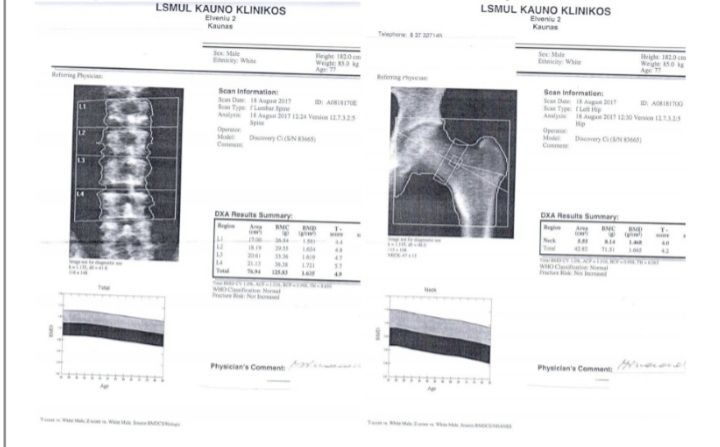
- AIncreased bone density
- BThe test can not be interpreted because of incorrect execution
- COsteopenia
- DThere is not enough data
- EOsteoporosis
123Match the Gonadal Dysgenesis type with its description.
46,XY [blank_start]ANSWER[blank_end]
45,X/46,XY [blank_start]ANSWER[blank_end]
46,XX [blank_start]ANSWER[blank_end]
Asymmetric [blank_start]ANSWER[blank_end]
Symmetric [blank_start]ANSWER[blank_end]
47,XXY [blank_start]ANSWER[blank_end]
45,X0 [blank_start]ANSWER[blank_end]- AMixed Gonadal Dysgenesis
- BSeminiferous tubule dysgenesis
- CPure Gonadal Dysgenesis
- DPure Gonadal Dysgenesis
- EMixed Gonadal Dysgenesis
- FSeminiferous tubule dysgenesis
- GMixed Gonadal Dysgenesis
- HPure Gonadal Dysgenesis
- ISeminiferous tubule dysgenesis
- JPure Gonadal Dysgenesis
- KSeminiferous tubule dysgenesis
- LMixed Gonadal Dysgenesis
- MMixed Gonadal Dysgenesis
- NPure Gonadal Dysgenesis
- OSeminiferous tubule dysgenesis
- PSeminiferous tubule dysgenesis
- QMixed Gonadal Dysgenesis
- RPure Gonadal Dysgenesis
- SPure Gonadal Dysgenesis
- TMixed Gonadal Dysgenesis
- USemininferous tubule Dysgenesis
124The adrenal CT scan is first line test that should be performed for everybody who is suspected for the primary hyperaldosteronism.
- AVerdadero
- BFalso
125Unilateral adrenalectomy is first line treatment for the ACTH independent Cushing Syndrome
- AVerdadero
- BFalso
126The most common causes of the secondary chronic adrenal insufficiency are brain tumors and trauma
- AVerdadero
- BFalso
127Which of those are the actions of androgens?
- AStimulates potassium excreation from
the organism - BStimulates the pubic and axillary hair
growth - CIncreases indirectly blood pressure
- DStimulates gluconeogenesis
- EInfluences libido, sexual behavior
- FIncreases the secreation of H* from the
organism - GIncreases bone mass
- HStimulates lipolysis
- IIncrease proteins synthesis in muscles,
bone tissue - JIncreases the glucose level in the blood
- AStimulates potassium excreation from
128How do you classify a person whose weight is 85.7 kg and height is 1.93 m based on Body Mass Index?
- AUnderweight
- BNormal
- COverweight
- DObesity Class I
- EObesity Class Il
- FObesity Class IlI
129How do you classify a person who is 170 cm tall, weighs 95.4 kg and has a body mass index of 33?
- AUnderweight
- BNormal
- COverweight
- DObesity Class I
- EObesity Class II
- FObesity Class Ill
130What is the type of obesity of a woman whose waist circumference is 102 cm and hip circumference is 98 cm 1.0408163265306
- APeripheral
- BCentral
131Which of those are the actions of mineralcorticoids?
- Aa. Stimulates potassium excretion from the organism
- Bb. Influences libido, sexual behavior
- Cc. Stimulates lipolysis
- Dd. Has anti-inflammatory activity
- Ee. Secretes H from the organism
- Ff. Stimulates the reabsorbtion Na+ from the urine back to the organism
- Gg. Increase blood volume
- Hh. Increases indirectly blood pressure
- Ii. Increases proteins synthesis in muscles, bone tissue
- Jj. Decreases renin-angiotensin activity
132The patient is suspected to have Cushing's syndrome. What hormonal test is used for screening?
- Aa. Testosterone
- Bb. Cortisol
- CC. TSH or STH
- Dd. Aldosterone and renine
- Ee. Epinefrine and norepinefrine
- Ff. Aldosterone
- Gg. Renin
133Which of the hormally active substance does not affect prolactin secretion?
- Aa. All answers are correct
- Bb. Dopamine
- Cc. TRH
- Dd. Vasopresine
- Ee. Estrogenes
134What are the clinical signs of mineralcorticoid excess when treating the chronic adrenal insufficiency?
- Aa. Arterial hypertension, edemas
- Bb. Loss of consciousness, hypotension
- Cc. Hypotension, edemas
- Dd. Edemas, frequent urination
135What is the most probable cause of chronic primary adrenal insufficiency?
- Aa. MEN 2A syndrome
- Bb. Radiotherapy of the abdomen region
- Cc. Non-functioning pituitary adenoma
- Dd. Chronic renal failure
- Ee Autoimmune adrenal damage
136The results of the patient's lab test are: Cortisol 200 nmol/l (n 177-700), ACTH 25 (n 4-14). What dynamic test will confirm the diagnosis?
- Aa. Synacthen test
- Bb. Oral glucose tolerance test
- Cc. Sampling of v. cava inferior
- Dd. Salt infusion test
- Ee. Overnight 1mg Dexamethasone supression test
- Ff. CRH test
137A patient has been diagnosed with type 2 diabetes 7 year ago. He is currently on Metformin 850 mg tid, Gliclazide MR 120 mg daily, Insulin Glargine 34 IU daily.
His self-monitoring blood glucose results are: fasting-up to 5.1 mmol/L; 2 hours post meal-10.6 mmol/t.
Based on these results, how should the treatment be adjusted?- AIncrease the dose of basal insulin
- BDiscontinue gliclazide, add rapid acting insulin for the meal that results in the highest glycemia
- CResults are acceptable, no treatment adjustment required
138A patient who is 24 weeks pregnant undergoes an Oral Glucose Tolerance Test
Fasting blood glucose is 4.9 mmol/L;
1 hour post challenge with 75 g of glucose solution 11.7 mmol/L
2 hours post-challenge -7.8 mmol/L
Indicative of what glucose metabolism impairment are such results?- ANormal glucose tolerance
- BGestational diabetes mellitus, as pre-challenge glucose is elevated
- CGestational diabetes mellitus, as 1 hour post-challenge glucose is elevated
- DGestational diabetes mellitus, as 2 hours post-challenge glucose is elevated
- EGestational diabetes mellitus, as pre-challenge and 1 hour post-challenge glucose are elevated
- FGestational diabetes mellitus, as pre-challenge and 2 hours post-challenge glucose are elevated
- GGestational diabetes mellitus, as 1 hour and 2 hour post-challenge glucose are elevated
- HGestational diabetes mellitus, as all blood glucose results are elevated
- IImpaired glucose tolerance as only a single value is elevated
- JInsufficient data to establish diagnosis
139A patient has been diagnosed with type 2 diabetes 4 years ago. He is currently on Metformin 850 mg tid, Gliclande MR 120 mg daily, Insulin Glargine 21 IU daily
After downloading his recent self-monitoring blood glucose readings you see that in the past week his SMBG results are
fasting up to 6.1 mmol/t 2 hours post meal-6.6 mmol/L
Based on these results, how should the treatment be adjusted?- AIncrease the dose of basal insulin
- BDiscontinue gliclazide, add rapid acting insulin for the meal that results in the highest glycemia
- CResults are acceptable, no treatment adjustment required
- DAdd a Sulphonylures class medication
140A patient has been diagnosed with type 2 diabetes 4 year ago. He is currently on Metformin 850 mg tid, Gliclazide MR 120
Studentul/ for Student
mg daily, and Liraglutide 1.8 mg daily HbA1c-7.5% His self monitoring blood glucose results are: fasting-up to 9 mmol, 2 hours post meal 7:3 mmol/1
Based on these results, what is the next step in adjusting the treatment?- AStart basal Insulin
- BDiscontinue Gliclazide and Liraglutide and start rapid acting insulin for the meal resulting in the highest glycemia
- CDiscontinue Gliclazide and start basal as well as rapiting insulin
- DDiscontinue all current medications and start basal insulin
- EDiscontinue all current medications and start rapid acting insulin
141A patient has been diagnosed with type 2 diabetes 6 year ago. He is currently on Metformin 850 mg tid, Gliclazide MR 120 mg daily, and Liraglutide 1.8 mg daily. HbA1c -7.5%.
His self monitoring blood glucose results are: fasting- up to 7.4 mmol/L; 2 hours post meal -7.7 mmol/L.
Based on these results, what is the next step in adjusting the treatment?- AStart basal Insulin
- BDiscontinue Gliclazide and Liraglutide and start rapid acting insulin for the meal resulting in the highest glycemia
- CDiscontinue Gliclazide and start basal, as well as rapid acting insulin
- DDiscontinue all current medications and start
basal insulin - EDiscontinue all current medications and start rapid acting insulin
142Patient underwent lab tests for a suspected thyroid disease- these are the results: TSH -0.2 (n. 0.5-4.75) mIU/I, fT4-24.1 (n. 10-20) pmol/l, fT3 8.5 (n. 2-6) pmol/l; anti-TPO-23 (n. <34), anti-TG 105.9 (n.<100), antiTSH (stimulating) - 7.1 (n. <10). What disease is the most probable based on such results?
- AGraves disease
- BHypothyroid phase of Hashimoto thyroiditis
- CEuthyroid phase of Hashimoto thyroiditis
- DHyperthyroid phase of Hashimoto thyroiditis
- ETSH producing pituitary adenoma
- FCentral hypothyroidism
- GAcute thyroiditis
- HThyroxin producing pituitary adenoma
- IDeviation of lab results is clinically irrelevant
143Patient underwent lab tests for a suspected thyroid disease - these are the results: TSH-13.2 (n. 0.5-4.75) mIU/l, fT4 -24.7 (n. 10-20) pmol/l, fT3 - 12.7 (n. 2-6) pmol/l; anti-TPO-13.1 (n. <34), anti-TG 32.5 (n.<100), antiTSH (stimulating) -2.3 (n. <10). What disease is the most probable based on such results?
- AGraves disease
- BHypothyroid phase of Hashimoto thyroiditis
- CEuthyroid phase of Hashimoto thyroiditis
- DHyperthyroid phase of Hashimoto thyroiditis
- ETSH producing pituitary adenoma
- FCentral hypothyroidism
- GAcute thyroiditis
- HThyroxin producing pituitary adenoma
- IDeviation of lab results is clinically
irrelevant
144Patient underwent lab tests for a suspected thyroid disease these are the results: TSH-0.13 (n. 0.5-4.75) maut, fT4-222 (n. 10-20) pmolt, FT3-11.8 (n. 2-6) pmolt, anti-TPO 155.9 (n. 34), and TG-35.30100), and TSH (stimulating)-157 (n <10), What disease is the most probable based on such results?
- AGraves disease
- BHypothyroid phase of Hashimoto thyroiditis
- CEuthyroid phase of Hashimoto thyroiditis
- DHyperthyroid phase of Hashimoto thyroiditis
- ETSH producing pituitary adenoma
- FCentral hypothyroidism
- GAcute thyroiditis
- HThyroxin producing pituitary adenoma
- IDeviation of lab results is clinically irrelevant
145Patient underwent lab tests for a suspected thyroid disease- these are the results: TSH-0.28 m 0.5-4.75) mat, fT4-51 mm 10-20) pmol/l, f13-1.4 (n. 2-6) pmol/t; anti-TPO 32.2 (n. 34), anti-TG-29.2 (n100), antiTSH (stimulating) 7.8 (n. 10). What disease is the most probable based on such results?
- AGraves disease.
- BHypothyroid phase of Hashimoto thyroiditis
- CEuthyroid phase of Hashimoto thyroiditis
- DHyperthyroid phase of Hashimoto thyroiditis
- ETSH producing pituitary adenoma
- FCentral hypothyroidism
- GAcute thyroiditis
- HThyroon producing pituitary adenoma
- IDeviation of lab results is clinically irrelevant
146Patient underwent lab tests for a suspected thyroid disease- these are the results: TSH-1.9 (n. 0.5-4.75) mai (74-15.9m 10-20) pmol/l, fT3-4.8 (n. 2-6) pmol/t anti-TPO-288.7 (n. 34), anti-TG-88.1 (n-100), antiTSH (stimulating)-7.6 (n. 10). What disease is the most probable based on such results?
- AGraves disease
- BHypothyroid phase of Hashimoto thyroiditis
- CEuthyroid phase of Hashimoto thyroiditis
- DHyperthyroid phase of Hashimoto thyroiditis
- ETSH producing pituitary adenoma
- FCentral hypothyroidism
- GAcute thyroiditis
- HThyroxin producing pituitary adenoma
- IDeviation of lab results is clinically irrelevant
147Patient underwent lab tests for a suspected thyroid disease- these are the results: TSH-5.6 (n. 0.5-4.75) mU/L (T4-9.6 (n. 10-20) pmolt 113-1.6 (n. 2-6) pmol/t anti-TPO-295.6 (n. 34), anti-TG-137.8 (n<100), antiTSH (stimulating)-5.6 (n. 10). What disease is the most probable based on such results?
- AGraves disease
- BHypothyroid phase of Hashimoto thyroiditis
- CEuthyroid phase of Hashimoto thyroiditis
- DHyperthyroid phase of Hashimoto thyroiditis
- ETSH producing pituitary adenoma
- FCentral hypothyroidism
- GAcute thyroiditis
- HThyroxin producing pituitary adenoma
- IDeviation of lab results is clinically irrelevant
148Patient comes in with complaints of rapid weight gain and decreased libido. Further complaints include hirsutism and recent onset of acne. Hypercortisolemia is suspected and so 24 hour urine cortisol is performed and result was 320 μg/24h.
What is the appropriate next step?- Aa. ACTH should be checked to verify the cause of hipercortisolemia X
- Bb. A high-dose dexamethasone suppression test should be done to verify the cause of hypercortisolemia
- Cc. Overnight 1 mg dexamethasone suppression test should be done to rule out physiologic hypercortisolemia
- Dd. The level of Cortisol is slightly elevated because of the obesity - no further tests are necessary
- Ee. Further tests are not necessary. increased level of cortisol is the cause of obesity
149Patient develops hypoglycemia while at the hospital and is currently unconscious. His current blood glucose is 2.1mmol/l. What is the recommended approach?
- A20 mg glucose orally
- B80 ml 20% glucose i/v
- C1 mg glucagon i/m
- D4 IU rapid acting insulin s/c
150Patient underwent lab tests for a suspected thyroid disease - these are the results: TSH-0.24 (n. 0.5-4.75) mIU/l, fT4-26.4 (n. 10-20) pmol/l, fT3-9.9 (n. 2-6) pmol/l; anti-TPO-276.5 (n. <34), anti-TG-83.5 (n.<100), antiTSH (stimulating) - 11.3 (n. <10). What disease is the most probable based on such results?
- AGraves disease
- BHypothyroid phase of Hashimoto thyroiditis
- CEuthyroid phase of Hashimoto thyroiditis
- DHyperthyroid phase of Hashimoto thyroiditis
- ETSH producing pituitary adenoma
- FCentral hypothyroidism
- GAcute thyroiditis
- HThyroxin-producing pituitary adenoma
- IDeviation of lab results is clinically irrelevant
151Patient underwent lab tests for a suspected thyroid disease - these are the results: TSH -0.15 (n. 0.5-4.75) mIU/l, fT4-7.2 (n. 10-20) pmol/l, fT3 1.8 (n. 2-6) pmol/l; anti-TPO -2.9 (n. <34), anti-TG 6 (n.<100), antiTSH (stimulating) - 2.7 (n. <10). What disease is the most probable based on such results?
- AGraves disease
- BHypothyroid phase of Hashimoto thyroiditis
- CEuthyroid phase of Hashimoto thyroiditis
- DHyperthyroid phase of Hashimoto thyroiditis
- ETSH producing pituitary adenoma
- FCentral hypothyroidism
- GAcute thyroiditis
- HThyroxin producing pituitary adenoma
- IDeviation of lab results is clinically irrelevant
152Patient underwent lab tests for a suspected thyroid disease - these are the results: TSH 9.1 (n. 0.5-4.75) mIU/l, fT4-5.1 (n. 10-20) pmol/l, fT3-1.4 (n. 2-6) pmol/l; anti-TPO - 56.8 (n. <34), anti-TG-142.7 (n.<100), antiTSH (stimulating) 9.2 (n. <10). What disease is the most probable based on such results?
- AGraves disease
- BHypothyroid phase of Hashimoto thyroiditis
- CEuthyroid phase of Hashimoto thyroiditis
- DHyperthyroid phase of Hashimoto thyroiditis
- ETSH producing pituitary adenoma
- FCentral hypothyroidism
- GAcute thyroiditis
- HThyroxin producing pituitary adenoma
- IDeviation of lab results is clinically
irrelevant
153Patient underwent lab tests for a suspected thyroid disease - these are the results: TSH -8.6 (n. 0.5-4.75) mIU/l, fT4-7.5 (n. 10-20) pmol/l, fT3-1.6 (n. 2-6) pmol/l; anti-TPO-240.4 (n. <34), anti-TG-147.3 (n.<100), antiTSH (stimulating) 3 (n. <10). What disease is the most probable based on such results?
- AGraves disease
- BHypothyroid phase of Hashimoto thyroiditis
- CEuthyroid phase of Hashimoto thyroiditis
- DHyperthyroid phase of Hashimoto thyroiditis
- ETSH producing pituitary adenoma
- FCentral hypothyroidism
- GAcute thyroiditis
- HThyroxin producing pituitary adenoma
- IDeviation of lab results is clinically irrelevant
154Patient underwent lab tests for a suspected thyroid disease - these are the results: TSH -6.3 (n. 0.5-4.75) mIU/l, fT4-5.4 (n. 10-20) pmol/l, fT3-1.8 (n. 2-6) pmol/l; anti-TPO-59.2 (n. <34), anti-TG 143.4 (n.<100), antiTSH (stimulating) - 3.2 (n. <10). What disease is the most probable based on such results?
- AGraves disease
- BHypothyroid phase of Hashimoto thyroiditis
- CEuthyroid phase of Hashimoto thyroiditis
- DHyperthyroid phase of Hashimoto thyroiditis
- ETSH producing pituitary adenoma
- FCentral hypothyroidism
- GAcute thyroiditis
- HThyroxin producing pituitary adenoma
- IDeviation of lab results is clinically irrelevant
155Patient underwent lab tests for a suspected thyroid disease- these are the results: TSH-2.1 (n. 0.5-4.75) mIU/l, fT4-14.5 (n. 10-20) pmol/l, fT3-5.6 (n. 2-6) pmol/l; anti-TPO-89.1 (n. <34), anti-TG-34.8 (n.<100), antiTSH (stimulating) 3.5 (n. <10), What disease is the most probable based on such results?
- AGraves disease
- BHypothyroid phase of Hashimoto thyroiditis
- CEuthyroid phase of Hashimoto thyroiditis
- DHyperthyroid phase of Hashimoto thyroiditis
- ETSH producing pituitary adenoma
- FCentral hypothyroidism
- GAcute thyroiditis
- HThyroxin producing pituitary adenoma
- IDeviation of lab results is clinically
irrelevant
156Patient underwent lab tests for a suspected thyroid disease - these are the results: TSH - 0.44 (n. 0.5-4.75) mIU/l, fT4-6.5 (n. 10-20) pmol/l, fT3-1.5 (n. 2-6) pmol/l; anti-TPO-17.3 (n. <34), anti-TG-75.8 (n.<100), antiTSH (stimulating)-5.8 (n. <10). What disease is the most probable based on such results?
- AGraves disease
- BHypothyroid phase of Hashimoto thyroiditis
- CEuthyroid phase of Hashimoto thyroiditis
- DHyperthyroid phase of Hashimoto thyroiditis
- ETSH producing pituitary adenoma
- FCentral hypothyroidism
- GAcute thyroiditis
- HThyroxin producing pituitary adenoma
- IDeviation of lab results is clinically irrelevant
157Patient underwent lab tests for a suspected thyroid disease- these are the results: TSH-0.12 (n. 0.5-4.75) mIU/l, fT4-26.9 (n. 10-20) pmol/l, fT3-11.4 (n. 2-6) pmol/l; anti-TPO-15.6 (n. <34), anti-TG-150 (n.<100), antiTSH (stimulating)-3 (n. <10), What disease is the most probable based on such results?
- AGraves disease
- BHypothyroid phase of Hashimoto thyroiditis
- CEuthyroid phase of Hashimoto thyroiditis
- DHyperthyroid phase of Hashimoto thyroiditis
- ETSH producing pituitary adenoma
- FCentral hypothyroidism
- GAcute thyroiditis
- HThyroxin producing pituitary adenoma
- IDeviation of lab results is clinically irrelevant
158Patient underwent lab tests for a suspected thyroid disease - these are the results: TSH-16 (n. 0.5-4.75) mIU/l, fT4-22.9 (n. 10-20) pmol/l, fT3 12.2 (n. 2-6) pmol/l; anti-TPO-8.2 (n. <34), anti-TG -21.1 (n.<100), antiTSH (stimulating) - 4.4 (n. <10). What disease is the most probable based on such results?
- AGraves disease
- BHypothyroid phase of Hashimoto thyroiditis
- CEuthyroid phase of Hashimoto thyroiditis
- DHyperthyroid phase of Hashimoto thyroiditis
- ETSH producing pituitary adenoma
- FCentral hypothyroidism
- GAcute thyroiditis
- HThyroxin producing pituitary adenoma
- IDeviation of lab results is clinically irrelevant
159Patient underwent lab tests for a suspected thyroid disease - these are the results: TSH -0.33 (n. 0.5-4.75) mIU/l, fT4-25.4 (n. 10-20) pmol/l, fT3 -10.7 (n. 2-6) pmol/l; anti-TPO - 14.8 (n. <34), anti TG-121 (n.<100), antiTSH (stimulating) - 3.1 (n. <10). What disease is the most probable based on such results?
- AGraves disease
- BHypothyroid phase of Hashimoto thyroiditis
- CEuthyroid phase of Hashimoto thyroiditis
- DHyperthyroid phase of Hashimoto thyroiditis
- ETSH producing pituitary adenoma
- FCentral hypothyroidism
- GAcute thyroiditis
- HThyroxin producing pituitary adenoma
- IDeviation of lab results is clinically irrelevant
160Patient underwent lab tests for a suspected thyroid disease - these are the results: TSH-0.4 (n. 0.5-4.75) mIU/l, fT4-26.4 (n. 10-20) pmol/l, fT3-8.2 (n. 2-6) pmol/l; anti-TPO-20.6 (n. <34), anti-TG-126.4 (n.<100), antiTSH (stimulating) -8.4 (n. <10). What disease is the most probable based on such results?
- AGraves disease
- BHypothyroid phase of Hashimoto thyroiditis
- CEuthyroid phase of Hashimoto thyroiditis
- DHyperthyroid phase of Hashimoto thyroiditis
- ETSH producing pituitary adenoma
- FCentral hypothyroidism
- GAcute thyroiditis
- HThyroxin producing pituitary adenoma
- IDeviation of lab results is clinically irrelevant
161Patient underwent lab tests for a suspected thyroid disease - these are the results: TSH-12.6 (n. 0.5-4.75) mIU/l, fT4-25.2 (n. 10-20) pmol/l, fT3-8.4 (n. 2-6) pmol/l; anti-TPO-5.9 (n. <34), anti-TG-12.4 (n.<100), antiTSH (stimulating) - 6.6 (n. <10). What disease is the most probable based on such results?
- AGraves disease
- BHypothyroid phase of Hashimoto thyroiditis
- CEuthyroid phase of Hashimoto thyroiditis
- DHyperthyroid phase of Hashimoto thyroiditis
- ETSH producing pituitary adenoma
- FCentral hypothyroidism
- GAcute thyroiditis
- HThyroxin producing pituitary adenoma
- IDeviation of lab results is clinically irrelevant
Información
- Descripción
- Test sobre Endocrinology Exam Questions, creado por Uchechukwu Nwanja el 05/10/2022.
- Autor
- Uchechukwu Nwanja
- Idioma
- English
- Visitas
- 58
- Valoración
- Aún sin valoraciones Valora este test