
Test
GY327 Freshwater Processes and Ecosystems_Revision Session
Este test tiene tiempo límite, así que se abre en el reproductor de siempre.
Preguntas del test (38)
1What salinity classified freshwater?
- A<1 mg L-1
- B<100 mg L-1
- C<1000 mg L-1
- A<1 mg L-1
2What are the three dominant ions in freshwater?
- AMg, CaCO3, HCO3
- BMg, Na, Ca
- CMg, Na, Cl
3What percentage of Earth's water is defined as being freshwater?
- A0.25 %
- B2.5%
- C25 %
4What term best describes ‘all the organisms in a given area as well as the abiotic factors with which they interact; a community and its’ physical environment’ ?
Campbell and Reece, 2002)- ANiche
- BBiosphere
- CEcosystem
5Which of these sets of definitions distinguishes correctly between the terms phytoplankton and periphyton?
- APeriphyton are free-floating plants/algae, that are suspended in the water column.
Phytoplankton are algae that are attached to substrates such as rocks (epitlithic phytoplankton) and larger plants/macrophytes (epiphytic phytoplankton) - BPhytoplankton are free-floating plants/algae, that are suspended in the water column.
Periphyton are algae that are attached to substrates such as rocks (epitlithic periphyton) and larger plants/macrophytes (epiphytic periphyton)
- APeriphyton are free-floating plants/algae, that are suspended in the water column.
6The term ‘Lotic’ describes which of the following categories of water?
- AStanding waters
- BEphemeral waters
- CFlowing waters
7What are the seven general challenges of living in freshwater environments?
- ARespiration, Productivity, Reproduction, Ontogeny, Feeding, Emersion, Diffusion
- BRespiration, Physical forces, Reproduction, Osmoregulation, Feeding, Emersion, Dispersal
- CRespiration, Photosynthesis, Reproduction, Oncology, Feeding, Emersion, Disposal
8Suggest 4 reasons why oxygen availability is more variable in freshwater ecosystems than marine systems or the atmosphere?
- AHigh volume ecosystems = high buffering capacity
Low surface area to volume ratio = small temperature fluctuations (affect 02 dissolving/diffusion rate).
Variable organic loading = low microbial oxygen demand
High photosynthetic oxygen production - BSmall volume ecosystems = High buffering capacity
High surface area to volume ratio = wide temperature fluctuations (affect 02 dissolving/diffusion rate).
Low organic loading = high microbial oxygen demand
High photosynthetic oxygen production - CSmall volume ecosystems = low buffering capacity
High surface area to volume ratio = wide temperature fluctuations (affect 02 dissolving/diffusion rate).
Variable organic loading = variable microbial oxygen demand
Variable photosynthetic oxygen production
- AHigh volume ecosystems = high buffering capacity
9Freshwater ecosystems are geographically isolated and temporally impermanent. What effect does each of these characteristics have on the number of species present?
- ASpatial isolation increases speciation. Temporal impermanence decreases speciation.
- BSpatial isolation decreases speciation. Temporal impermanence increases speciation.
- ASpatial isolation increases speciation. Temporal impermanence decreases speciation.
10What is anhydrobiosis and name an organism that can perform it?
- AAnhydrobiosis means life without water. It is a form of desiccation resistance that some vertebrates exhibit (African lungfish).
- BAnhydrobiosis means life without water. It is a form of desiccation resistance that some invertebrates exhibit (tardigrades, rotifers, chironimids).
- CAnhydrobiosis means life without water. It is a form of desiccation resistance that some algae exhibit.
- AAnhydrobiosis means life without water. It is a form of desiccation resistance that some vertebrates exhibit (African lungfish).
11What are the two main differences between lakes and ponds?
- ALakes tend to be bigger and are mixed primarily through atmospheric turbulence (wind). Ponds tend to be smaller and are mixed primarily through thermal convection currents.
- BLakes tend to be bigger and are mixed primarily through thermal convection currents. Ponds tend to be smaller and are mixed primarily through atmospheric turbulence (wind).
- ALakes tend to be bigger and are mixed primarily through atmospheric turbulence (wind). Ponds tend to be smaller and are mixed primarily through thermal convection currents.
12Distinguish between the terms plankton and benthos?
- ABenthos are the organisms that spend the majority of their time in the water column. Plankton are the organisms that spend the most of their time in the bed sediments (lake or river).
- BPlankton are the organisms that spend the majority of their time in the water column. Benthos are the organisms that spend the most of their time in the bed sediments (lake or river).
- CPlankton are the organisms that spend the majority of their time in the subsurface environments. Benthos are the organisms that spend the most of their time in the bed sediments (lake or river).
- ABenthos are the organisms that spend the majority of their time in the water column. Plankton are the organisms that spend the most of their time in the bed sediments (lake or river).
13The availability of light influences the distribution of plants and animals within a lake. What is the name given to the depth at which only 1 % of the incoming light remains (i.e the boundary between the photic and aphotic zone)?
- AThe critical depth
- BThe boundary depth
- CThe compensation depth
14Who developed a conceptual model known as the ‘River Continuum Concept’ that describes the longitudinal changes in physical, chemical and biological composition along a river?
- AVannote et al (1980)
- BBegon et al (1980)
- CTownsend et al (1980)
- AVannote et al (1980)
15What is meant by the term ‘allocthonous’?
- AEnergy or matter derived from within the freshwater ecosystem (e.g. phytoplankton and fungal spores)
- BEnergy or matter derived from outside of the freshwater ecosystem (e.g. terrestrial leaf fall into a river; bat guano in a cave)
- AEnergy or matter derived from within the freshwater ecosystem (e.g. phytoplankton and fungal spores)
16What term best describes ‘subsurface water that occurs beneath the watertable in soils and geologic formations that are fully saturated’?
(Freeze and Cherry, 1979)- AHyporheos
- BSoil water
- CGroundwater
17How do the temperature/thermal conditions differ in subsurface environments compare to terrestrial environments?
- ASubsurface thermal regimes are more stable than their terrestrial counterparts; they are warmer than the terrestrial minimum, but cooler than the terrestrial maximum.
- BSubsurface thermal regimes are more variable than their terrestrial counterparts; they are cooler than the terrestrial minimum, but warmer than the terrestrial maximum.
- CSubsurface thermal regimes are identical to their terrestrial counterparts
- ASubsurface thermal regimes are more stable than their terrestrial counterparts; they are warmer than the terrestrial minimum, but cooler than the terrestrial maximum.
18There are two main groups of subsurface dwelling organisms (hypogeans). These are stygophiles and stygobites. Which group show specific adaptations to living in subsurface environments?
- AStygophile
- BStygobite
19Where on the R-K-A selection continuum might you expect stygobites to be positioned?
- AStygobites are R-selected species; they are adapted to high resource availability but environmental variability
- BStygobites are K-selected species; they are adapted to high resource availability and environmental constancy
- CStygobites are A-selected species; they are adapted to poor resource availability but environmental constancy
20What is an ephemeral waterbody?
- AA temporary waterbody
- BA waterbody on the fringe of a catchment
- CAn isolated waterbody
21Name 5 ways in which humans disturb the physical characteristics of freshwater ecosystems?
- AThermal discharges from industrial processes
- BSuspended sediment pollution from increased soil erosion from agricultural fields
- CStraightening river channels
- DDamming river channels
- ERemoving native species of invertebrates
- FIntroducing non-native species of invertebrates
- GAbstracting water for agricultural, domestic and industrial uses
22For what reasons are river channels straightened?
- ATo decrease the speed of removal of flood waters in order to protect land/properties.
To abandon land and impede drainage.
To impede navigability for vessels. - BTo increase the speed of removal of flood waters in order to protect land/properties.
To reclaim land and improve drainage.
To improve navigability for vessels.
- ATo decrease the speed of removal of flood waters in order to protect land/properties.
23What management system is in place in England and Wales, as part of the EU Water Framework Directive, to prevent the negative impacts of over-abstraction from freshwater environments?
- ACatchment Abstraction Drainage System (CADS).
- BCatchment Abstraction Management System (CAMS).
- CSustainable Urban Drainage System (SUDS)
24Why is water temperature so important for many freshwater organisms?
- AWater temperature is important to freshwater organisms because most freshwater organisms are poikilothermic- their internal body temperature is controlled by the environmental temperature, therefore their rate of metabolism also changes with changing external temperatures.
- BMany freshwater organisms rely on thermal cues for certain stages within their life-cycle, disruption to thermal regimes can have significant detrimental impacts on the populations of species.
- CMany freshwater organisms obtain their oxygen directly from the water. Dissolved oxygen availability decreases with increasing water temperature, thus warming temperatures can lead to hypoxic conditions.
25What legislation is in place across Europe in order to protect freshwater ecosystems?
- AEU Freshwater Fisheries Directive
- BEU Shellfisheries Directive
- CEU Water Framework Directive
26What plant nutrient is most commonly the limiting nutrient in freshwater ecosystems?
- ANitrogen
- BPhosphorus
- CPotassium
27What term describes the trophic status of a water body where phosphorus concentrations are in the range of 30-100 µg L-1?
- AOligotrophic
- BMesotrophic
- CEutrophic
28Which of the following are potential sources of heavy metals in freshwater environments?
- AOil spills
- BCombustion of fossil fuels
- CMetal works/industry
- DMining/quarrying
- EWaste incineration
- FSewage sludge disposal
- GWaste landfill sites
- HMilitary firing ranges
29Who is responsible for monitoring the water quality of freshwaters in Scotland?
- AEnvironment Agency
- BEuropean Environment Agency
- CScottish Environment Protection Agency
30What are the two main ways in which humans directly disturb the biological characteristics of freshwater ecosystems?
- AIntroduction of non-native invasive species
- BPhysical disturbance of the habitat
- CChemical pollution of the habitat
- DRemoval of native species through fishing and harvesting
31What is the name of this non-native (to the UK) invasive plant?
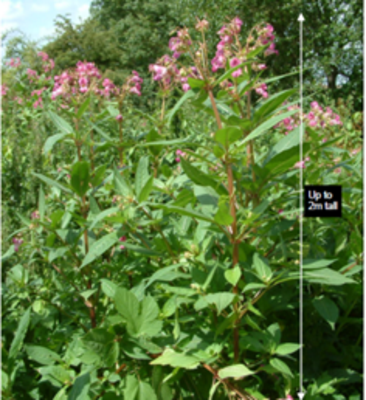
- AHogweed
- BHimalayan balsam
- CGiant Hogweed
32Which of the following can be used to successfully control and eradicate populations of the plant identified in Q31?
- AMechanical control (cutting/mowing) for 18 months, ensuring that no new seeds are produced during that period.
- BChemical control (glycophosphate or 24D-amine), for 18 months, ensuring that no new seeds are produced during that period.
- CBiological control (grazing by non-specific livestock), for 18 months, ensuring that no new seeds are produced during that period.
- DEnvironmental control (maintenance of a dense grass sward on river banks), for 18 months, ensuring that no new seeds are produced during that period.
- AMechanical control (cutting/mowing) for 18 months, ensuring that no new seeds are produced during that period.
33What is the main mechanism through which Signal Crayfish (Pacifastacus lenisculus) has its deletory impact on the native white-clawed crayfish (Austropotamobius pallipes)?
- ACompetition
- BPredation
- CDisease
34This species provides an example of how removal of native species can influence an ecosystem. What is the name of this fish?
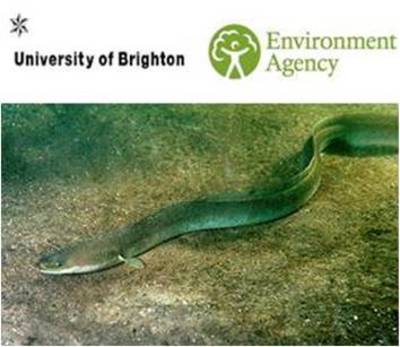
- AEuropean lamprey
- BEuropean eel
35Name the main sampling method used to sample benthic invertebrates under the EU Water Framework Directive?
- AKick sample
- BSurber sampler
- CGrab sample
36Which of the following are common methods used to sample fish populations as part of EU Water Framework Directive assessments?
- ASeine netting
- BElectrofishing
- CMark re-capture
37What is the name of the method used by the Environment Agency to survey the hydromorphological aspects of a river?
- ARiver Ecosystem Survey
- BRiverine Environmental Impact Assessment
- CRiver Habitat Survey
38Which of the following environments are protected by the EU Water Framework Directive?
- AFreshwater surface waters (rivers, streams and lakes)
- BFreshwater groundwaters
- CBrackish estuaries
- DMarine waters out to one mile from the low water mark.
- AFreshwater surface waters (rivers, streams and lakes)
Información
- Descripción
- This is a revision session for the University of Brighotn's GY327 module 'Freshwater Processes and Ecosystems'. The revision session is comprised of a set of 39 multiple-choice questions. These are designed to stimulate your memory in order to prepare you for longer essay-style questions. In the examination for this module (worth 60% of the module grade) you will be required to answer two essay questions out of a choice of six. All essay questions carry equal marks.
- Autor
- g.s.bilotta
- Idioma
- English
- Visitas
- 192
- Historial
- Creado el 15 may 2014 · actualizado el 29 sep 2016
- Valoración
- Aún sin valoraciones Valora este test