
Trends in Crime
Diapositivas del conjunto (4)
-
- From the mid-19th century to around 1940s, the recorded crime rate in Britain had steadily fallen. However, at the turn of the century in 1950 this trend reversed and a severe increase in crime began.
- Crime has increased since World War Two, but not as fast as some would suggest. Crime has increased due to:
- increasing crime
- more people reporting on the incidence of crime
- greater recording of crime

-
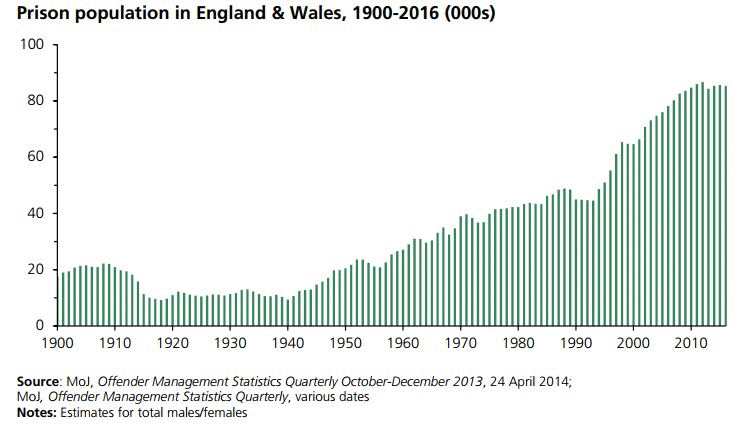
- Pie de imagen: Graph on prison population numbers
-
- Figures for crime have also increased due to changing definitions of crime; this varies from the introduction of race crimes to recognition of domestic abuse and sexual crimes. Moreover, the crime rate has reduced since 1992.
- From 1946 to 1986, the average male population in prison has increased. Some historians would argue that this can be explained not only by increasing crime but better law enforcement and sentencing resulting in more prison sentences.

-
- More reporting:
- People report to the police when their house is burgled as this is part of the insurance process
- With greater access to technology e.g. telephone; people had an easier time reporting crimes
- Many people began to report more violent crimes (rape, domestic abuse, etc.) as laws were introduced to protect these victims
- Previously, police would have not reported crime and dealt with cases informally
- With access to computers, police services have a more efficient and easier means of recording crime
- People in Britain fear crime; in 1984, a survey asked if people felt unsafe walking out at night, 12% responded with a yes. When a similar survey was conducted in 1997, 32% of respondents answered yes.
Información
- Descripción
- El usuario ha eliminado su información de asignaturas Diapositivas sobre Trends in Crime, creado por Usuario eliminado el 18/08/2017.
- Creado por
- Usuario eliminado
- Visitas
- 32
- Historial
-
- Creado por Andrew Burke · 17 ago 2017
- Copiado por Andrew Burke · 18 ago 2017
- Valoración