
The Police at Whitechapel
Diapositivas del conjunto (5)
-
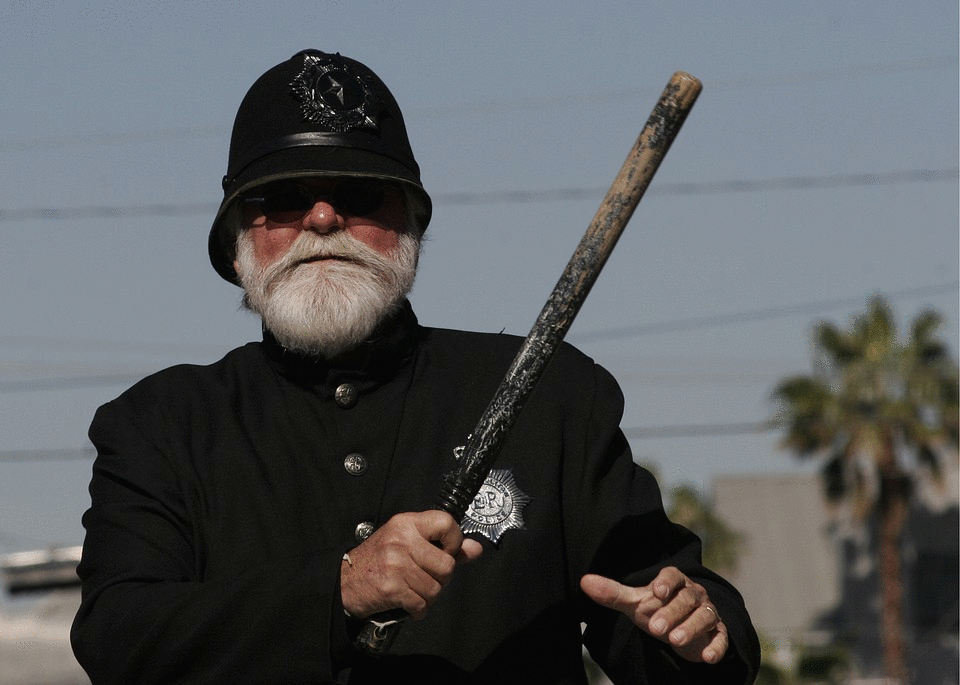
- The Metropolitan Police force, set up in 1829, was divided into 20 separate divisions. Each division was responsible for a district of London. The divisions were each named with a letter of the alphabet; Whitechapel was watched over by the H Division.
- The division had a superintendent and chief inspector, who were supported by 27 inspectors and 37 sergeants. The sergeants looked after 500 ordinary officers who roamed the streets of Whitechapel, enforcing the law.
-
- Patrolling (a beat constable's day):
- Each constable had a beat - the area he partrolled
- An important part of the constable's job was to stop and question people to find out what they were doing
- Sometimes, the constable would meet with his sergeant to to discuss and record what had happened on his shift
- If a constable missed a crime on his beat there was a possibliity he could be fined or dismissed
- The job was often dangerous and was paid poorly
- Sergeants would follow constables to make sure they were doing their job properly
- Approaches:
- In the mid-19th century, the Metropolitan Police were seen as keepers of peace and upholders of the law
- Police in general were seen as reliable and worthwhile
- However, in areas of deprivation, like Whitechapel, the police were seen in a negative light and violent gangs were prevalent
- Widespread poverty and economic depression were reasons for the unpopularity of the police in the latter half of the 19th century
- People in Whitechapel viewed the police as upholders of unpopular government decisions
-
- Prostitution:
- Women had difficulties finding work and decided to turn to prostitution (offers sexual activity for exchange of money). Some worked in brothels (a house where prostitutes work), while others walked the streets and were vulnerable to sexual assault. Prostitution was not illegal, however, it was a social difficulty that police monitored. Many women at this time also conceived and underwent an abortion, which were often performed in conditions that led to the death of a woman.
- Alcohol:
- Many people turned to alcohol due to the desperate social and economic conditions in Whitechapel. Strong alcoholic beverages were affordable to the poorest and pubs were at every corner. In one mile of road in Whitechapel, there was almost 45 buildings serving as pubs or gin palaces. Moreover, there was also opium dens (a location where opium was sold and smoked). Drunkenness often led to violence and alcoholics would turn to crime to obtain more money for drink.
-
- The high number of immigrants and locals meant that there was high tensions between different nationalities in Whitechapel.
- Violence in Whitechapel was often stirred up by gangs like the Bessarabian Tigers and Odessians. These gangs wanted protection money from small business owners; if people refused to pay then the gang would wreck their shop or market stall.
- Ordinary people were scared to report crime activities to police, as there was a possibility that violence would turn towards them. The H Division was understaffed and inadequate to cope with all the criminal activity in Whitechapel.

-
- The constable was regarded by locals as a type of social worker. In the 1870s, 82 government laws outlined the issues Metropolitan Police should deal with: lunatics, vagrancy, street traffic, litter, coinage, children, sewage, fires and accidents.
- The Metropolitan Streets Act of 1867 introduced regulations for street trading, traffic, and the compulsory practice of putting a muzzle on dogs.
- When police acted as poor relief officers they faced much hostility
- In trying to control prostitution, police were resented as women depended on this practice for escaping starvation
- Members of the Whitechapel community did see the benefits of the H Division - hosting soup kitchens, caring for stray children and stopping runaway horses. Many felt that the presence of police was necessary, however, it was police conduct and priorities that created an environment of hostility sometimes.
Información
- Descripción
- El usuario ha eliminado su información de asignaturas Diapositivas sobre The Police at Whitechapel, creado por Usuario eliminado el 24/08/2017.
- Creado por
- Usuario eliminado · ago 2017
- Actualizado
- 24 ago 2017
- Visitas
- 80
- Historial
-
- Creado por Andrew Burke · 22 ago 2017
- Copiado por Andrew Burke · 24 ago 2017
- Valoración