
Fichas
*Biology iGCSE - Topic 3 -Reproduction and Inheritance - Reproduction Paper 1
Fichas del conjunto (18)
- 1Plants can reproduce sexually or asexually. Plants that reproduce sexually can be pollinated by insects or by wind. (a) State three ways in which the structure of insect-pollinated flowers differs from the structure of wind-pollinated flowers.1. larger petals
2. colour;
3. enclosed stamens
4. enclosed carpels
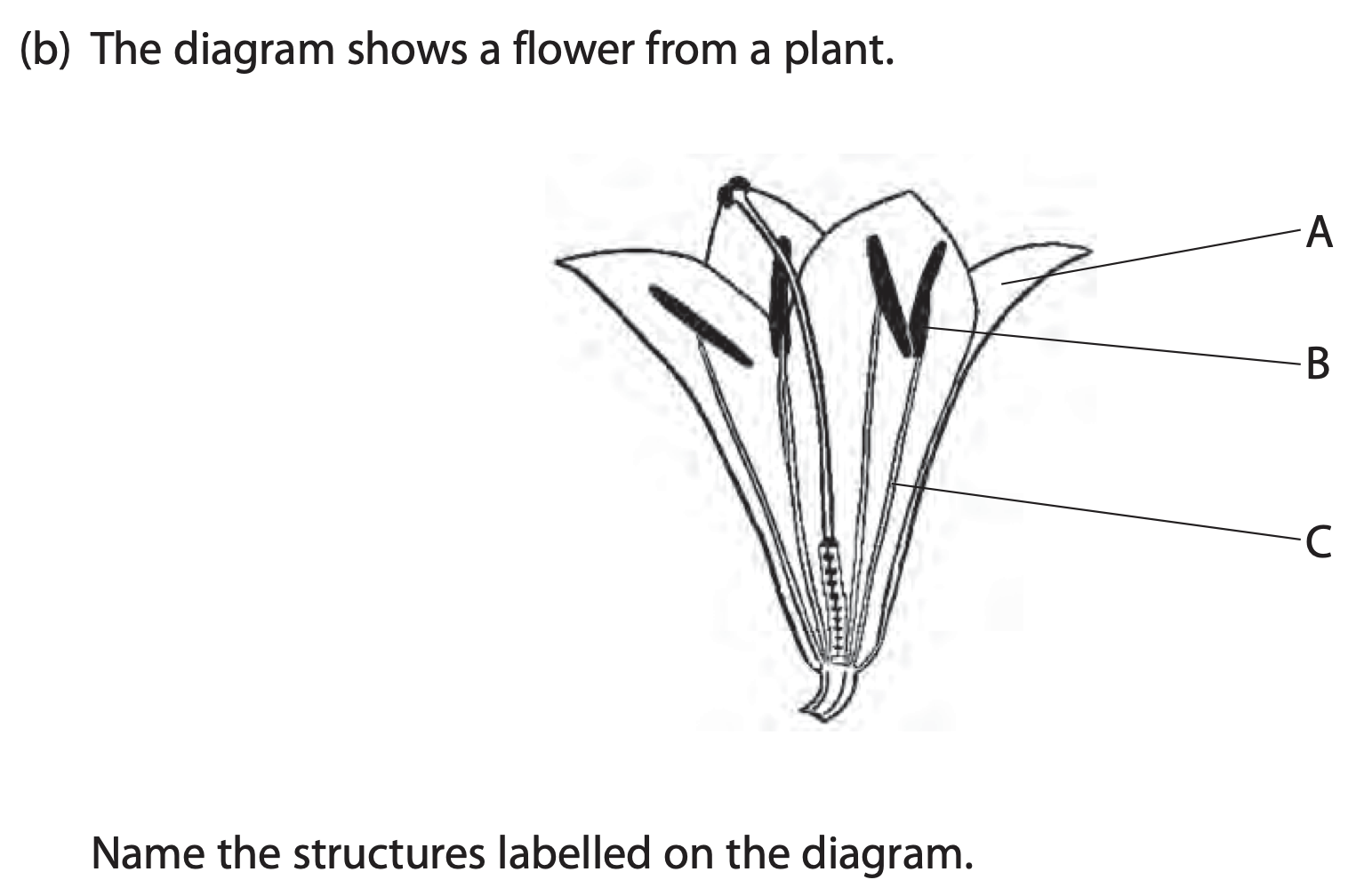
5. stigma not feathery - 2—A. Petals
B. Anther
C. Filament - 3The flower in the diagram is insect-pollinated. An insect carrying pollen lands on the flower. Describe the events that lead to seed formation.1. igma;
2. pollen tube grows
3. into ovule / ovary
4. en rs via micropyle
5. male gamete
6. fertilisation
7. female gamete
8. ovule becomes seed
9. ovule wall becomes seed coat
10.0. ovary becomes fruit - 4—1. large petals
2. bright petals
3. scent
4. nectar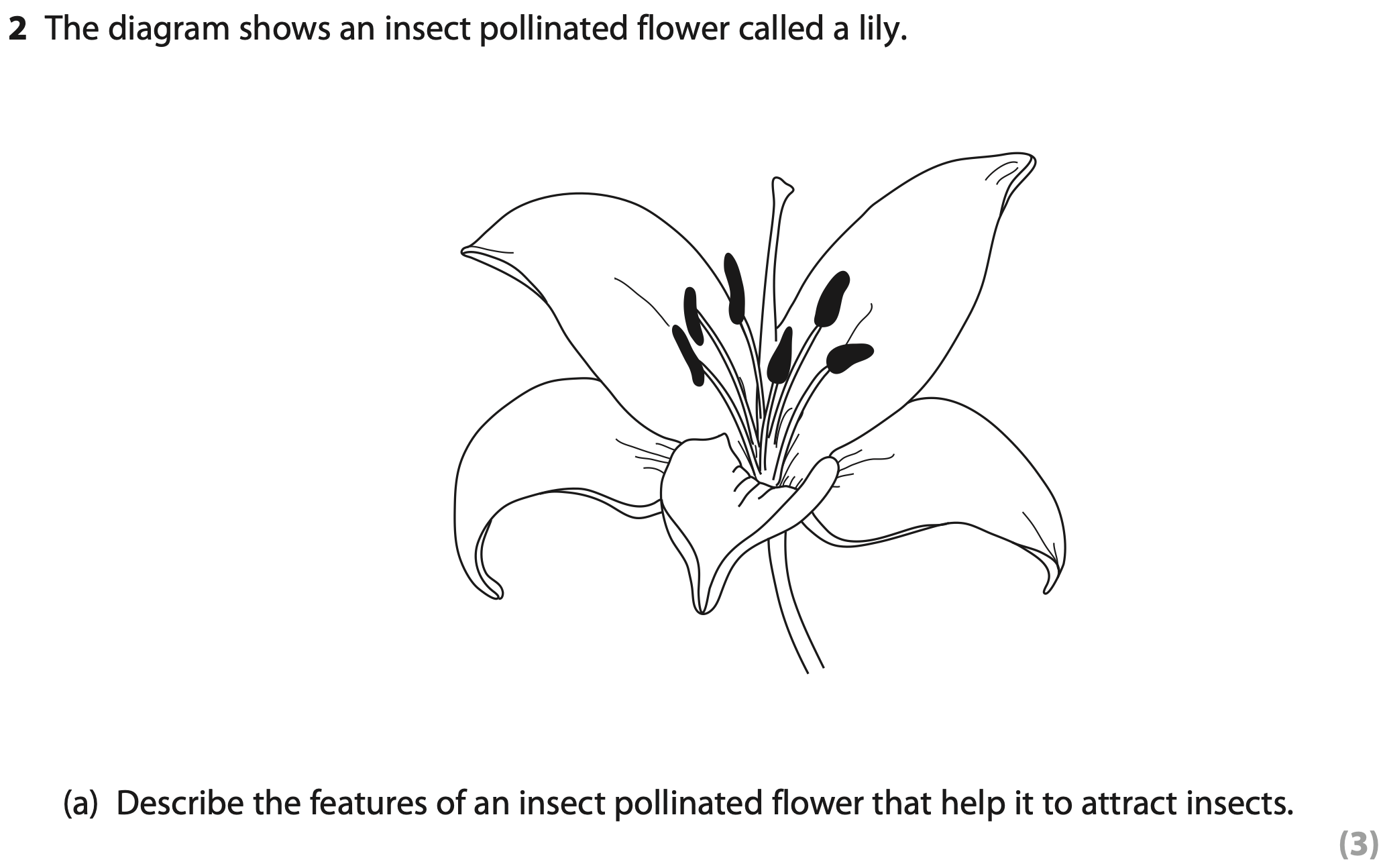
- 5—
- 6Cell division in an organism can take place by mitosis or by meiosis. Give three ways in which mitosis differs from meiosis1. used in growth / used in repair /
used in asexual reproduction
2. genetically identical cells produced
3. chromosome number stays the same
4. 2 cells produced
5. not used to make gametes; - 7Suggest why a flower grower may want his coloured flowers to reproduce asexually1. look the same / all identical
2. no genetic variation
3. quick re production;
4. production all year round - 8—gametes
zygote
embryo
fetus
baby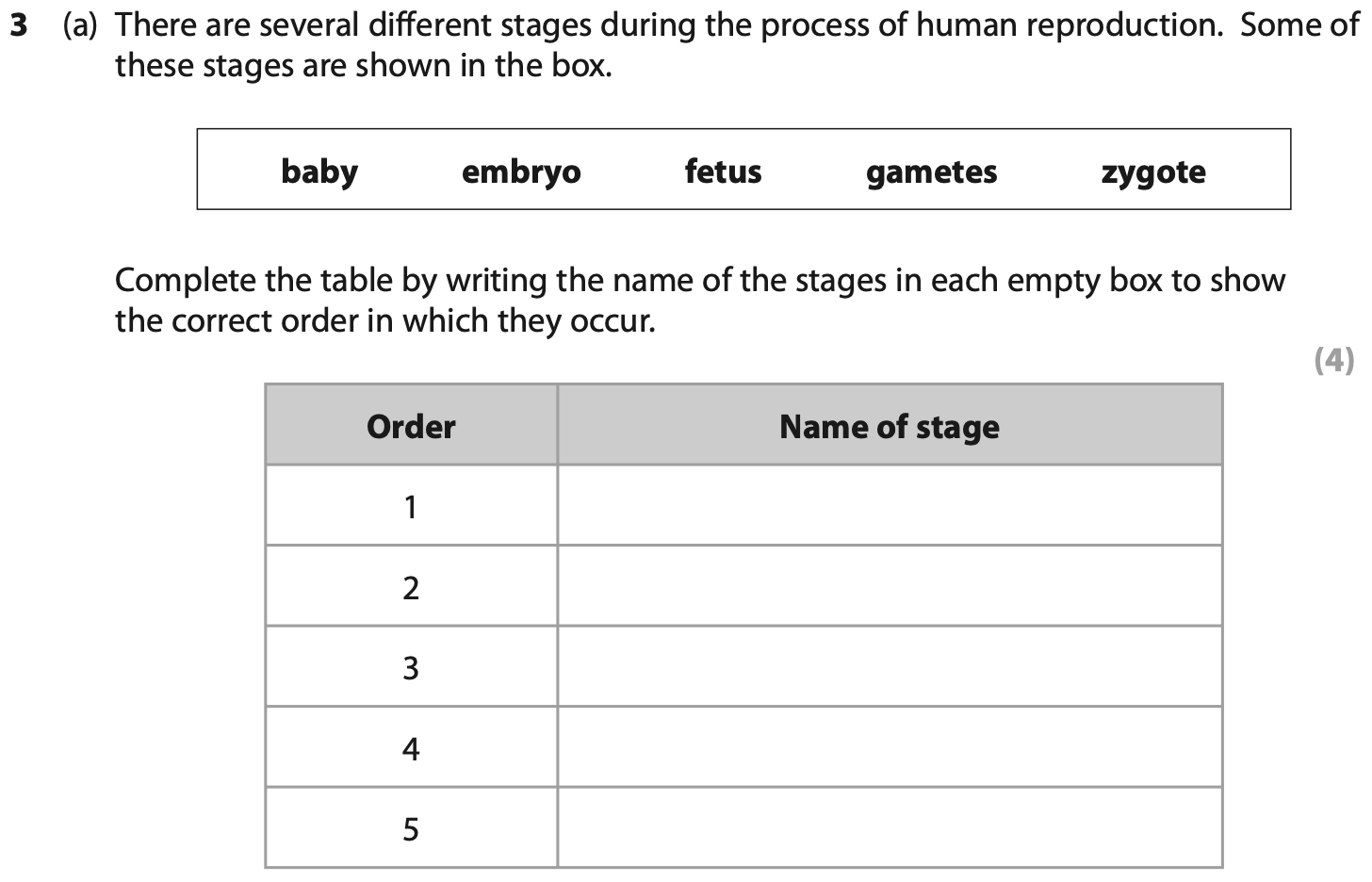
- 9—connection between atria
connection between arteries
pulmonary artery and aorta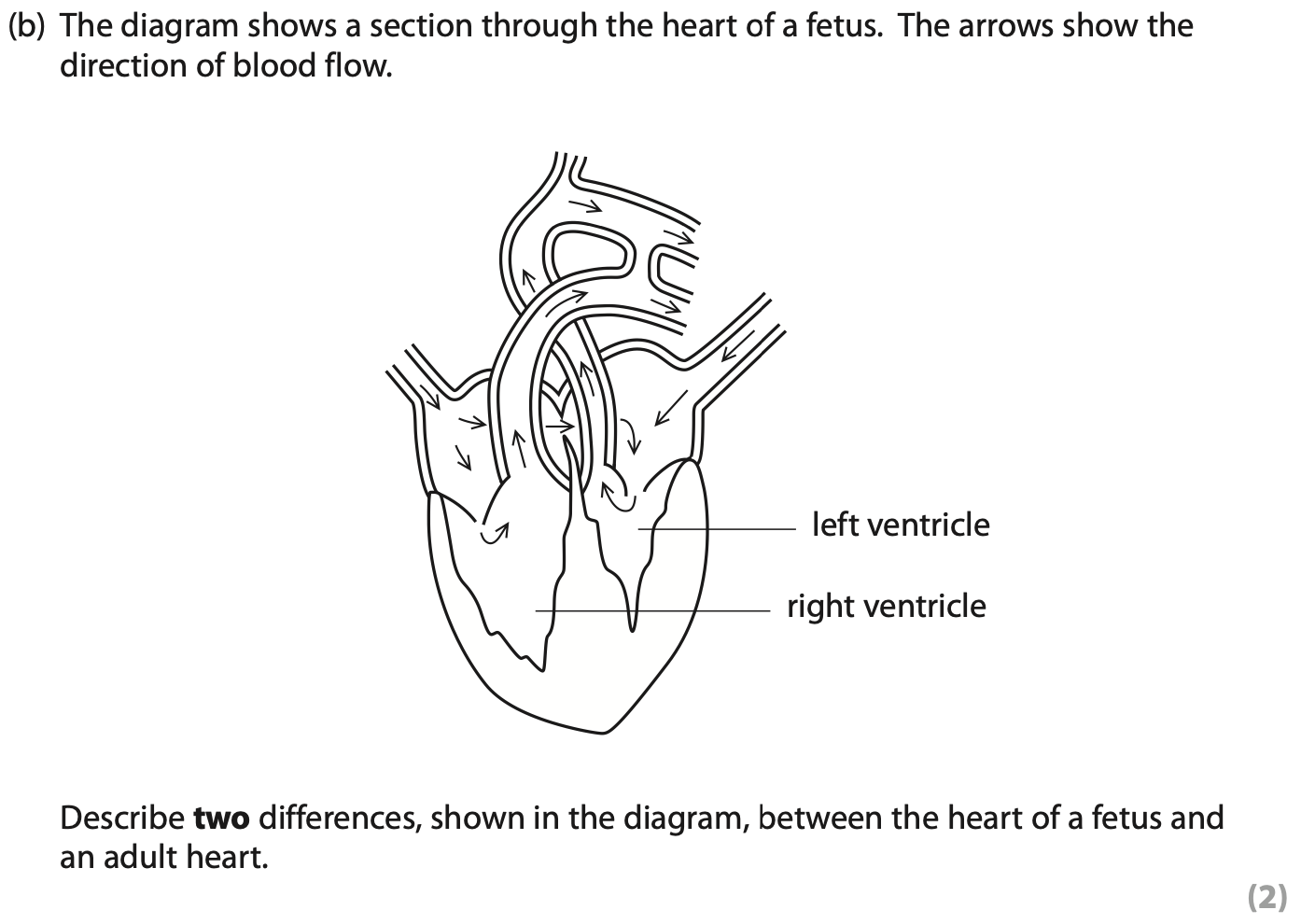
- 10The sex chromosomes in the cells of a mother are XX. The sex chromosomes in the cells of a father are XY. (i) Use this information to give the sex chromosomes in the cells of their male fetus.XY
- 11Give the number of chromosomes in a body cell of the male fetus.46 or 23 pairs
- 12—P oviduct / fallopian tube;
Q ovary;
R uterus / womb;
S vagina;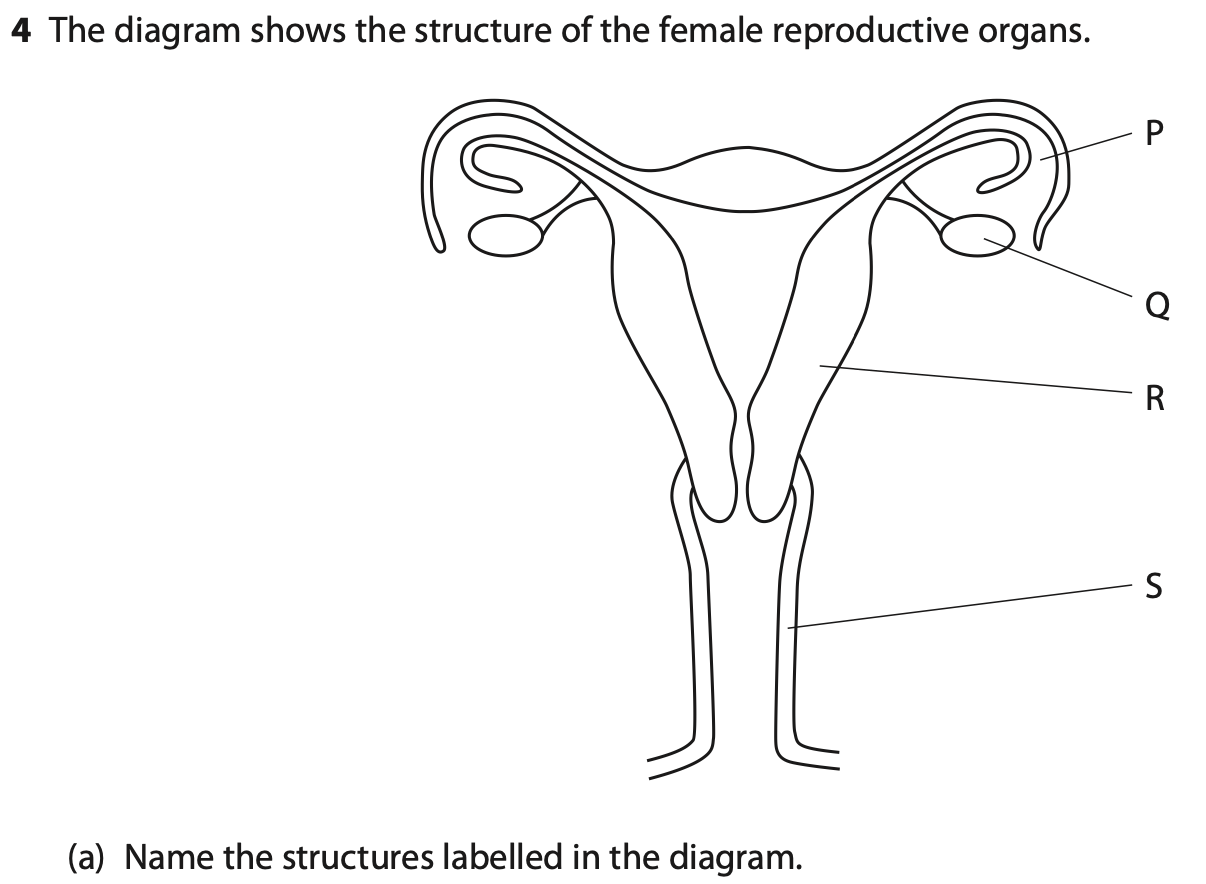
- 13—O from oestrogen peak to trough;
M from start until oestrogen line levels at start of cycle
/ from where progesterone peaks to end of cycle
1. thickens - 2. remains - 3. shedding -
4. egg implanted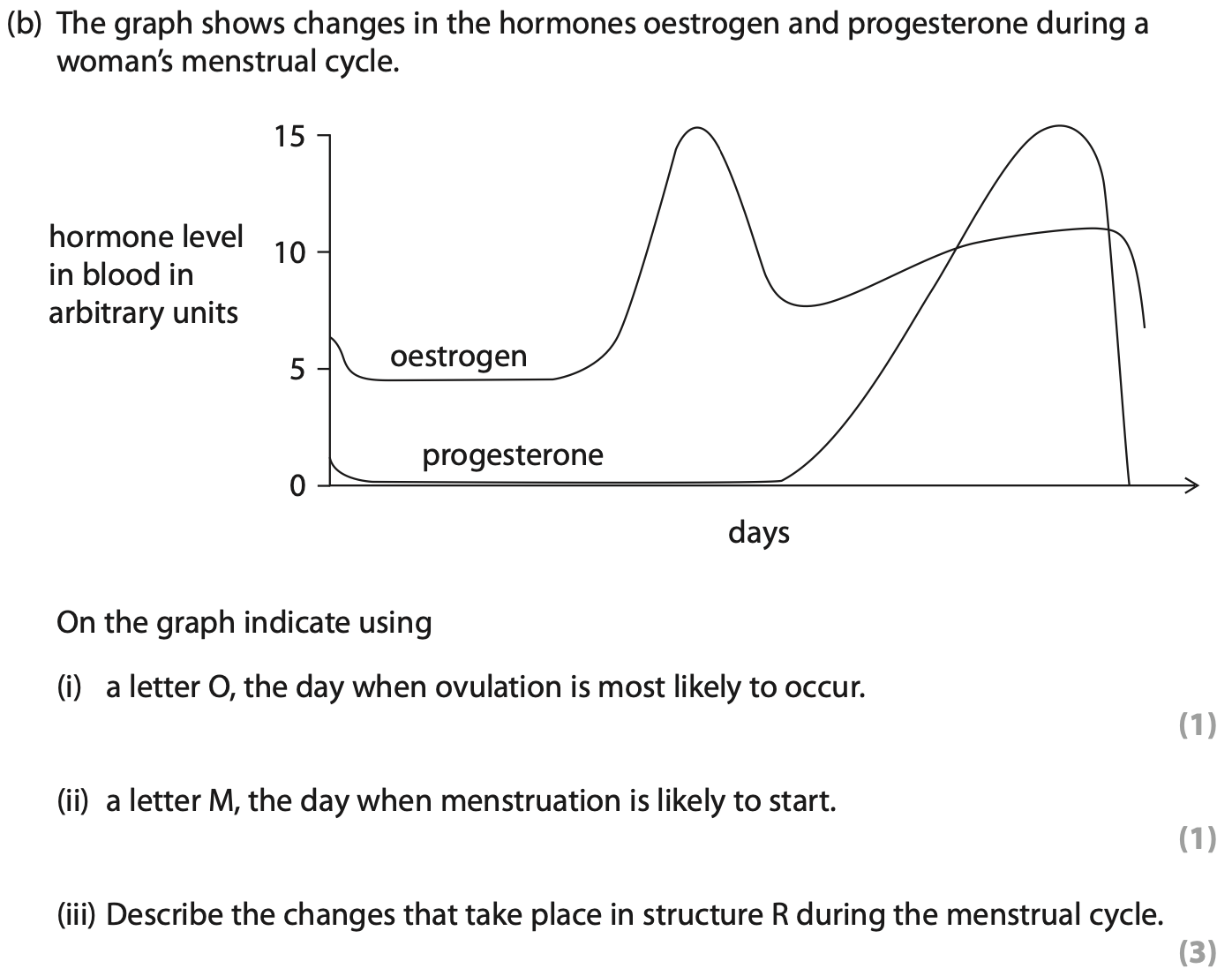
- 14Some women only have sexual intercourse at certain times of their menstrual cycle in order to avoid pregnancy. Explain why this may not be a reliable method of birth control.ovulation may vary within one woman
length of cycle varies
cycle can be irregular - 15Describe the role of oestrogen at puberty. (3)1. secondary sexual characteristics;
2. start periods
3. hips widen
4. growth of breasts
5. growth of pubic hair
6. change distribution of fat - 16—mitosis
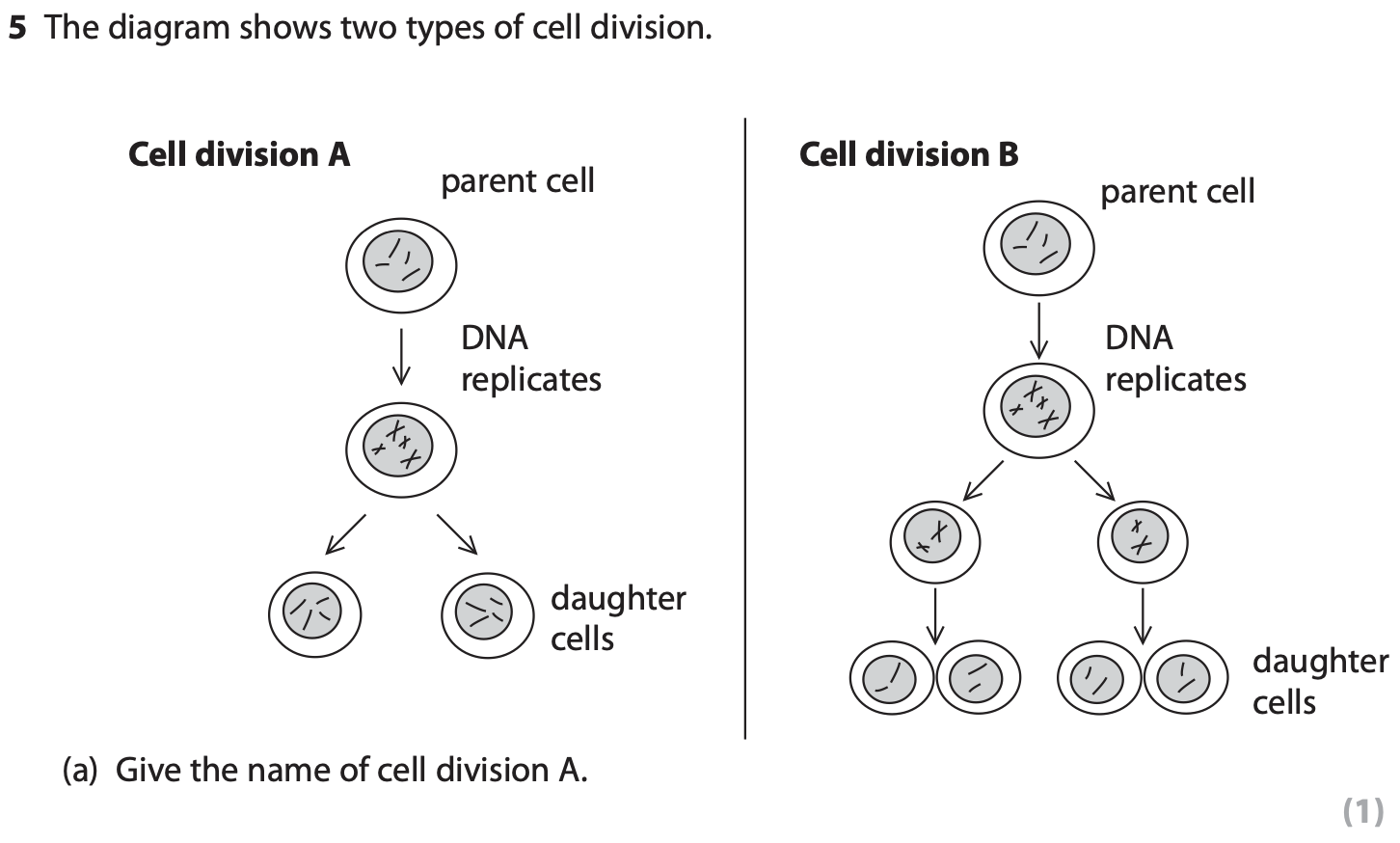
- 17—1. A produces two daughter cells;
2. A splits once;
3. A produces cells with four
chromosomes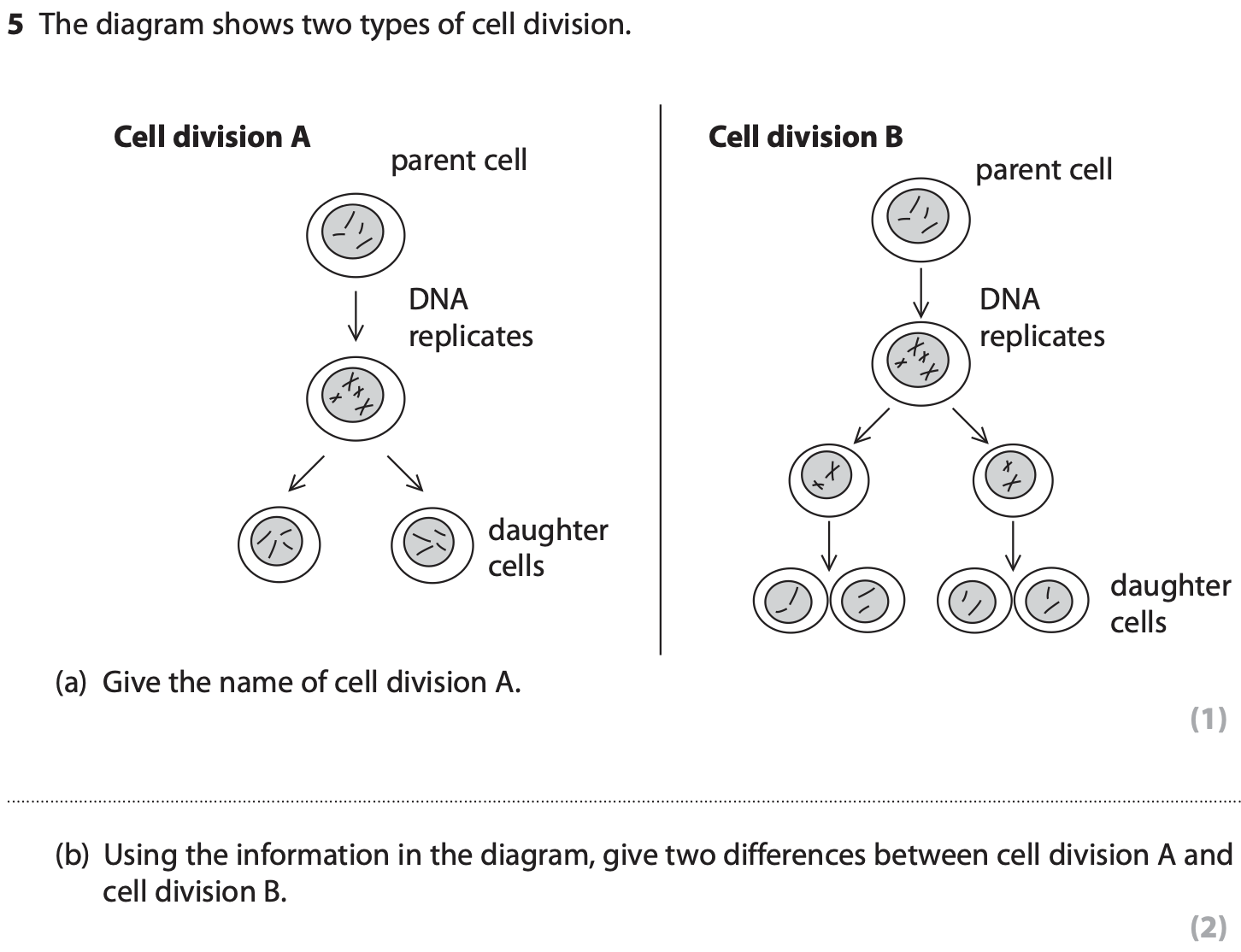
- 18Name a part of a flowering plant where cell division A occurs and a part where cell division B occurs.A any correctly named plant part
eg tip / stem / root / buds / leaf /
embryo / bulb
B anther / ovule / ovary