
Fichas
Ecosystems
Fichas del conjunto (20)
- 1Ecosystems and their componentsBiosphere: All living things on Earth and places where they live. Troposphere, hydrosphere and upper part of geosphere.
Ecosystem: Section of the biosphere formed by living things, phisical environment and the relationship.
Ecology: Science that studies ecosystems. - 2Components of an ecosystemThe relationship between living things and the environment
- Biotope: Temperature, precipitation, wind
- Community or biocenosis: Animal, plants and other living things. - 3Factors of an ecosystemComponents of biotope and biocenosis that affect the development of living things.
- Abiotic factors: Climatic, phisical and chemical. Tolerance ranges.
- Biotic factors - 4The organization of living things in an ecosystemPopulation: organisms from the same species:
- Family populations
- Colonial populations
- Gregarious populations
- State populations
Community: a population interacts with other population - 5Relationships between living things- Intraspecific: between individuals of the same species.
* Competition
* Cooperation
- Interspecific: between individuals of different species. - 6Interspecific relationships* Competition
Predation
* Parasitism
* Mutualism
* Symbiosis
* Commensalism
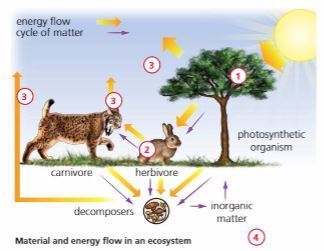
* Inquilism - 7Material and energy flow in ecosystems
- 8Trophic levels* Producers
* Consumers
* Decomposers - 9Representantions of the transit of matter and energy- Trophic chain
_ Trophic network
- Trophic pyramids:
* Energy pyramid
* Biomass pyramid
* Number pyramid - 10How Living Things adapt to the environmentAdaptation refers to the adjustements which species make over million of years of evolution in order to manage their relationship with the environment.
- 11Adaptation to temperature- Fur and fat
- Only active at night
- Migration
- Plants close to the ground
- Lose their leaves
- Traspiration - 12Adaptation to humidity- Fat stored
- Exoskeleton
- Store water - 13Adaptation to light- Eyes are adapted
- Large leaves
- Flowering or shedding regulated by the changing number of hours of sunlight. - 14Types of ecosystemGroup formed by the biotipe, the biocenosis and the relationships between them.
- Terrestrial and aquatic. - 15The biggest terrestrial ecosystem: biomesA biome is a set of terrestrial ecosystems that, due to sharing similar climatic conditions, have a similar biocenosis

- 16Spanish terrestrial ecosystems: Atlantic forestsNorthern areas of Spain: Abundant precipitation and mild temperatures. Deciduous species
- 17Mediterranean or sclerophyllous forestsLong hot periods and droughts.
Perennial leaves, hard and small.
Grasslands: Mediterranean forests modify by human activity. Middle, east and southwest of the Iberian Peninsula..
Mediterranean shrubs: Maquis and garriga. - 18Aquatic ecosystems- Marine ecosystems: Coastal and oceanic.
Organisms: Bentic or pelagic ( nektonic or planktonic)
- Inland water ecosystems: Calm water and Flowing water - 19The soil as an ecosystemThe soil is the outermost layer of the Earth's surface, and consists of loose materials.
Layers or horizons: 0 horizon, A horizon, B horizon, C horizon, R horizon.
Damage or deterioration: deforestation and overexploitation. - 20Humans and ecosystemsEquilibrium when:
- Environmental conditions are settled.
- Its component interact.
- Population remain stable.
Sustainable development uses the natural resources
Información
- Descripción
- Ecosystems. Biology 1 ESO.
- Creado por
- gomezolvega007
- Visitas
- 96
- Etiquetas
- Valoración