
12713952
Description

Flashcards by Natasha Hilton, updated more than 1 year ago

|
Created by Natasha Hilton
almost 8 years ago
|
|
| Question | Answer |
| Anatomy | Science of body structures and the relationship between |
| Physiology | Science of Body Function |
| Cellular Level | Cells that are made out of molecules e.g. Muscle cells, Sperm Cells, and Neurons |
| Tissue Level | Groups of similar cells |
| Organ Level | Made up of different types of tissues joined together e.g. Heart, Kidney |
| Organ System Level | Different organs that work together closely e.g. Cardiovascular System |
| Organism Level | Made up of many organ systems e.g. whole bod |
| Red Blood Cell | Carries oxygen around the body |
| Neuron Cell | Transmits a message (communication) to the whole body from the brain |
| Fat Cell | Energy and cushioning - Goes towards creating ATP |
| Sperm and Egg Cells | Reproduction 23 chromosomes in each |
| Skeletal Muscle Cell | Movement to bone structures from muscle |
| Digestive System | Brings in Nutrients -> Breaks Down -> Eliminates feces |
| Cardiovascular System | Distributes oxygen and nutrients to all body cells Delivers waste and carbon dioxide to disposal organs |
| Respiratory System | Takes in oxygen and eliminates carbon dixoide |
| Urinary System | Eliminates nitrogenous wastes and excess ions |
| Integumentary System | Protects body from external factors |
| Musculoskeletal System | Movement of skeletal muscle |
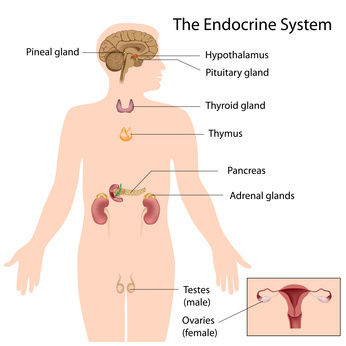
| Nervous and Endocrine System | Communication from the brain |
| Lymphatic and Integumentary System | Protection for immune system |
| Lymphatic System | Immune System - Lymph nodes and spleen |
| Integumentary System | First Layer of Skin |
| Reproductive System | Production of offspring |
| Necessary for cells | -Oxygen -ATP (Fats and sugars) - Water -Optimum pH range - Optimum temperature - Removal of waste |
| ATP Adenosine Triphosphate | Energy Molecule |
| Body temperature falls | Blood vessels constrict |
| Blood temperature rises | blood vessels dilate |
| Homeostasis | A constant internal environment |
| Positive Feedback Systems | Enhance the stimulus - Blood Clotting - Breast feeding - Pregnancy ( Child Birth ) |
| Negative Feedback Systems | Maintaining - Body Temperature - Blood calcium levels - Blood glucose levels |
| Plasma membrane | Controls materials moving in and out of a cell. |
| Nucleus | Controls cell activities |
| Cytoplasm | Fluid material between membrane and nucleus |
| Organelles | Machinery structures that perform specific cell functions |
| Functions of Membrane Proteins | Transport -> Receptor -> Attaches to cytoskeleton -> Enzymatic Activity -> Intercellular joining -> Cell-cell recognition |
| Tight Junction | Prevents molecules passing through intercellular space -Lining of the stomach |
| Desmosomes | Binds adjacent cells together Helps form internal tension-reducing network of fibres - Skin |
| Gap functions | Allows ions and small molecules to pass from one cell to the next for intercellular communication |
| Passive Membrane Transport | Does not require ATP energy |
| Active Membrane Transport | Does require ATP energy |
| Passive Transport (Diffusion) | Movement of a substance from a high to low concentration e.g. Farts |
| Passive Transport (Filtration) | Movement of a substance through a membrane of pressure e.g Kidney |
| Simple Diffusion | Fat soluble molecules that simply travel through the phospholipid bilayer |
| Carrier-mediated facilitated diffusion | Protein carrier that changes the shape of a protein |
| Channel-mediated facilitated diffusions | Channel protein that selects ions based on their size and charge |
| Osmosis | Diffusion of solvent through a protein channel or lipid bilayer e.g. Water |
| Tonicity | Ability of solution to change shape or tone by altering the internal water volume |
| Isotonic | Same solute concentration |
| Hypertonic | High solute concentration - Cell shrinks |
| Hypotonic | Low solute concentration - Cell Bursts (lysis) |
| Exocytosis | Solution comes out of the cell |
| Endocytes | solution goes into the cell -Vesicular Transport |
| Solute Pump | Requires the use of ATP and a protein carrier. Moves solutes against a concentration gradient. |
| Mitochondria "Power House" | Produce cell energy ATP |
| Ribosomes | Produce proteins (for incorporation into new lasma membraneur for lysosomes) |
| Rough Endoplasmic Reticulum | Manufactures protein |
| Smooth Endoplasmic Reticulum | Produces phospholipids, fats and steroids |
| Liver cells | Breakdown stored glycon to glucose |
| Skeletal and Cardiac Muscle Cell (sarcoplasm reticulum) | Stores calcium for muscle contraction |
| Golgi Bodies (Dictyosomes) | Made up of 20 flattened plate like structures know as cisterns Concentrates, modifies and packages the products of the ER into vesicles. |
| Lysomes | Breakdown of substances entering the cell e.g. introduces/toxic chemicals Contains sacs of enzymes |
| Peroxisomes | Formation of new membranes Detoxifies harmful substances e.g. Alcohol, neutralise free radicals Found in the Liver and Kidney cells |
| Cytoskeleton | Network of protein filaments |
| Microfilaments | Strands made of spherical protein subunits called actins |
| Microvilli | Large number of minute projections from the surface of a cell to increase surface area Specialised in Absorption e.g. the small intestine and kidney tubules |
| Cytoskeleton | Intermediate filaments - tough, insoluble protein fibres constructed liken woren ropes |
| Microtubules | Hollow tubes of spherical pattern subunits called tubulins e.g. centrosome, cilia, and flagella |
| Centrosome | Centrioles organise the formation of new cilia and flagella, as well the spindle in cell division |
| Cilia and Flagella - functions | Extensions of the cell membrane involved in the movement |
| Cila | numerous short extensions that are found on the surface of cells e.g. move mucus with trapped dust away from the lungs |
| Flagella | singular extension of the cell membrane, which is usually long and propels cells forward e.g. the whip like tail of a sperm cell. |
| Cell Division | Number and types of organelles found in a cell relate to it's function |
| Transcription | Codes for protein in the nucleus via the DNA genetic code Ribosome copies a gene for a protein |
| Translation | Where the ribosome reads the copied genetic code and translates into amino acid |
| Cardiac Muscle cell | contractions to move blood around the body from the heart. |
| Enzyme | producing pancreatic cell |
| Phagocytic Cell | Breaks up bacteria and destroys it |
| Hormone | secreting cell of the ovary |
| Proximal | Closer to the origin of the body part of the body part or the point of attachment of a limb to the body trunk |
| Distal | Farther from the origin of a body part or the point of attachment of a limb to the body trunk |
| Superficial (external) | Toward or at the body surface |
| Deep (internal) | Away from the body surface more internal |
| Medial | Toward or at the midline of the body on the inner side of |
| Lateral | Away from the midline of the body; on the outer side of |
| Intermediate | Between a more medial and a more lateral structure |
| Superior (cranial) | Toward the head end or upper part of a structure or the body above |
| Inferior (caudal) | Away from the head end or toward the lower part of a structure or the body below |
| Anterior (ventral) | Toward or at the front of the body; in front of |
| Posterior (dorsal) | Toward or at the back of the body; behind |
| Osteo | Bone |
| Cardio | Heart |
| Cyte | (mature) cell |
| Chondro | Cartilage |
| Blast | (young) cell |
| Peri | Perimeter |
| Myo | muscle |
Want to create your own Flashcards for free with GoConqr? Learn more.