
15022768
Description

Flashcards by Random Person, updated more than 1 year ago

|
Created by Random Person
over 7 years ago
|
|
| Question | Answer |
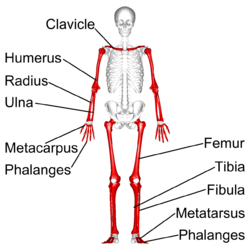
| How are bones classified? | Classified by shape as either long, short, flat or irregular bones. |
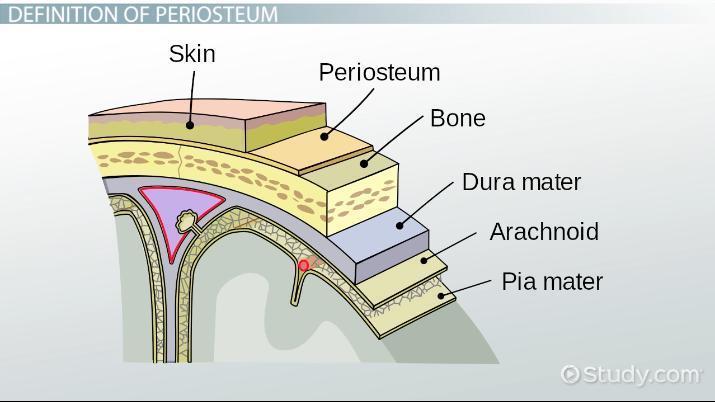
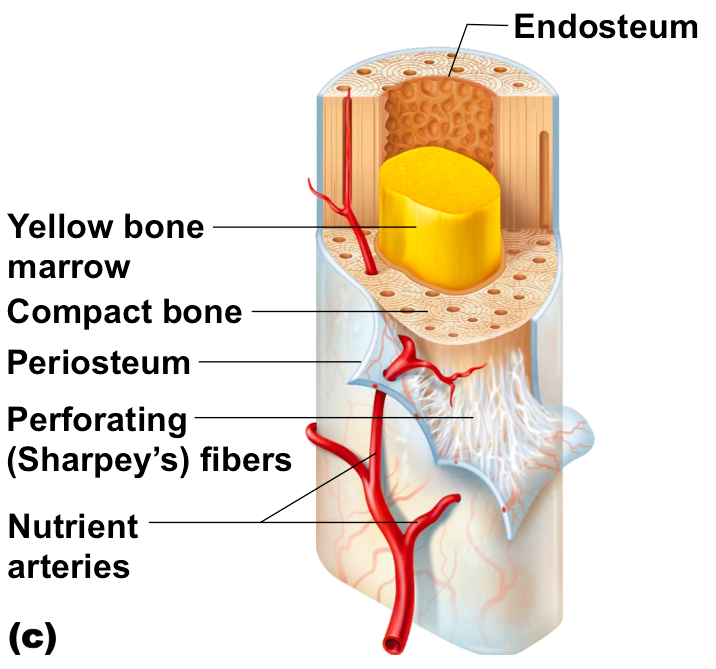
| Periosteum | Connective tissue that covers the outside of the bone. |
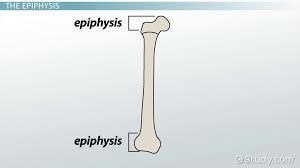
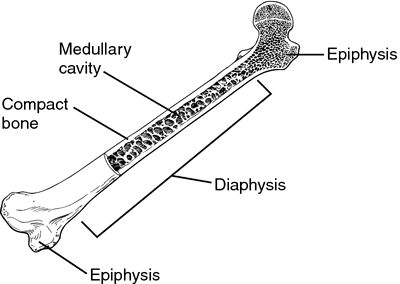
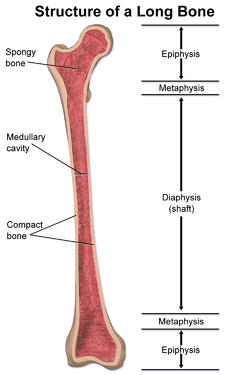
| Long Bones | Long and skinny. They have widened ends called epiphyses and a long shaft called the diaphysis. |
| Epiphyses | Very ends of a long bone. Widened. |
| Diaphysis |
Long shaft of a long bone. Or the central part of a long bone.
Image:
X2604 D 32 (image/png)
|
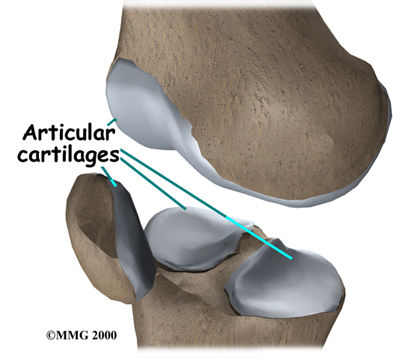
| Articular Cartilage | Each epiphysis is covered by this, which protects the bone at the joint. |
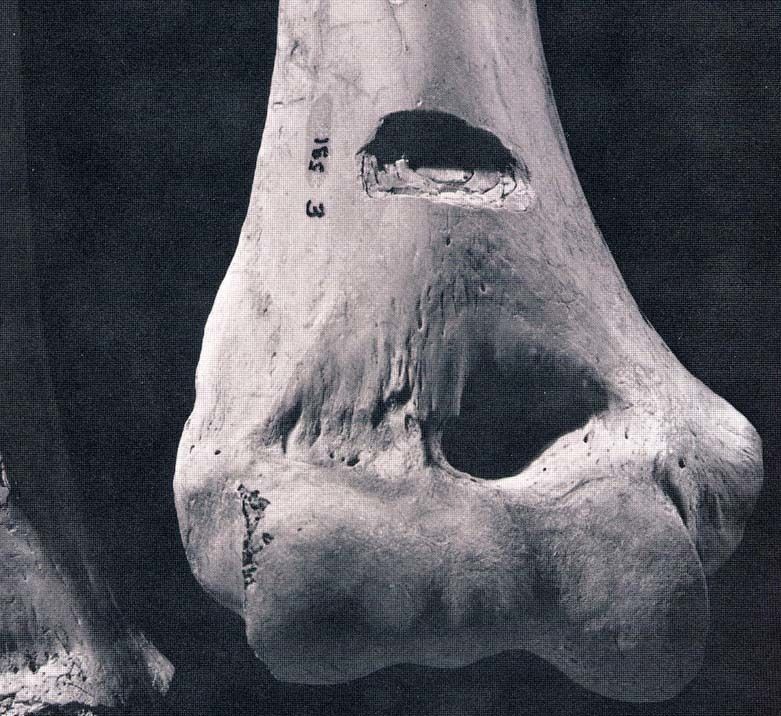
| Why is the bone surface not smooth? |
It allows for muscle and ligament attachment and for joint surfaces.
Image:
Chopmark,White (image/jpeg)
|
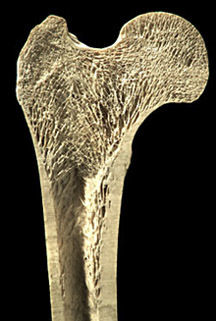
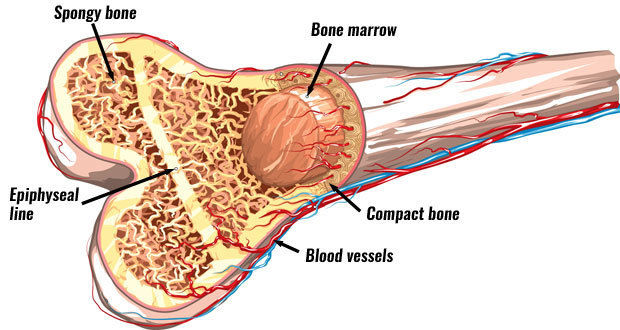
| What do long bones have inside? |
Have a medullary (marrow) cavity and 2 different types of bones: spongy and compact.
Image:
Femur (image/jpeg)
|
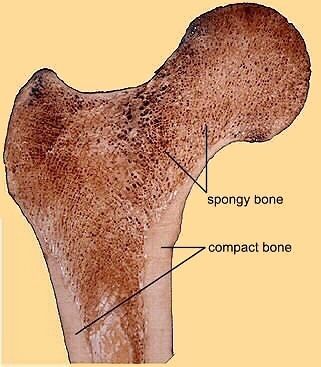
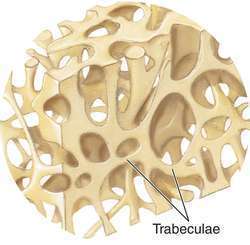
| Spongy Bone | Looks like a cleaning sponge, with holes in between strips of bone called trabeculae, which is covered by endosteum. |
| Trabeculae | Is a small, often microscopic, tissue element in the form of a small beam, strut or rod that supports or anchors a framework of parts within a body or organ |
| Endosteum |
Is a thin vascular membrane of connective tissue that lines the inner surface of the bony tissue that forms the medullary cavity of long bones
Image:
2742270 Orig (image/png)
|
| Medullary Cavity | Is the central cavity of bone shafts where red bone marrow and/or yellow bone marrow (adipose tissue) is stored; hence, the medullary cavity is also known as the marrow cavity. |
|
Compact Bone
Image:
Compbo (image/jpeg)
|
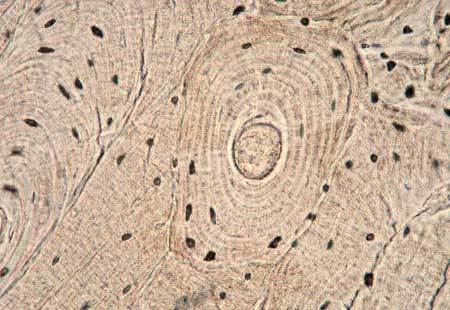
looks solid but isn't. It is composed of many tree trunk-like structures called osteons. |
| Osteons | Has a central canal for blood vessels and circular layers of bone surrounding the central canal. |
| Osteoprogenitor Cells | Makes bone stem cells. Involved in osteogenisis. |
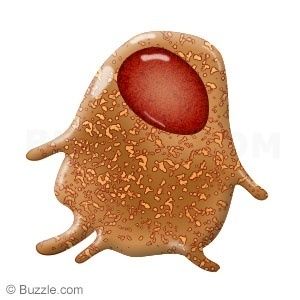
| Osteoblasts |
Makes bone. Involved in osteogenisis.
Image:
Osteoblast (image/jpeg)
|
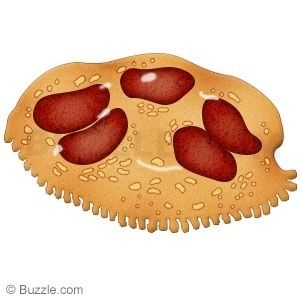
| Osteoclasts |
Destroys bone. Involved in osteogenisis.
Image:
Osteoclast (image/jpeg)
|
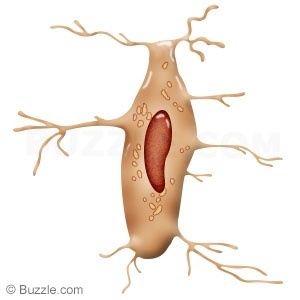
| Osteocytes |
Maintains the matrix. Involved in osteogenisis.
Image:
Osteocyte (image/jpeg)
|
| 2 Types of Bone Development | Intramembranous Ossification and Endochondral Ossification. |
| Intramembranous Ossification | Connective tissue membrane turns into bone. The bones of your skull are formed this way. |
| Endochondral Ossification | Hyaline cartilage model of a bone turns into bone. The rest of the body's bones except for the skull is made this wat |
| What happens if breakdown is faster than buildup? | Osteoporosis. |
| How does a bone heal if it's fractured? | Via endochondral ossification. |
| Joints | Places where bones meet. Has 2 other skeletal tissues: Cartilage and Ligaments. May be classified by structure or function. |
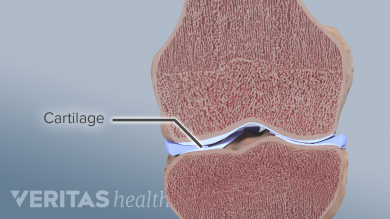
| Cartilage | Is a resilient and smooth elastic tissue, a rubber-like padding that covers and protects the ends of long bones at the joints, and is a structural component of the rib cage, the ear, the nose, the bronchial tubes, the intervertebral discs, and many other body components. |
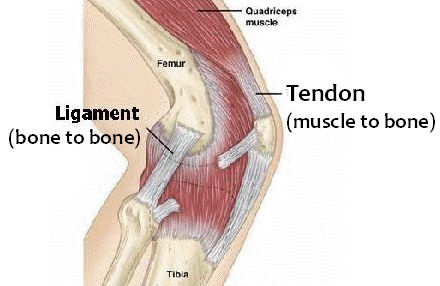
| Ligaments | A short band of tough, flexible, fibrous connective tissue that connects two bones or cartilages or holds together a joint. |
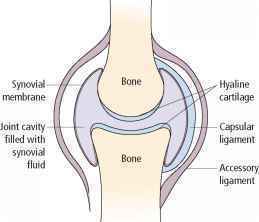
| Synovial Joints | Most of the joints in your body. Has a large range of movement, and a fluid-filled cavity between the bones. |
| Some examples of joint disorders: | Arthritis, sprains, bursitis, and tendonitis. |
| Some examples of skeletal injuries: | Disk herniation, abnormal spinal curvatures, and bone fractures. |
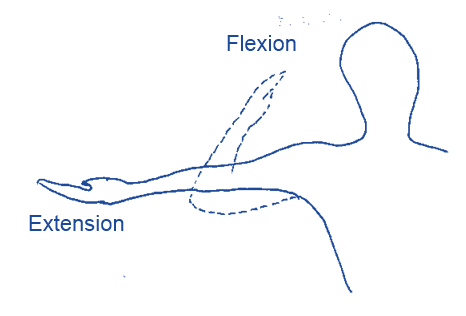
| Flexion | The action of bending or the condition of being bent, especially the bending of a limb or joint. |
| Extension |
Is the opposite of flexion, describing a straightening movement that increases the angle between body parts.
Image:
Flex Extend (image/png)
|
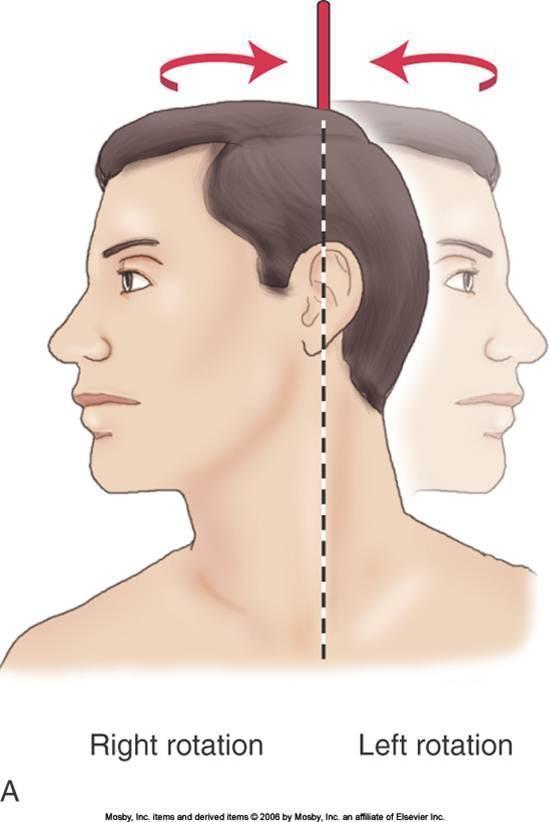
| Rotation | The action of rotating around an axis or center. |
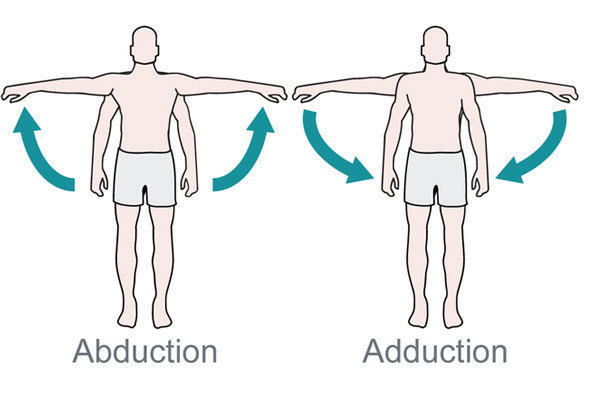
| Abduction |
The movement of a limb or other part away from the midline of the body, or from another part.
Image:
Diff Btwn (image/jpeg)
|
| Adduction |
Is the movement of a body part toward the body's midline. So, if a person has their arms straight out at the shoulders and brings them down to their sides, it is adduction.
Image:
Diff Btwn (image/jpeg)
|
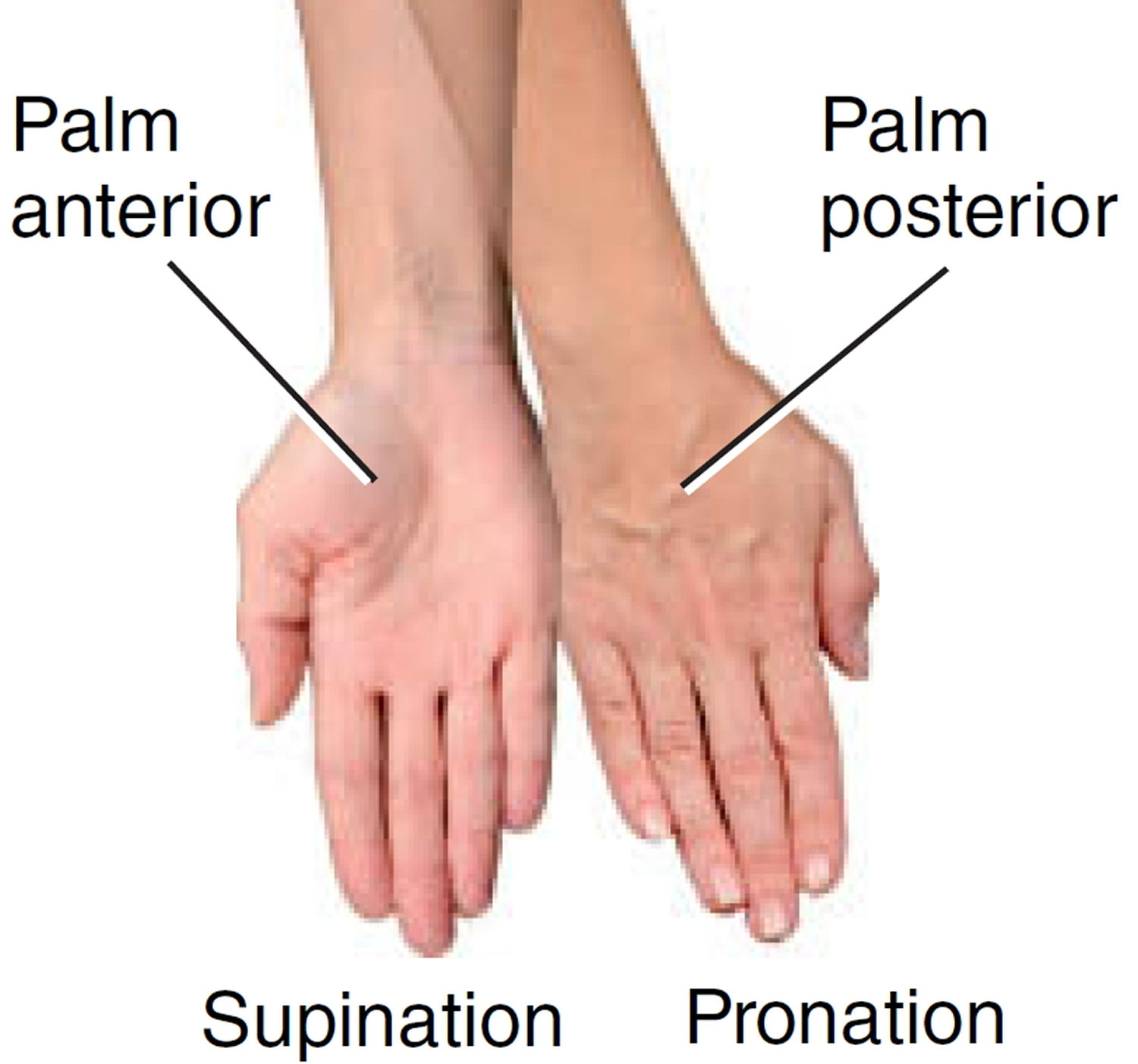
| Pronation | The forearm turns the hand so that the palm is downwards or backwards. |
| Supination | The palm is forward or upwards. |
Want to create your own Flashcards for free with GoConqr? Learn more.