
15042739
Description

Flashcards by Brittany O'Brien, updated more than 1 year ago

|
Created by Brittany O'Brien
over 7 years ago
|
|
| Question | Answer |
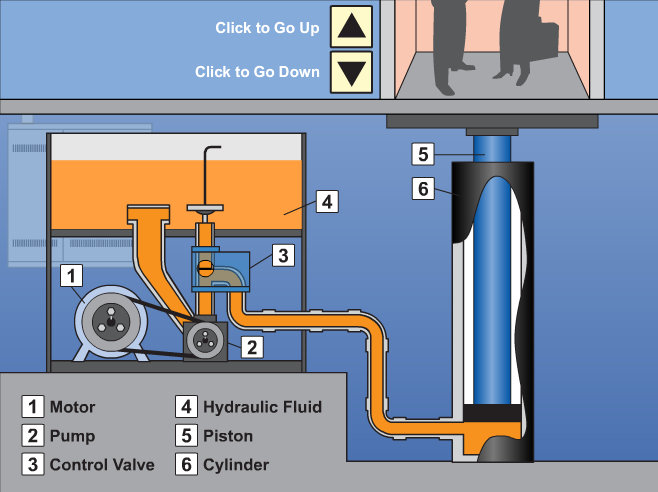
| Pump Unit Operation | Several things happen once you press a button to call an elevator. The animation depicts a few of these events. In reality, this process happens in a matter of seconds. In our example, it has been slowed to make it easier to follow. This animation is just an overview. Please watch it a couple of times to become familiar with the process. There were quite a number of electrical and mechanical events occurring in a very short time period but don't worry if it seemed to go by too fast. hydraulic power unit pump |
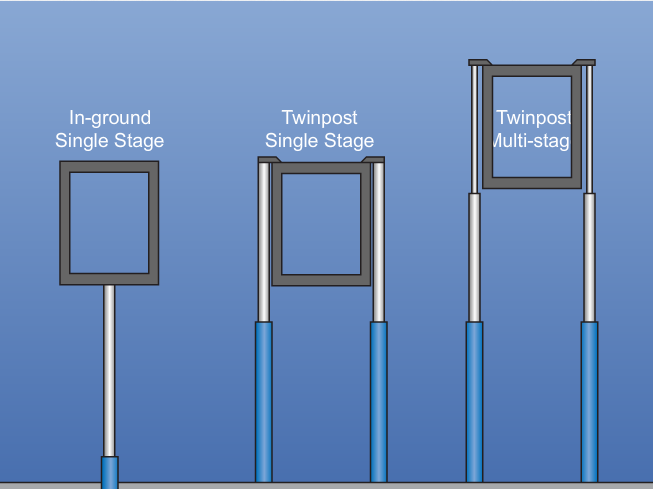
| Conventional (In-Ground) Jack | This application accommodates front openings as well as front and rear opening configurations. Jackhole Hydraulic design is the traditional hydraulic design used for decades. The hydraulic cylinder (jack) is installed in the ground directly under the car platform. This arrangement can accommodate high and low capacity cars for both passenger and freight applications. To raise the car, hydraulic oil is pumped into the cylinder causing the piston (also referred to as a plunger) to be displaced forcing the piston to move in the up direction. A car is lowered when the piston retracts inside the cylinder because the hydraulic oil is removed from the cylinder. hydraulic holed Oil |
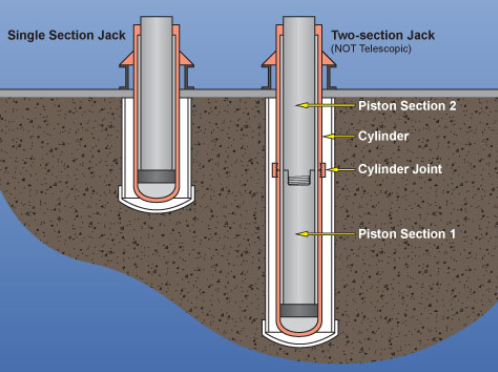
| Conventional (Multi-Section) Jack | In some cases, conventional jacks can be as much as 75 feet in length. Therefore, it may be impractical or difficult to ship or install these lengthy jacks. The solution is to have multiple jack sections. Only a single stage jack can have multiple sections. The maximum number of sections is four. The cylinder and piston sections are coupled together using factory provided machined threads. (see file 1005-16) During the manufacturing process the steel cylinder and piston are mounted in a lathe and the threads carefully machined. The jack sections for a single stage jack are manufactured equidistant or equal in length. So, basically, for 30 feet of travel, the most common configuration is two sections of 15 feet. The usual length for a jack section is 14-18 feet. Generally, jack sections do not exceed 20 feet unless the extra length can be accommodated in the field. Now, how would you reach 48 feet of travel if the jack needs to be shipped in sections? Answer: Use three 16 foot sections connected together in the field. hydraulic jack holed cylinder |
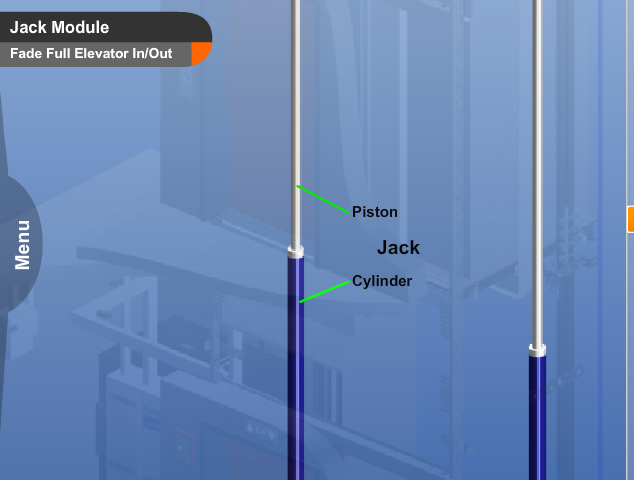
| Jack Designs | Here's a closer look at two types of jacks used on a hydraulic eleavator. One is a single piece jack and the other is a two piece jack. The jack module consists of different types of jack assemblies. The underground assembly includes the piston, cylinder and jack head. ThyssenKrupp Elevator’s AMEE holeless jack assemblies are similar in design to the jack hole design but have different connection, jack head and oil port designs to accommodate the way the holeless jack assembly is designed to lift the elevator. hydraulic jack |
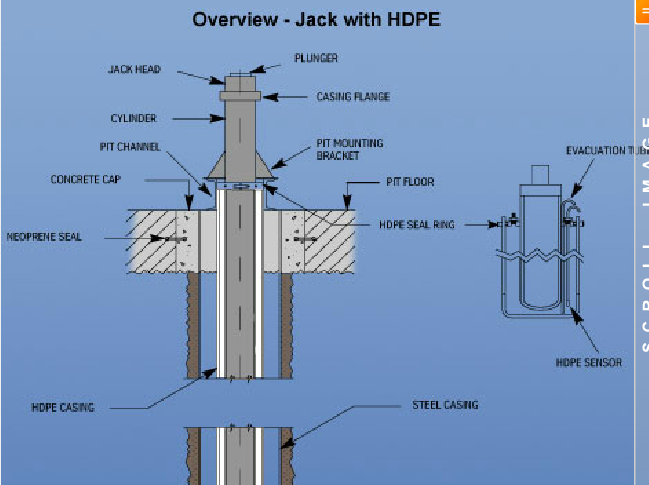
| Jack Protection | The A17.1 Safety Code for Elevators and Escalators requires that a cylinder installed below ground be protected from corrosion. As a minimum, one of three methods may be used: 1) monitored cathodic protection; 2) a coating to protect the cylinder that will withstand the installation process; 3) a protective casing. Also required is a method to determine ongoing compliance. ThyssenKrupp uses the “protective casing method” as experience shows that this method seems to provide the customer the best long term protection with minimum customer intervention. A HDPE (High Density Polyethelyn) pipe is factory provided for all ThyssenKrupp single piece jacks. The HDPE is factory assembled with the jack to help provide an efficient installation. A HDPE or PVC casing is used for multiple jack sections and field installed. In some cases a steel casing must be first installed to prevent the jack hole from back filling. When required, the steel casing is sized larger then the HDPE or PVC pipe casing so the steel casing is large enough to accommodate these protective pipe casings. The HDPE or |
| Rail Module | Rail Module: The rail module contains the rails (typically 16 feet long). Conventional “T” rails come in various sizes which are specified as pounds per foot of rail. Industry standard rail sizes are 8, 15, 18.5, 22, and 30 pound rail. The rail module also includes splice plates with the nuts and bolts that are used to connect multiple rails together. The ThyssenKrupp pre-engineered hydraulic elevator uses a specially designed “omega” rail. A cross section of the omega rail resembles the Greek letter “omega” (Ω). Since the hydraulic elevator is not required to use a rail safety to prevent a free falling car the plain steel “T” rails that provide a safety shoe griping surface used for traction elevators is not necessary. This allows the innovative omega rail design which provides a lighter rail weight and easier and faster rail installation. Hoistway width space must allow enough room for the rail and rail bracket. For the typical hydraulic elevator a minimum of 8” on each side of the platform is provided. For larger engineered applications a larger space may be required. hydrau |
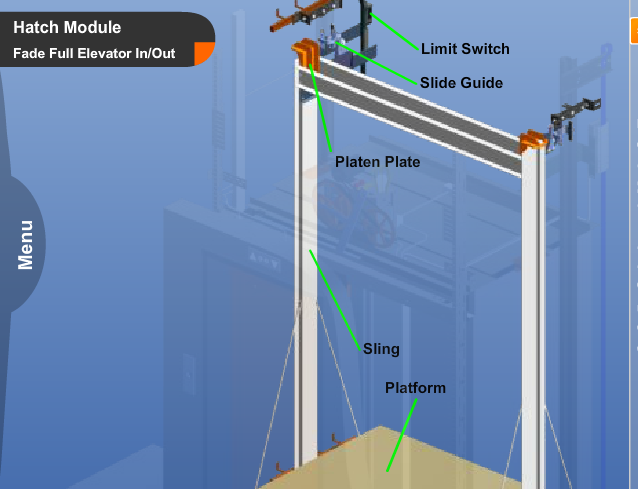
| Hatch Package Module | Hatch Package Module: The hatch package module is the core of the elevator package and consists of many different assemblies. This module usually requires substantial engineering time because within this module there will be multiple assemblies that when installed create the total hatch package. hydraulic rail hoistway |
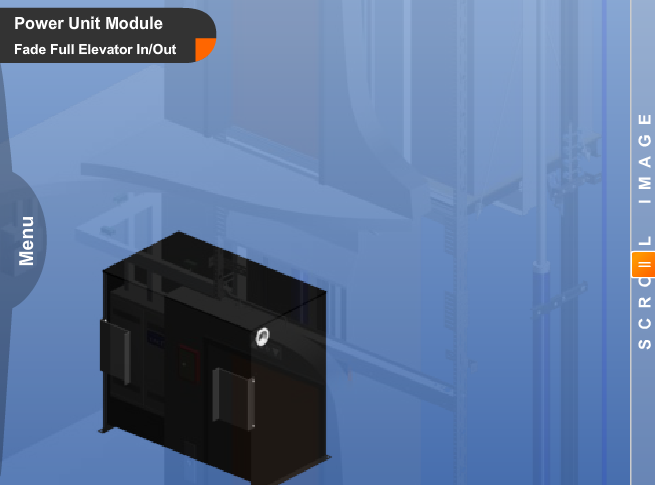
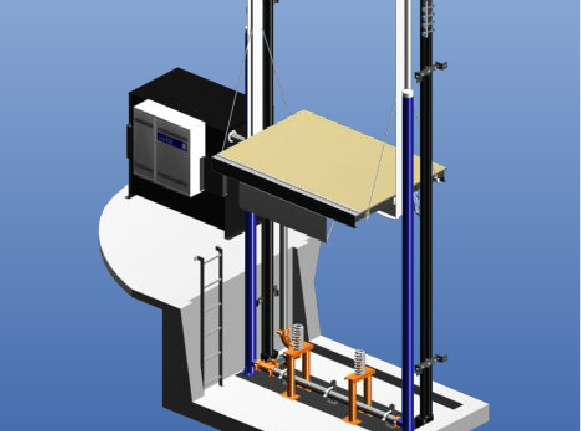
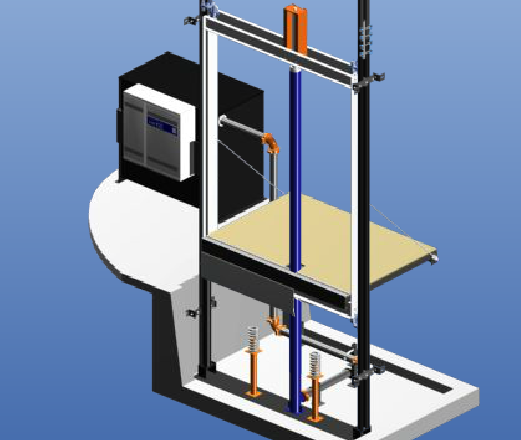
| Power Unit Module | Power Unit Module: A power unit is used on all hydraulic elevator equipment types. A standard power unit consists of a tank, pump, motor, control valve, and silencer. The power unit pumps oil to push the piston up. It also allows the oil to return to the tank as the car travels down. This diagram shows a submersible power unit located in an adjacent machine room. hydraulic pump pipe Oil tank |
| Jack Module | Jack Module: The jack module consists of different types of jack assemblies. The underground assembly includes the piston, cylinder and jack head. ThyssenKrupp Elevator’s AMEE holeless jack assemblies are similar in design to the jack hole design but have different connection, jack head and oil port designs to accommodate the way the holeless jack assembly is designed to lift the elevator. hydraulic holed holeless twinpost cylinder |
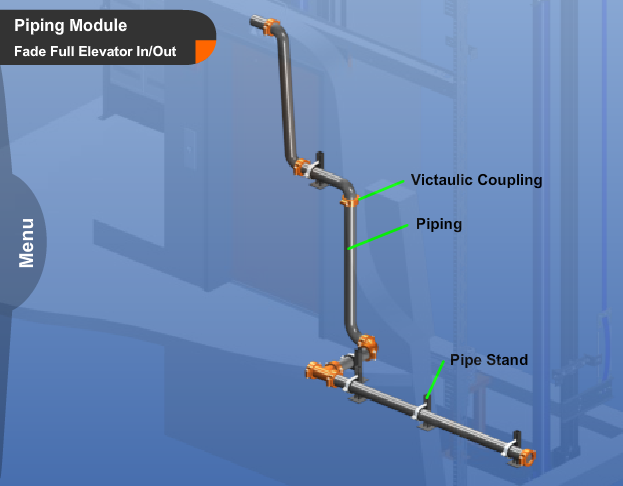
| Piping Package Module | Piping Package Module: A typical piping package module consists of schedule 40 pipe, shut off ball valves, Victaulic couplings, Victaulic 90 degree elbows, and pipe stands. Victaulic isolation coupling design also provides dielectric (A dielectric material is a substance that is a poor conductor of electricity) protection and is also effective in the reduction of mechanically transmitted noise between the elevator power unit and the elevator car. hydraulic pipe Oil |
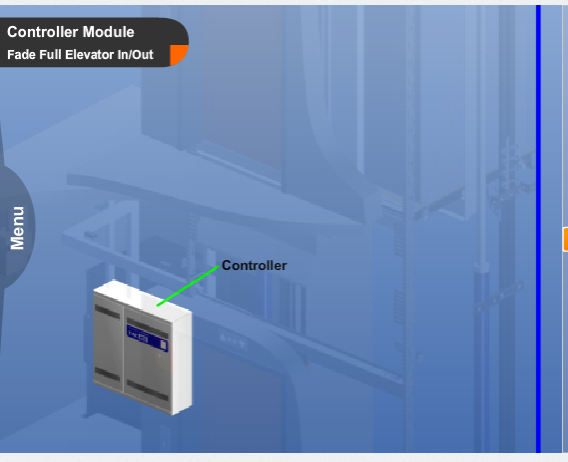
| Controller / Selector Module | Controller/Selector Module: The controller, using microprocessor technology, receives and sends out signals that direct all the activities associated with the elevator. These include the following: the opening and closing of doors, when to speed up or slow down, the rate of acceleration and deceleration and where to stop. There are several different designs of selectors. The most common selector assembly consists of a metal tape running approximately the length of the hoistway. The selector box runs up and down on this metal tape and is mounted on top of the car. As the car moves up and down, the selector box sends signals back to the controller identifying the car location in the hoistway. For instance, car location is especially important as the elevator levels to the floor. hydraulic controller |
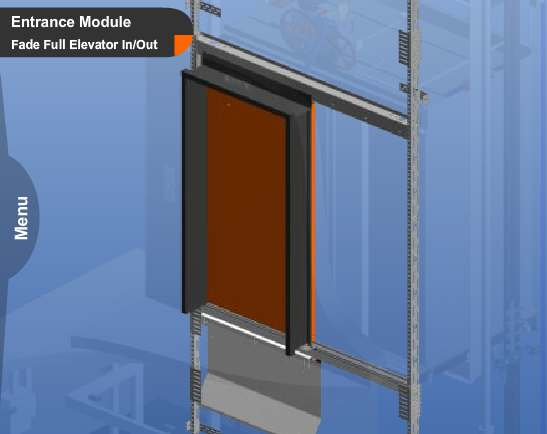
| Entrance Module | Entrance: The framework for the opening is called the entrance and is set into the hoistway wall. The entrance provides safe access to the elevator car. It protects the passenger from entering the hoistway unless an elevator has arrived at the landing. It also protects the passenger who is riding in the car, in conjunction with the car door, by preventing the passenger from disembarking until the elevator has arrived safely at a landing. The entrance assembly must be fire rated as a function of the hoistway construction type. There are typically three types of hoistway construction types that require specific entrance designs: block, drywall & steel stud, drywall & wood stud. The entrances are “labeled” with a fire rating and this label is inspected at installation completion to be sure that the correct entrance type was installed. hydraulic entrances door |
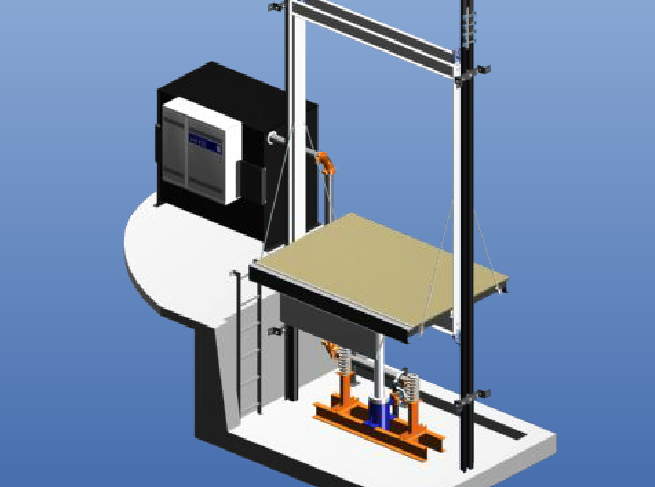
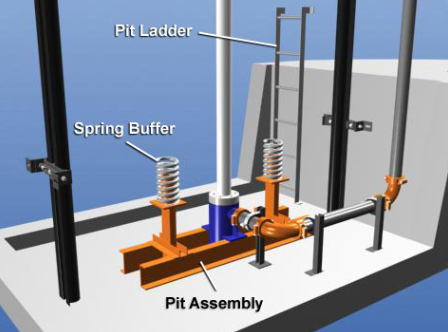
| Pit Assembly | The pit assembly is a safety device on which buffer springs are mounted. For the jack hole car type shown here, it also serves as a support for the jack. The pit ladder assembly is used to access the pit area from the bottom landing. Its design and location are based on elevator code requirements. hydraulic pit buffers jack |
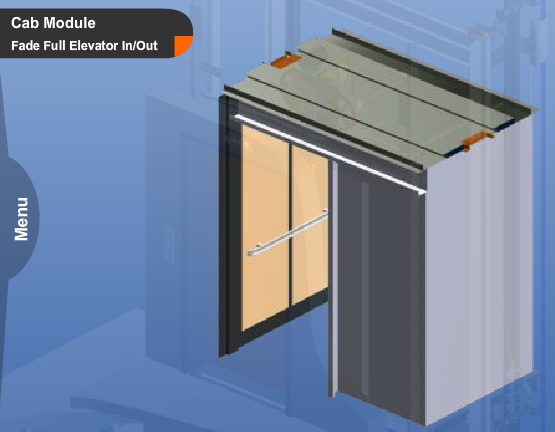
| Cab Module | Cab Module: The cab module may be either a passenger or freight type. The cab module is made up of a number of assemblies: enclosure; platform, car frame; car door or gate. The cab enclosure is the part of the elevator that people or freight ride in. A freight cab is typically constructed from a series of formed sheet steel wall panels. A passenger cab has many options for the finished interior enclosure materials: such as stainless steel, bronze, cold rolled steel and plastic laminate. (see file 1004-13) Both the freight and passenger cab sizes are designed to size standards provided by the A17.1 Safety Code for Elevators & Escalators. For passenger elevators a maximum inside net platform area is provided in relationship to capacity. For instance, a 2,500# capacity would be a maximum of 29.1 square feet. For freight elevators the size is governed by the type of freight to be hauled and a design formula. hydraulic cab finishes Architectural |
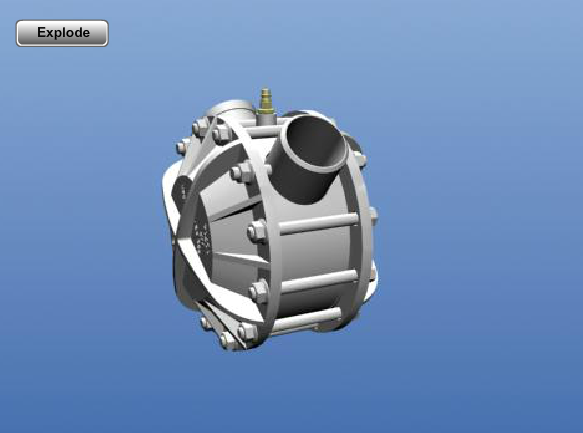
| Silencer | The silencer removes vibrations that would otherwise be transferred through the piping to the car. Below are details about the TKE Silencer: • Can reduce up to 60% of hydraulic noise • Approximately 12" in length, 5" in diameter and 31 lbs. in weight • Victaulic connections are standard • Internal air chamber • Three uniquely designed diffuser chambers Internal components of the TKE silencer are as follows: • Inner chamber • Compressed coil spring • Radial flow chamber • Oil • Charging valve • Compressed air • Bladder • Outer casing hydraulic power unit pump Oil |
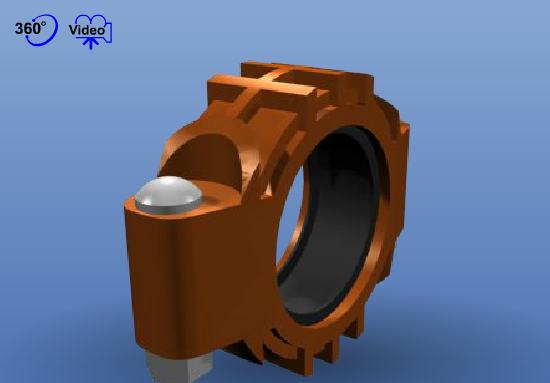
| Victaulic Coupling | Victaulic isolation coupling design provides dielectric (A dielectric material is a substance that is a poor conductor of electricity) protection and is also effective in the reduction of mechanically transmitted noise between the elevator power unit and the elevator car. Hydro oil line power unit pump |
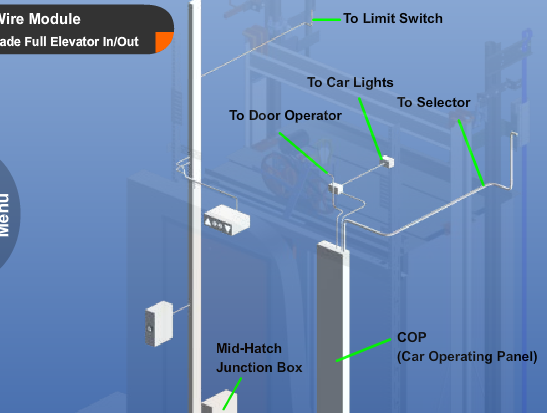
| Wiring Package Module | Wire Package Module: The wiring package module contains material used to wire the complete elevator package. The wiring package consists of standard electrical components such as duct, junction boxes, conduit, and fittings. The wiring package also consists of wire that is unique to elevators. A traveling cable is an electrical "cable" consisting of numerous conductors that electrically connect the moving car to the elevator controller in the machine room. The traveling cable is an “engineered” cable designed and manufactured to prevent twisting as the elevator moves through the hoistway. The cable is also designed to be strong enough to withstand the constant movement. The cable is composed of electrical conductors to allow control signals, electricity for lighting, fans and utility outlets. The cable also includes shielded pairs for communication devices such as telephones. hydraulic wiring duct emt |
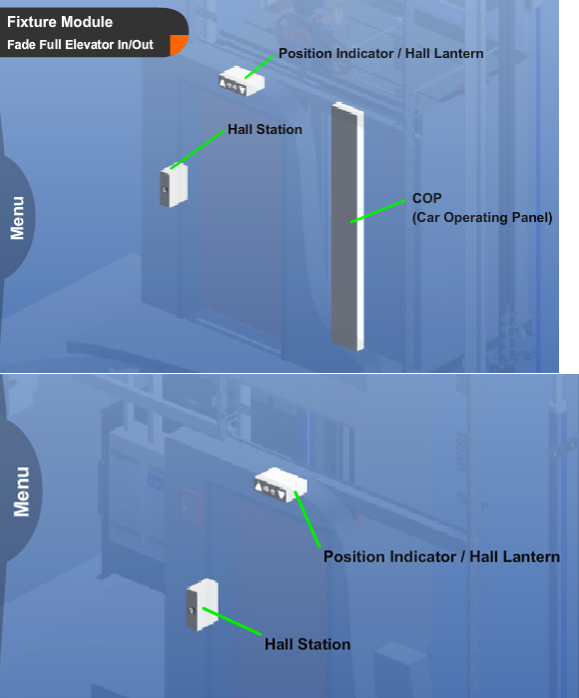
| Fixture Module | Fixture Module: The car operating panel and hall push buttons allow the elevator user to give commands to the elevator. The position indicator, in turn, tells the user the location of the elevator. The directional lantern indicates which direction the elevator will be traveling on the next start. The fixture module includes the hall push button stations, car operating panel, position indicators and directional lanterns. hydraulic fixture signal |
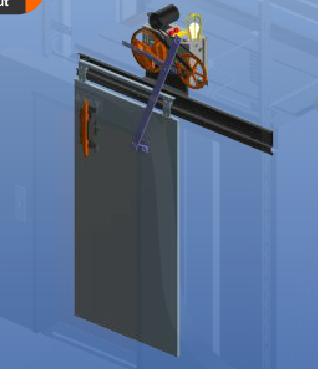
| Door Equipment Module | Door Equipment Module: The door equipment module consists of numerous assemblies. In its simplest form, this equipment opens, closes, and locks the cab and hoistway doors. The major assemblies consist of the door operator, header, tracks, hanger rollers, interlock, clutch, and closures. hydraulic Doors entrances |
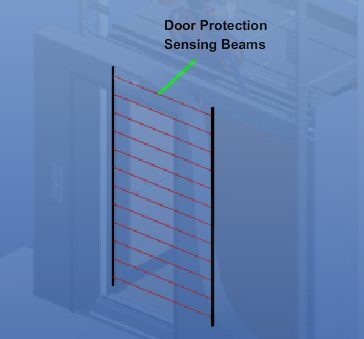
| Door Protection Module | Door Protection Module: This module contains assemblies that keep the doors from attempting to close on passengers when they enter or leave the elevator. The three major assemblies within this module are as follows: • Power supply: sends power to the transmitter and receiver. The power supply is usually mounted on the top of the car. • Transmitter: transmits infrared "beams" across the door opening. Any obstruction within the door opening will break this beam. • Receiver: receives the infrared "beams" from the transmitter. These assemblies are located on the car. hydraulic Safety |
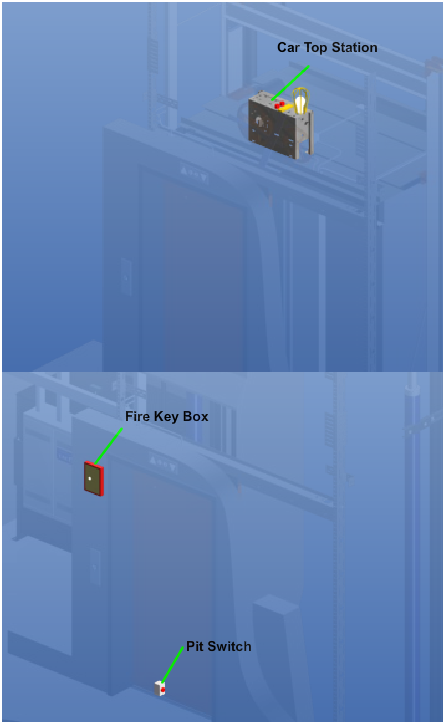
| Accessories Module | Accessories Module:This module contains a number of individual components that do not necessarily have a relationship with other modules: Pit Switch: A safety device used to disable the car before entering the pit. Car Top Station: A device, located on top of the car, used by maintenance personnel to control the car movement. Fire Key Box: Fire key box contains the key to activate phase I fire service (used by firefighters or rescue personnel). It is typically mounted in the hall, next to the opening at the egress level. hydraulic hoistway |
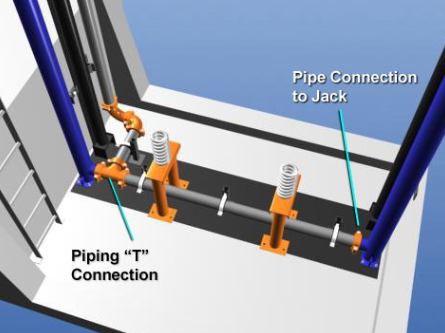
| Piping Package | The piping package has distinctive characteristics for the jack hole hydraulic elevator equipment type. A typical piping package module consists of schedule 40 pipe, shut-off ball valves, Victaulic couplings, Victaulic 90 degree elbows, and pipe stands. The piping package provides the hydraulic connection from the power unit to the jack. hydraulic Oil |
| Submersible Pump Unit | The up movement of hydraulic equipment types is achieved by pumping a certain volume of oil (gallons per minute or GPM) into the jack. Submersible pumps come in several sizes, and each moves a different, constant volume of oil (GPM). Submersible pumps are coupled directly to the motor with bolts. The motor turns at a constant speed (revolutions per minute or RPM). The pump is either pumping oil at full volume or not at all; it is either on or off. hydraulic EP power unit |
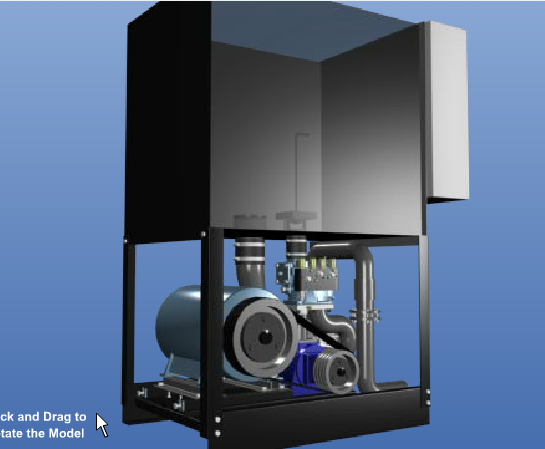
| Dry Pump Unit | A dry power unit is assembled with the pump, motor, control valve, and silencer underneath the tank. The tank is purely an oil reservoir. This is why they are called dry power units. The motor, in conjunction with sheaves and belts, drives the dry pump. The pump speed, or GPM, can be altered by changing the RPM of the pump. The RPM is changed by modifying the size of the sheaves. This means that one pump size can be used for a range of contract speeds, simply by varying the sheaves. hydraulic power unit ap |
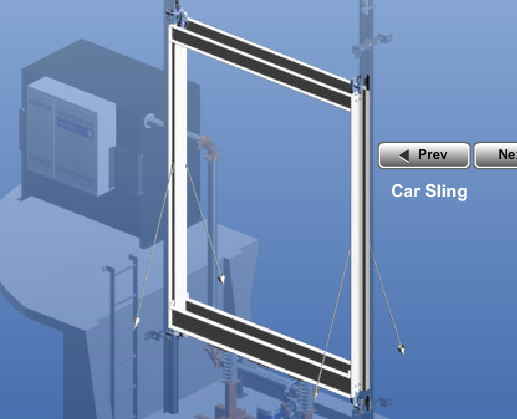
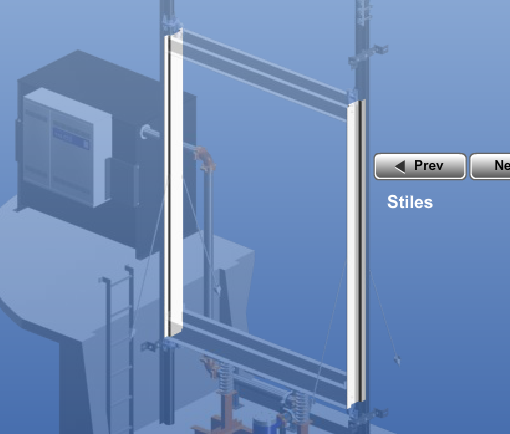
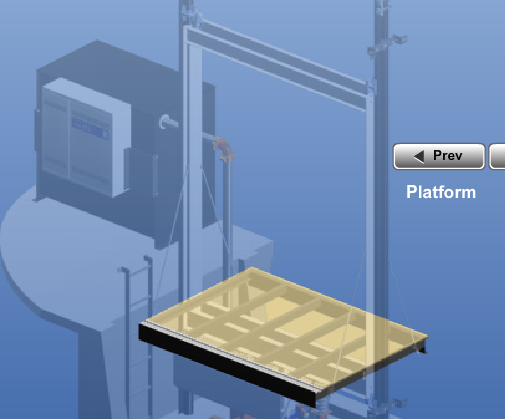
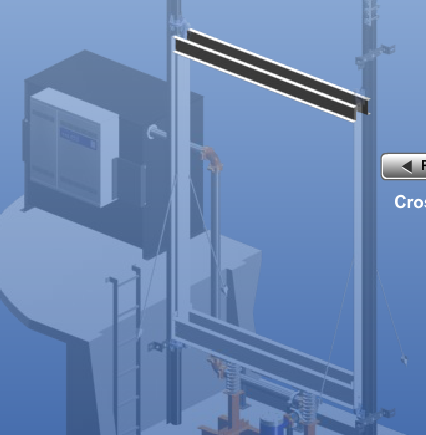
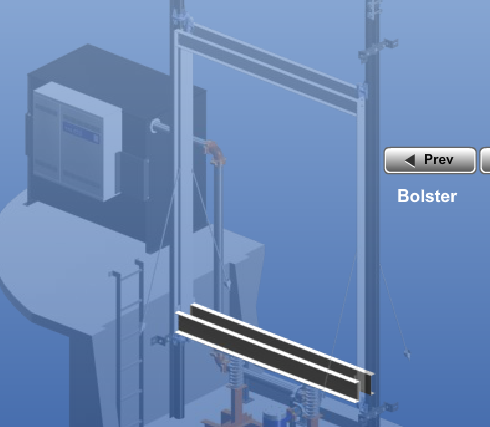
| Sling | Sling: is the framework around the cab and platform. Included is the Stiles, Bolster, and Cross-Head. hydraulic car sling platform |
| Stiles | Stiles: Two vertical channels, one on each side of the car, running parallel to the rails. The stiles connect to the cross-head and the bolster. They provide a mounting point for one end of the brace rods, and a mounting point for the platen plate to attach the piston to the car. The length of the stiles determines the sling height. Because the plungers mount near the top of the stiles, the jack length (or travel) can be a determining factor as to the stile length. This concept is most prevalent on single stage jacks. hydraulic car sling platform |
| Platform | Platform: is the surface that the cab sits on. hydraulic car sling platform |
| Cross - Head | Cross-Head: Channels running horizontally between the stiles at the very top of the sling. The cross-head on hydraulic elevators is the counterpart to the bolster. In addition, the cross-head serves as an attachment point for the top guides. hydraulic car sling platform |
| Bolster | Bolster: Two channels running horizontally between the two vertical stiles. The bolsters are on the very bottom of the sling. The main purpose of the bolsters is to support the platform. Also, the bolsters serve as attachment points for the strike plates and bottom guides. hydraulic car sling platform |
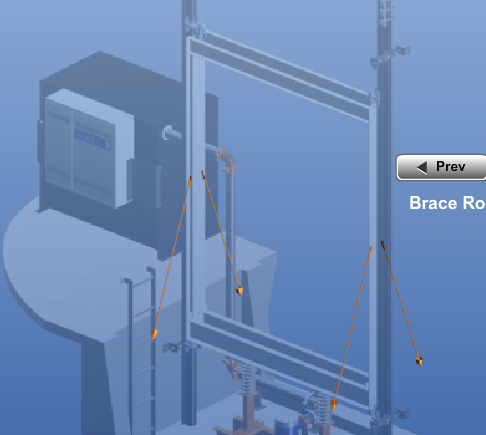
| Brace Rods | Brace Rods:Normally, there are four brace rods. One end attaches midway up each stile and the other end attaches to a corner of the platform. Brace rods provide stability and ensure that the platform is level. hydraulic car sling platform |
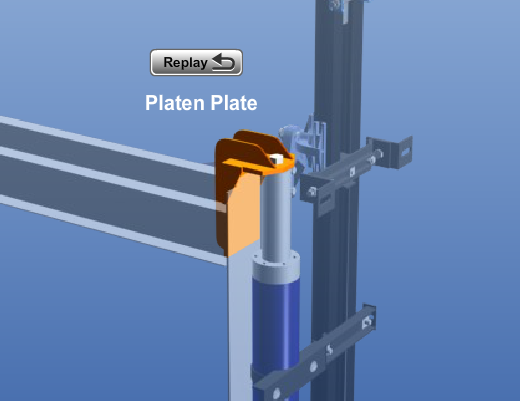
| Platen Plate | Platen Plate: plate that attaches the piston to the bolster on the sling |
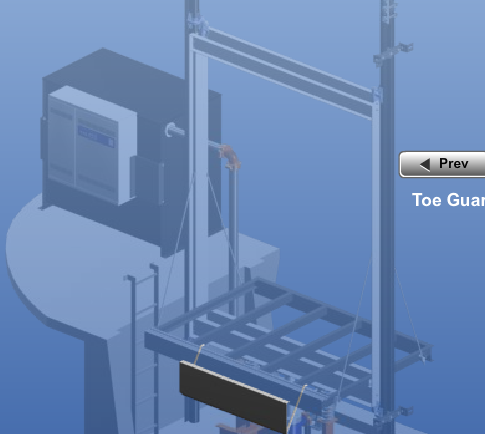
| Toe Guard | Toe Guard: This piece of equipment is rarely seen by elevator passengers. The sole purpose of the toe guard is to protect the passengers from accidentally sticking their foot under the platform if it is not level with the landing. True to its name, the toe guard is there to protect the passenger’s toes! |
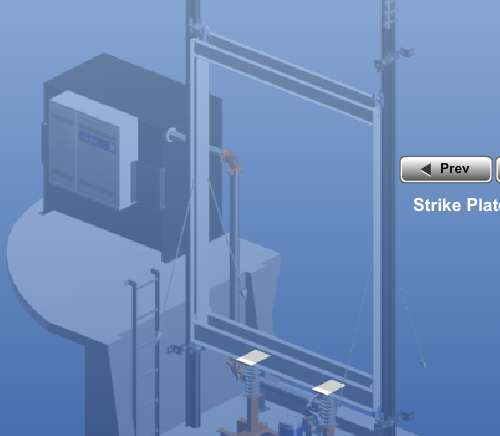
| Strike Plates | Strike Plates: Two strike plates are attached to the underside of the bolster channels. The strike plates are the contact points between the car sling and the buffer springs if the car travels too far below the lowest terminal landing. |
| AMEE | There are some important points to know about the jacks in a twin-post jack holeless application. 1. "Twin-post jack" means there are two jacks, one on each side of the elevator car. 2. The jacks can be single stage jacks (having a single plunger) or telescopic jacks (having two or more stages of plunger). o A telescopic two stage jack has a pair of two-stage plungers. o A telescopic three stage jack has a pair of three-stage plunger. hydraulic holeless |
| AMEE C | The AMEE C series has special front-mounted cylinders that extend through the front wall of the cab, which necessitates slightly more hoistway depth. The jack can be single stage (single plunger) or telescopic, i.e. multiple stages. A telescopic two stage jack has a pair of two-stage plungers. This application accommodates only front opening entrance configurations. One jack is used; it runs through the front wall of the cab. This design takes advantage of using a conventional jack in a unique way. Instead of the jack being installed in the ground it is installed above ground in the hoistway. Running the jack through the front wall allows a cross head pick up so the hoistway space is more efficiently used. alternative is also available: the multi-stage telescopic jack. When a single stage jack will not work for a hydraulic equipment type, a telescopic jack may be a viable solution. This is a jack in which multiple pistons telescope together. For instance, a two-stage jack, when fully compressed together, is appone-half the length of a single stage jack |
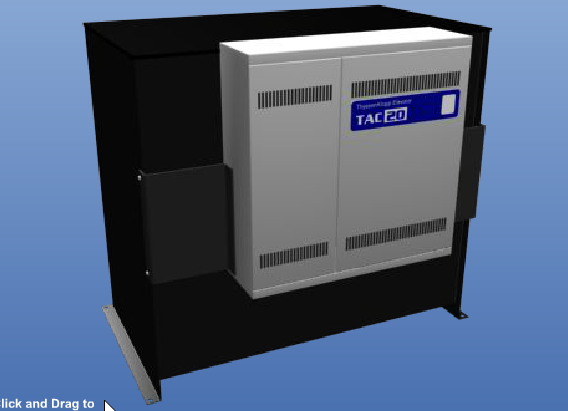
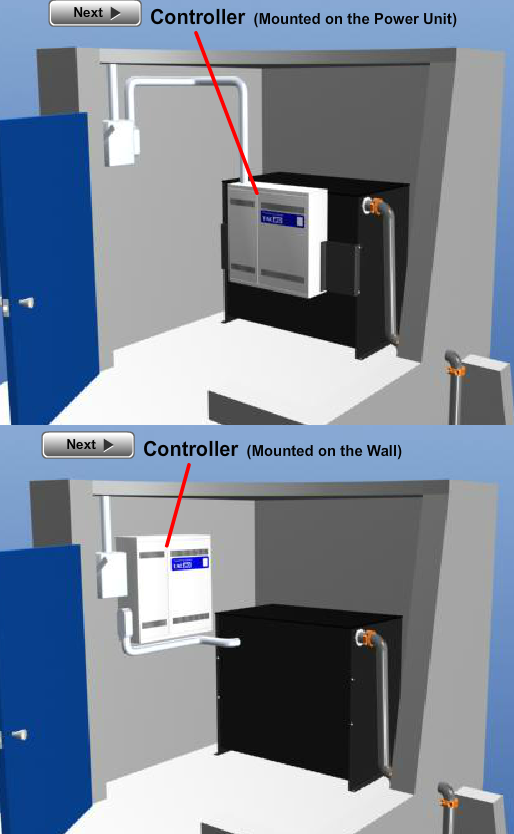
| Controller Mountin | The contoller for a Hydraulic elevator is typically mounted to the power unit, however due to clearance issues it is wall mounted. |
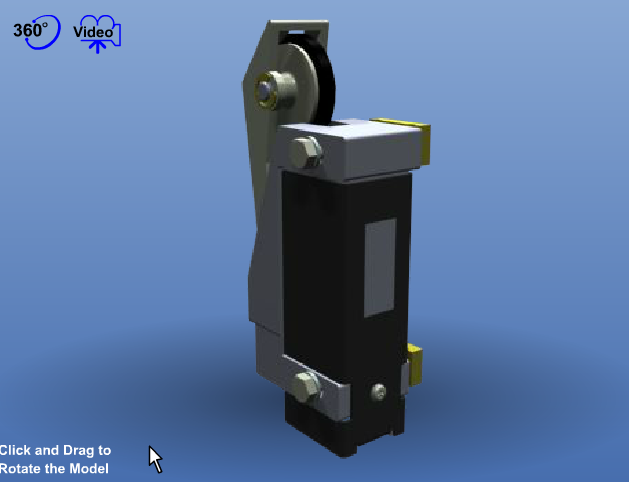
| Limit Switch | The limit switch assembly includes brackets, switches, and a cam.In its simplest form, the cam activates the limit switch. The limit switch stops the movement of the elevator from extending beyond the terminal landings. hydraulic controller |
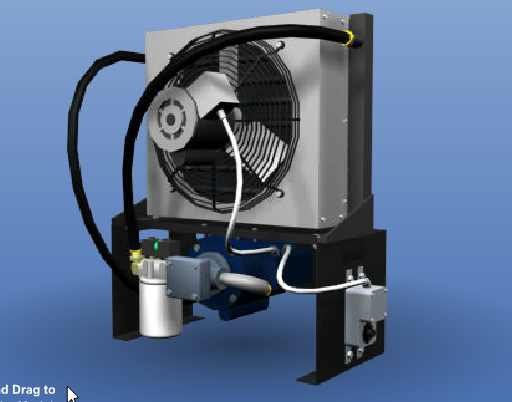
| Oil Cooler | Oil Temperature is critical for hydraulic power units. Hot oil is caused by friction, and an oil cooler is needed as a remedy. The oil moves from the tank (the red track), through a series of coils (cooled by the fan), and back into the tank (the blue track). The air flows through the radiator coils on the oil cooler where the heat from the hot oil is removed. Then the hot air is vented out of the machine room. hydraulic power unit |
Want to create your own Flashcards for free with GoConqr? Learn more.