
1698862
Description

Flashcards by Althea Baptiste, updated more than 1 year ago

|
Created by Althea Baptiste
almost 12 years ago
|
|
| Question | Answer |
|
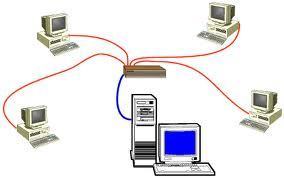
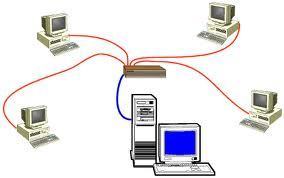
A network is a set of connected computer and devices to allow the sharing of resources and data.
Image:
download__1_ (image/jpg)
|
Image:
download__1_ (image/jpg)
|
| Networks can be classified by: SCALE: | THE SIZE AND REACH OF THE NETWORK E.G. PAN LAN CAN MAN WAN |
| L A N LOCAL AREA NETWORK | A NETWORK COVERING A SMALL GEOGRAPHIC AREA LIKE A HOME, OFFICE OR BUILDING |
| WAN WIDE AREA NETWORK | IS A DATA COMMUNICATIONS THAT COVERS A BROAD GEOGRAPHIC AREA e.g one city to another and one country to another |
| Backup | a duplicate of a file, program or disk that can be used if the original is lost, damaged or destroyed |
| to back up a file means | MEANS TO make a copy of it |
| information theft | occurs when someone steals personal or confidential information |
| ENCRYPTION | is a process of converting readable data into unreadable charters to prevent unauthorized access |
| unauthorized access | is the use of a computer or network without permission |
| unauthorized use | is the use of a computer or its data for unapproved or possibly illegal activites |
| Computer virus | affects a computer negatively by altering the way the computer works |
| worm | copies itself repeatedly, using up resources and possibly shutting down the computer or network |
| Trojan horse | A malicious program that hides within or looks like a legitimate program |
| ROOT KIT | Program that hides in a computer and allows someone from a remote location to take full control |
| COMPUTER SECURITY RISK | Is any event or action that could cause a loss of a damage to computer hardware, software,data information or processing capability |
| CYBER CRIME | IS AN ONLINE OR INTERNET BASED ILLEGAL ACT |
| SECONDARY STORAGE | non-volatile storage that is external to the main memory of a computer. it IS PERMANENT IT COST CHEAPER CAPACITY IS BIG IT HAS SPEED All our files are stored in secondary storage |
| STORAGE MEDIUM | is the physical material on which a computer keeps data, instructions, and information E.g. CDs, DVDs, hard drives Magnetic disks |
| Capacity | is the number of bytes a storage medium can hold |
| storage device | is the computer hardware that records and/or retrieves items to and from storage media |
| Why use Secondary Storage? | 1) Any time we want to keep something permanently 2) It is good for backing up your files. |
| Hard Disk | iT consists of more than one magnetic disk in what is referred to as a disk platter, which is arranged one on top the other connected and rotate via a central spindle. |
| Cylinder concept | the same location on each plate where the top and bottom is filled before it continues to another |
| Formatting | It is the process of dividing the disk into tracks and sectors so that the operating system can store and locate data and information on the disk |
| Fixed Hard Drive | hard-drive built into the case of a computer is known as ‘fixed’. Almost every computer has a fixed hard-drive. |
| Portable Hard Drive | Portable hard-drives allow very large amounts of data to be transported from computer to computer. |
| RAID redundant array of independent disks | is a group of two or more integrated hard disks |
| network attached storage (NAS) | A network attached storage device is a server connected to a network with the sole purpose of providing storage |
| Access Time Access time = Rotational Delay + Seek Time | The time taken to access a record on the disk is determined by the Seek Time – i.e., the time taken for the head to move to the specified track) . The Rotational Delay Time (i.e., the time taken for the correct sector to come under the read/write head. |
| optical disc | It consists of a flat, round, portable disc made of metal, plastic, and lacquer that is written and read by a laser Typically store software, data, digital photos, movies, and music Read only vs. rewritable E.g. CD, CD-RW, DVD etc |
| Optical Discs | three main types of optical media: CD, DVD, and Blu-ray disc. A CD drive can only read CD discs, a DVD drive can only read DVD and CD discs, and Blu-ray can read CD, DVD, and Blu-ray discs. |
| CD-ROM | It can be read from but not written to Read from a CD-ROM drive or CD-ROM player |
| CD-R | It is a multi session optical disc on which users can write, but not erase |
| CD-RW | It is an erasable multi session disc Must have a * drive |
| magnetic tape | There are various types of *. They include:- Reel, Cartridge, and Cassette. |
| Magnetic Tape | is a data storage medium consisting of a magnetisable oxide (Iron Oxide) coating on a thin plastic strip, commonly used for backup and archiving. |
| Magnetic tape is a large capacity, | It is a large capacity, serial access medium. Because it is a serial access medium, accessing individual files on a tape is slow. |
| Types of Access Sequential Access | It- Refers to reading or writing data records in sequential order, that is, one record after the other. To read record 10, for example, you would first need to read records 1 through 9. |
| Types of Access: Random Access | They are – records can be read and written in any order |
| Types of Access Devices can also be classified as sequential access or random access | An example, a tape drive is a sequential-access device because to get to point q on the tape, the drive needs to pass through points a through p. disk drive, on the other hand, is a random-access device because the drive can access any point on the disk without passing through all intervening points. |
| Advantages of a Network: | Advantages of a Network: Facilitating communications Sharing hardware Sharing software Sharing data and information |
| Networks may be classified by | * may be classified by 1) Scale 2) Connection method 3) Network topology 4) Network architecture 5) Standards and Protocol |
| SCALE: Personal Area Network (PAN) | It is a computer network used for communication among computer devices close to one person. Some examples of devices that may be used in a PAN are printers, fax machines, telephones, |
| SCALE; Local Area Network (LAN) | A network covering a small geographic area, like a home, office, or building. |
| scale: Campus Area Network (CAN) | A network that connects two or more LANs but that is limited to a specific and contiguous geographical area such as a college campus, industrial complex, or a military base |
| scale: Metropolitan Area Network (MAN) | a network that connects two or more Local Area Networks or Campus Area Networks together but does not extend beyond the boundaries of the immediate town, city, or metropolitan area. |
| scale: Wide Area Network (WAN) | is a data communications network that covers a relatively broad geographic area (i.e. one city to another and one country to another country) and that often uses transmission facilities provided by common carriers, such as telephone companies. |
| Networks: collection methods | Computer networks can also be classified according to the hardware technology that is used to connect the individual devices in the network such as Optical fiber, Wireless, Coaxial, Ethernet, Radio Frequency, Microwave or Power line communication. |
| Ethernets | They are used physical wiring to connect devices. Often, they employ the use of hubs, switches, bridges, and routers |
| Network Topology | It signifies the geographical layout or logical arrangement of devices on a network. |
| Classification of Networks – Network Topology | Some examples of types of *: Bus Star Ring |
| Classification of Networks – Communication Standards & Protocol | Ethernet Token ring TCP/IP Wi-Fi Blue tooth UWB IrDA RFID WiMAX WAP |
| Classification of Networks – Communication Standards & Protocol TCP/ IP | * is a network standard that defines how messages are routed from one end of a network to another. |
| Computer communications | It describes a process in which two or more computers or devices transfer data, instructions, and information. |
| A communications device is | It is any type of hardware capable of transmitting data, instructions, and information between a sending device and a receiving device A dial-up modem converts signals between analog and digital A digital modem sends and receives data and information to and from a digital line A wireless modem uses the cell phone network to connect to the Internet wirelessly from a notebook computer, a smart phone, or other mobile device |
| Communications software consists | Communications software consists of programs that: Help users establish a connection to another computer or network Manage the transmission of data, instructions, and information Provide an interface for users to communicate with one another |
| bandwidth | The amount of data that can travel over a communications channel is called the * |
| Latency | It is the time it takes a signal to travel from one location to another on a network |
| Transmission media | It carries one or more signals |
| Broadband media | It transmit multiple signals simultaneously e.g DSL |
| inter network | Any interconnection among or between public, private, commercial, industrial, or governmental networks may be defined as an * |
| three variants of inter network, | There are at least three variants of internetwork, depending on who administers and who participates in them: Intranet Extranet Internet |
| Intranets and extranets may or may not have connections to the Internet. | Intranets and extranets may or may not have connections to the Internet. If connected to the Internet, the intranet or extranet is normally protected from being accessed from the Internet without proper authorization. The Internet is not considered to be a part of the intranet or extranet, although it may serve as a portal for access to portions of an extranet. |
| An intranet | An * is a set of interconnected networks, using the Internet Protocol and uses IP-based tools such as web browsers, that is under the control of a single administrative entity. That administrative entity closes the intranet to the rest of the world, and allows only specific users |
| An extranet is a network or inter network | An * is a network or internetwork that is limited in scope to a single organization or entity but which also has limited connections to the networks of one or more other usually, but not necessarily, trusted organizations or entities (e.g. a company's customers may be given access to some part of its intranet creating in this way an extranet, while at the same time the customers may not be considered 'trusted' from a security standpoint). |
| Internet | A specific internetwork , consisting of a worldwide interconnection of governmental, academic, public, and private networks. It is also home to the World Wide Web (WWW) and referred to as the 'Internet' with a capital 'I' to distinguish it from other generic internetworks. |
| Classification of Networks: Ethernet | It is a network standard that specifies no computer controls when data can be transmitted. |
| Classification of Networks: Standards and Communication Token Ring | The * standard specifies that computers and devices on the network share or pass a special signal (token) |
Want to create your own Flashcards for free with GoConqr? Learn more.