
17040197


| Question | Answer |
| Define diffraction | The spreading out or bending of waves as they pass through a gap or around an obstacle |
| Which type of waves can diffract? | All types |
| What does the amount of diffraction depend on? | The ratio of the wavelength to the size of the opening or obstacle |
| When is diffraction the greatest? | When the wavelength is approximately the same size as the width of the gap |
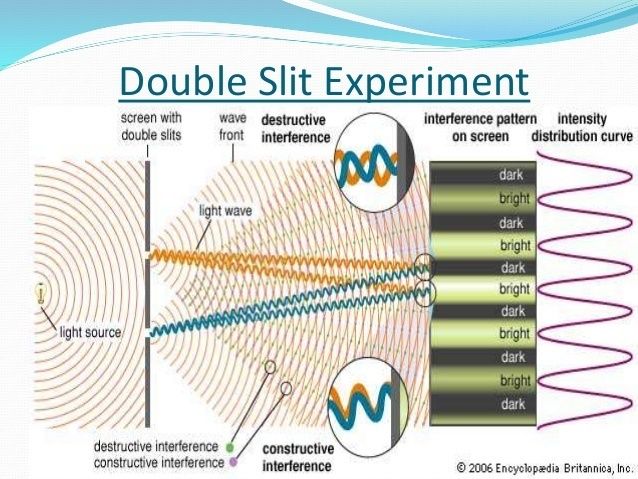
| Young double split experiment diagram: | |
| Through the double split, what colour of light is shown? | Red (as longest wavelength at the top and bottom of original diffracted light waves) |
| What do we see a bright and dark pattern on the screen? | It's the result of destructive interference |
| What do we call the bright parts of the pattern? | Bright fringes |
| What do we call the dark parts of the pattern? | Dark fringes |
| What is the central fringe? | The brightest which then reduces the further away from the centre you go |
| The bright and dark fringes create a pattern which is..... | Symmetrical |
| If in a question that just says "fringes" (and not bright or dark) , what should we assume? | It's talking about bright fringes |
| What is the equation for fringe spacing? | Fringe spacing (m) = (wavelength (m) x distance from slits to screen (m) ) / slit spacing (m) w = λD / s |
| The fringe spacing is measured between either the...... | Bright spots or the dark spots |
Want to create your own Flashcards for free with GoConqr? Learn more.