
17459088
Description

Flashcards by Elisandra De Oliveira, updated more than 1 year ago

|
Created by Elisandra De Oliveira
almost 7 years ago
|
|
| Question | Answer |
| What creates the head shape? | The skeleton of the head witch is divide into two parts. |
| Texture is? | The thickness or diameter of the individual that is corse medium. |
| Medium hair is? | The most common hair texture. |
| Coarse hair is? | It is often more resistance so requires more processing that medium hair texture. |
| Fine hair is? | hair that have the smallest diameter and is more fragile. |
| Porosty is? | The ability of the hair to absorb and moisture |
| Low porosity is? | Considered resistant hair. |
| Hight porosity is? | Considere overly porous. |
| Elasticity is? | The ability of hair to stretch and return to original length without breaking. |
| Density is? | A measurement of the number of individual strands on one square in ICH of scalping. |
| Growth cycles of the hair is? | Anagen: The growth phase when new hair is produced. Catagen: The transitional phase after growth during witch follicle canal shrinks. Talogen: The resting phase, the final in the hair cycle about 10% of hair is in phase. |
| What means SMA? | S: Sanitary M: Maintenance A: Area |
| Drapes | Neck, strip, cape, drape. Drapes: Single, double & neck strap. |
| Single drape: | Towel, cape, chemo. |
| Double drape: | Towel, cape, towel, chemical |
| Perm procedure: DEPTH | D- Density E- Elasticity P- Porosity T- Texture/Formation H- Hair history |
| Perm procedure: | 1- Section and wrap the hair 2- Check curl evaluation- Unroll one and half turns avoid stretching, look for rod size and separation. 3- rinse with the rods for 5-10 min for five inches of hair os less. Rinse w/ warm water, avoid washing hair for 48, 72 hours. |
| THREE LAWS OF THE MIND: | Can’t avoid a don’t. You move toward what you focus on. You can only focus on one thing at a time. |
| FORWARD FOCUS: | Recognize where you are. Make a 10% shift. Practice the three laws of the mind. Ask forward-focused questions. |
| F.A.C.E. | F- Find what’s working. A- Acknowledge it. C- Celebrate it! E- Enjoy it! |
| MULTIPLE INTELLIGENCES: | Verbal / Linguistic Math / Logic Spatial Body / Kinesthetic Musical / Rhythmic Interpersonal Interpersonal |
| THREE P’s OF AFFIRMATION: | Personal Positive Present |
| TWO MINUTE PLAN: | Wait to clean service area Escort guest to the service desk. Introduce guest to service team. Pull products & focus on solutions. Reserve a future service time. Give your guest a business card & five additional business cards. Ask for a referral. Say thank you! Clean your service area. |
| 10 OPPORTUNITIES: | CREATE MAGIC FIRST! Always greet your guests with a “Be Nice” welcome. Use first & last name, be friendly, and escort them to your service area. IDENTIFY CHALLENGES: Discover what your guests need & look for opportunities to serve them by asking discovery questions. RECOMMEND SOLUTIONS: Suggest services & products to help your guests. Get their agreement before you proceed with the service. THE WASH HOUSE: Create a customized product experience. Allow your guest to choose the Wash House experience from the menu. EDUCATE YOUR GUESTS: Provide info that will help guests look & feel better by sharing ideas & tips about their beauty & image throughout the service. TALK PROFESSIONALLY: Focus on your guest and direct your conversation to their needs. Be present with your guest always. RECOMMEND THE COLOR BAR & OTHER SERVICES: Create a color experience or another service your guests may need to enhance their image. STYLE EXPERIENCE: Show your guests what products to use and how to create and maintain their new look. REVIEW & RECOMMEND: Review what you recommend, write down your recom |
| FOUR STEP PROGRAM: | MINI-POW WOW: Consult with Learning Leader. SERVICE CONSULTATION: LL consults with guest. SERVICE CHECK: LL checks up. SERVICE COMPLETION: |
| STEPS TO COLOR FORMATION: | Determine natural level & percentage of grey. Identify target level & tone. Determine dominant pigment at target level. Refer to color chart to neutralize or enhance or intensify. |
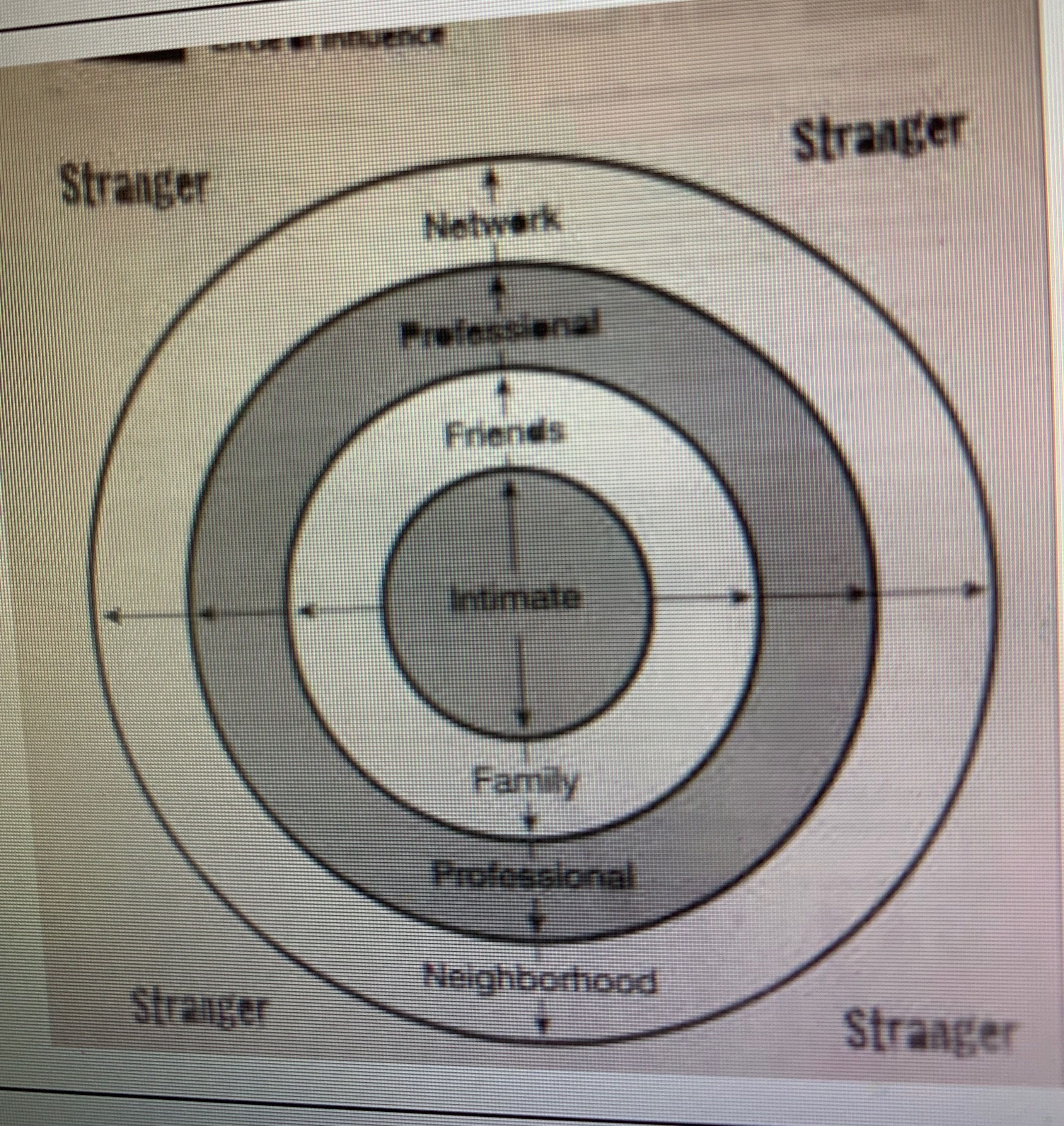
| CIRCLE OF INFLUENCE: | |
| PM SHINES DEVELOPER: | Processing Liquid Less than 5 volume developer. 5 volume developer may be substituted. |
| HIGHTLIFT VIRGIN: | 1 : 2 – maximum lift 1 : 1 – maximum tone Part the hair into FIVE segments. Begin application in the back sections. ¼ in. horizontal subsections in the back. ¼ in. vertical sections on the side and Mohawk segments. Apply ½ in. from the scalp to the porous ends. Apply to both sides. Mix the fresh color. Outline the segments being worked on. Begin in the back and apply to the scalp and ends. Process for an additional 45 minutes. Rinse until the water runs clear; shampoo & condition according to the manufacturer's instructions. |
| HIGHLIFT RETOUCH: | Part the hair into FIVE segments. Outline the segments being worked on. Begin the application in the back segments. Take ¼ in. horizontal sections in the back segments & ¼ in. vertical sections on the side and Mohawk segments. Apply from the scalp to the line of demarcation. Apply to both sides. Process for 45 minutes. Rinse until the water runs clear; shampoo & condition according to manufacturer’s instructions. |
| SINGLE PROCESS going lighter: | 1 : 1 Part the hair into FIVE segments. Begin the application in the back segments at the bottom; work from the bottom to top and back to front. Take ¼ in. horizontal sections in the back and ¼ in. and ¼ in. vertical sections on the side & Mohawk sections. Apply from ½ in. from the scalp to the porous ends. Apply to both sides. Process for 10 minutes. Outline the segments being worked on. Remix & apply color to the scalp and ends. Process for 35 minutes for permanent results. Rinse until water runs clear; shampoo and condition to the manufacturer's instructions. |
| SINGLE PROCESS going darker: | Part the hair into FIVE segments. Outline all five segments. Begin the application in the back segments. Take ¼ in. horizontal sections in the back segment & ¼ in. vertical sections on the side & Mohawk sections. Apply from the scalp through the ends. Apply to both sides. Process according to the manufacturer's instructions. Rinse until the water runs clear; shampoo & condition according to the manufacturer's instructions. |
| TINT RETOUCH: | Part the hair into FIVE segments. Outline all five segments. Begin the application in the back segments. Take ¼ in. horizontal sections in the back segments and ¼ in. vertical sections on the side & Mohawk sections. Apply the chosen formula to the new growth. Apply to both sides. Refresh the mid-shaft and ends with the chosen formula and process appropriately. Rinse until the water runs clear; shampoo & condition according to instructions. |
| DOUBLE PROCESS: | Part the hair into FIVE segments. Begin the application in the back segments. Take ⅛ in. horizontal sections in the back segments & ⅛ in. vertical sections on the side and Mohawk sections. Apply ½ in. to one inch from the scalp to the porous ends. Apply to both sides of the section. Place the cotton strip at the scalp in between each section. Lighten 50-75% of the desired result. Remove the cotton. Outline the segments beginning in the back. Apply to the scalp and ends. Process to the desired lightness. Rinse with cool water and shampoo according to instructions and tone. |
| DOUBLE PROCESS RETOUCH | Part the hair into FIVE segments. Outline the segments being worked on. Begin the application in the back segments. Take ⅛ in. horizontal sections in the back segments and ⅛ in. vertical sections on the side and Mohawk sections. Apply from the scalp to 1/16 of an inch away from the line of demarcation. Apply to both sides. Process to the desired lightness. Rinse with cool water and shampoo according to instructions and tone. |
| FOIL WORK: | Place an ⅛ in. fold at the base of the slice or weave. Secure the foil and hair with your thumb. Apply the product at the mid-shaft. Place your hand under the foil as a “platform.” Apply the product through the ends. Secure the top corners using your thumb & index finger. “Tap” the product up to the fold. Fold the foil in half and gently pinch the fold. Using the comb, fold the bottom of the foil and the two sides. |
| DIAGONAL SLICE: | Part the hair into SIX panels. Begin in either back panel, then do the sides, and finish in the top panel. Take ¼ in. horizontal / diagonal sections & skin 30-40% off the top. Weave & lock the first two fools in the hairline, sideburn area, and crown. If a section is wider than two inches, divide it in half and foil side by side |
| HORIZONTAL WEAVE: | Part the hair into SIX panels. Begin at the center-back section. Take ¼ in. sections, weave off the top half, and leave the bottom. Weave using a 1:2 ratio, leaving double the amount of space between each “ribbon” or weave. Work from the lower sides in the sideburn area until parallel with the side back area. Include the hairline in the weave. Lock the fools at the hairline, crown, center part, and sideburn areas. Work back and forth up the side to the center top. Weave the “box” panel at the crown last. |
| PHASES OF STYLE & FINISH: | Select the proper texture & formation. Select the dominant length option: short to medium, or medium to long. Select the desired end result: volume or control. Select the proper tools & techniques. |
| ACID PERM: | Rod size with maximum separation. |
| ALKALINE PERM: | Rod size with minimal separation. |
| EXOTHERMIC PERM: | Processes at a neutral 7. |
| END PAPER: | Single flat wrap. |
| TECHNIQUES: | Double flat wrap Bookend. |
| END WRAP TECHNIQUES: | Pinch Twist Flat |
| THREE PRINCIPLES OF DIMENSION: | Height – round, triangle, square Depth – short, medium, long Width |
| GEOMETRIC SHAPES: | Triangle Square Round |
| THREE PARTS OF A CURL: | Base Curl Stem |
| THREE BACK PLACEMENTS OF A ROLLER SET: | On-base: 135º Half : 90º Off-base: 45º |
| DENSITY: | Amount of hair per square inch. |
| ELASTICITY: | Ability for the hair to stretch and return to its natural shape without breaking. |
| POROSITY: | Ability of the hair to absorb & release moisture. Low, medium, high. |
| TEXTURE: | Diameter of an individual strand. (Fine, normal, coarse) |
| FORMATION: | Straight, wavy, curly, extra curly. |
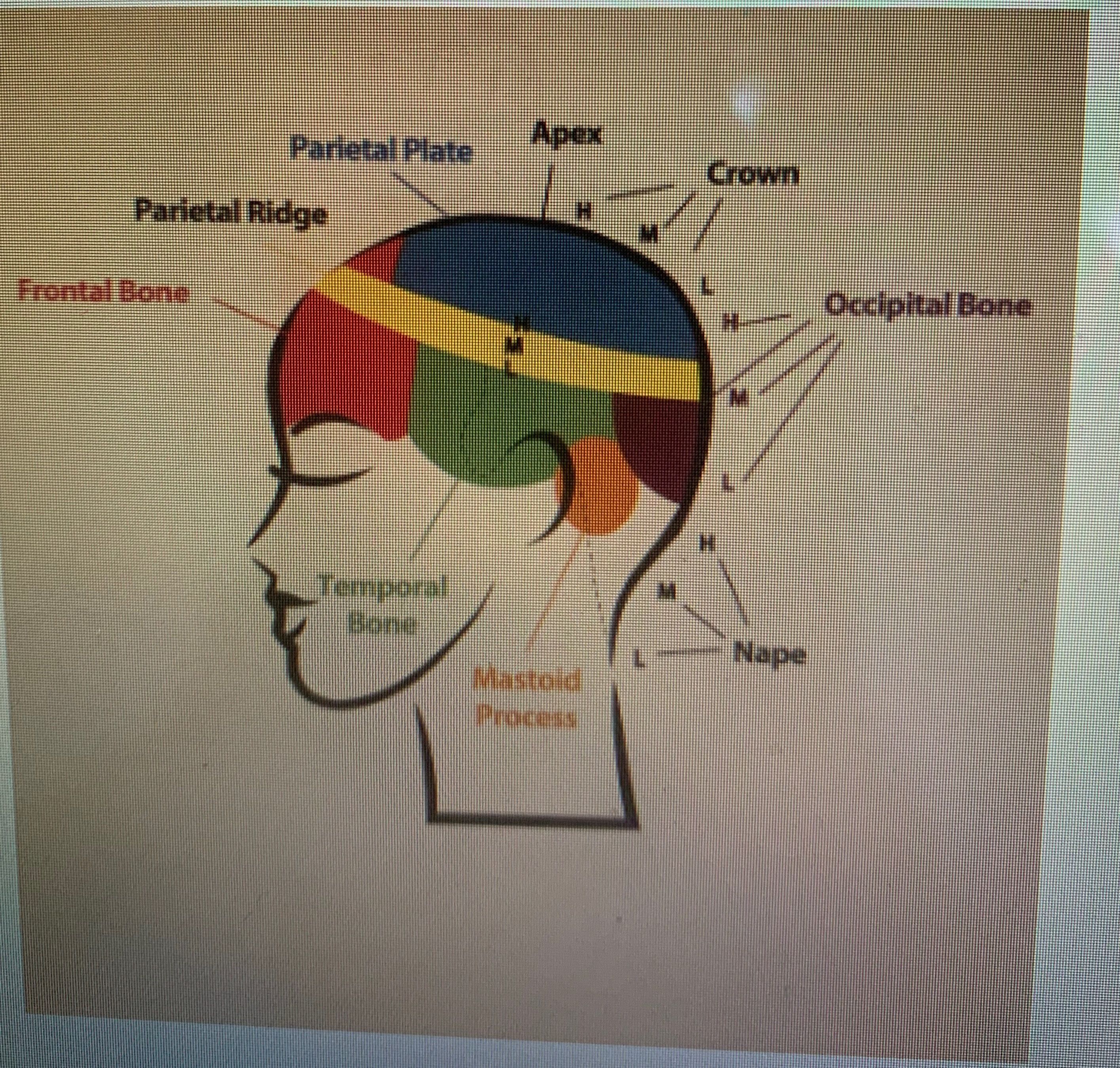
| BONE STRUCTURE: | |
| THREE DRAPING TECHNIQUES: | Neck strip Single drape Double drape |
| THREE PARTS OF THE HAIR STRAND: | Cuticle Cortex Medulla |
| WHAT DOES HEALTHY HAIR CONTAIN? | Lipids Carbohydrates Minerals |
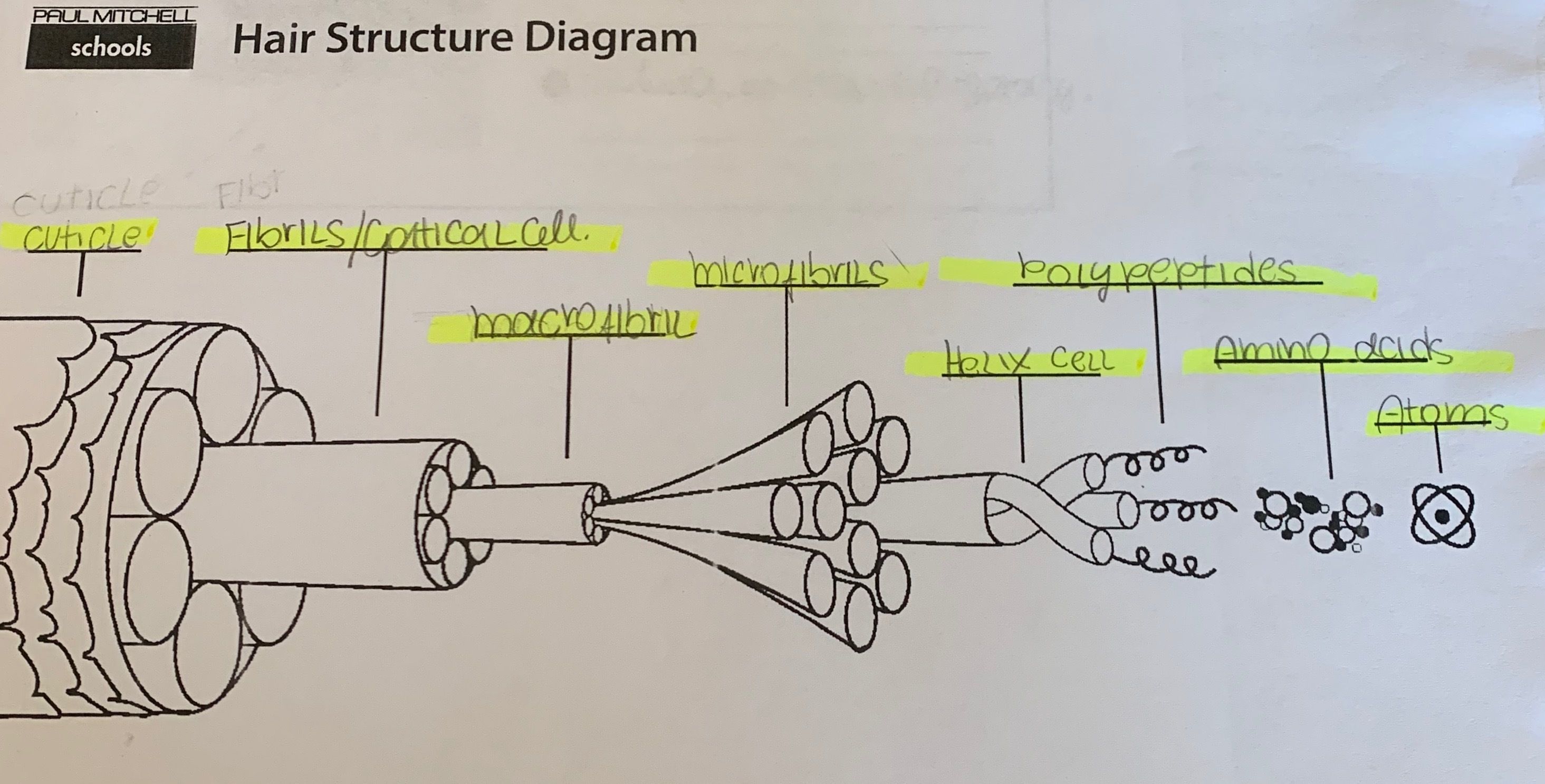
| HAIR STRUCTURE DIAGRAM | |
| FINGER WAVES. | Develop finger strength, coordination, dexterity. |
| ABCD’s OF COLOR | Ammonia Base Color (pigment) Developer |
| THREE SECTION ANGLES | HORIZONTAL: Maintains weight VERTICAL: Removes weight DIAGONAL: Builds weight |
| PHASES OF A HAIRCUT | Create the basic shape. Cross check. Blow-dry. Refine. Style & finish. |
| Nail, PROPER METHOD? | From the outside to the center. |
| FACE SHAPES | Square Oval Round Diamond Inverted-triangle Triangle |
| FACE LENGTH | Three equal horizontal sections. |
| FACE WIDTH | Five eye-lengths wide. |
| SCALP TREATMENTS; What is the purpose of a scalp treatment? | Stimulate blood circulation. How often should they be given? Healthy scalps: 1x week. Troubled scalps: 2-3x week. |
| STEPS TO A 5-MINUTE EYE LOOK | Prep the eye area. Pencil placement. Shading. Highlighting. Eyeliner. Mascara. |
| 5-MINUTE LIP DIAGRAM | AVERAGE LIPS: Line on the lip line. SMALL LIPS: Line outside. FULL LIPS: Line inside. |
| MAKEUP SMA | WORKING AREA: Tools & supplies. SUPPLY AREA... |
| THREE MENTORS IN THE INDUSTRY | Audra Turner Angus Mitchell Dave Holland |
| PRIMARY COLORS: | Red Blue Yellow |
| SECONDARY COLORS: | Green Orange Violet |
| TERTIARY COLORS: | Red-violet Red-orange Yellow-orange Yellow-green Blue-green Blue-violet BROWN is the color found when all PRIMARY colors are combined. |
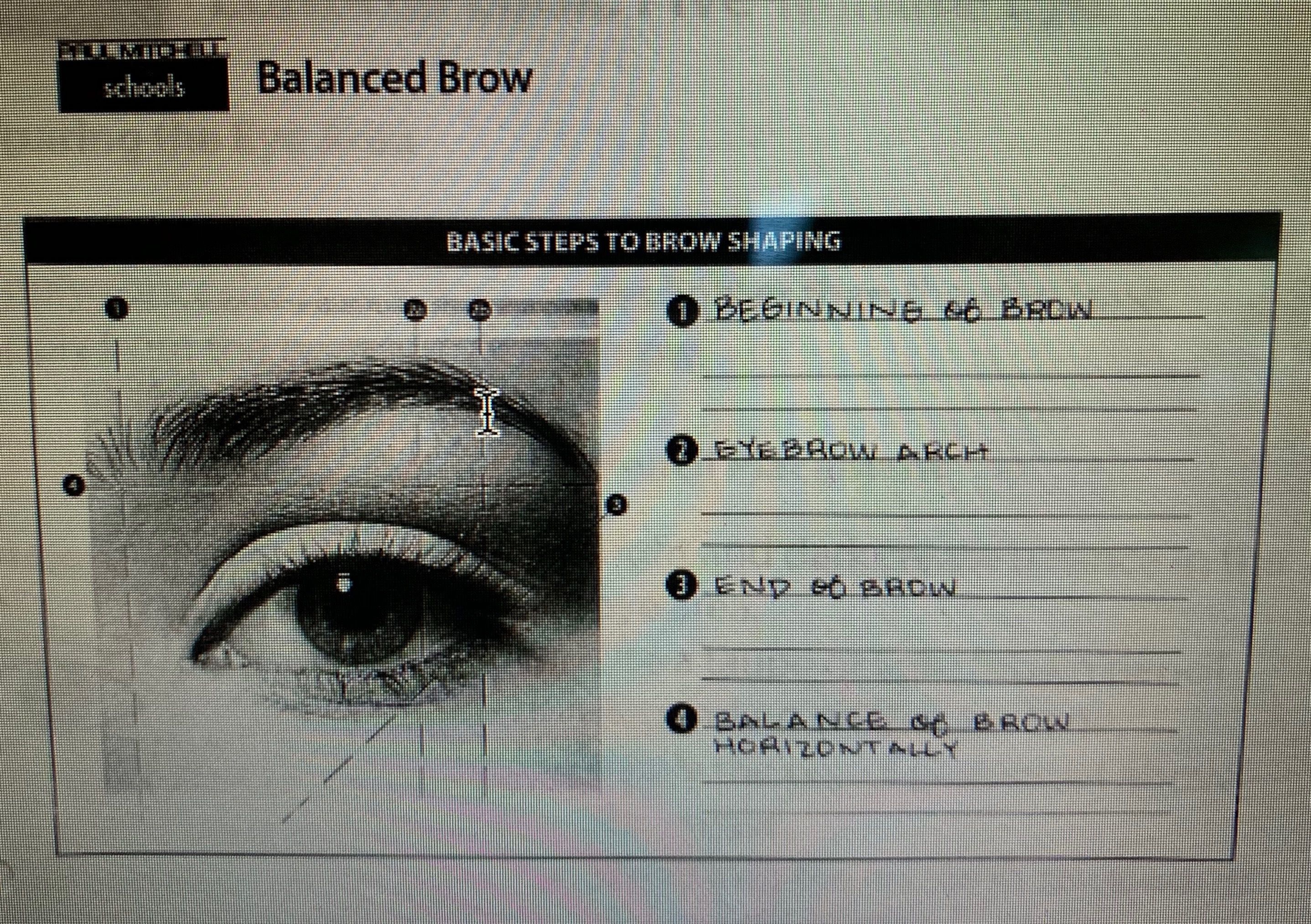
| BROW SHAPING | Beginning of brow, eyebrow arch, end of brow, balance of brow horizontally. |
| COMPLIMENTARY COLORS | The color opposite on the color wheel. Complementary colors NEUTRALIZE each other. |
| SCISSOR LENGTHS & TECHNIQUES | SHORT: 4.5 to 5” - used for graduation, short, layered, and detail work around hair and neckline. MEDIUM: 5.5 to 6” - “Workhorse” scissors - This length is used most often; also used for long, layered cuts, and point cutting. LONG: 6.5 to 7” - Ideal for one-length, barbering, and scissor-over-comb techniques. |
| MEN’S CUTTING CONTOURS | Leaning Natural Building |
| TENSION RELEASE METHOD | Pull hair away from the ear. |
| 20 STEP PERM PROCEDURE | Consultation. Double drape. Release of claims. Clarify shampoo. Section and wrap. Cotton. Process. Check curl evaluation. Rinse. Towel blot. Paper towel blot. Air neutralize. Cotton. Neutralizers. Rinse. Drop rods. Rinse. Towel blot. Style. 2-Minute Process. |
| When do you give a predisposition test? | 24-48 hours before a color service. |
| What do you look for when performing a predisposition test? | Allergies – welts, rash, redness, etc. |
| What are the three pre-dry methods? | Directional, flat wrap, round wrap |
| What are the four finishing methods? | Directional, round brush, beveling, leafing |
| What do Flash Finish, Ultra Toner, and Demi-Permanent all have in common? | They all use 5 Volume developer. |
| Barbicide is used to? | To disinfect combs & brushes. |
| Which perm solution is recommended for colored & highlighted hair? | Acid. |
| What does the upper body control in haircutting? | Technique. |
| What does the lower body control in haircutting? | Shape. |
| What are the two types of hair? | Vellus or lanugo Terminal |
| A mature strand of hair is divided into what two parts? | The root and the strand. |
| What are the three growth patterns created by hair follicles? | Cowlick Whorl Hair stream |
| Describe on-base roller placement. | Roller sits directly on its base. Achieves maximum curl & volume, with minimum mobility. |
| Describe half-base roller placement | Roller sits half on/half behind its base. Achieves moderate curl, volume, and mobility. |
| Describe off-base roller placement. | Roller sits behind its base. Achieves minimum curl & volume, with maximum mobility. |
| What is the dominant primary color in Golden Brown? | Yellow. |
| What is the dominant primary color in Warm Brown? | Red |
| What is the dominant primary color in Ash Brown? | Blue |
| What are the two types of dyes most commonly used? | Oxidative dyes Direct dyes |
| What is the Law of Color? | A true law that can never be changed. |
| What are Neutral Colors? | Created when all three primary colors are mixed together in equal parts. |
| What is tone when describing hair? | Warmth or coolness of a color. |
| What are the three different tones? | WARM – Think fall – R / O / Y / Gold – May appear lighter. COOL – Think winter – B / V – May appear darker. NEUTRAL – Think earth tones – Greys / Browns / Beiges |
| What is complementary color? | Color that enhances features. |
| What is dominant pigment? | The pigment that remains in hair and is exposed when natural color is lightened. Directly related to level. |
| What are the three levels to the formulation of hair? | NATURAL – new growth DESIRED – what they want CANVAS – everything but the new growth |
| What is height? | The distribution of weight vertically. |
| What is width? | The distribution of weight horizontally. |
| What is depth? | The distance the hair extends from the scalp. |
| Three categories of hair length: | Short, medium, long |
| What are a few factors that affect length? | Guests’ desire Current condition Texture Density Formation Lifestyle Facial features |
| What is over-direction? | Degree of movement either forward or backward from natural fall. |
| What does geometrical shape mean? | The horizontal distribution of weight most often created by the choice of over-direction either forward or backward. |
| Define Section Angle Accuracy: | A system of sectioning to create consistent and accurate end results. |
| Type of DEVELOPERS | 5 VOLUME: Deposit only / demi-permanent. 10 VOLUME: Deposit only / demi-permanent. 20 VOLUME: Deposit, 1-2 levels of lift, grey coverage. 30 VOLUME: 2-3 levels of lift. 40 VOLUME: 3 full levels of lift. |
| VERTICAL SECTIONING | Reduces weight (density) within a haircut. Creates a flatter dimension within the vertical characteristic (height) of the haircut. Creates a curved dimension within the horizontal (width) of the haircut. Most commonly used when cutting layers. |
| HORIZONTAL SECTIONING | Distributes weight through both the vertical and horizontal characteristics of a haircut. Commonly used when cutting round or triangular shapes (horizontal). Most commonly used for graduation. |
| TENSION | The degree of stretch/stress placed on the hair. Tension on the hair is controlled by fingers or comb position and determines the cleanliness of each cut. Tension helps to create clean, consistent dimension within a haircut. The amount of tension used is determined by the texture, formation, and density of the hair. |
| FINGER ANGLE | Determines the heaviness of a technique vertically and the steepness of the geometric shape horizontally. Finger angle plays a role in the weight distribution both vertically and horizontally. Affects the vertical characteristic (height) of a haircut when using vertical sectioning. Affects the horizontal characteristic (width) of a haircut when using horizontal sectioning. |
| IN-COMB | Allows you to control a section of hair by using the teeth of the comb. In-comb is good for achieving no elevation, no over direction, and no tension. In-comb creates maximum density in the hair and is commonly used for one-lengths. |
| PALM TO PALM | Cutting inside the hand or palm adds tension and is best for creating graduation. When using an inside-hand position, allow the index finger to lead the way. Adjust the amount of tension to control the texture and formation. |
| OVERHAND | Cutting outside the hand or overhand also adds tension and requires a high-elevation technique. When using an overhand position, allow the pinkie finger to lead the way. Adjust the amount of tension to control the texture and formation. |
| TYPES OF POROSITY: | LOW: Closed cuticle. Resistant. Alkaline solution in order to raise the cuticle. MEDIUM / NORMAL: No cuticle. HIGH: Open cuticle. Porous. Solution w/ lower pH to prevent additional over-processing and damaging. |
| How much hair is on your head per square inch. | BLONDES: 140,000 BROWN: 110,000 BLACK: 108,000 RED: 80,000 |
| CLARIFY SHAMPOO? | Shampoo Three or Heavy Hitter – Avoid rubbing or brushing the scalp vigorously. |
| ON PERM COTTON | Apply the solution and the cotton. |
| ON PERM PROCESS | Set a timer and wait for solution to process. Always follow instructions on perm box. Usually takes approx. 20 minutes. |
| BLUE OIL LIGHTENER SYSTEM. | Cream oil. Lifts 5 levels. |
| SKYLIGHT. | Clay lightener. Hand painting. Dries on outside and keeps product moist on inside. Uses a higher developer to boost power. |
| SYNCHROLIFT. | Most used on PMTS floor. Lifts up to 7 levels. On or off scalp. Hand painting or highlighting. Neutralizes yellow tones a little bit. Fine to medium hair. |
| DUAL-PURPOSE LIGHTENER. | Powder bleach. Medium to coarse hair. Lifts 7 levels. |
| LIGHTEN UP | Cream based. Used for fine hair. POWDER LIGHTENER always mixes w/ CREAM DEVELOPER. |
Want to create your own Flashcards for free with GoConqr? Learn more.