
19082690
Description

Flashcards by Molly Alexander, updated more than 1 year ago

|
Created by Molly Alexander
over 6 years ago
|
|
| Question | Answer |
|
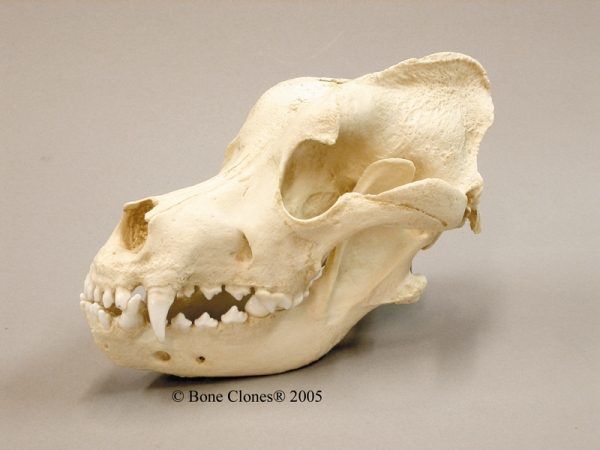
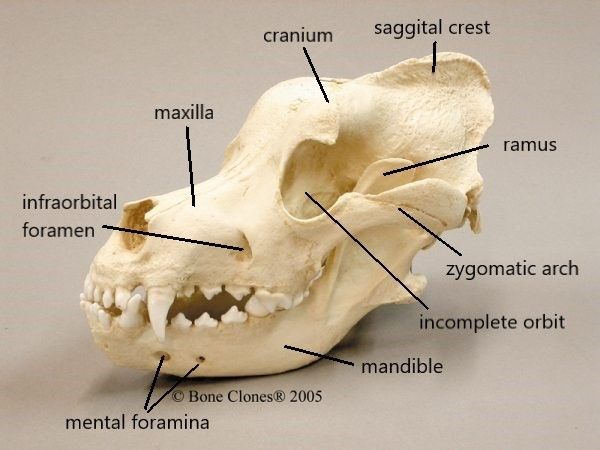
Image:
Skull (binary/octet-stream)
|
skull braincase made of flat bones, rest of skull made of irregular bones |
| atlas (C1 vertebra) first vertebra in the spinal column, first vertebra in the cervical region note: all vertebrae are irregular bones | |
| axis (C2 vertebra) second vertebra in the spinal column, second vertebra in the cervical region note: all vertebrae are irregular bones | |
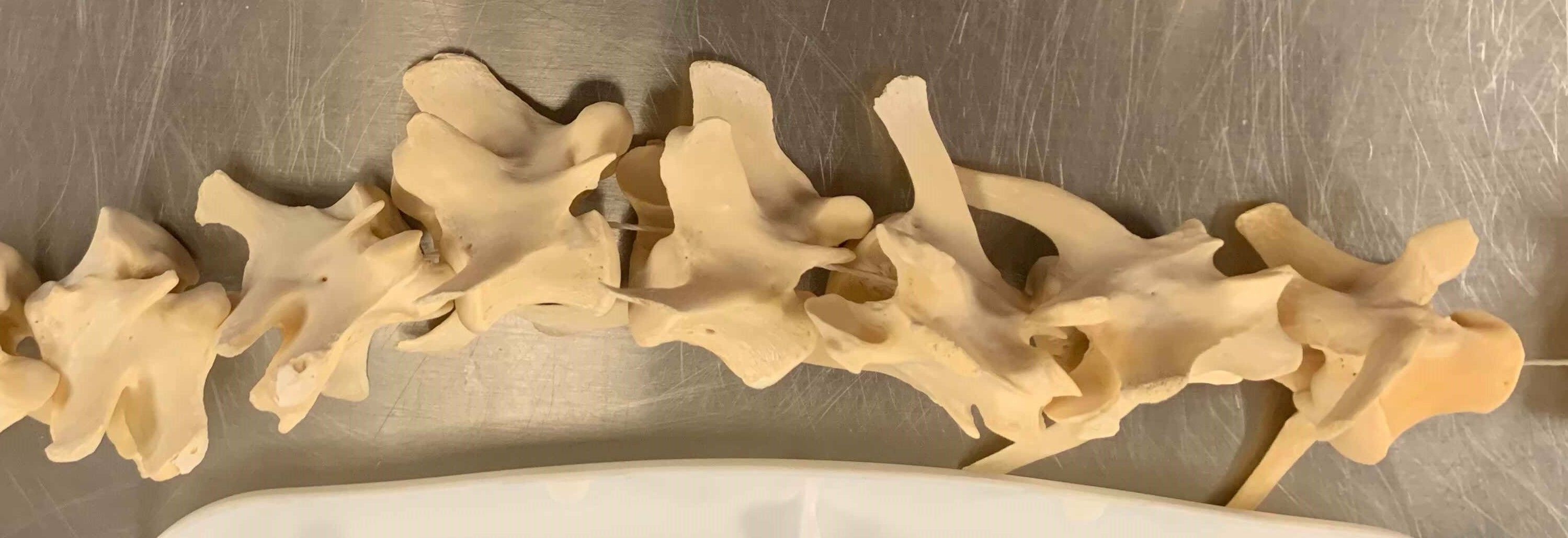
| cervical region of spine (C) 7 vertebrae (first two are atlas and axis); vertebra identification clue: bilateral transverse foramina on either side of vertebral foramen note: all vertebrae are irregular bones | |
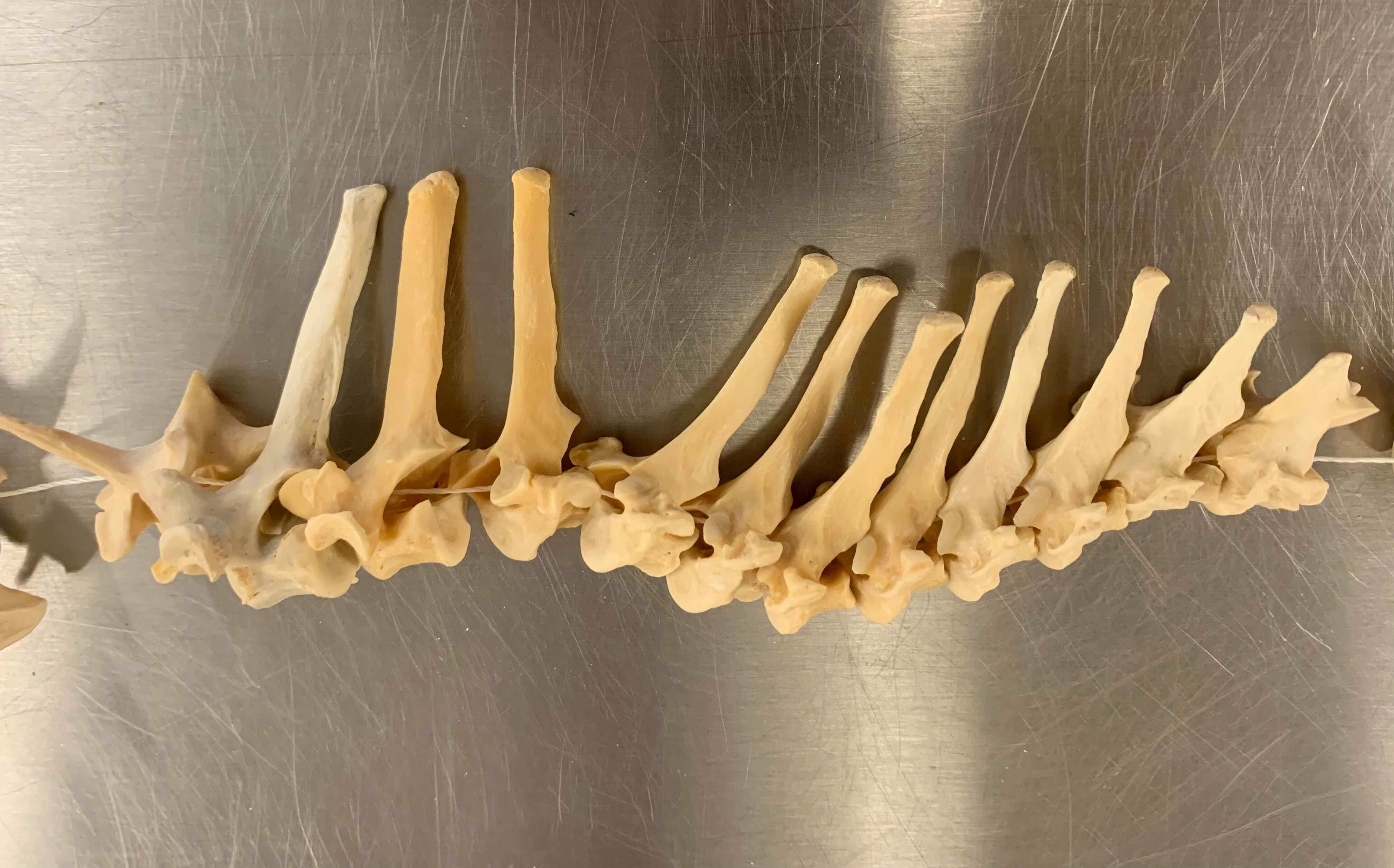
| thoracic region of spine (T) 13 vertebrae (this image omits T12-T13); T11 is the anticlinal vertebra where features begin to change; vertebra identification clue: prominent dorsal process note: all vertebrae are irregular bones | |
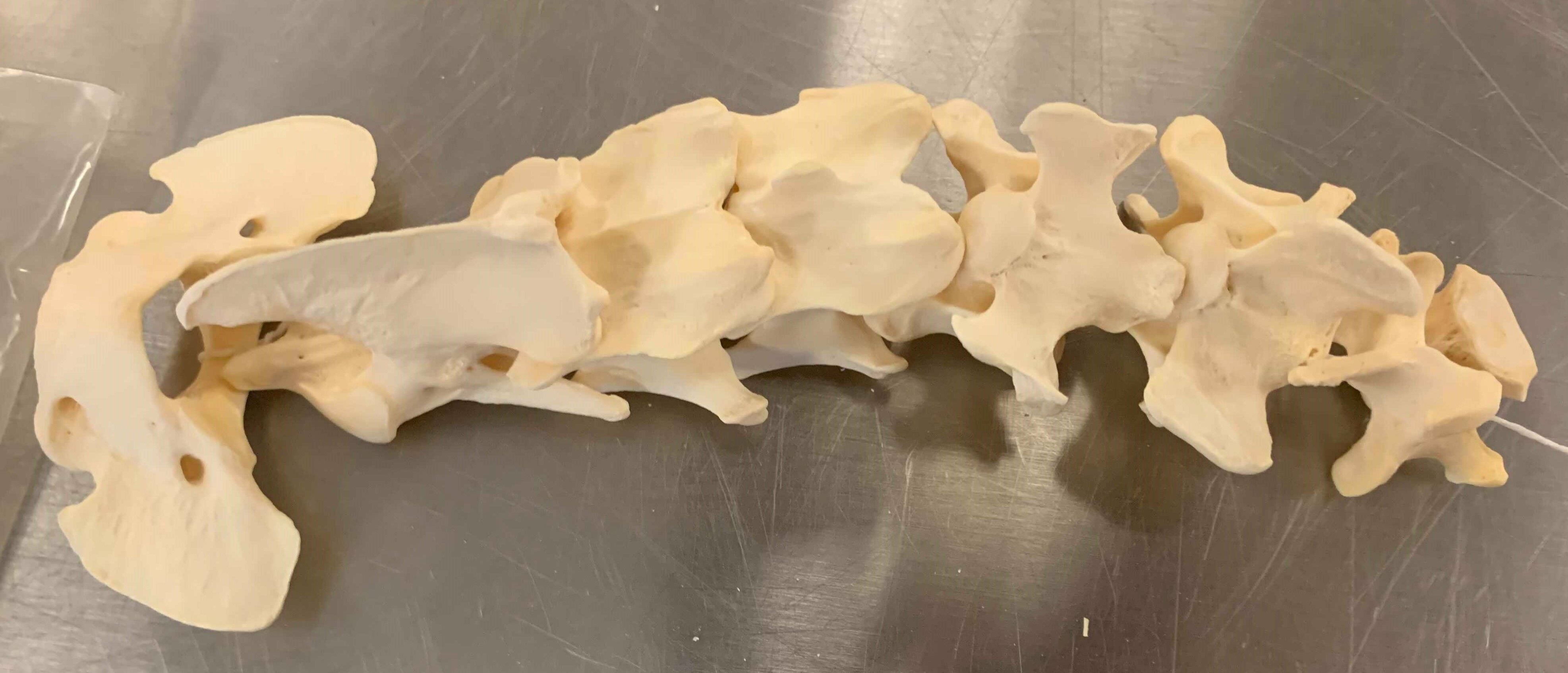
| lumbar region of spine (L) 7 vertebrae; vertebra identification clue: prominent transverse process note: all vertebrae are irregular bones | |
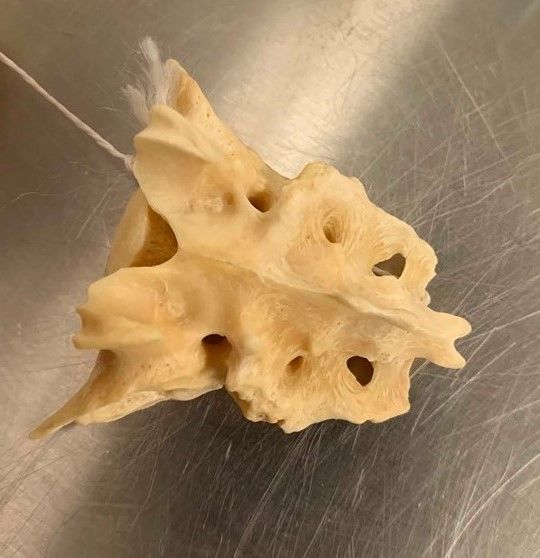
| sacrum/sacral region of spine (S) 3 fused vertebrae; connects to ilium at sacraliliac joint; vertebra identification clue: long due to fusion and six dorsal foramina note: all vertebrae are irregular bones | |
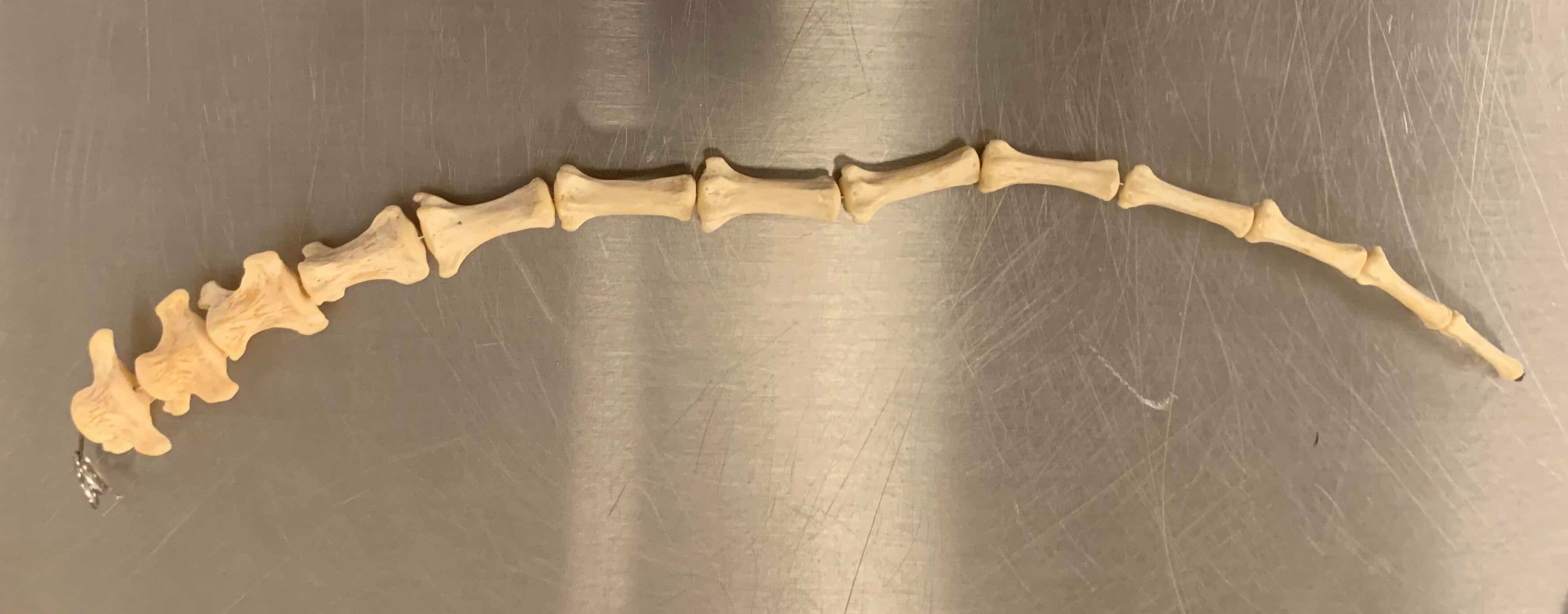
| coccygeal/caudal region of spine (Cy/Cd) number of vertebrae varies based on tail length; vertebra identification clue: smallest and simplest vertebrae note: all vertebrae are irregular bones | |
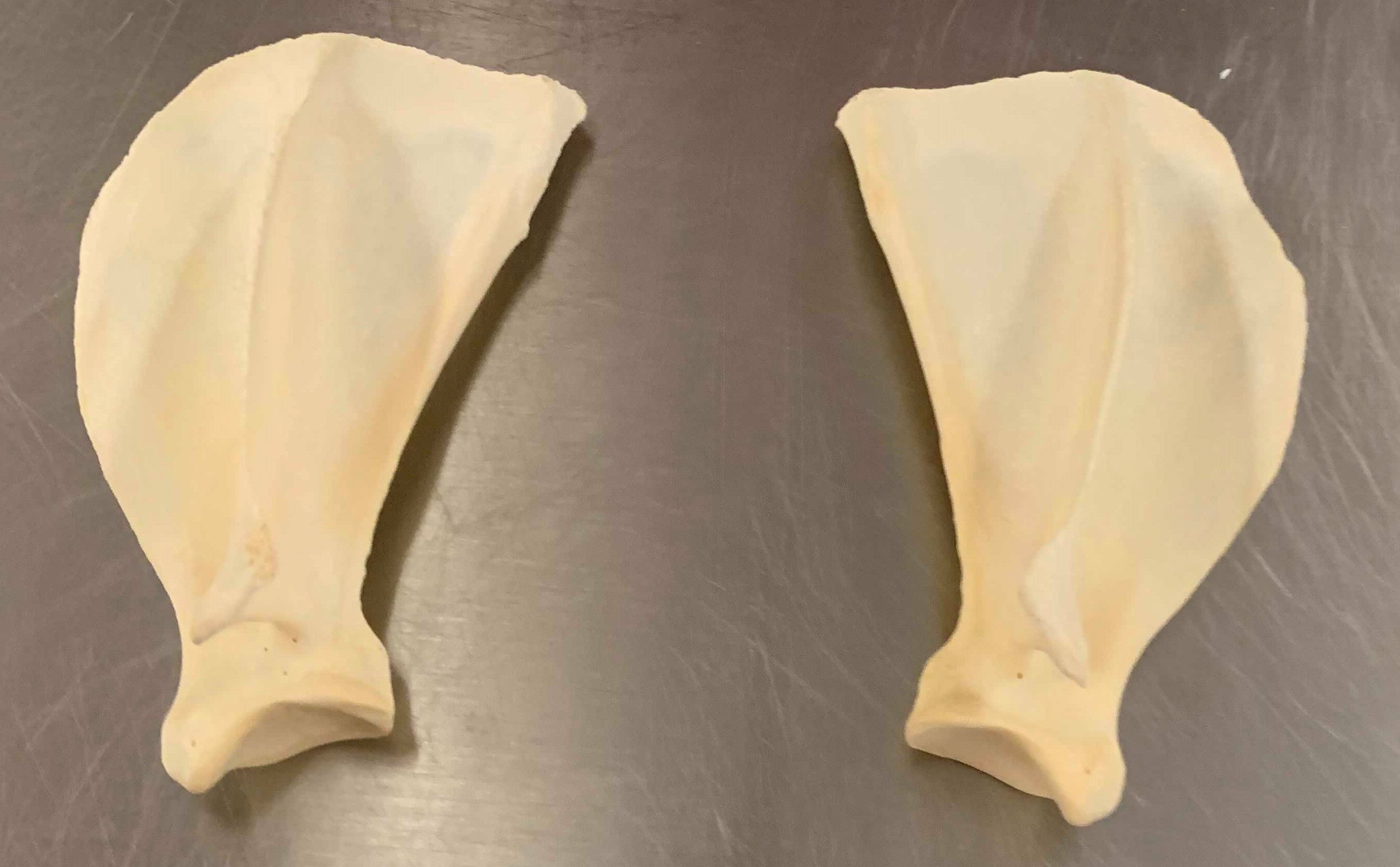
| scapulae (singular: scapula) shoulder blade, flat bones; supraspinatus fossa on lateral cranial aspect, infraspinatus fossa on lateral caudal aspect; scapular spine is the prominent plate of bone running down lateral surface; acromion is the distal peak of the spine | |
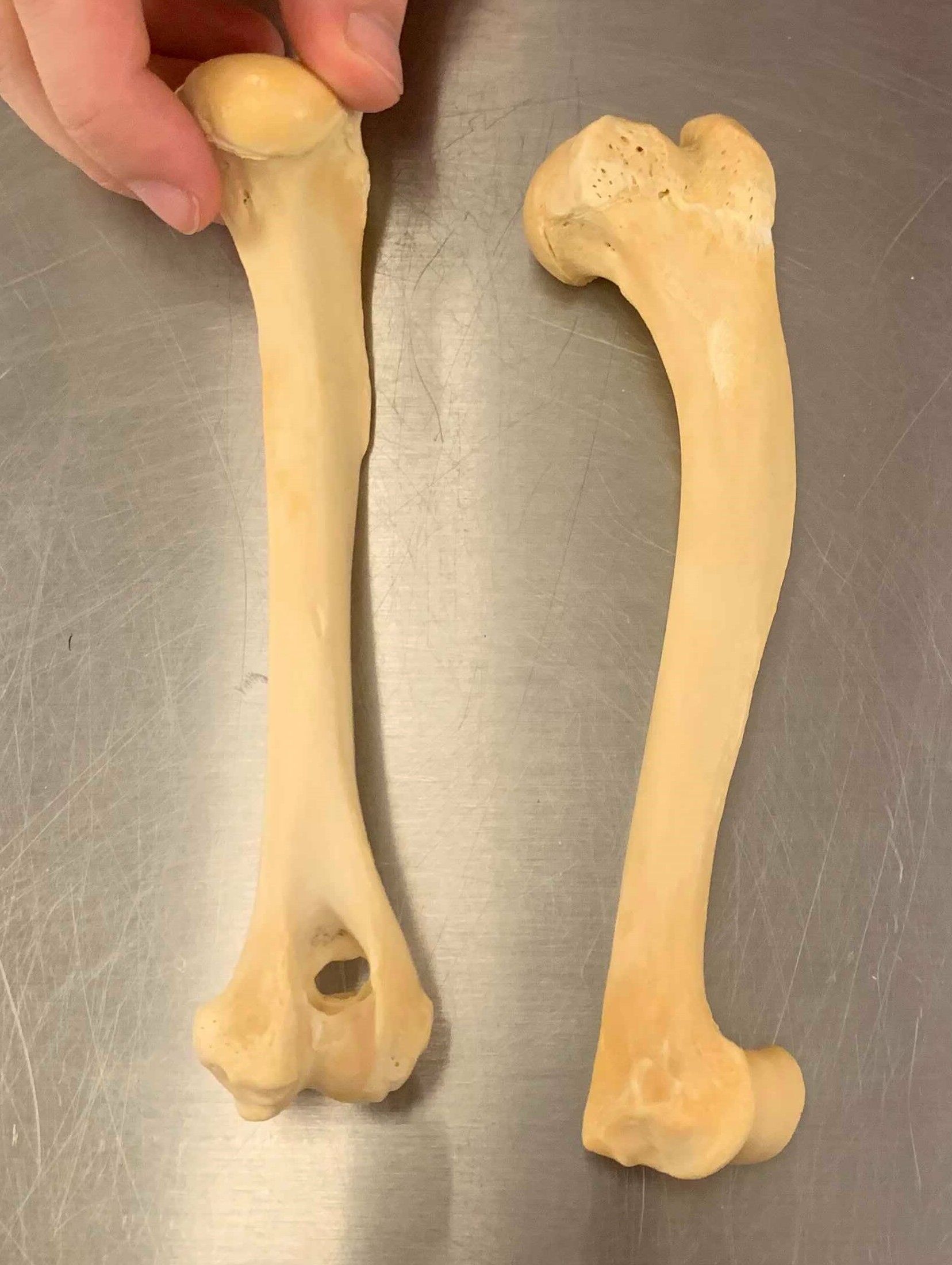
| humerus long bone of the proximal forelimb | |
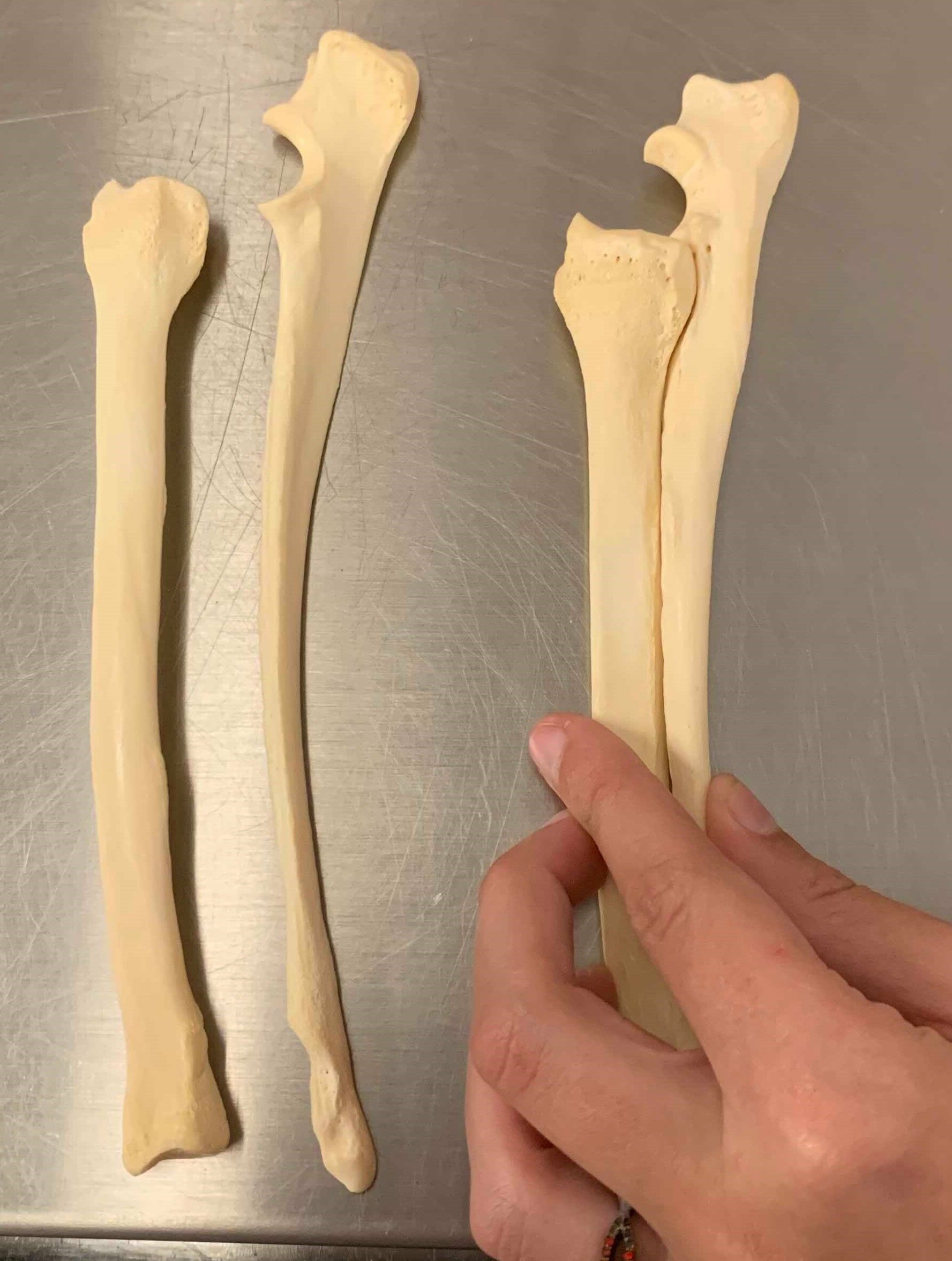
| radius (left, shorter bone) ulna (right, longer bone) long bones of the distal forelimb | |
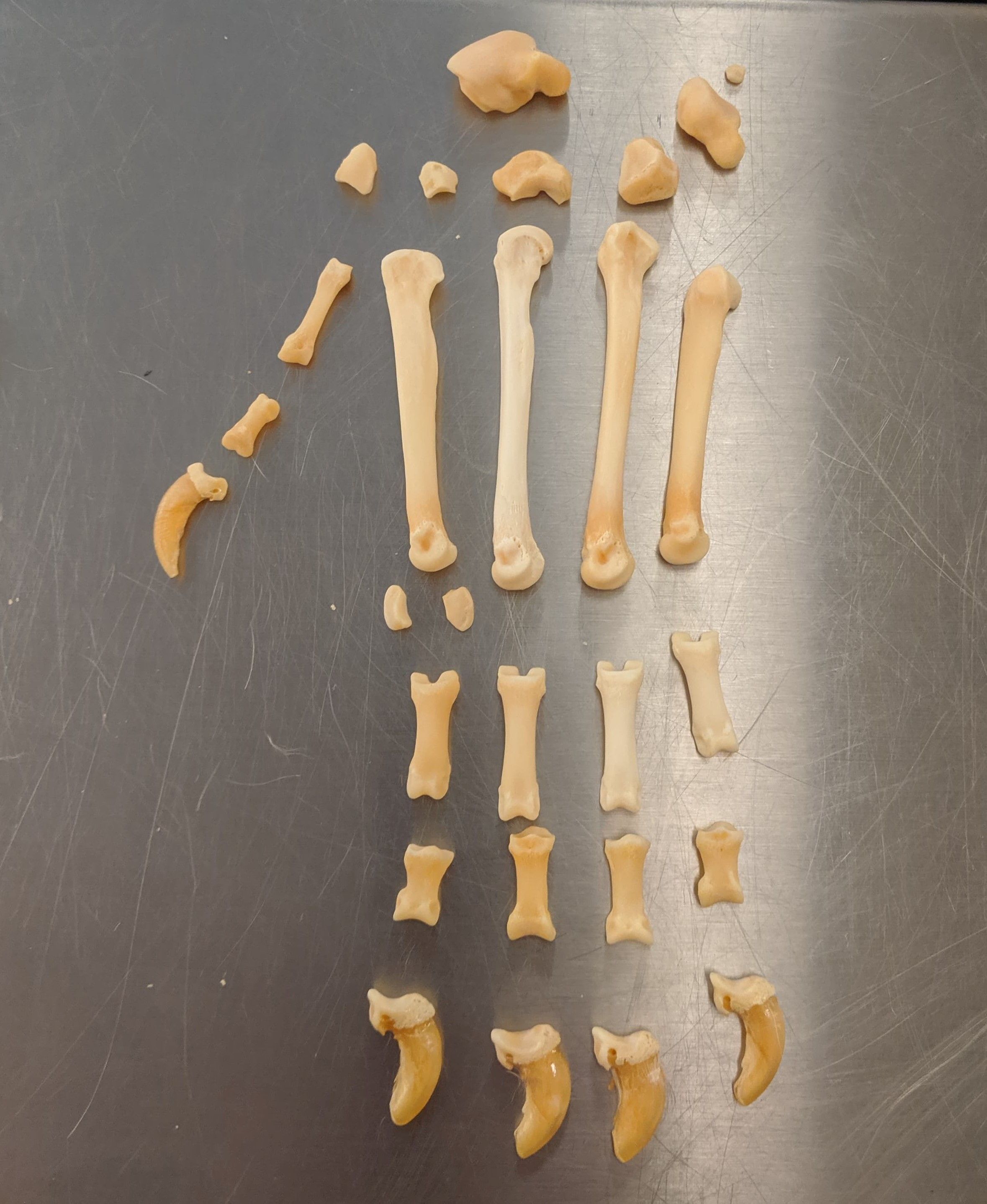
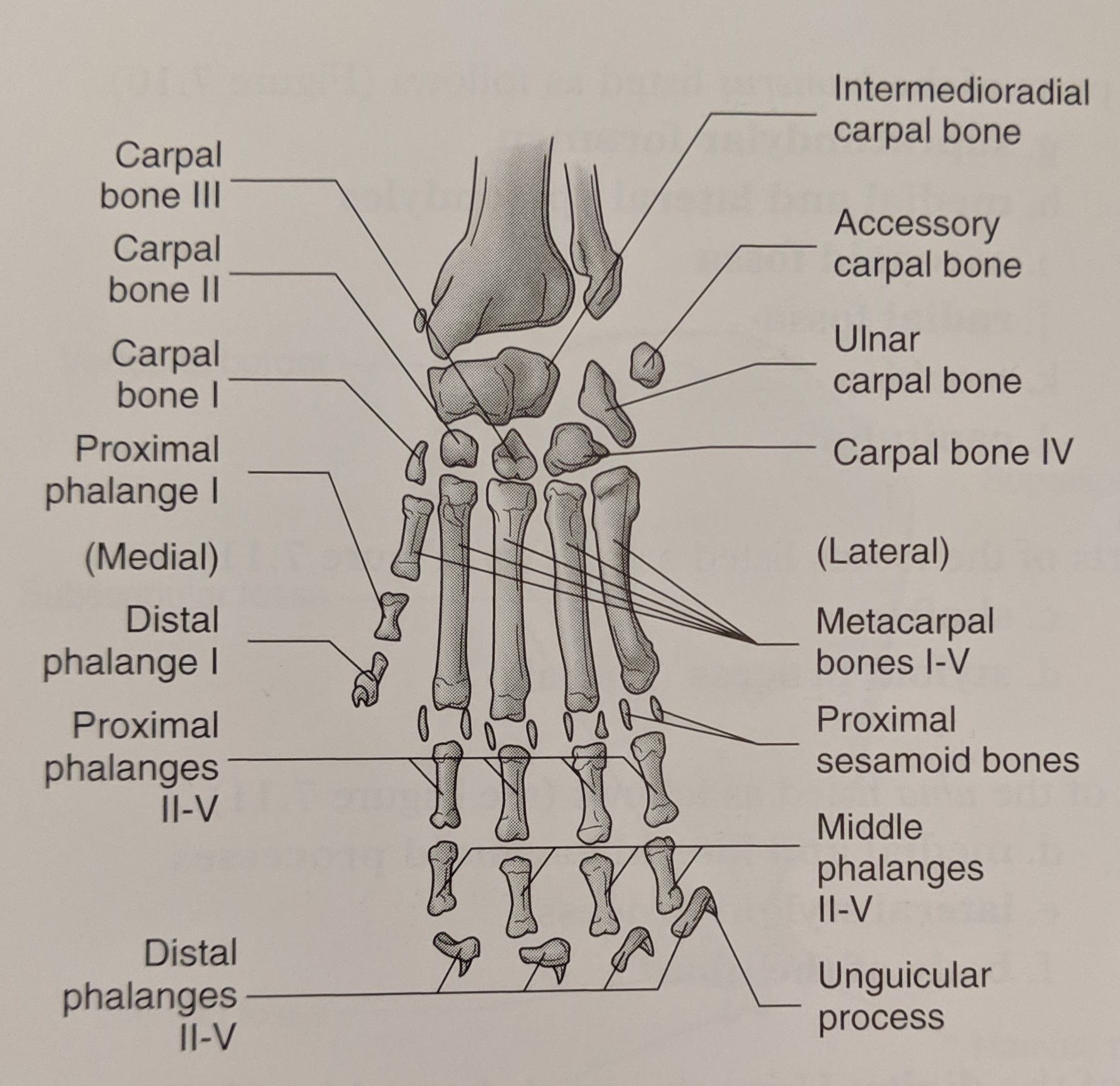
| forefoot includes carpus (short bones), metacarpals (long bones), and proximal/middle/distal phylanges (long bones) | |
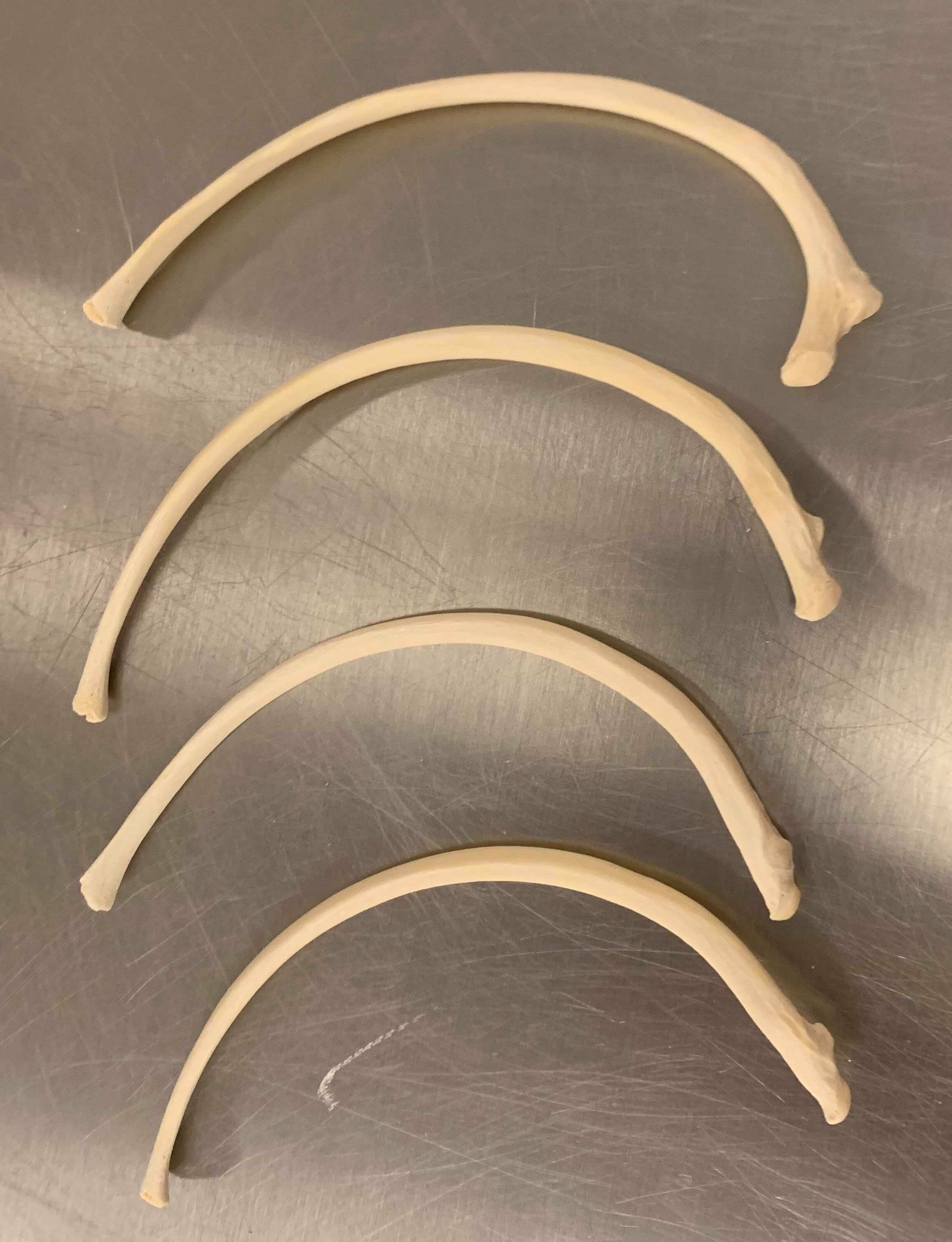
| ribs 26 flat bones that form the rib cage to surround the thorax (13 bilaterally); first 9 bones connected by cartilage to sternum ("true ribs"), #10-12 connected by cartilage to preceding rib ("false ribs"); #13 not connected ("floating rib") | |
|
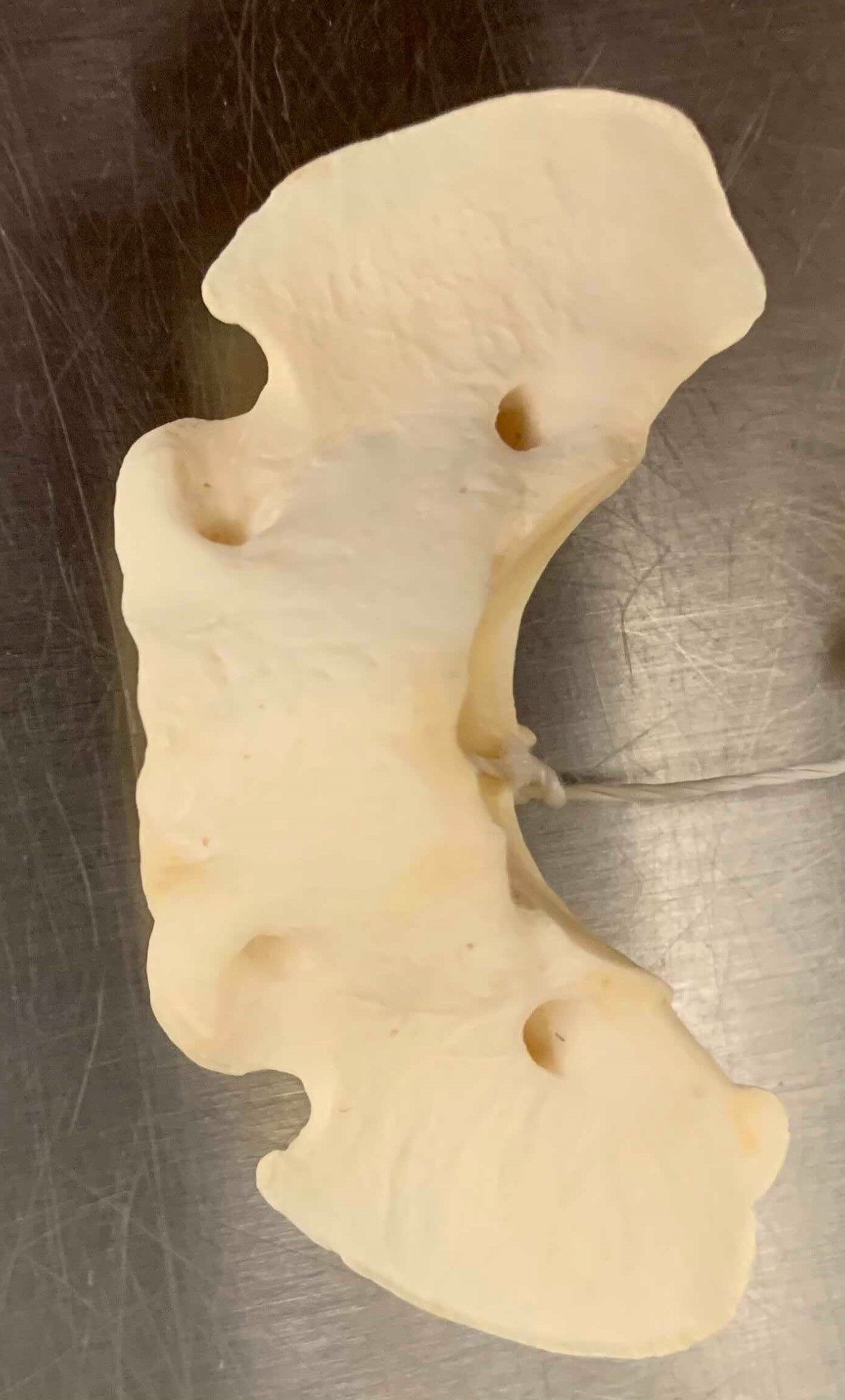
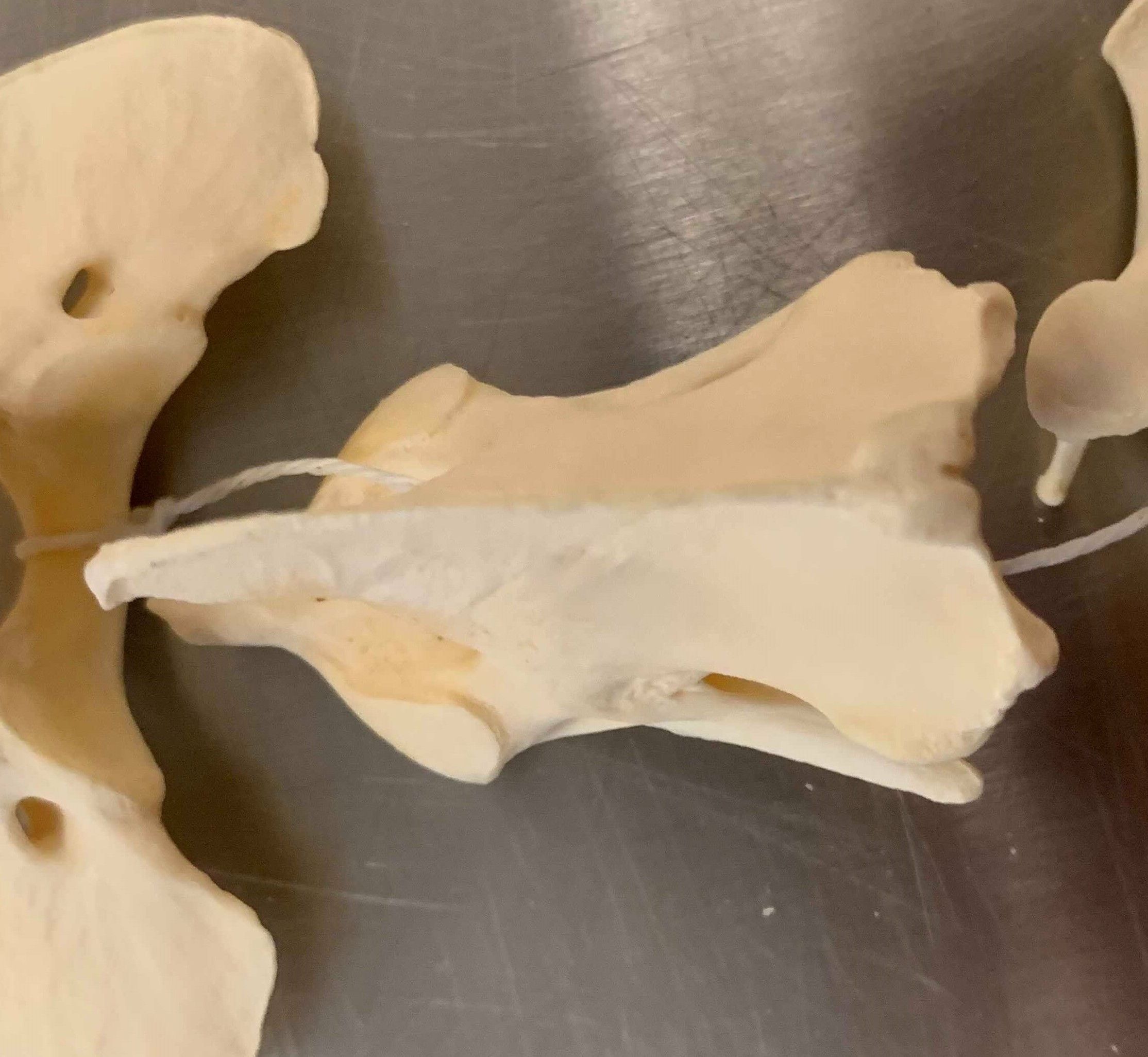
Image:
Pelvis (binary/octet-stream)
|
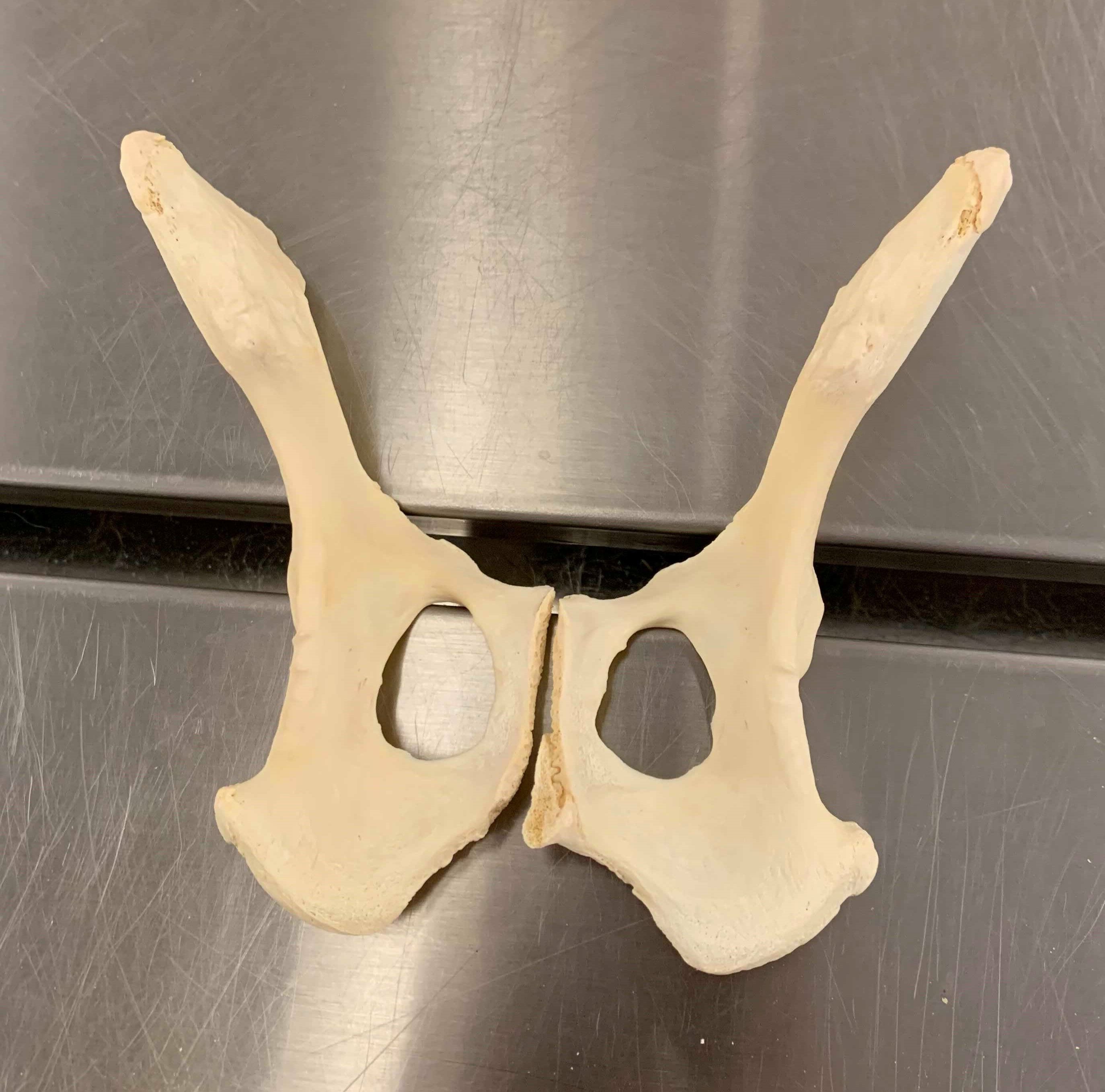
pelvis irregular bone ventral to sacrum; includes ilium (large portion dorsal to obturator foramina, connects to sacrum at sacroiliac joint), ischium (portion caudal and lateral to foramina), and pubis (portion cranial and medial to foramina) |
|
Image:
Femur (binary/octet-stream)
|
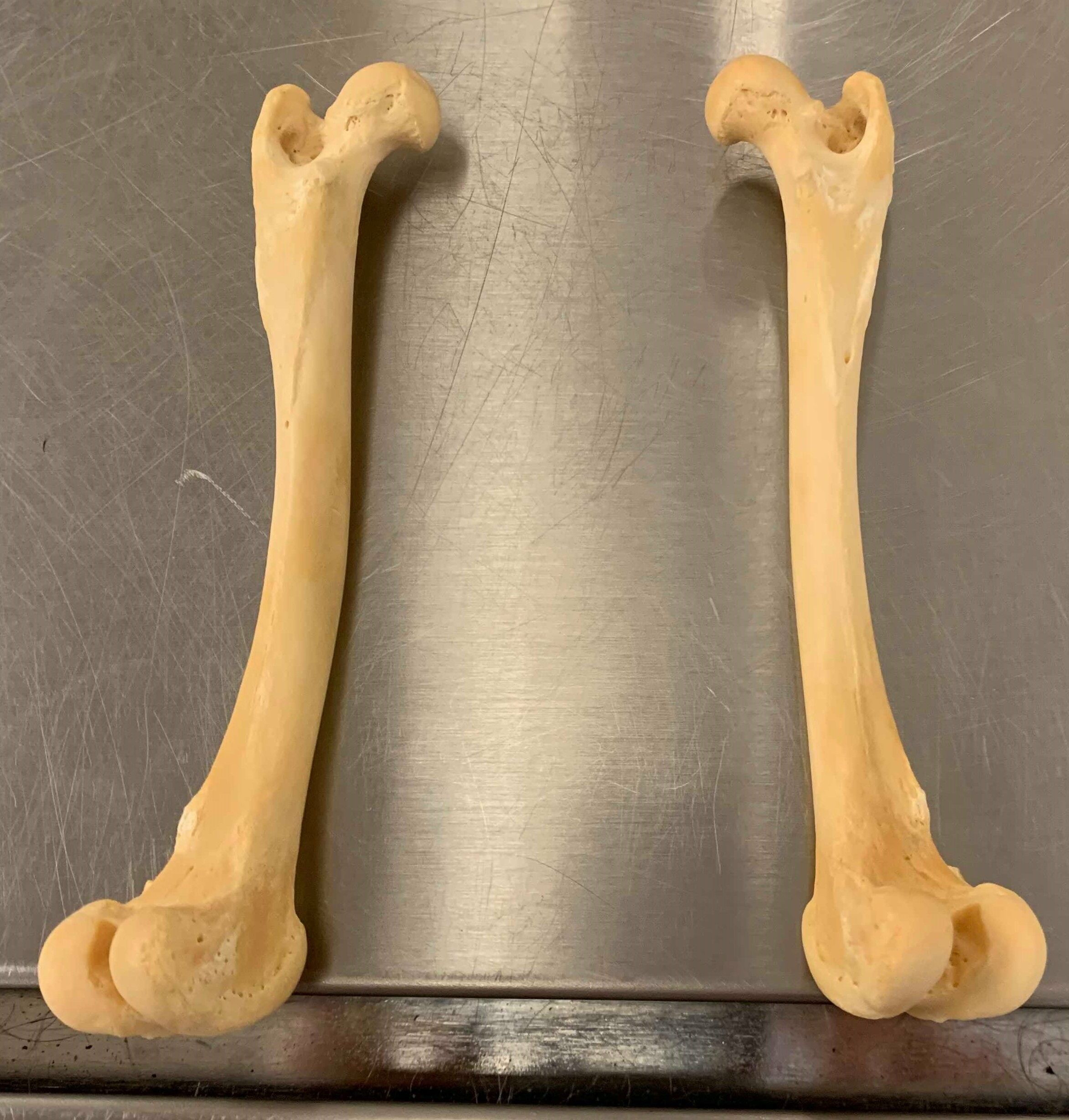
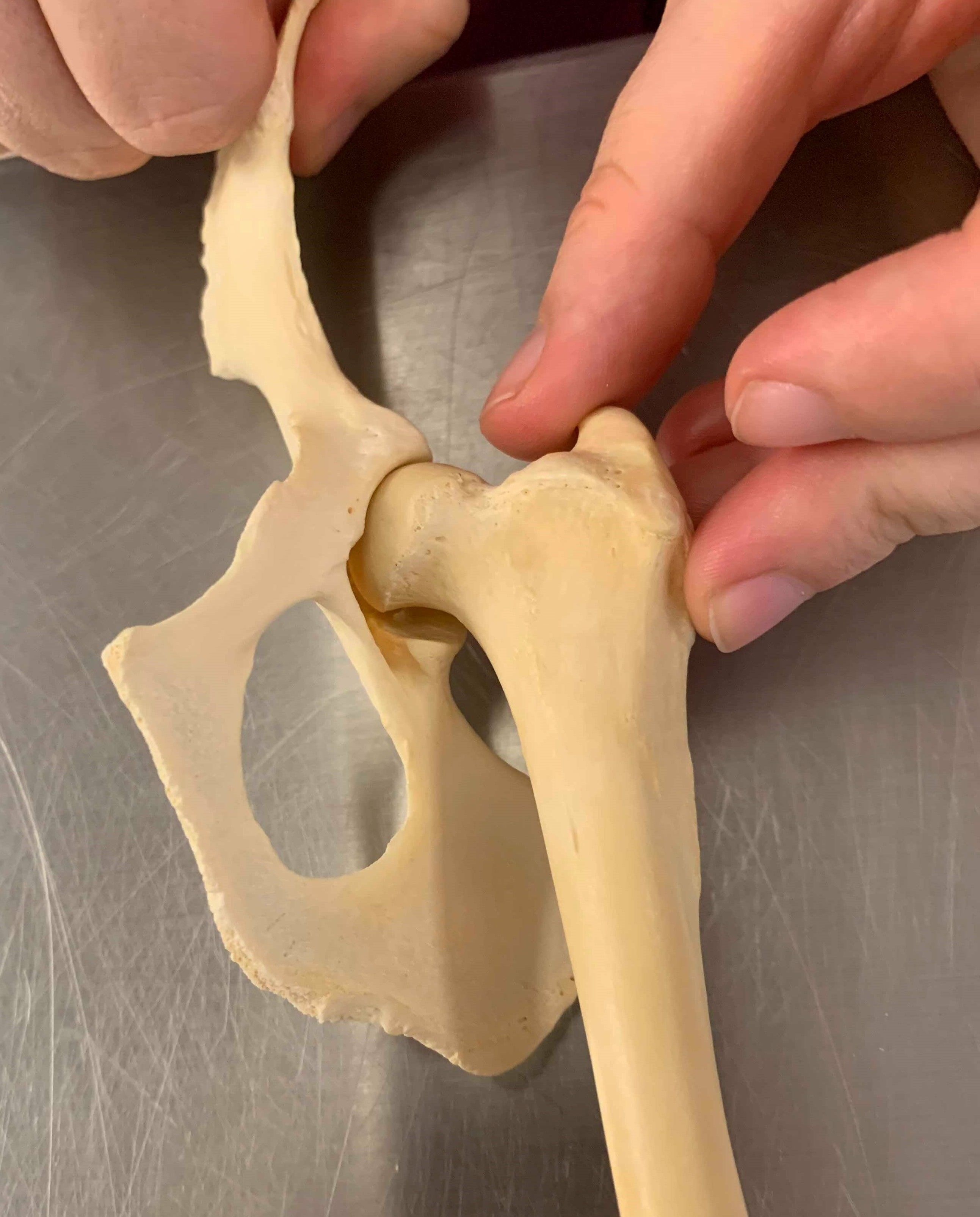
femur long bones of the proximal hindlimb, fits into pelvis at a ball-and-socket joint |
| ball-and-socket joint partially spherical epiphysis lies in a socket, allowing multi-directional range of motion | |
| patellae (singular: patella) kneecap; sesamoid or "floating" bone embedded in a tendon | |
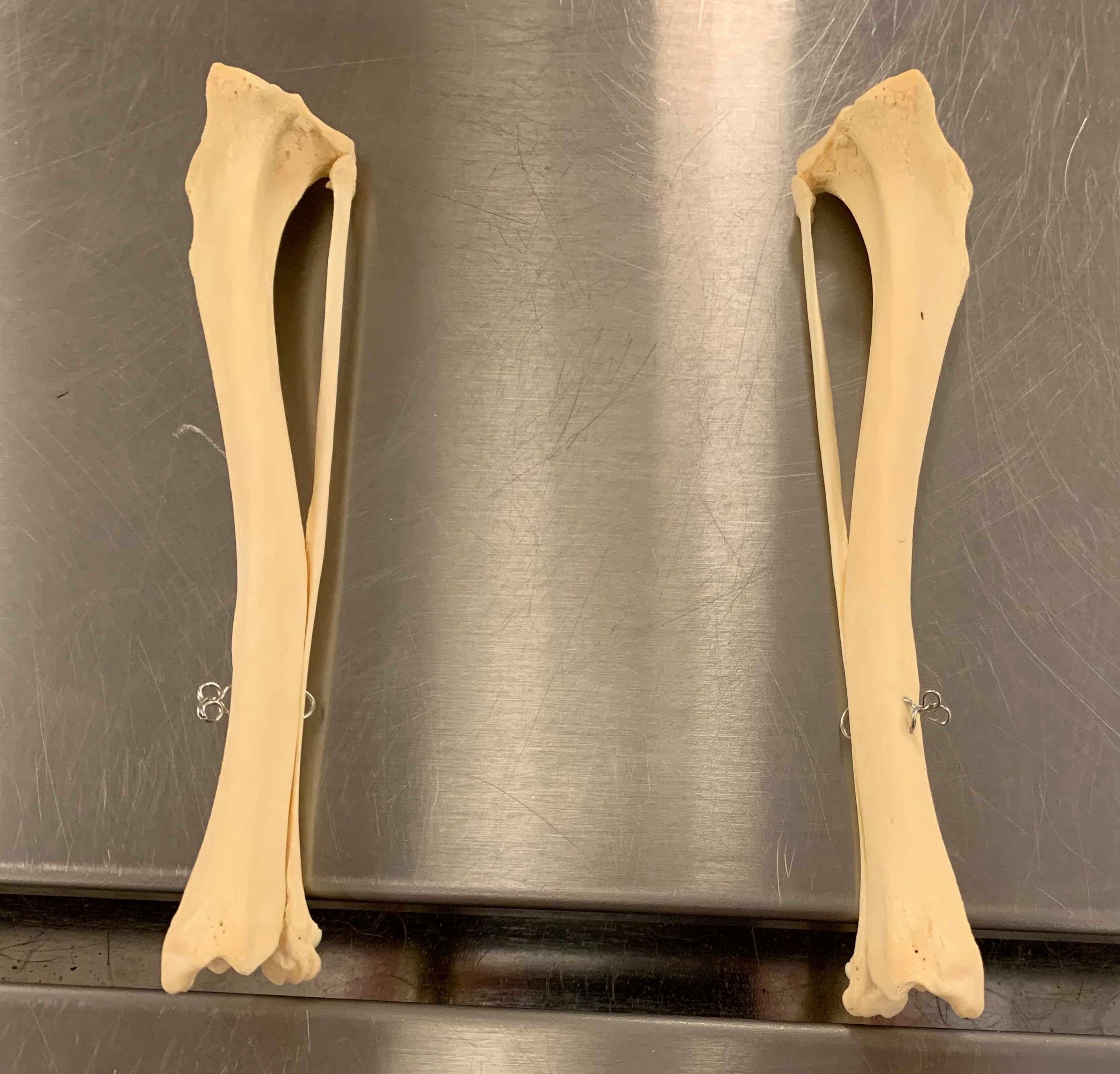
| tibia (larger bone) fibula (thinner bone) long bones of the distal hindlimb | |
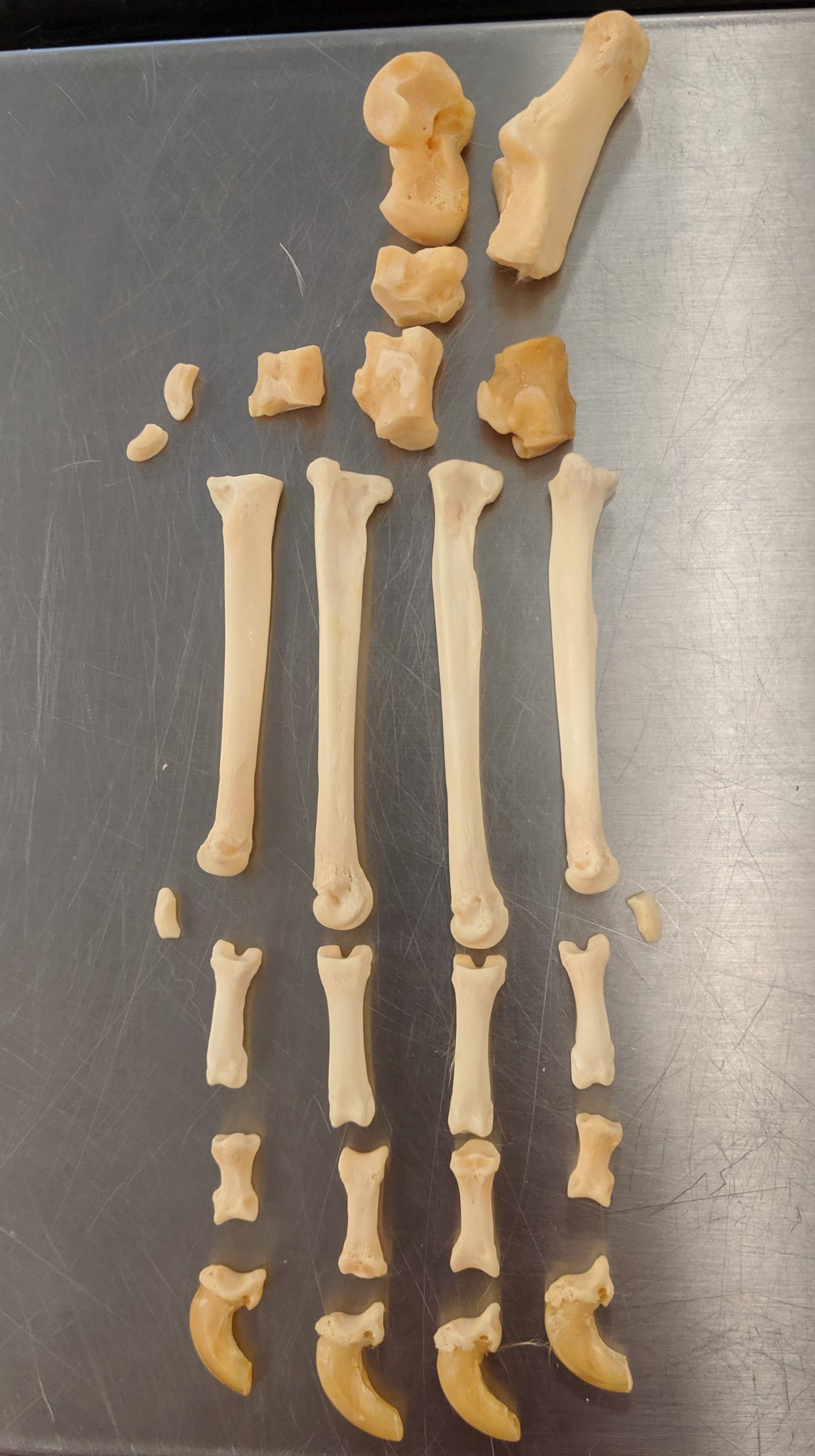
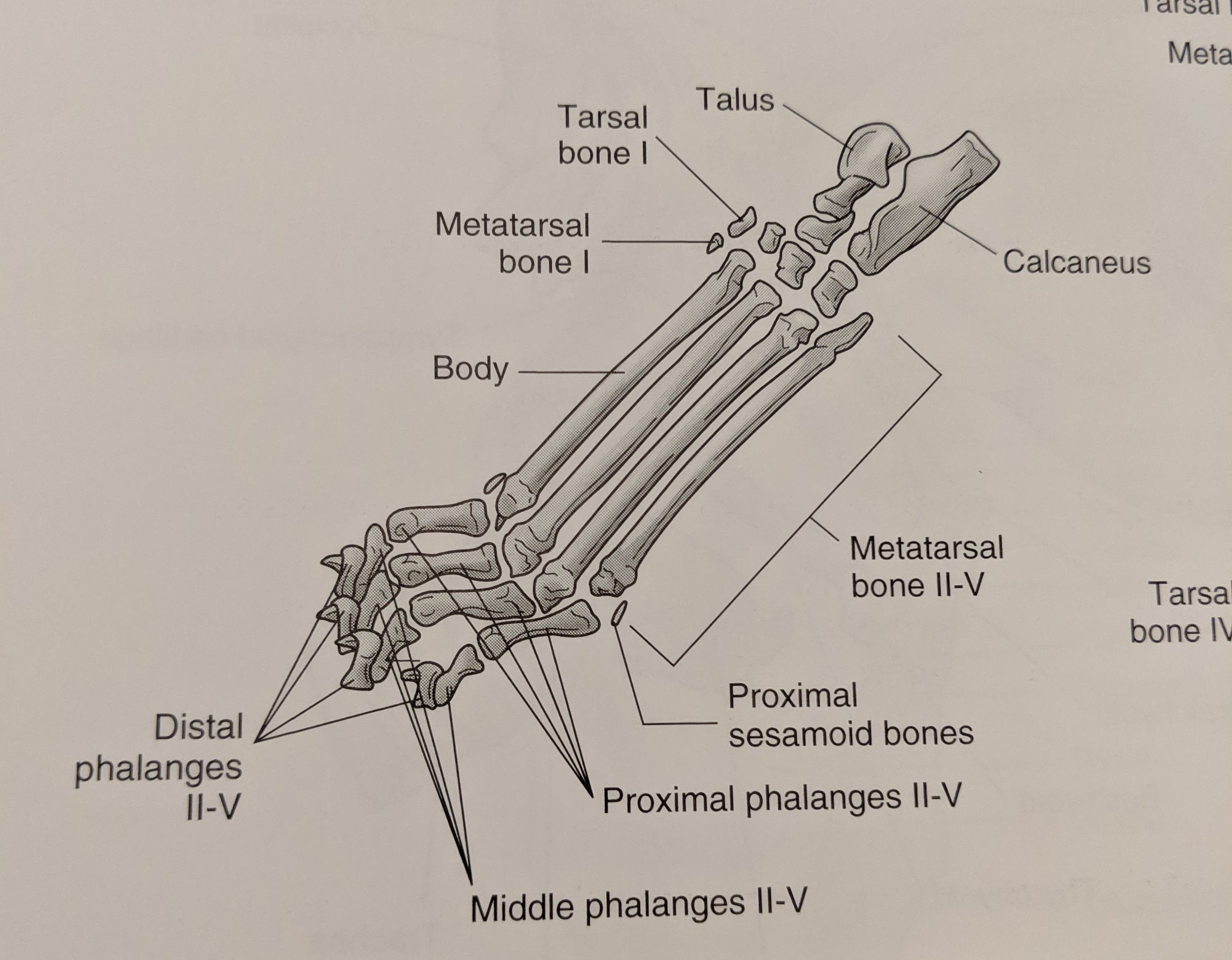
| hindfoot includes tarsus (short bones), metatarsals (long bones), and proximal/middle/distal phylanges (long bones) | |
|
Image:
Nail (binary/octet-stream)
|
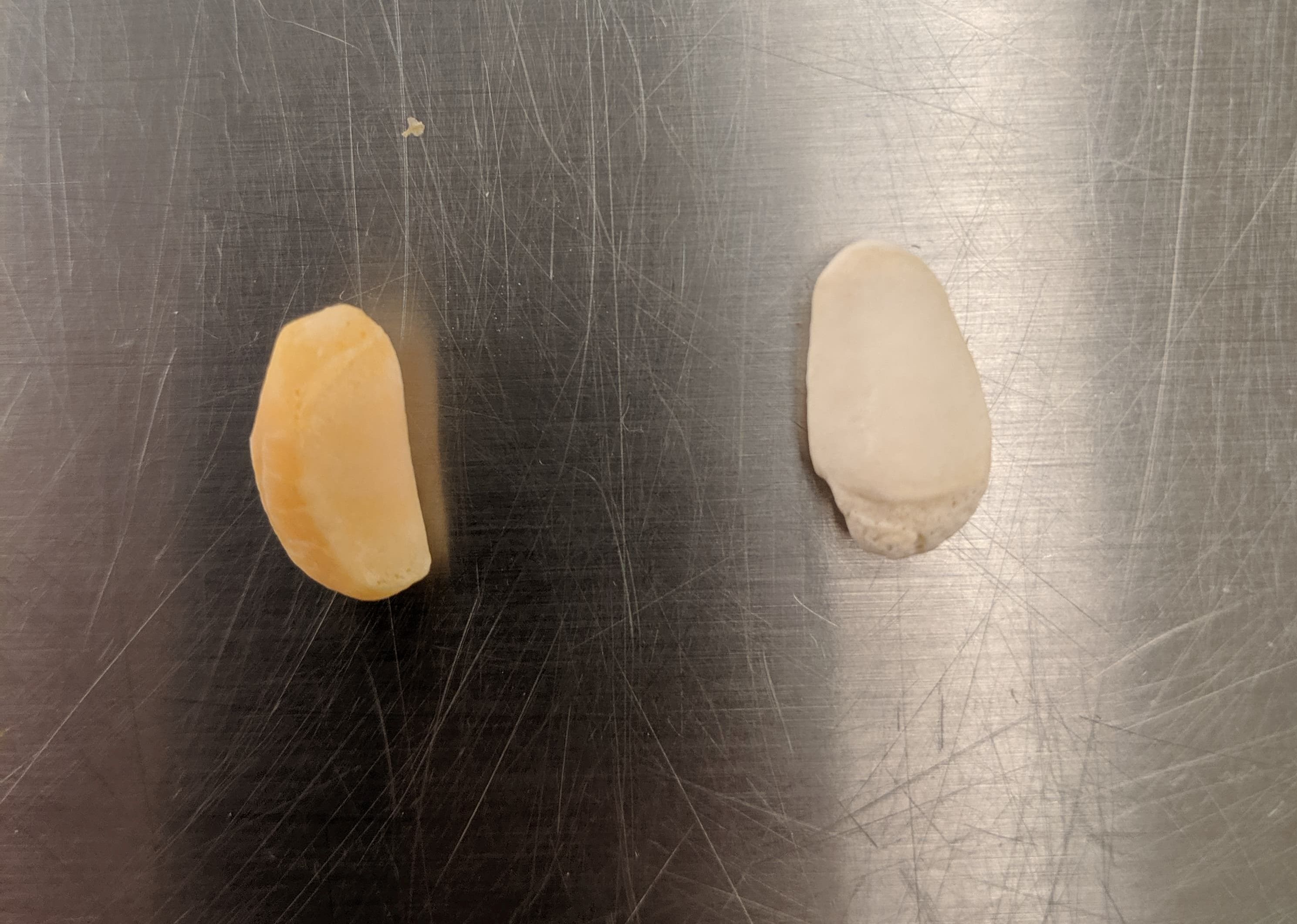
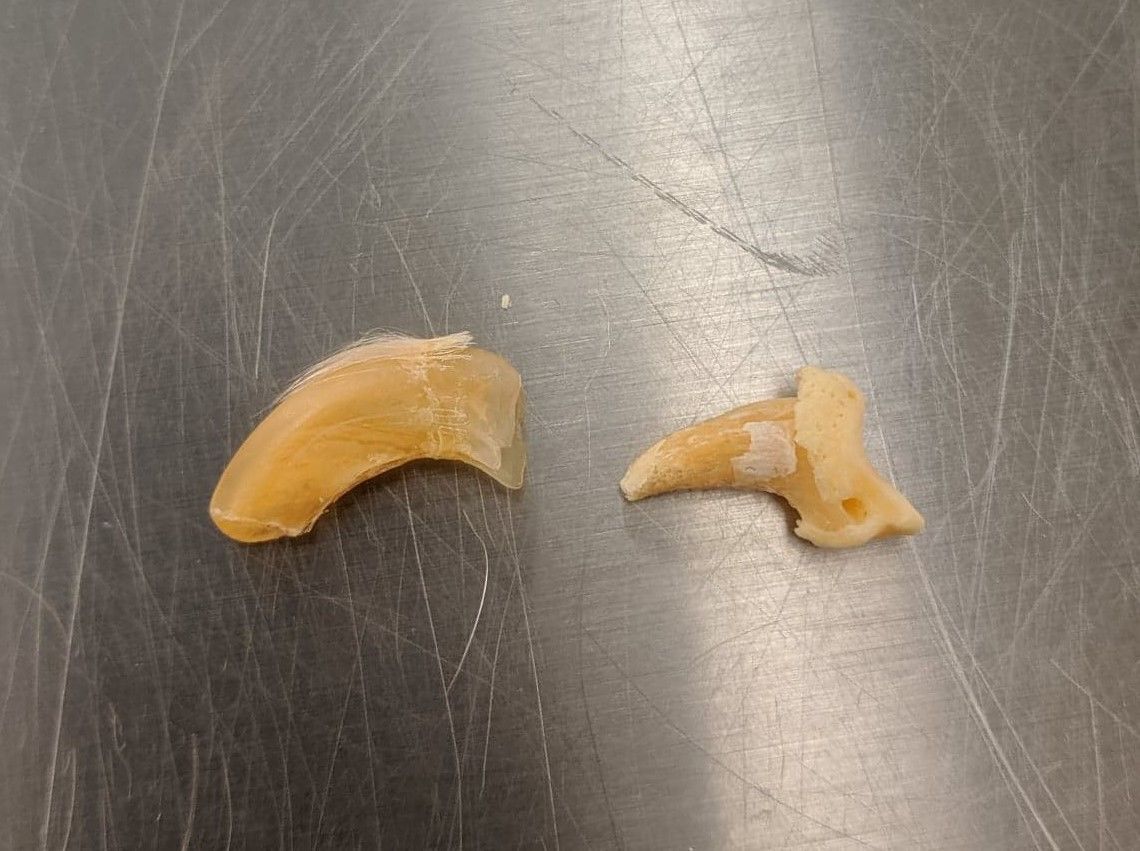
nail (left) encases distal phalange (right) |
Want to create your own Flashcards for free with GoConqr? Learn more.