
25414551
Description

Flashcards by Stephanie Mora, updated more than 1 year ago

|
Created by Stephanie Mora
over 5 years ago
|
|
| Question | Answer |
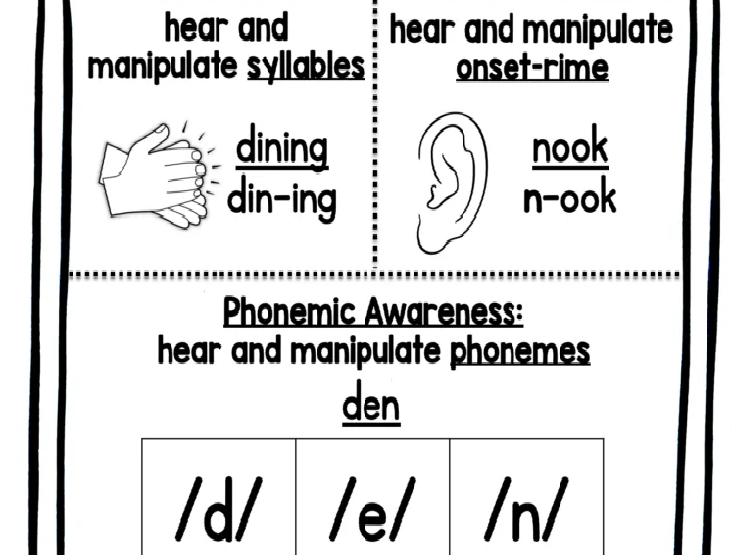
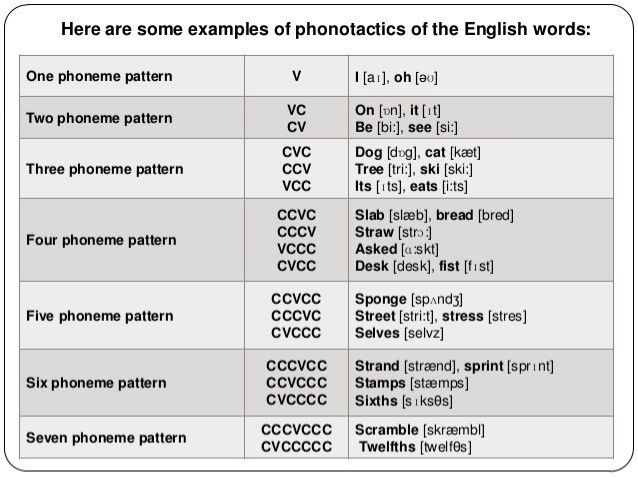
| phonology | the sound system of languages; also addresses the syllable structure and the sequence of sounds in a word |
| What are the two subsets of phonology? | segmental phonology & suprasegmental phonology |
| segmental phonology | focuses on the discrete sounds within a language-phonemes. |
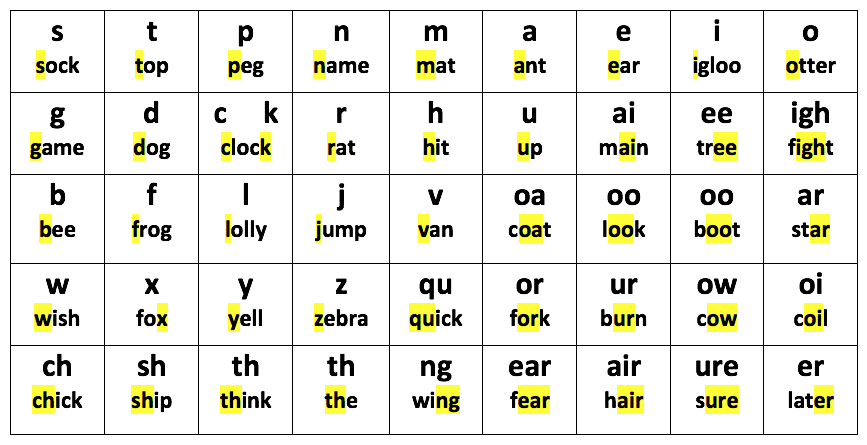
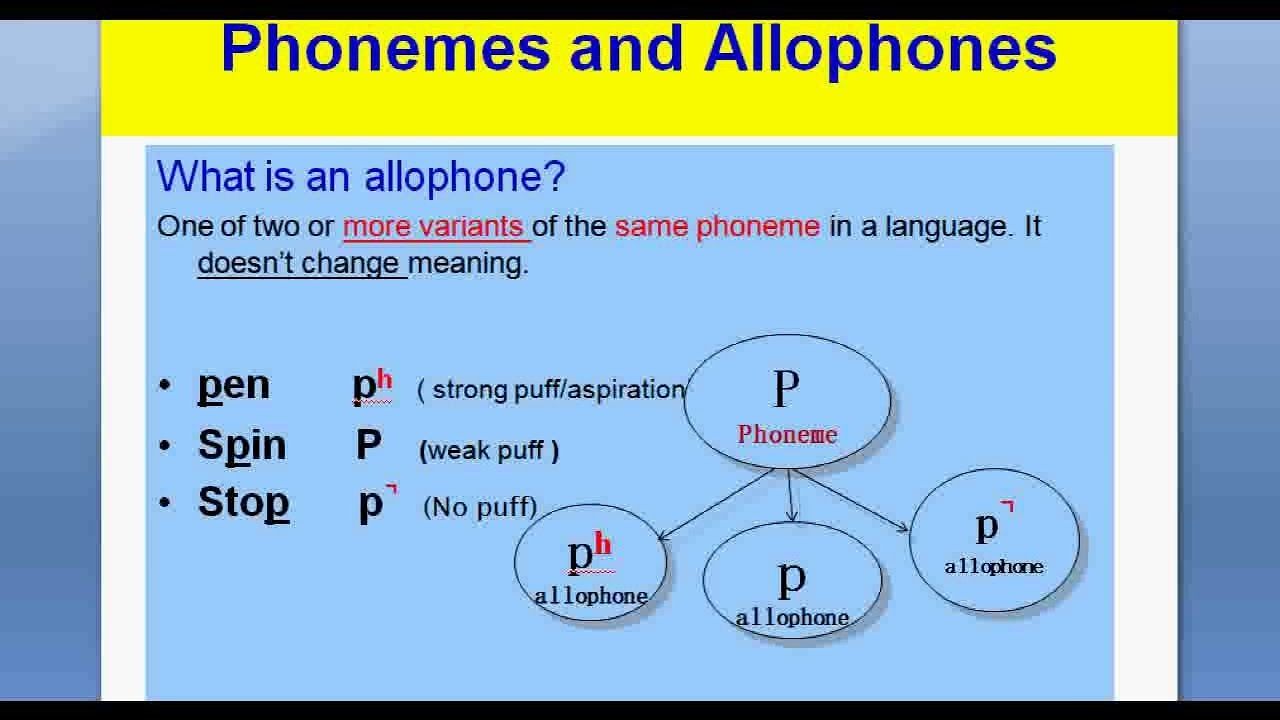
| Phonemes | the smallest units of sound |
| allophones | the manifestations of a single phoneme |
| suprasegmental phonology | focuses on intonation, stress patterns, and other features that occur across phonemes |
| Why is the the knowledge of phonology important for teachers? | it helps them "understand issues related to pronunciation, accents, and regional varieties of English" (Wright, p. 31) |
| morphology |
the study of the structure of words; also address the creation of new words through different techniques
Image:
Index (binary/octet-stream)
|
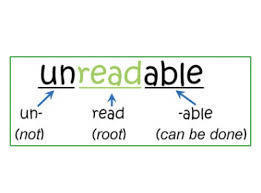
| morphemes | smallest units that carry meaning or have a grammatical function |
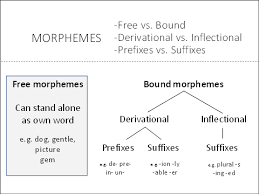
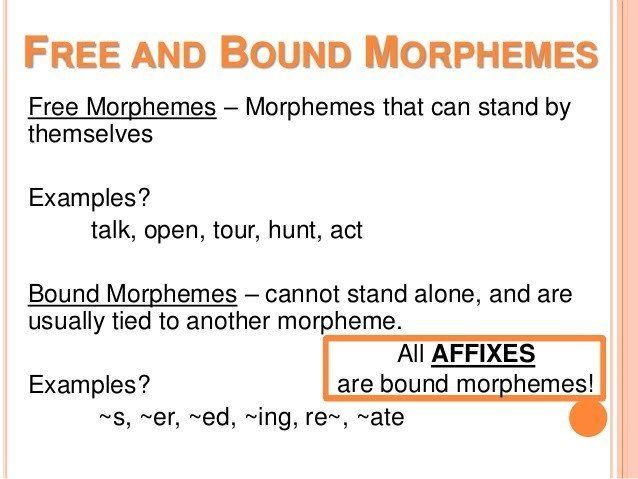
| What is the difference between a free morpheme and bound morpheme? |
Image:
30 (binary/octet-stream)
|
| How many morphemes does the word "books" have? What are they? Are they free or bound morphemes? | There are two: !) book is a free morpheme 2) -s, which expresses plurality, is a bound morpheme |
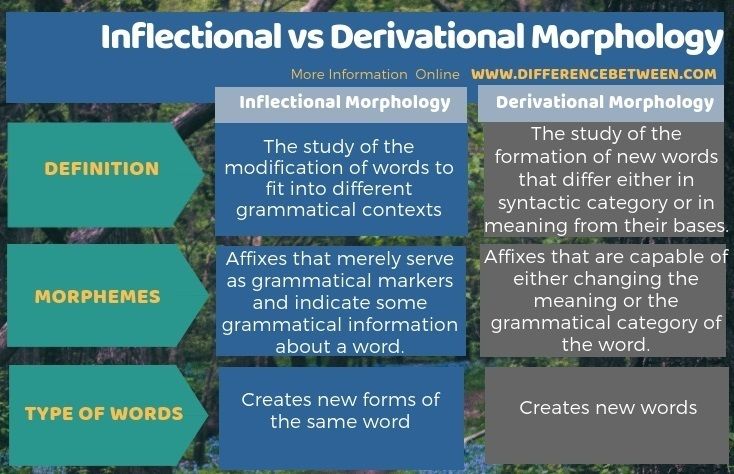
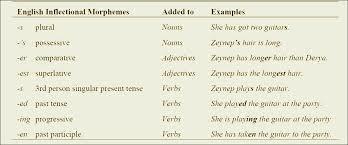
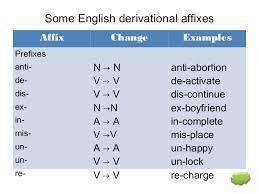
| What is the difference between inflectional and derivational morphemes? | |
| Is the -s in books inflectional or derivational morpheme? |
inflectional
Image:
Index (binary/octet-stream)
|
| Is the mis- in misrepresent a inflectional or derivational morpheme? | derivational |
| Why is having a knowledge of morphology important for teachers? | They can use this knowledge "to help students understand how to change verb tenses, how to make compound words, plurals and possessives, and comparatives and superlatives" (Wright, p. 32) |
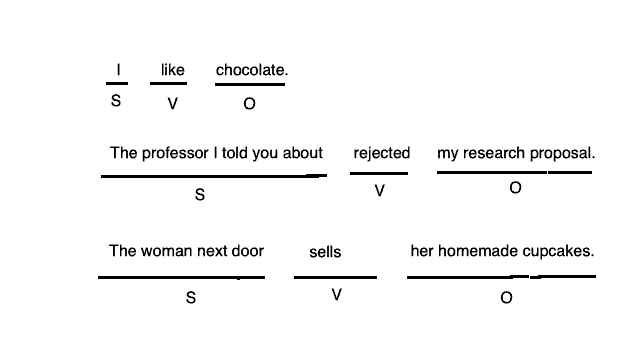
| syntax | the study of rules governing the way words are combines to form sentences and the rules governing the arrangement of sentences in sequences (Wright, p. 33) |
| Which sentence follows proper English word order? Mom gave my book to Dad. OR To book my gave Dad Mom. | Mom gave my book to dad. |
| Why is knowledge of syntactic rules on words order necessary? | because the following of those rules allow us to comprehend the meaning of what is being said (orally or in writing). (Wright, p. 33) |
| Why might an ELL student whose first language is Spanish say "car red" instead of "red car"? | Because different languages can have different syntactic rules regarding word order, and in Spanish adjectives come after the nouns |
|
Semantics
Image:
Images (binary/octet-stream)
|
the study of the meaning of words, phrases, and sentences; helps understand the relationships between words; addresses things such as modality/mood(command vs. statement), personal pronouns (he vs she), and words that provide orientation or points of reference (here, now) |
| All words have semantic features that indicate various properties or meanings are inherent in the word: woman. For example, the word "girl" contain these features: animate, human female. What semantic features does the word "man" have? | animate, human, adult, male |
| Why does our understanding of semantics help us recognize how odd this sentence is? My turtle is an great mechanic | The semantic features of turtle do not include human, and only humans can be mechanics. |
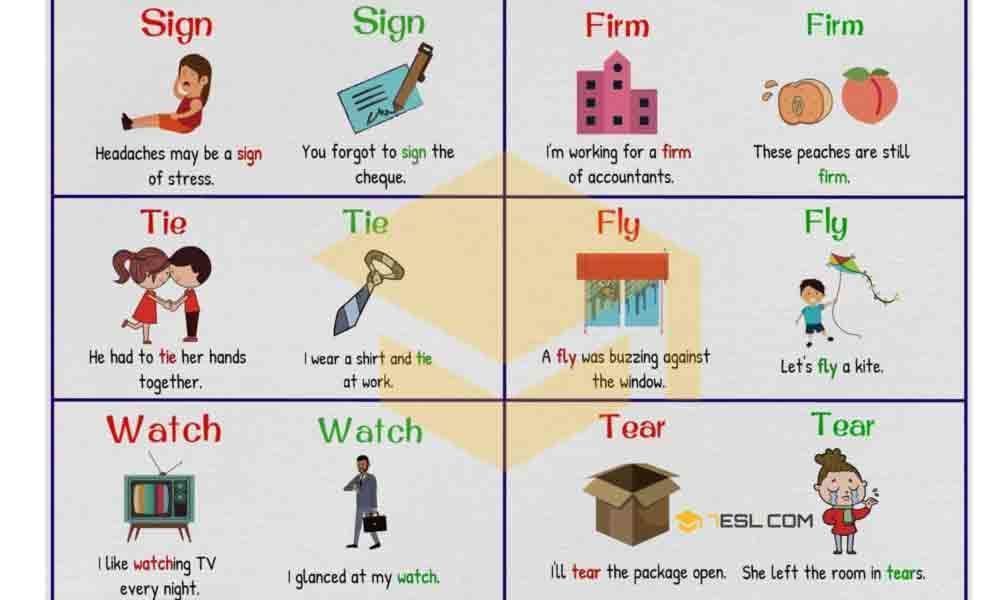
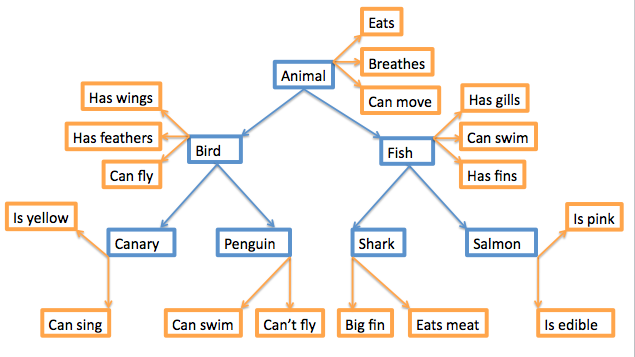
| What do synonyms, antonyms, homophones, homonyms, hyponyms, converseness, and polysemy, and part/whole realtionship words have in common? | They help us understand the relationships between words |
| homophones | words that sound the same but have different meanings |
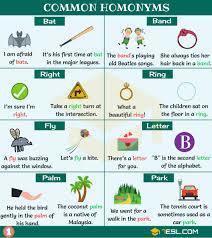
| homonyms |
words that have two or more meanings
Image:
Index (binary/octet-stream)
|
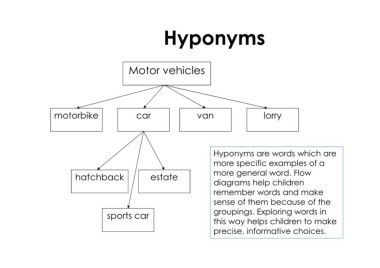
| hyponyms |
Image:
13 (binary/octet-stream)
|
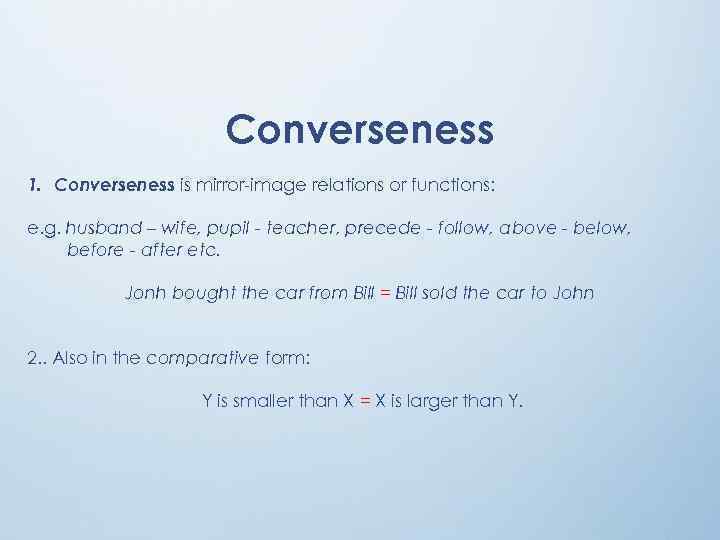
| converseness | |
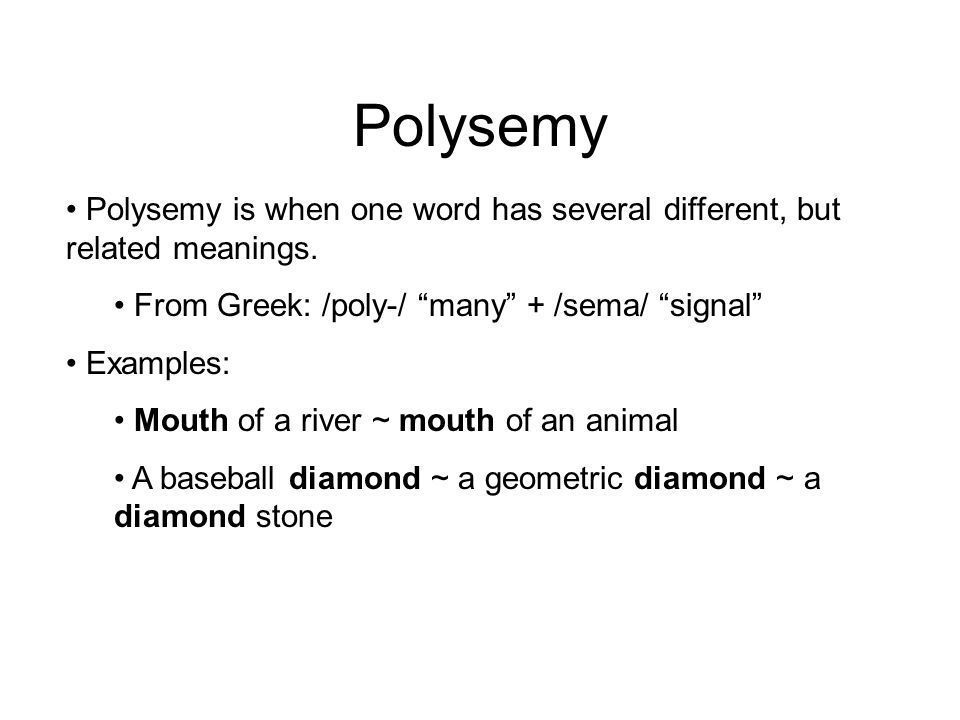
| polysemy | |
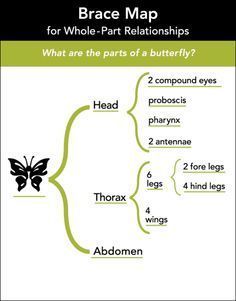
| part/whole relationships | refers to the relationships between words in which one or more words are part of another |
| How does knowledge of semantics help teachers? | Helps them develop vocabulary lessons with semantically related words which are easier for ELLs to learn, informs their teaching of cognates, helps them understand why certain students have trouble with personal pronouns or |
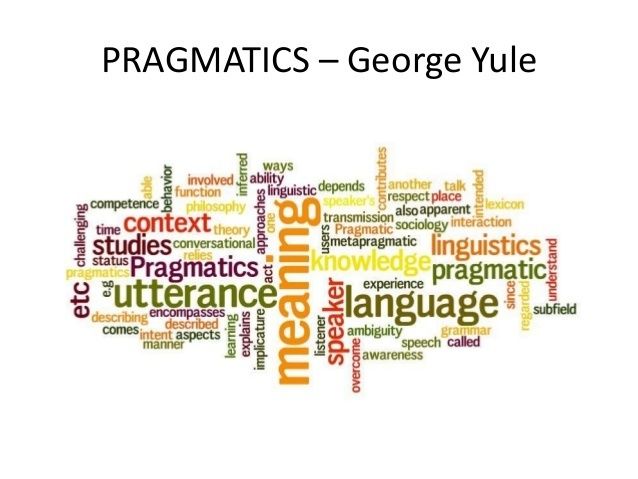
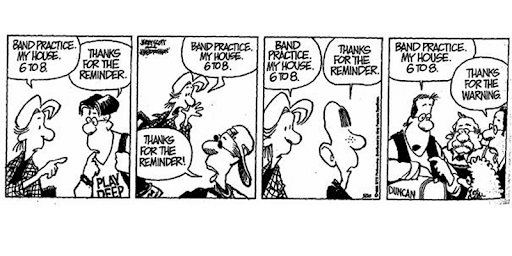
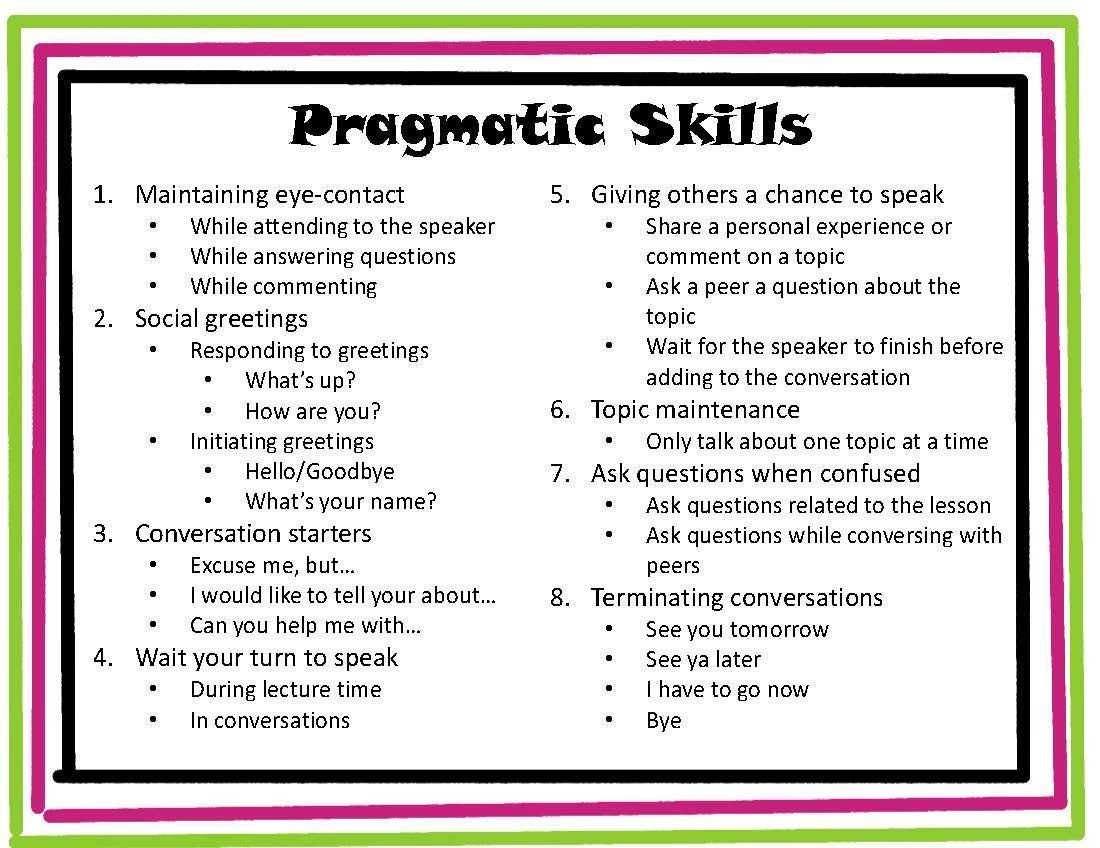
| Pragmatics | the study of language from the point of view of the user, especially in terms of choices they make, constraints they encounter in using language in social interaction, and the effect their use of language has on other participants in an act of communication |
| How does pragmatics help explain this misunderstandi-ng that is occuring? | Pragmatics can help us understand the 'invisible" meaning in conversations/words which help us to interpret speech acts as requests, commands, questions, or statements. The child is not understanding that although the mother had said a statement she meant it as a command. |
| TRUE OR FALSE From pragmatics, we learn that it is what we say and not how we say it that conveys the intended meaning. | FALSE "From pragmatics, we understand that it's not just what we say but often how we say it that conveys the intended meaning" (Wright, p. 35) |
| Why is a knowledge of pragmatics necessary for teachers? | They can use it to help their ELLS learn the underlying rules of interactions needed for successful interaction in and out of the classroom. |
| Lexicon |
Image:
Index (binary/octet-stream)
|
| In order for a person to use a word from the lexicon they must have what four kinds of information | 1) its sound and sequencing 2) its meaning 3) its category (i.e noun, verb) and how to use it in a sentence 4) how related words such as plural and past tenses are formed |
| It is necessary for teachers to build up their ELLs lexicon by building up their vocabulary. How can teachers help their students acquire new words? | by understanding that vocabulary acquisition happens most easily in context and related topics that students care about |
|
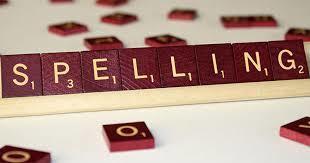
Spelling
Image:
Index (binary/octet-stream)
|
Modern American English is logical and systematic, so two words may be spelled similarly because they are related in meaning. Additionally, the spelling of a word may reflect its origin. (Wright, p. 36) |
| examples of two words being spelled similarly because of their meaning | EXAMPLE #1 know: be aware of through observation, inquiry, or information. & acknowledge: accept or admit the existence or truth of. EXAMPLE #2 sign: an object, quality, or event whose presence or occurrence indicates the probable presence or occurrence of something else. & signify: be an indication of. |
| examples of words whose spelling reflect their origin | croissants (French) tamale (Spanish) jaguar (Guarani) |
Want to create your own Flashcards for free with GoConqr? Learn more.