
38471128
Description

Flashcards by Mr Wiggly Gamer A.C, updated more than 1 year ago

|
Created by Mr Wiggly Gamer A.C
almost 3 years ago
|
|
| Question | Answer |
| Define protocol | A set of rules which govern communication <-- 1 mark answer A common set of rules followed during data transmission over a network to minimise inconsistencies <-- More detail |
| Define baud rate | Number of signal changes per unit time (typically per second) |
| Explain why number of bits transferred per second may be greater than the baud rate | Each signal (level) can represent more than 1 bit (in this case _ bits) Bit rate can be higher than baud rate if more than one bit is encoded in each signal change. <-- From spec |
| What is the relationship between bandwidth and bit rate | Bit rate is directly proportionate to bandwidth. Greater the bandwidth the higher the bit rate (positive correlation) |
| Define bandwidth | The range of frequencies that can be transmitted across a network connection (Usually measured in Hertz) |
| Define latency | General: delay between an action being instigated and its effects being noticed |
| How to calculate bit rate using baud rate and number of bits per signal level | bit rate = number of bits represented by each signal level * baud rate |
| Describe 3 drawbacks of parallel transmission | Requires more wires: higher cost + more difficult to manage (compared to serial transmission) (this effect is more important over longer distances) Data skew: more chance of errors + limits transmission speed and cable length Crosstalk: more chance of errors + limits transmission speed and cable length (Serial transmission doesn't suffer from either skew or crosstalk, meaning meaning it is more suitable for longer distances) |
| Define skew and crosstalk | Skew: the time taken for one bit to be transferred will differ slightly from line to line. This means that bits sent together may not be received together. Crosstalk: signals from one line can “leak” into another, causing of data corruption. |
| Define bit rate | The number of bits transferred per unit time (usually per second) |
| Define serial and parallel transmission | Serial Transmission: single bits are transmitted one after another along a single wire Parallel Transmission: Multiple bits transmitted simultaneously. Each simultaneously transmitted bit is sent down a different wire. |
| Define synchronous and asynchronous transmission | Synchronous: The transmission of data as a continuous between devices whose time signals are synchronised via a common clock. Asynchronous: The transmission of data intermittently between devices without the use of an external clock signal. No clock wire is required |
| Why may access to the internet be slower when connected to a more popular hotspot | Speed may be intentionally limited for each device which is connected May be more collisions |
| Describe briefly the purpose of start and stop bits in asynchronous data transmission | Start bit: is to start the receiver clock ticking and synchronise the clock in the receiver to the transmitter clock Stop bit: provide time for the receiver to process the received data and allows next start bit to be recognised |
| Reasons for segmenting a topology | Reduce network congestion by reducing the number of clients connected to each section of cabling Improve security by localising packet transmission |
| Benefits of a bus topology over a star topology | Less expensive due to reduced cabling costs There is no central hub, reducing the chances of a network failure and decreasing the cost of installation |
| Benefits of a star topology over a bus topology | The failure of one cable does not affect the performance of the rest of the network. Packets are sent directly to their recipient (if a switch is used) It is easy to add and remove clients to and from the network. |
| Benefits of a client-server network | - Centralised management improves security by ensuring anti-virus, firewalls, encryption etc are up to date and correctly configured - Centralised backups avoiding users forgetting to back up files regularly - Servers would be accessible at all times computers in a peer-to-peer network may be turned off meaning some data may not be available to all users as needed |
| What device is used to allow computers to connect to a network | Wireless network adapter |
| Describe whitelisting in the context of networking | MAC address are unique to each wireless network adapter Wireless access point checks the MAC address of the device trying to connect against the whitelisted MAC addresses. Only devices with an allowed MAC address can connect |
| Explain why fewer connections to an access point allows for improved performance | There is a limited bandwidth By limiting connected devices more band width is available to connected devices |
| Explain the role of a service set identifier | SSID is a locally unique identifier of a network. Wireless client must use the same SSID as the one put in the access point to join |
| How can disabling SSID broadcasting increase security of a wireless network | SSID of the network will not be visible when trying to connect to a network. This means that only users who know the SSID of the network can try to connect |
| How is it possible for devices to collect information traveling a personal Wi-Fi network | Wi-Fi signals can travel outside of property Any Wi-Fi receiver can read the data packets No need for a physical connection May've used a protocol which doesn't encrypt transmitted data |
| How to prevent devices from collecting information traveling your personal Wi-Fi network | Use a protocol which encrypts data transmission. E.g., WPA2 Limit power transmission so data doesn't travel beyond premises Use a cabled network MAC address whitelisting Hiding SSID (will prevent unwanted connection) (may have malicious intent) (will not prevent against collecting packets of data) |
| Explain the difference between a physical and logical topology | Physical: Physical layout of the cabling Logical: How the data flows around the network |
| Explain the differences between a peer-to peer and a client-server network (p2p = peer-to-peer network) (cs = client-sever network) | - For a p2p each computer has equal status, whereas, for a cs 1+ computer(s) nominated as server(s), other computers are clients - For p2p resources stored on and shared from any computer, whereas, for cs clients access resources from server(s) - For p2p no centralised management of security, whereas, inverse for cs - For p2p the same resource can be made available or shared from multiple computers, whereas, for cs resources cannot be accessed if server(s) turned off |
| When answering a long form networking question consider. | is IPv4 enough are there many more devices which are joining the network (bandwidth) security issues concerning many devices connecting to network Interference with other devices, collision |
| Describe how the CSMA/CA with RTS/CTS method is used | •Computer with data to send monitors for data signal. •If data signal present, then the computer continues to wait. •When no data signal present, computer sends a Request to Send. •Two computers could start transmitting simultaneously if they both detect there is no data signal. •Receiver/ Wireless access point responds to RTS with a Clear to Send. •RTS/CTS signals block any other transmissions from nodes in range (for a specified time). •If CTS received, then start to transmit. •If CTS not received continue to wait until transmission ends. •Receiver sends acknowledgement after all data is received. •After transmitting the transmitter waits to receive acknowledgement packet to confirm data received was not corrupt. •If no acknowledgement received, then wait a time period and then listen again/ retransmit. •The acknowledgement also notifies other computers that they can transmit again. •Waiting periods are often random. •Collisions cannot be detected by transmitter. |
| How can a physical star topology act as a logical bus topology | running a bus protocol on the hub allows it to distribute packets to all of the connected clients so as to act like a bus network. A network physically wired in star topology can behave logically as a bus network by using a bus protocol and appropriate physical switching. |
| Describe 3 roles of routers | Manage congestion Examine destination of packet Forward from 1 network to another (When a router receives a packet, it examines the destination IP address of the packet and uses a routing table to determine the best path for the packet to take) |
| Explain difference between WWW and the internet | WWW is system of interconnected documents accessed over the internet using HTTP protocol |
| Define packet switching | A method for sending data over a network by breaking data into several data packets which are sent independently (they travel on independent paths) and then reassembled once they all reach their destination |
| Explain role of IP address | A binary address assigned to devices communicating via the Internet on a network used to identify its host and addresses its location. |
| Why must port numbers be widely accepted | Communication initiated by clients Clients must know which port number to connect to |
| Discuss worms | Worms can self-replicate between computers, either within a network or by users downloading and running a malicious file. worms have the ability to replicate and distribute independently |
| Discuss trojans | Type of malware that is disguised as a benign file that users can be tricked into opening |
| Discuss viruses | Require a host file in which to reside. Viruses can spread between computers over a private network, the Internet or through physical media like hard drives, flash drives and optical disks. File must be opened |
| Explain anti-malware software | Detection: compare files on computer with known malware in order to find matches, scan for suspicious activity After detection: If file is important it maybe possible to remove the malware. If an important file may contain malware, it can be quarantined (which will protect against infecting other files) |
| describe 3 security threats | Spam - Unsolicited junk email Remote login - ability to login to a computer via the internet Phishing - attempts at getting someone's personal information (typically done by impersonation) |
| Explain how improved code quality protects against malware | Malware can exploit bugs in poorly written code. Data in memory may be stolen or exploited later (if forgotten about), or programs may contain debugging code that exposes sensitive information that the programmer forgot to remove. |
| (1) How will a packet travel internationally | >There is a hierarchy organisation of router. E.g., packet passed up to national routers, transferred internationally and then passed back down a hierarchy. >Path to take is selected by each router >Route may change as a result of a collision/technical problem |
| (2) Explain how the path of a packet is determined (for international travel) | >Repackaging of packet to a different protocol (using a gateway) >Route determined using IP addresses >Router tables/ other criteria are used to determine next hop >Router decrements time to live of packet >Source and destination MAC address changed at each router |
| (3) Explain how a computer sends packets internally (when trying to send data outside LAN) | Senders computer uses subnet mask to determine if the destination computer is in the same subnet (Describe how subnet mask is used)(different flashcard) Packet is sent to router Router identifies that destination is outside the LAN so forwards packet to gateway |
| (4) Describe how subnet mask is used to determine if packet recipient is in same LAN | AND operation of subnet mask with senders IP address AND operation of subnet mask with recipients IP address Result of operation is the network ID Network ID's are compared If they are the same, then computers are in same subnet |
| How are digital certificate used and obtained | A digital certificate is an electronic document that authenticates (verifies the identity of) a message sender or a website. It is issued by an official certificate authority (CA), such as Let's Encrypt or Verisign. |
| Explain packet filtering in relation to how a fire wall works | Check the headers of the packets arriving from the untrusted network against a set of rules or packet filters defined by the network administrator. |
| Explain stateful inspection in relation to how a fire wall works | Firewall maintains information about current connections and only allows packets relevant to these connections through. (Stateful inspection means continuously monitoring incoming and outgoing traffic after a connection is established, analysing packet types, looking inside the payload of the packet rather than just the header, and checking for suspicious activity) |
| Explain proxy server in relation to how a fire wall works | A proxy server sits between the client devices and the firewall. It provides anonymity to the clients, keeping their true IP addresses hidden. It can also keep a cache of websites, serving them from its cache wherever possible, which speeds up user access and reduces network traffic. In addition, the proxy server may log all user activities, such as recording a list of the websites that the user has attempted to visit. |
| Explain the service provided by internet registries | Internet registries maintain a definitive register of who owns a specific domain. Update the IP addresses of the authoritative name servers Regulated by registrar |
| Explain terms fully qualified domain name domain name IP address | FQDN: DN + includes the host. (e.g., https://www.bbc.co.uk/news/index.html) DN: A string that locates a domain on the internet. It is included as part of a URL. (e.g., bbc.co.uk/news/index.html) IP: A numerical address assigned to any device communicating via Internet Protocol on a network that identifies its host and addresses its location. |
| Describe the term uniform resource locator | A uniform resource locator (or URL) is a standardized identifier used to locate a resource, such as a file, web page, image, or video, on the Internet. It includes several components that specify the protocol, domain name or IP address, path, and query parameters necessary to locate the resource |
| define router gateway | Routers: A device used to direct packets being transmitted between networks. Gateway: A device that allows data to flow from one network to another. (converts data from one protocol to another) |
| Name and describe main components of a packet | Sender’s address - Identifies where the packet was sent from Receiver's address - Identifies the packet’s intended recipient Packet contents - Where the packet holds the data that is being transferred Time to live (TTL) - Holds the number of routers that a packet can pass through before being deleted and resent. Sequence number - Contains the number of packets in a message and identifies a packet’s position in relation to others |
| Discuss differences between private and public IP addresses (there are 4 differences) | 1. Public IP addresses are globally unique whereas many computers may share the same private IP address 2 .Public IP addresses are allocated by a central issuing authority. Public IP addresses are allocated by home user/ company/ ISP 3. Public IP addresses can be connected to directly over the internet. Whereas it is difficult to connect to private IP addresses over the internet 4. Owners of public IP addresses can be looked up using a WHOIS protocol |
| Explain what NAT is | Network Address Transmission When a device on the private network needs to communicate with a device on the Internet, it sends packets through the router, which makes a record of the packet before replacing the private IP address in the packet header with its own routable IP address (address translation) When a response is received, it is sent to the router’s public IP address, which then forwards the response to the correct private IP address by using the record it made when sending the packet. i.e. modifies (network/IP) addresses as they pass through a router WHEN ANSWERING A LONGER QUESTION ON NAT INCLUDE DEFINTIONS FOR PUBLIC AND PRIVATE IP ADDRESSES |
| Why are NAT's preformed | Private IP addresses are not routable, so cannot be used for routing on the internet -> private IP addresses are not routable because they aren't globally unique To improve security of a LAN network |
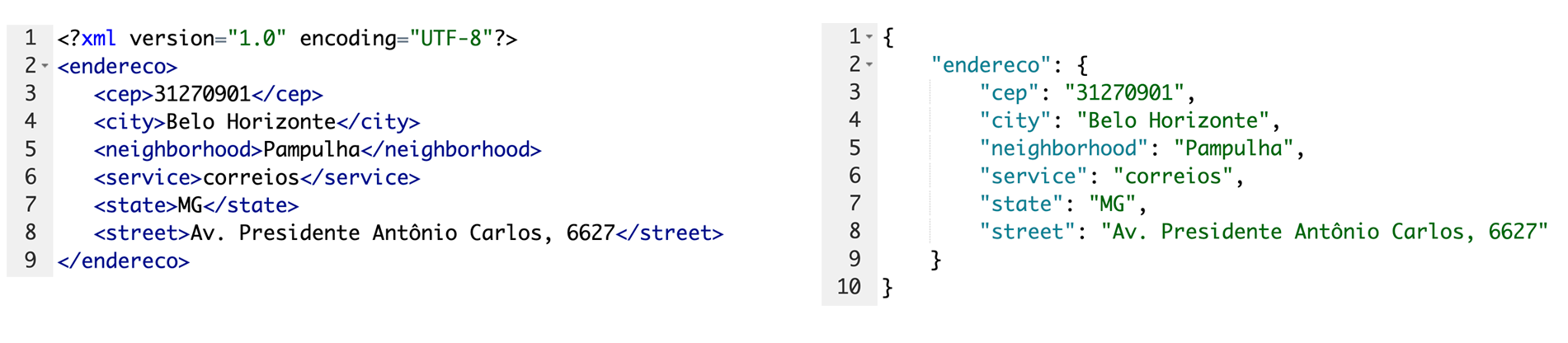
| Advantages of JSON over XML | - easier for a human to read - more compact - easier to create - easier for computers to parse and therefore quicker to parse. |
| Describe the role of the application layer in the TCP/IP stack | The application layer defines protocols and standards that applications use to exchange data and communicate with each other over a network. The layer interacts with the user with application software. |
| Describe the role of the transport layer in the TCP/IP stack | Establishes what’s called a virtual path: an end to end connection between the sender and the receiver. The layer then splits the transmission into packets. Each packet has a sequence number which identifies a packet’s position in relation to other packets that form part of the same message. Also contained in each packet is the port number to be used. (some protocols have common port numbers) Also a TCP checksum. |
| Describe the role of the network layer in the TCP/IP stack | Provides the correct IP addresses for each packet’s source and destination. Routers work within the network layer, using the IP addresses on a packet to send it to its destination (preforms routing) Creates checksum for datagram/packet header Encapsulating/splitting data into datagrams |
| Describe the role of the link layer in the TCP/IP stack | Controls physical connections between pieces of hardware in a network. Adds MAC addresses to packets which it receives from the network layer. The MAC addresses identify the hardware to which a packet should be sent. These MAC addresses change with every hop through a network. |
| Describe the role of a socket in the TCP/IP stack | A TCP end point is a combination of an IP address and a port number; this combination is known as a socket. A server will bind an address and port number to create a socket A client will connect to a socket |
| Describe the role of MAC addresses in TCP/IP | MAC address are globally unique to each device Used to find device within locally network |
| What is the protocol associated with port(s) 20 (data) & 21(commands) Describe the function of this protocol | FTP (File transfer protocol) Used for sending files between devices. FTP client software can run on devices, allowing them to connect to FTP servers which send files requested by the client. Clients can access FTP servers anonymously or non-anonymously by logging in with a username and password Can navigate directory structure |
| What is the protocol associated with port(s) 22 Describe the function of this protocol | SSH (Secure shell is an encrypted communications protocol) Used for remote management of computers through a secured shell, allowing computers to be accessed and controlled remotely. In order to access a remote computer, SSH requires a username / password combination and encrypts information during transmission. SSH clients are pieces of software which can be used to make a TCP connection to a remote port. Once a connection is established, commands for application-level protocols (such as, GET for HTTP, SMTP for sending emails and POP3 for receiving emails) can be sent to the remote computer. (Tunnelling) |
| What is the protocol associated with port(s) 80 Describe the function of this protocol | HTTP (Hypertext transfer protocol) Web servers hold web pages in text form, which they can deliver to clients using HTTP. Application software on the client receives these text files and renders them as web pages. |
| What is the protocol associated with port(s) 443 Describe the function of this protocol | HTTPS (Hypertext transfer protocol secure) HTTPS performs the same function as HTTP, but encrypts information during transmission. This doesn’t just keep information sent by clients secure, but helps to prevent information from being tampered with or modified during transmission. |
| What is the protocol associated with port(s) 110 Describe the function of this protocol | POP3 (Post office protocol 3) Used for retrieving/managing emails from an email server. Email servers are responsible for receiving and sending emails. POP3 communicates with email servers to check for and download any new messages. |
| What is the protocol associated with port(s) 25 Describe the function of this protocol | SMTP (Simple mail transfer protocol) Used for sending emails. SMTP is used between a client and an email server. |
| Name to 2 parts an IP address is split into and briefly describe each | To provide a logical structure to these addresses, the initial bits are the same for all of the hosts on a particular network. By inspecting these initial bits, the network to which the host belongs can be identified. These initial bits are called the network id. The network id part of an IP address can be determined with a subnet mask. The remaining bits in the address identify a particular host in that network and so they are called the host id. |
| There are 2 standards of IP addresses, IPv4 and IPv6. How many bits does each type contain? Why was IPv6 introduced? | IPv4, 4 8 bit codes IPv6, 8 16 bit codes IPv4 has 4 billion unique codes however this isn't enough. E.g, 8 billion people, 1/2 which own devices which connect to the internet, each with 1+ devices connected to the internet |
| What is the function of DHCP system (dynamic host configuration protocol) | DHCP is used to allocate an IP address to devices that have not been manually assigned an IP address. DHCP is configured to assign a pool of available IP addresses for a lease time. After the lease time expires, the device is required to re-request an IP address and the previous IP address is made available. |
| What, why, when (WebSocket protocol) | The WebSocket specification defines an API (Application Programming Interface) establishing a full-duplex 'socket' connection between a web browser and a server over TCP. This means that there is a persistent connection between client and server, allowing both parties to send data at any time. The WebSocket protocol, which allows for fast transmission of data by reducing the size of packet headers, is used in video streaming, online games and instant messaging. |
| What is CRUD | CRUD is an acronym for create, retrieve, update, delete; four commands that can be used to query online databases. Each of the four CRUD commands has a SQL equivalent. Create - INSERT Retrieve - SELECT Update - UPDATE Delete - DELETE |
| What is REST | An acronym for representational state transfer, REST is a design methodology for online database applications that are queried with a web browser. (Database connected to the web browser using REST). REST uses the four HTTP request methods POST, GET, PUT and DELETE to query databases. HTTP - SQL POST - INSERT GET - SELECT PUT - UPDATE DELETE - DELETE |
| Previous flash card continuation | database connected to browser using REST – Representational State Transfer - which relies on HTTP request methods REST allows JavaScript to talk to server through HTTP REST API (Application Programming Interface) created and run on server, browser Javascript calls API JSON (JavaScript Object Notation) or XML can be used to transmit data between a server and web application Javascript referenced by HTML file, eg index.html, is run in browser. |
| Thin client | In thin-client networks, the majority of the network’s processing power belongs to servers which provide services and resources including storage and processing. It’s easy to add new clients to thin-client networks and the clients themselves are inexpensive machines. Thin-client networks also allow for greater centralised control of the network as software updates and security can be managed from the server. However, thin-client networks require a powerful server which is expensive and requires expertise to set up and maintain. |
| Thick client | In a thick-client network, the clients are powerful enough to provide their own processing power and storage. This independence eliminates the requirement for a server, although it is possible for thick-client networks can make use of a server. Thick-client networks require more powerful clients than their thin-client counterparts, making the network expensive to set up. However, the cost and expertise required in setting up and maintaining an expensive server is done away with. Thick-client networks are harder to maintain because there is no facility to issue updates and manage security from a central server. Compared to thin-client networks which suffer from high volumes of traffic communicating between clients and the server, thick client networks boast much quieter communication channels which reduces the likelihood of data collisions |
| When is a peer-to-peer network suitable | - Small number of users / devices; - Likely that the users will trust each other - Individual users will have ability to choose which files/resources they share and with who - Will avoid additional cost of buying server - No additional expertise required to set up / manage server(s) |
| Explain peer-to-peer architecture (Context of downloading/ streaming video)(Like Netflix) | Client hosts not only download a file, but can upload what they have obtained to others as well. Client hosts are capable of doing both at the same time. They are called peers rather than clients. |
| Benefits of decentralised peer-to-peer over clients-server. (Context of downloading/ streaming video)(Like Netflix) | -Don't rely on expensive centralised resources because processing power and bandwidth reside in the peers -Scaling doesn't lead to deterioration in download speed because peer-to-peer networks use the processing and networking power of the end users machine (which grows in direct proportion to the network) |
| Explain the purpose of WiFi | A wireless local area network that is based on international standards. Used to enable devices to connect to a network wirelessly. |
| What is the purpose of a wireless access point | Provides the wireless to wired bridging function in which wireless frames are converted to wired frames - usually ethernet frames. Access points are also used to control access to a wireless network by authenticating devices which wish to join the network |
| Describe the main purpose of a domain name server system and how it works | • Translates/maps FQDNs into IP addresses (host names are more memorable but cannot be used by a router) • DNS stores a database of FQDNs and corresponding IP addresses • DNS is a distributed database of mappings • Individual mappings are only known by some DNS servers • DNS servers are organised into a hierarchy • If one DNS server cannot resolve a lookup the query will be passed to another (DNS server) • DNS servers support load distribution by returning one IP address from a list • DNS queries are cached locally |
| NOTE | Asymmetric keys are linked to public and private keys |
| What falls under monitoring and protection (protecting against malware) | Digital certificate (allows user to trust source) Anti virus and Anti malware |
| Explain four different ways that a firewall can protect computers on a LAN. | • Block/allow traffic on specific ports. • Block/allow traffic from specific IP addresses. • Block/allow certain types of packets. • Firewall maintains information about current connections and only allows packets relevant to these connections through. • Act as a proxy server. • Identify unusual behaviour from a host (e.g., send large amount of data) |
| Compare hardware requirements of thin and thick clients | For a thin-client system… Network: Higher bandwidth network connection required. Client: • Slower clock speed processor needed • Reduced RAM needed • Small secondary storage requirements in workstations Server: • Multiple processors needed • A lot of RAM needed • Many secondary storage drives needed |
| CSMA/CA without RTS/CTS | •Computer with data to send monitors for data signal. •If data signal present, then the computer continues to wait. •When no data signal present, computer starts transmission •Two computers could start transmitting simultaneously if they both detect there is no data signal. (This is dealt with using RTS/CTS) |
| Explain the role of a web server in serving up web pages in text form. | -Client will make request to the web server for a web page -Web page is a text file with links to resources -Client will then parse the file HTML making further requests for missing resources -As these are downloaded, the client will render the page for the user. |
|
Which side is JSON, which side is XML
Image:
A (binary/octet-stream)
|
XML is left JSON is right |
| What is Port Fowarding | In port forwarding, specific router ports are opened up so that the router is able to is able to direct all traffic arriving at these ports to a specific internal IP address |
| How are domain names organised | The DNS hierarchy starts with the root domain, represented by a dot (.), which is the highest level in the DNS hierarchy. It contains the authoritative servers for the top-level domains. Below the root domain are the top-level domains (TLDs) such as ".com," ".org," or country-specific TLDs. Each TLD has its own set of authoritative name servers responsible for resolving domain names within that TLD. Subsequently, second-level domains, subdomains, and individual domain names are managed by authoritative name servers associated with the respective domain |
Want to create your own Flashcards for free with GoConqr? Learn more.