
4059123


| Question | Answer |
| bicameral | having two branches, chambers, or houses, as a legislative body. |
| HOR | The House and the Senate work together on bills to give to the President to put into law. |
| constituents | a member of a constituency. |
| gerrymander | the boundaries of (an electoral constituency) so as to favor one party or class. |
| Senate | the smaller upper assembly in the US Congress, most US states |
| Speaker of the House | The presiding officer of the United States House of Representatives. The Speaker, a member of the House, is elected by a majority party caucus. |
| President pro tempore | a high-ranking senator of the majority party who presides over the US Senate in the absence of the vice president. |
| Party whips | is a member of parliament who is selected by their parliamentary party to take on the role of team manager. |
| standing committee | a permanent committee that meets regularly. |
| select committee | a small legislative committee appointed for a special purpose. |
| Joint Committee | is a term that is used to refer to a committee made up of members of both chambers of a bicameral legislature. |
| seniority system | Senators are given preferential treatment in choosing committee assignments based on seniority. |
| expressed powers | Those powers of Congress specifically listed in the Constitution. |
| implied powers | n the United States, are those powers authorized by a document (from the Constitution) that, while not stated, |
| elastic clause | a statement in the U.S. Constitution |
| impeach | call into question the integrity or validity of (a practice). |
| bills of attainder | an act of legislature finding a person guilty of treason or felony without trial. |
| ex post facto laws | is a law that retroactively changes the legal consequences (or status) of actions that were committed |
| US Representative Qualifications | requires that Members of the House be at least 25 years old, have been a U.S. citizen for at least seven years, and live in the state they represent (though not necessarily the same district) |
| franking privilege | right of members to post mail to constituents without having to pay postage |
| pork barrell projects | is a metaphor for the appropriation of government spending for localized projects secured solely or primarily to bring money to a representative's district. |
| US Senator Qualifications | including a U.S. senator, are set forth by the U.S. constitution. They refer to a Senate candidate's age, citizenship status and the state in which the aspiring senator lives. |
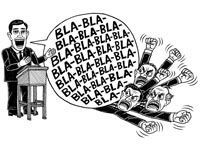
| filibuster | an action such as a prolonged speech that obstructs progress in a legislative assembly while not technically contravening the required procedures |
| cloture | (in a legislative assembly) a procedure for ending a debate and taking a vote. |
| veto | a constitutional right to reject a decision or proposal made by a law-making body. |
| pocket veto | an indirect veto of a legislative bill by the president or a governor by retaining the bill unsigned until it is too late for it to be dealt with during the legislative session. |

Want to create your own Flashcards for free with GoConqr? Learn more.