
6046048


| Question | Answer |
| Applied Psychology | Use of psychological principles and theories to overcome problems in real world |
| Walter Dill Scott | Applied psych began 1903 when Scott first applied to advertising |
| WW1 | Alpha and beta test for army placement. Later adapted for civilian use |
| Hawthorne Effect | Productivity was increased by attention to workers |
| WWII | Psychologist called to improve placements |
| Job Analysis | Determine duties and skills required for a no and kind of person to hire. Develop job description and specification |
| Subject matter experts (SME) | Job incumbent, supervisor, trained job analyst |
| Job analysis methods | 1. Review material 2. Standardize measure 3. Job participation 4. Interview 5. Activity log 6. Observation 7. Survey questionnaires 8. Focus group |
| Job analysis issues | Change over time. Need to be flexible and responsive |
| Selection | Matching their person to the job and then evaluating the effectiveness of the match |
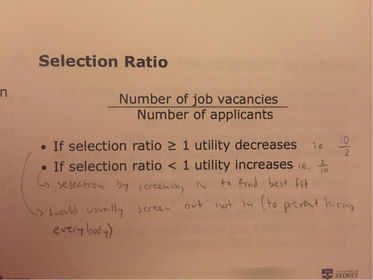
| Selection ratio | Enter text here... |
| Base rate of success | Easiness. Proportion of hires successful |
| Selection process | 1. Employee recruitment 2. Screening 3. Employee selection and placement 4. Validity check |
| Realistic job previews | Part of recruitment. And provides accurate prospective of job |
Want to create your own Flashcards for free with GoConqr? Learn more.