
28456336
Description

Mind Map by Fabián Arias, updated more than 1 year ago

|
Created by Fabián Arias
over 5 years ago
|
|
TEACHING
METHODOLOGIES
FOR EFL
- METHODOLOGY OF THE
ENGLISH TEACHING
- METHOD (Way to
reach a purpose)
- Approach
- Nature of language
- Definition of objectives and
elaboration of program
- Definition of objectives and
elaboration of program
- Nature of language learning
- Reasons to choose
the procedure
- Reasons to choose
the procedure
- Nature of language
- Design
(composed by)
- Syllabus
- Learner roles
- Teacher
roles
- Materials
- Syllabus
- Procedure (techniques
during the process)
- Type of
techniques
- Type of
exercises
- Resources to implement the practice
- Type of
techniques
- Approach
- METHODOLOGY (Way to reach
a goal through a process)
- METHOD (Way to
reach a purpose)
- THEORIES OF
LANGUAGE
ACQUISITION
- LANGUAGE
ACQUISITION
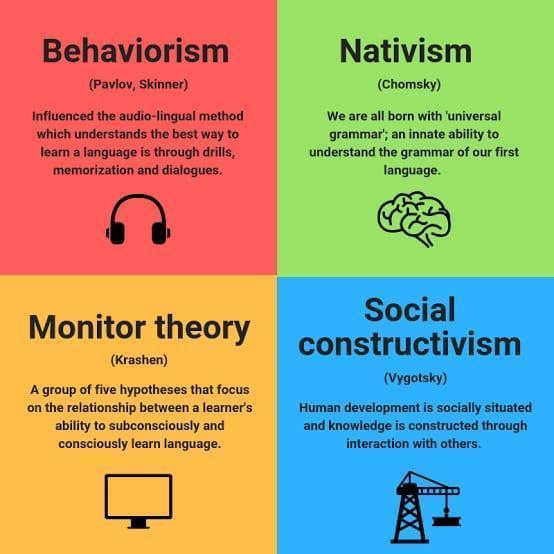
- Cognitive Theories
- Active process of learning:
ability, mental, store knowledge
- Active process of learning:
ability, mental, store knowledge
- Nativist Theories
- Certain modes of perception, abilities
and capacities are biologically given
- Certain modes of perception, abilities
and capacities are biologically given
- Behavioristic Theories
- Operant conditioning to
response generalization
- Operant conditioning to
response generalization
- Cognitive Theories
- ATHEORETICAL
STUDIES
- Learning process of spoken
to written language
- Learning process of spoken
to written language
- LINGUISTICALLY VS LEARNING
- Interested in the description of
child languaje and interested in
applying learning principles
derived from experiments
- Interested in the description of
child languaje and interested in
applying learning principles
derived from experiments
- FOUR CONTROVERSIAL ISSUES
- Frecuency of stimuli
- Omits the most
frecuently words
- Omits the most
frecuently words
- Place of imitation
- Poor imitation by his
short term memory span
- Poor imitation by his
short term memory span
- Role of expansion
- Deliberate expansion of
children’s language by adults
- Deliberate expansion of
children’s language by adults
- Function of meaning
- Semantic difficulty rather
than grammatical complexity
- Semantic difficulty rather
than grammatical complexity
- Frecuency of stimuli
- AN ASSESSMENT
OF THE THEORIES
- Lack of detail and lack
of empirical validation.
- Lack of detail and lack
of empirical validation.
- LANGUAGE
ACQUISITION
- LANGUAGE
ACQUISITION THEORIES
- DEFINITIONS
- Language
- Mean of communication
- Mean of communication
- Learning
- Help to learner performance
- Influence in learners to learn more
- Help to learner performance
- Teaching
- Transmission of knowledge
- Transmission of knowledge
- Language
- FIRST LANGUAGE
- Behavioristic Theory
- Operant conditioning (good or
bad responses for stimulus)
- Operant conditioning (good or
bad responses for stimulus)
- Generative Theory
- Nativist Approach
(Innate language)
- Pre - programmed
since children born
- Pre - programmed
since children born
- Cognitive Approach
- Scientific process of get of
knowleadge into the environment
- Scientific process of get of
knowleadge into the environment
- Nativist Approach
(Innate language)
- Behavioristic Theory
- SECOND LANGUAGE
- Classical Behaviorism Theory
- Stimulus - response
process
- Stimulus - response
process
- Neovehaviorism Theory
- Good or bad activities
done with reinforcement
- Good or bad activities
done with reinforcement
- Cognitive Learning Theory
- Meaningful learning and
at less one rote learning
- Meaningful learning and
at less one rote learning
- Humanistic Psichology Theory
- Based on human beings and
aware to learn on their own way
- Based on human beings and
aware to learn on their own way
- Classical Behaviorism Theory
- DEFINITIONS
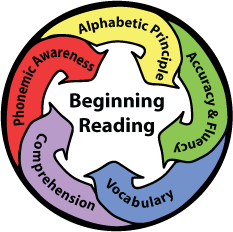
- LANGUAGE
ACQUISITION AND
BEGINNING READING
- AFTER AGE SIX
- Significant language development
begings at 6 years with the school
- Significant language development
begings at 6 years with the school
- DIFFERECES BETWEEN LANGUAGE
ACQUISITION AND BEGINNING READING
- * Language is gradualy acquired while
learning to read has a sudden onset
- * Anxiety to read with but no for speach
- * Reading is formal and language informal
- * Reading depends on special skills
- * Abstraction to write
- * Four controvertial issues are
important to write but no for
language
- * Language is gradualy acquired while
learning to read has a sudden onset
- AFTER AGE SIX
Media attachments



Want to create your own Mind Maps for free with GoConqr? Learn more.