
31071184
Description

Mind Map by María Alejandra Lainfiesta Wahl, updated more than 1 year ago

|
Created by María Alejandra Lainfiesta Wahl
over 4 years ago
|
|
Cell structure and function
- The Cell Theory
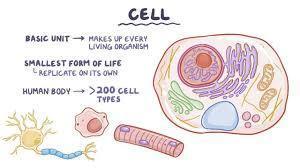
- In biology, cell theory is the historic scientific theory, now
universally accepted, that living organisms are made up of cells,
that they are the basic structural/organizational unit of all
organisms, and that all cells come from pre-existing cells.
- Three principles
- First, that DNA is passed between cells during cell
division; second, that the cells of all organisms within
a similar species are mostly the same, both
structurally and chemically; and finally, that energy
flow occurs within.
- First, that DNA is passed between cells during cell
division; second, that the cells of all organisms within
a similar species are mostly the same, both
structurally and chemically; and finally, that energy
flow occurs within.
- In biology, cell theory is the historic scientific theory, now
universally accepted, that living organisms are made up of cells,
that they are the basic structural/organizational unit of all
organisms, and that all cells come from pre-existing cells.
- The plasma membrane, or the cell membrane,
provides protection for a cell. It also provides
a fixed environment inside the cell. And that
membrane has several different functions.
One is to transport nutrients into the cell and
also to transport toxic substances out of the
cell.
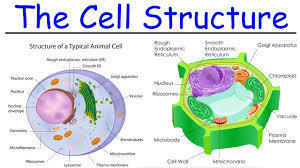
- All cells have cell membranes, organelles, cytoplasm,
and DNA. But there are two basic types of cells. Cells
without a nucleus are prokaryotic cells.
- A eukaryotic cell contains membrane-bound organelles
such as a nucleus, mitochondria, and an endoplasmic
reticulum. Organisms based on the eukaryotic cell
include protozoa, fungi, plants, and animals. These
organisms are grouped into the biological domain
Eukaryota.
- Prokaryotes are unicellular organisms that lack organelles or other
internal membrane-bound structures. Therefore, they do not have a
nucleus, but, instead, generally have a single chromosome: a piece of
circular, double-stranded DNA located in an area of the cell called the
nucleoid.
- Cells provide six main functions. They provide
structure and support, facilitate growth through
mitosis, allow passive and active transport, produce
energy, create metabolic reactions and aid in
reproduction.
Media attachments
Want to create your own Mind Maps for free with GoConqr? Learn more.