
3140187
Description

Mind Map by David Hernandez, updated more than 1 year ago
|
|
Created by David Hernandez
over 10 years ago
|
|
SAB7#021
Develop
Project Charter
- Agreements
- Agreements are used to define initial intentions for a
project. Agreements may take the form of contracts,
memorandums of understanding (MOUs), service level
agreements (SLA), letter of agreements, letters of intent,
verbal agreements, email, or other written agreements.
- Agreements are used to define initial intentions for a
project. Agreements may take the form of contracts,
memorandums of understanding (MOUs), service level
agreements (SLA), letter of agreements, letters of intent,
verbal agreements, email, or other written agreements.
- Business Case
- The business case describes the necessary
information from a business standpoint to
determine whether or not the project is
worth the required investment.
- The business case describes the necessary
information from a business standpoint to
determine whether or not the project is
worth the required investment.
- OPA's
- Organizational Process Assets are organizational
standard processes, policies, and process
definitions, templates and historical information
and lessons learned knowledge base
- Organizational Process Assets are organizational
standard processes, policies, and process
definitions, templates and historical information
and lessons learned knowledge base
- EEF's
- Enterprise Environmental Factors are government
standards, industry standards, regulations, organizational
culture and structure and Marketplace conditions.
- Enterprise Environmental Factors are government
standards, industry standards, regulations, organizational
culture and structure and Marketplace conditions.
- Project Charter
Annotations:
- •Project purpose or justification, • Objectives and related success criteria, • High-level requirements, • Assumptions and constraints, • High-level project description and boundaries, • High-level risks, • Summary milestone schedule, • Summary budget, • Stakeholder list, • Project approval requirements • Assigned project manager, responsibility, and authority level, and • Name and authority of the sponsor or other person(s) authorizing the project charter.
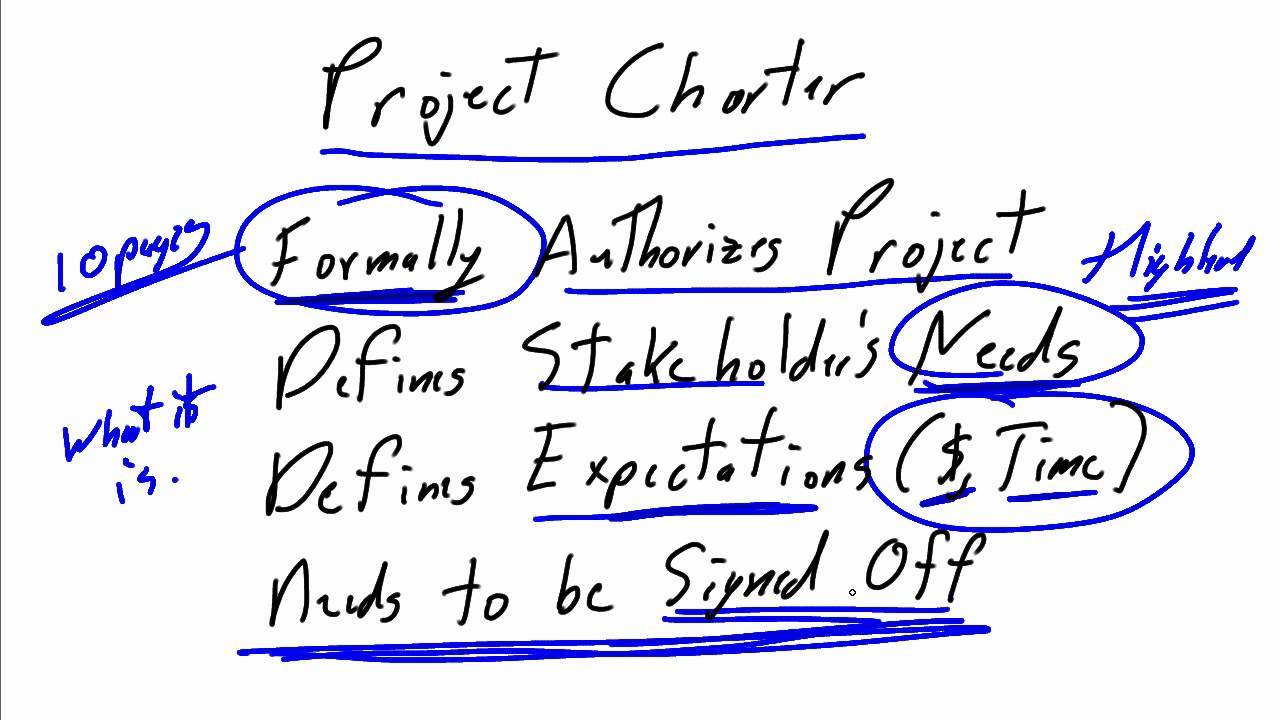
- It authorizes the existence
of a project and provides the
project manager with the authority .
It documents the business needs,
assumptions, constraints, the
understanding of the customer’s
needs and high-level requirements,
and the new product, service, or
result that it is intended to satisfy
- Assumption Log
Media attachments

Want to create your own Mind Maps for free with GoConqr? Learn more.