
32965074
Description

Mind Map by NATIVIDAD CORDOVA ROSAS, updated more than 1 year ago

|
Created by NATIVIDAD CORDOVA ROSAS
over 4 years ago
|
|
Planning, implementation
and evaluation
- Whatever the syllabus
that is chosen, it has to
take into account the
needs of the learners and
their particular learning
context
- Policy
- The first stage (policy making)
attempts to provide a general
statement of curriculum
philosophy and may be
preceded by some kind of
fact-finding stage
- National curriculum policies tend to
be enshrined in official reports and
policy statements
- Absence of a concrete statement
about policy does not indicate that
goals are totally missing. Dubin and
Olshtain (1986)
- Curriculum policy of private language
schools is inferable from their publicity
- The first stage (policy making)
attempts to provide a general
statement of curriculum
philosophy and may be
preceded by some kind of
fact-finding stage
- Needs analysis
- The selection and ordering of items in
a communicative syllabus would
benefit from knowing what the learner
needed to do with the language
- There are at least two ways of
interpreting the idea of needs.
Brindley (1989)
- The first is based on what could be
termed the "narrow" or "product
oriented" interpretation of needs
- Seen solely in terms of the language
learners will have to use in a
particular communicative situation
- Seen solely in terms of the language
learners will have to use in a
particular communicative situation
- The second interpretation of needs
known as the "broad" or "processed
oriented
- Sees needs primarily in terms of
the needs of the learner as an
individual in the learning situation
- Sees needs primarily in terms of
the needs of the learner as an
individual in the learning situation
- The first is based on what could be
termed the "narrow" or "product
oriented" interpretation of needs
- Distinction is also phrased
as a difference between
objective and subjective
needs
- Objective needs can be assessed
by finding out facts about what
language the students use or
will use in their particular
language-using contexts
- Subjective needs are
derived from finding out
the student´s opinions,
attitudes and learning style
- Objective needs can be assessed
by finding out facts about what
language the students use or
will use in their particular
language-using contexts
- TENOR (Teaching English for
No Obvious Reason) to
identify learner´s
motivational, attitudinal and
cognitive needs
- It is in ESP (English for Special
Purposes) and EAP (English for
Academic Purposes) courses that
the need for needs analysis is
particularly acute
- Questions to discover learner´s special purposes are:
- Who is the learner? Information
regarding learner´s age, sex, nationality,
mother tongue, etc.
- Purpose and domain: What is
the reason for needing English?
- In what kind of settings?
Academic, formal or informal
- With what kind of people?
Co-equals, superiors, strangers
- By what means? Written or spoken?
- For what
communicative
skills and functions
does the learner
need English?
Socialising,
negotiating
- To what degree of
proficiency?
Elementary, fluent,
native speaker
- Who is the learner? Information
regarding learner´s age, sex, nationality,
mother tongue, etc.
- Questions to discover learner´s special purposes are:
- A curriculum that aims to
take into account learner´s
needs, narrow and broad, will
need to provide opportunities
for both consultation and
negotiation
- The selection and ordering of items in
a communicative syllabus would
benefit from knowing what the learner
needed to do with the language
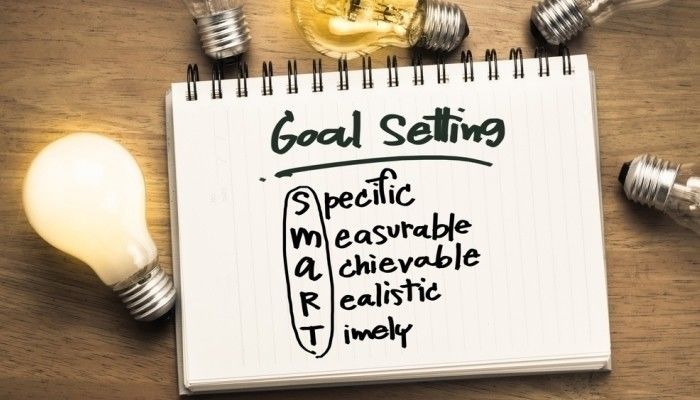
- Goal
Setting
- General
statements of the
intended
outcomes of the
programme
- The goals may be derived
from educational,
philosophical and
political beliefs and are
an extension of the
general policy motivating
the curriculum reform
- Goal
statements
tend to be
very broad and
general
- They can
be more
concrete
in the
form of
objectives
- Objectives are typically stated
in terms of either knowledge,
or
behaviours/skill/competencies
- Objectives are typically stated
in terms of either knowledge,
or
behaviours/skill/competencies
- Qualities of objectives
that specify
behavioural outcomes
(sometimes called
performance
objective) Richards
(1990)
- They must:
- Unambiguously
describe the
behaviour to be
performed
- Describe the
conditions
under which the
performance
will be expected
to occur
- State a standard of
acceptable
performance
- Unambiguously
describe the
behaviour to be
performed
- They must:
- Skill-based
objectives
- Statements of ability
in a particular
language skill, but
without reference to
specific situations of
tasks
- Coursebooks often
provide a statement
of objectives framed
in terms of a standard
of proficiency to be
reached over a given
time period
- Statements of ability
in a particular
language skill, but
without reference to
specific situations of
tasks
- General
statements of the
intended
outcomes of the
programme
- Materials choice
and design
- In some situations
teachers design
schemes of work
based on the
coursebook, or
whatever other
materials are
available
- In the case there are not
published materials,
teachers may base
instruction around
materials they produce
themselves
- The decision as to which
coursebook to use may
be made by the policy
makers, administrators,
or teachers
- Coursebooks
are chosen
according to
their degree of
fit with
curriculum
goals and
objectives
- Criteria for
coursebook choice:
Sheldon (1988)
- Rationale
- User definition
- Layout/Graphics
- Accessibility
- Selection/Grading
- Appropriacy
- Sufficiency
- Cultural bias
- Educational validity
- Flexibility
- Guidance
- Rationale
- Criteria for
coursebook choice:
Sheldon (1988)
- Coursebooks
are chosen
according to
their degree of
fit with
curriculum
goals and
objectives
- Not all materials used in
classrooms come from
published ELT sources
- Teachers commonly use
authentic materials and
also write their own
material
- Dubin and Olshtain´s advice to teachers
involved in a joint materials writing
project:
- Conceptualization
- Objectives
- Congruence
- Internal format
- Sequencing/Grading
- Ancillary
- Evaluation
- Conceptualization
- Dubin and Olshtain´s advice to teachers
involved in a joint materials writing
project:
- Teachers commonly use
authentic materials and
also write their own
material
- In some situations
teachers design
schemes of work
based on the
coursebook, or
whatever other
materials are
available
- Methodology
- One of the most important issues in
curricular innovation is its effect on
classroom practice, that is on
Methodology
- Methodology can be characterized
as the activities, tasks and learning
experience selected by the teacher
in order to achieve learning, and
how these are used within the
teaching/learning process
- Methodology refers to what
the teacher does in class
- One of the most important issues in
curricular innovation is its effect on
classroom practice, that is on
Methodology
- Managing curriculum
innovation
- Curriculum innovation is:
- A change of syllabus, or of coursebook, or
the introduction of different timetables of
new technology
- A change of syllabus, or of coursebook, or
the introduction of different timetables of
new technology
- Stages in implementing a
curriculum change. White
(1988) quotes Trump´s (1967)
model for a five step sequence:
- Analyse co-operatively
reasons for present
practices
- Discover what people want
that is different from what
they are doing
- Make tentative decisions
about the priority of proposed
changes
- Plan the innovation carefully in
terms of teacher preparation,
procedures to be followed and
the anticipated effects of the
innovation
- Determine the time and
techniques for evaluation
- Analyse co-operatively
reasons for present
practices
- Curriculum innovation is:
- Evaluation
- It is a wider
concept than
simply testing
- Sharp (1990) points out: Tests may
provide diagnostic evidence about
student´s work, but evaluation is
meant to provide a basis for future
decisions about course planning and
implementation
- Evaluation of the
curriculum is
usually thought
of as involving
two types:
- On-going (or formative)
- Brown (1989) argues that: the on-going program
evaluation is the glue that connects and holds
all of the elements together
- At each stage of Brown´s evaluation
process, the following questions need to be
asked:
- How effective is this
stage of the
curriculum?
- How efficient is this
stage of the
curriculum?
- What are attitudes like?
- How effective is this
stage of the
curriculum?
- At each stage of Brown´s evaluation
process, the following questions need to be
asked:
- Brown (1989) argues that: the on-going program
evaluation is the glue that connects and holds
all of the elements together
- Final (or summative)
- On-going (or formative)
- Product-based evaluation aims to
decide whether the goals of the
programme have been attained
- It is felt that
intrinsically-motivated evaluation
is more effective, since those who
are responsible for making the
curriculum work are directly
involved
- One advantage of this kind of evaluation as
MacKay (1996) points out is that the information:
- Can be presented in an appropriate and
summarized form to meet the interests
and concerns of the bureaucracy.
- Can be presented in an appropriate and
summarized form to meet the interests
and concerns of the bureaucracy.
- One advantage of this kind of evaluation as
MacKay (1996) points out is that the information:
- It is a wider
concept than
simply testing
- Conclusion
- The best laid plans of curriculum designers can
be subverted by teachers and students once
the classroom door is closed and the lesson is
underway.
- The best laid plans of curriculum designers can
be subverted by teachers and students once
the classroom door is closed and the lesson is
underway.
Media attachments




























Want to create your own Mind Maps for free with GoConqr? Learn more.