
36350999
Description

Mind Map by Jennifer Iglesias, updated more than 1 year ago

|
Created by Jennifer Iglesias
over 3 years ago
|
|
Current Communicative Approaches
- 1) Cooperative Language
Learning
- Quantitative research is ‘Explaining phenomena by
collecting numerical data that are analysed using
mathematically based methods (in particular statistics).
- It addresses language teaching as an integral
part of education, highlighting that language
teachers, like other educators, must create a
positive classroom environment.
- Highlights
- 1) The importance of
involving students - 2) Encourage active
participation - 3) Recognize the diversity
of motivations and interests - 4) Employ
strategies that promote group
collaboration
- 1) The importance of
involving students - 2) Encourage active
participation - 3) Recognize the diversity
of motivations and interests - 4) Employ
strategies that promote group
collaboration
- Highlights
- The CLL seeks to raise the achievement of all students, build
positive relationships among them, provide experiences for
their social, psychological and cognitive development, and
replace competitive classroom structures with a team-based
approach.
- Its objective
- The success of CLL depends on key
elements, such as positive
interdependence, group formation,
individual responsibility, social skills, and
structuring of activities.
- The success of CLL depends on key
elements, such as positive
interdependence, group formation,
individual responsibility, social skills, and
structuring of activities.
- Its objective
- Its meaning and uses
- Cooperative Learning is defined as an
organized group activity, where
learning depends on the socially
structured exchange of information
between students, and each student
is responsible for their own learning,
motivated to improve the learning of
others.
- In language teaching, CLL is adopted to
encourage communicative interaction
in the classroom and is seen as an
extension of the principles of the
Communicative Approach in language
teaching.
- It facilitates the natural
acquisition of the second
language, provides teachers with
a flexible, student-centered
methodology applicable in
various contexts, and improves
student motivation and creates a
positive affective environment in
the classroom.
- Cooperative Learning is defined as an
organized group activity, where
learning depends on the socially
structured exchange of information
between students, and each student
is responsible for their own learning,
motivated to improve the learning of
others.
- It addresses language teaching as an integral
part of education, highlighting that language
teachers, like other educators, must create a
positive classroom environment.
- Quantitative research is ‘Explaining phenomena by
collecting numerical data that are analysed using
mathematically based methods (in particular statistics).
- 2) Content-Based
Instruction
- It is focused on project-based work, taking a
holistic approach to language teaching, will
help us to reinforce skills and knowledge.
- To achieve a successful result it is necessary that there is a selective
approach in the contents of the disciplines, it is also necessary that the
learner practices and has at his disposal sufficient sources of
information.
- Techniques to achieve it
- Grammar is important but it is only the
mechanism by which people
communicate by expressing what they
want to say and what they can
understand in oral or written form.
- The student: Participate actively to approach the new
language, master the 4 skills, practice with topics of
interest that motivate him/her to express him/herself.
- The teacher: Define clear objectives and make sure they are appropriate
for the student, adapt the contents to the academic-linguistic needs
through the use of complementary material.
- Grammar is important but it is only the
mechanism by which people
communicate by expressing what they
want to say and what they can
understand in oral or written form.
- It is focused on project-based work, taking a
holistic approach to language teaching, will
help us to reinforce skills and knowledge.
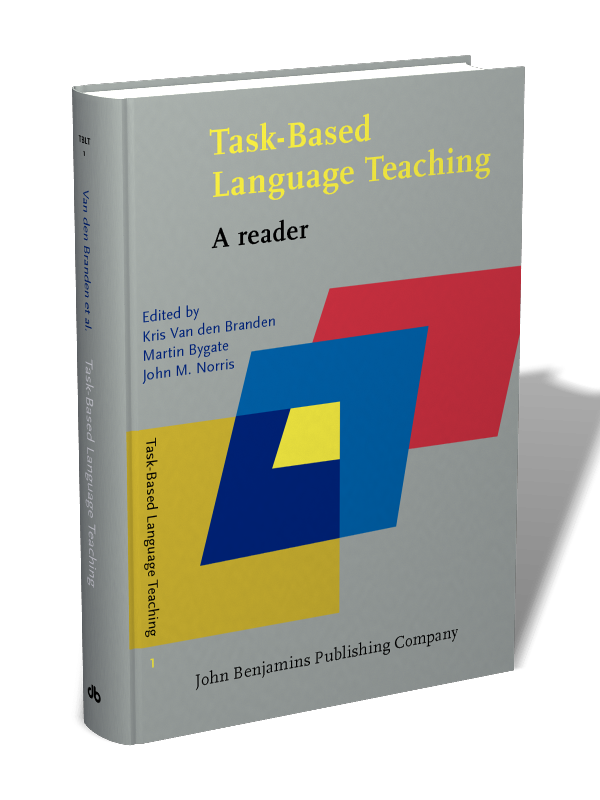
- 3) Task-Based Language Teaching
- This approach is based on the idea of providing students
with functional tasks that invite them to focus primarily on
the exchange of meanings and to use language for
real-world purposes.
- Unlike the
Presentation-Practice-Production (PPP)
approach, where a preselected element is
practiced, in TBLT students use all their
linguistic resources at all stages, and
varied exposure to language is
emphasized.
- Approach
- Features and benefits of TBLT are
highlighted, such as its focus on
process over product, attention to
activities and tasks with emphasis on
communication and meaning, and
sequencing of tasks based on
difficulty.
- Characteristics
- TBLT is characterized as an approach rather than a method
and can be linked to other approaches and methods.
- Early applications of the approach in language teaching are mentioned, and
it is argued that TBLT may be more effective than traditional approaches.
- Early applications of the approach in language teaching are mentioned, and
it is argued that TBLT may be more effective than traditional approaches.
- TBLT is characterized as an approach rather than a method
and can be linked to other approaches and methods.
- Summary
- The text presents the fundamental principles,
characteristics and applications of the TBLT approach in
language teaching, highlighting its focus on meaningful
tasks to promote language learning.
- The text presents the fundamental principles,
characteristics and applications of the TBLT approach in
language teaching, highlighting its focus on meaningful
tasks to promote language learning.
- Characteristics
- Features and benefits of TBLT are
highlighted, such as its focus on
process over product, attention to
activities and tasks with emphasis on
communication and meaning, and
sequencing of tasks based on
difficulty.
- Mentions the definition of task in the context
of TBLT, highlighting that a task is an activity
that a person performs to achieve a goal and
that involves the use of language. Additionally,
the benefits and practical application of TBLT
in various educational contexts are discussed,
supported by studies and testimonials.
- Unlike the
Presentation-Practice-Production (PPP)
approach, where a preselected element is
practiced, in TBLT students use all their
linguistic resources at all stages, and
varied exposure to language is
emphasized.
- This approach is based on the idea of providing students
with functional tasks that invite them to focus primarily on
the exchange of meanings and to use language for
real-world purposes.
- 4) The
post-methods era.
- Non-quantitative phenomena can be converted into
quantitative data through our measurement instruments.
- The teacher is at the center of learning and teaching the language, is autonomous,
analytical, strategic researcher and decision maker, they will evaluate the results,
identify problems, find solutions and come up with new techniques.
- It has three pedagogical parameters that differentiate it from the
concept of method: particularity, practicality, and possibility.
- This method must be socially, culturally, and politically
appropriate, as it recognizes teachers' prior knowledge as well
as their potential to know how to act autonomously within
imposed academic and administrative constraints.
- It is necessary:
- Check that the learning style is
appropriate.
- That there is a collaborative environment among all
participants promoting communicative interaction.
- There must be a development of autonomy.
- Check that the learning style is
appropriate.
- Non-quantitative phenomena can be converted into
quantitative data through our measurement instruments.
Media attachments











Want to create your own Mind Maps for free with GoConqr? Learn more.