
37489742
Description

Mind Map by Alejandra Lizeth Toledo Claros, updated more than 1 year ago

|
Created by Alejandra Lizeth Toledo Claros
about 4 years ago
|
|
FOREIGN LANGUAGE
ACQUISITION AND LEARNING
- Course description: Particularities and
characteristics
- Methodological course
(theoretical practical)
- Is part of the path of the practical component of
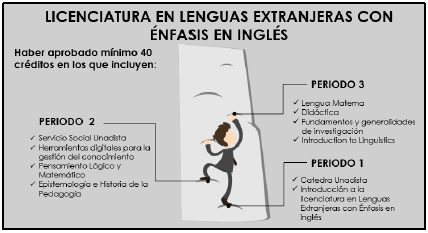
Licenciatura en Lenguas Extranjeras con Énfasis
en Inglés in its phase of Participant observation
- Methodological course
(theoretical practical)
- Number of phases the course has
and what you need to do in each
phase.
- The Learning Strategy is
organized in 5 Phases
- Phase 5: Final Activity
- Set up a proposal related to the new assessment
approaches in the classroom environment.
- Set up a proposal related to the new assessment
approaches in the classroom environment.
- Phase 2: Participant -
Observation Practice
- Examine the factors that influence the process
of foreign language acquisition and learning
- Examine the factors that influence the process
of foreign language acquisition and learning
- Phase 3: Participant
- Observation
Practice
- Compare the main theories on foreign
language acquisition within the context
of the pedagogical practice scenario.
- Compare the main theories on foreign
language acquisition within the context
of the pedagogical practice scenario.
- Phase 4: Participant -
Observation Practice
- Evaluate teaching strategies used within the classroom
based on the student's learning characteristics.
- Evaluate teaching strategies used within the classroom
based on the student's learning characteristics.
- Phase 1:
Recognition
Activity
- Record a video where you make a brief
introduction of the course, and you give the main
information about the pedagogical practice.
- Record a video where you make a brief
introduction of the course, and you give the main
information about the pedagogical practice.
- Phase 5: Final Activity
- The Learning Strategy is
organized in 5 Phases
- Identify the main Information of Lineamientos para
el desarrollo de la Practica Pedagógica y Educativa
- Normative
referents
- Principles of
action
- 1. Integrality of teaching
pedagogical practice.
- 2. Dialogue between
educational actors.
- 3. Promotion of protective environments
for children and adolescents.
- 4. Respect for differences.
- 5. Excellence in service.
- 1. Integrality of teaching
pedagogical practice.
- Bachelor's Degree Programs in ECEDU
- Definitions
- Practical
component
- It is part of the curricular construction of the
programs of the Higher Education System and
Education for Work and Human Development.
- It is part of the curricular construction of the
programs of the Higher Education System and
Education for Work and Human Development.
- Pedagogical and
Educational Practice -
PPE
- It is a curricular space of integral training foreseen for the
staging of the competences developed by the future
teacher in his formative process as an education
professional.
- It is a curricular space of integral training foreseen for the
staging of the competences developed by the future
teacher in his formative process as an education
professional.
- Specific Regulation of Pedagogical
and Educational Practices - PPE
- Specific Regulation of Pedagogical and Educational Practices - PPESet of rules
and guidelines stipulated by each school or program, which regulate and
define the conditions and activities necessary for the exercise of the practical
component in the different scenarios established for its development.
- Nature and offer of the
courses of the practical
component
- The training route of Pedagogical and Educational Practice
-PPE of the degrees in the School of Education Sciences are
made up of practical courses and methodological courses.
- Methodological course.
Emphasizes the theory-practice
relationship
- Practical courses. Emphasizes
knowing how to act through situated
learning
- Methodological course.
Emphasizes the theory-practice
relationship
- The training route of Pedagogical and Educational Practice
-PPE of the degrees in the School of Education Sciences are
made up of practical courses and methodological courses.
- Teacher in
training
- Person who formally enrolled in an academic program of the UNAD
advances, in a procedural and planned way, academic and training activities
with the purpose of acquiring the competences, quality standards and
learning results of the exercise and the teaching profession.
- Person who formally enrolled in an academic program of the UNAD
advances, in a procedural and planned way, academic and training activities
with the purpose of acquiring the competences, quality standards and
learning results of the exercise and the teaching profession.
- Practical
component
- Pedagogical and Educational Practice
Route
- It is the curricular route in which courses of the practical
component of the bachelor's degrees are addressed from the
practice of participant observation, intervention and research.
- It is the curricular route in which courses of the practical
component of the bachelor's degrees are addressed from the
practice of participant observation, intervention and research.
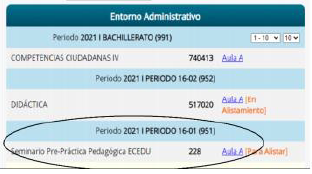
- Pre-Practice Seminar
- It is developed in the period prior to the beginning of the practice
and is mandatory, in it the administrative enlistment of the
pedagogical practice is generated and the registration of the
courses of the practical route is authorized, once the exercise of
scenario assignment and administrative enlistment is exhausted.
- The Pre-Practical Seminar has no credits, is
not a degree requirement and has no cost.
- The practice scenario is assigned as follows:
- The undergraduate student must be aware of the opening of
registration for the Pre-Practice Seminar in the period prior to the start
of their first courses of the pedagogical and educational practice route
- The Undergraduate Student must register for the
Pre-Practical Seminar through the link that appears in the
communiqués, once the registration dates are established.
- Once your data has been registered in the registration form,
it will be reflected in the student's campus from the
following 48 hours of having made the registration
- the student must enter the seminar, review the participation video
tutorial, locate the space determined for their bachelor's degree, and
participate in the forum corresponding to their program.
- the student must enter the seminar, review the participation video
tutorial, locate the space determined for their bachelor's degree, and
participate in the forum corresponding to their program.
- On your enrollment and participation as a bachelor's degree
student, the assignment of practice scenario depends.
- The undergraduate student must be aware of the opening of
registration for the Pre-Practice Seminar in the period prior to the start
of their first courses of the pedagogical and educational practice route
- It is developed in the period prior to the beginning of the practice
and is mandatory, in it the administrative enlistment of the
pedagogical practice is generated and the registration of the
courses of the practical route is authorized, once the exercise of
scenario assignment and administrative enlistment is exhausted.
- ESAPEC
- To respond to the quality criteria required by pedagogical and
educational practice, the ECEDU defines the "Strategy of face-to-face
accompaniment of the School of Education Sciences ESAPEC"
- Strategy that is applied to the courses of the practical component
with practice of participant observation and immersion.
- Synchronous accompaniments to groups of student
practitioners, in interaction of the teachers the teachers of
accompaniment of practice of the ECEDU of each course
- To respond to the quality criteria required by pedagogical and
educational practice, the ECEDU defines the "Strategy of face-to-face
accompaniment of the School of Education Sciences ESAPEC"
- Simulator
- It is an academic tool that allows the students of the Bachelor's Degrees, to propose
and carry out simulated pedagogical and didactic practices, leveraged in problem
situations, to strengthen competences of the training of graduates, which they can
then apply in their field practices in the different learning environments.
- Normative
referents
- Learning outcomes and how they
are related to each phase of the
course.
- 1. Review the characteristics of the course
and the particularities of the pedagogical
and educational practice process.
- 2. Examine the factors that influence the process of
foreign language acquisition and learning methodically
and in detail within the pedagogical practice scenarios.
- 3. Compare the main theories on foreign language acquisition
within the context of the pedagogical practice scenario
- 4. Evaluate teaching strategies used within the classroom
based on the student's learning characteristics.
- 5. Set up a proposal related to the new assessment
approaches in the classroom environment.
- 1. Review the characteristics of the course
and the particularities of the pedagogical
and educational practice process.
- Number of units the course has.
- The course has two
units
- Unit 1: Foreign Language
Acquisition, from the theory to the
practice.
- Unit 2: Learning trends
in Foreign Language
- Unit 1: Foreign Language
Acquisition, from the theory to the
practice.
- The course has two
units
- Identify each chapter of Acuerdo reglamento de Practicas
Pedagógicas y Educativas and the articles it has.
- CHAPTER I - DEFINITION AND PURPOSE
- CHAPTER II - GENERALITIES AND DEFINITIONS
- CHAPTER III - CURRICULAR ASPECTS OF THE FORMATIVE
ROUTE OF PEDAGOGICAL AND EDUCATIONAL PRACTICE
- CHAPTER IV - PRINCIPLES OF ACTION OF THE TEACHER IN
TRAINING IN PEDAGOGICAL AND EDUCATIONAL PRACTICE
- CHAPTER V - DEFINITIONS OF THE ACADEMIC NETWORK
OF PEDAGOGICAL AND EDUCATIONAL PRACTICES
- CHAPTER VI - PRE-PRACTICE SEMINAR
- CHAPTER VII - MONITORING AND EVALUATION
OF PEDAGOGICAL AND EDUCATIONAL PRACTICE
- CHAPTER VIII - DUTIES AND RIGHTS OF TEACHERS IN
TRAINING OF BACHELOR'S DEGREES IN THE DEVELOPMENT
OF THEIR PEDAGOGICAL AND EDUCATIONAL PRACTICE
- CHAPTER IX - CERTIFICATION OF PEDAGOGICAL
AND EDUCATIONAL PRACTICE
- CHAPTER I - DEFINITION AND PURPOSE
Media attachments
Want to create your own Mind Maps for free with GoConqr? Learn more.