
38604044
Description

Mind Map by yanine reyes, updated more than 1 year ago

|
Created by yanine reyes
almost 3 years ago
|
|
GRAMMATICALCONSTRUCTION
1
- pronouns
- word used as an alternative
to a noun
- refers to a person or
thing
- comes from the Latin
pronomen
- means instead of
name
- means instead of
name
- Pronouns have another characteristic — gender.
Masculine pronouns
- (he, him, himself) take the place of
masculine nouns
- (he, him, himself) take the place of
masculine nouns
- and feminine pronouns (she, her, herself) fill
in for feminine
- word used as an alternative
to a noun
- activity 1:pronouns in
padlet
- pronouns
personlal
- The pronoun has the same
meaning as a noun.
- The pronoun takes the
place of the noun.
- subject pronouns
:
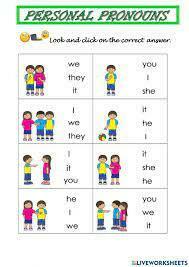
- I-You-He/She-it-We-You-They
- I-You-He/She-it-We-You-They
- objectpronouns
- Me-You-Her-Him-it-Us-Them
- Me-You-Her-Him-it-Us-Them
- The pronoun has the same
meaning as a noun.
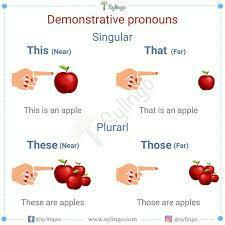
- demostrative pronouns
- They are used to indicate specific people or things, indicating the
one to which it refers and distinguishing it from others of the
same class.
- This-Este/a (cerca)
- That-Ese/a, Aquel/lla (lejos)
- These- Esto/as (cerca)
- Those-Esos/as, Aquellos/as (lejos)
- Those-Esos/as, Aquellos/as (lejos)
- These- Esto/as (cerca)
- That-Ese/a, Aquel/lla (lejos)
- This-Este/a (cerca)
- They are used to indicate specific people or things, indicating the
one to which it refers and distinguishing it from others of the
same class.
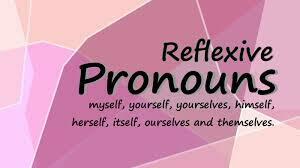
- Reflexivos
pronouns
- reflexive pronouns are those that can
function as subjects
- subjective
- I-
They-She-You-We
- I-
They-She-You-We
- Objects
- Myself-Themselves-She
herself-Yourself-Ourselves
- Myself-Themselves-She
herself-Yourself-Ourselves
- subjective
- reflexive pronouns are those that can
function as subjects
- pronouns
personlal
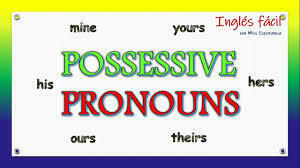
- pronouns possessive
- replace nouns when possessive pronouns are
used
- show ownership of a person, place, or
thing
- Its function is to indicate
belonging
- replace
nouns
- Mine- Yours- His- Hers-
Its-ours-Yours-Theirs
- replace nouns when possessive pronouns are
used
- Undefined
“it”
- We use it to talk about the
day/month/year/date/time and weather.
- example: ¿ what time is
it?
- it's 6:00
- it's 6:00
- example: ¿ what time is
it?
- We use it to talk about the
day/month/year/date/time and weather.
- Using
“the”
- when talking about
something specific
- example: definite. El, La,
LoLos,Las,
- example: definite. El, La,
LoLos,Las,
- when talking about something
in general
- example: undefined a, an
- example: undefined a, an
- when talking about
something specific
- Activity 2: my favorite day and
place
- Exercise 1
- time prepositions
- they say when things are
happening
- Allows you to discuss a specific
period of time
- Allows you to discuss a specific
period of time
- we use: "at" for a precise
time
- means
En
- example: we have a class
at three
- example: we have a class
at three
- means
En
- "in" is used for months, years, centuries, and long
periods
- example: my birthday is in
October
- example: my birthday is in
October
- "on" for days and
dates
- example: i have class on
Monday
- example: i have class on
Monday
- they say when things are
happening
- time prepositions
- Exercise
2
- preposition of location
- indicates where
things are
- example:
- behind the computer there
are cables
- Under the keyboard there
is a note
- Above the armchair there is
a picture
- Next to the monitor there is
a horn
- behind the computer there
are cables
- example:
- indicates where
things are
- preposition of location
- Exercise 1
- Activity 3: superheroes
- sentences using comparatives and superlatives
about the superheroes
- comparative
- when comparing two people two
things
- example of comparative
sentences
- two
syllables
- If the adjective ends in Y, it is changed
to ier or er
- If the adjective ends in Y, it is changed
to ier or er
- a
syllable
- the suffix er is added in
most cases
- if the adjective ends in e, just
add an r
- the suffix er is added in
most cases
- two
syllables
- example of comparative
sentences
- when comparing two people two
things
- superlative
- The superlative (the-est/the most) will compare three or more
people as well as three or more things.
- Example: My hand has five fingers, I have a big finger and a short one.
- Example: My hand has five fingers, I have a big finger and a short one.
- The superlative (the-est/the most) will compare three or more
people as well as three or more things.
- The same rules apply in the use of the superlative as with the
comparative, when the adjective has one syllable.
- If the adjective has two or more syllables, "the most" should be
used before the adjective.
- comparative
- sentences using comparatives and superlatives
about the superheroes
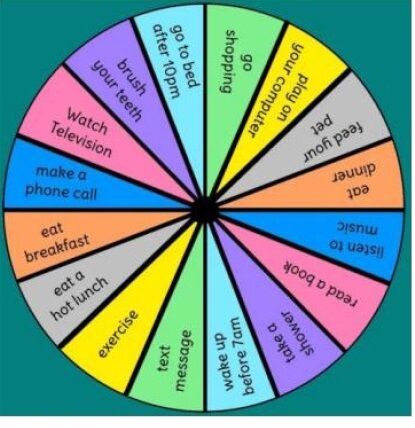
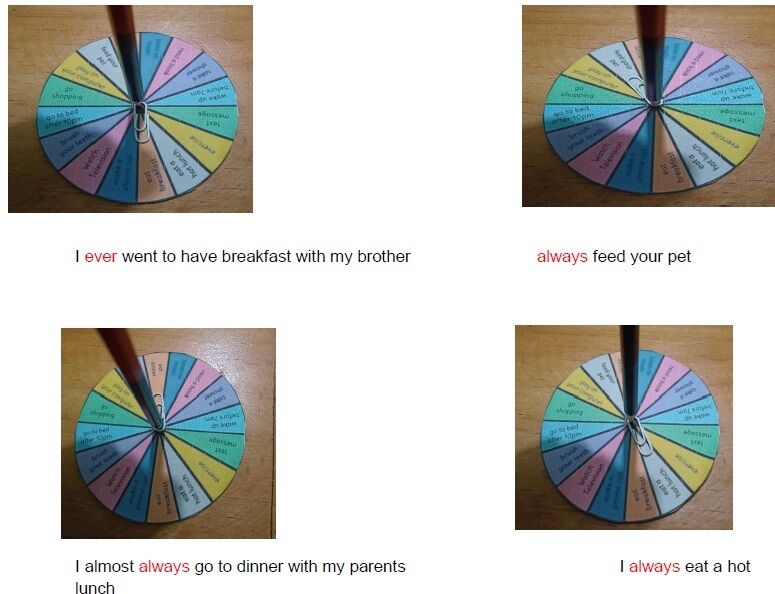
- Activity 4: spin and
speak
- frequency
adverbs
- Always, usually, often, sometimes, seldom, rarely and never are
called "frequency adverbs
- Adverbs of frequency go before the main verb but
after the verb "to be"
- when we use the verb to be with an adverb of frequency, the verb "to be" will come
first
- there is an exception to this rule and serious "sometimes" This is
the only one that can go in front, in the middle or at the end of a
sentence.
- there is an exception to this rule and serious "sometimes" This is
the only one that can go in front, in the middle or at the end of a
sentence.
- when we use the verb to be with an adverb of frequency, the verb "to be" will come
first
- Adverbs of frequency go before the main verb but
after the verb "to be"
- Always, usually, often, sometimes, seldom, rarely and never are
called "frequency adverbs
- frequency
adverbs
Media attachments


Want to create your own Mind Maps for free with GoConqr? Learn more.