
4485775
Description

Mind Map by Arely Becerril, updated more than 1 year ago

|
Created by Arely Becerril
almost 10 years ago
|
|
Study techniques
- Mnemonic techniques
- Concept
- Are used for information that needs to be
memorized, but not necessarily understood. A
general rule for any type of mnemonic device is that
it must be simple, clear and vivid. We tend to
remember the unusual, the funny, or the personal.
- Are used for information that needs to be
memorized, but not necessarily understood. A
general rule for any type of mnemonic device is that
it must be simple, clear and vivid. We tend to
remember the unusual, the funny, or the personal.
- Tips
- Visual Association
- Association involves linking two ideas. When
you are memorizing lists of words, you can
link words by using images.
- Association involves linking two ideas. When
you are memorizing lists of words, you can
link words by using images.
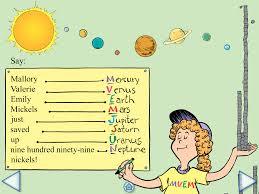
- Acronyms and Acrostics
- Use acronyms to help you
remember lists of words. The first
letter from each word in a list
forms a key word, name, or
sentence.
- One example is in
music, "every good
boy does fine" are the
lines on the treble clef
(EGBDF). FACE stands
for the spaces on the
treble clef. Acronyms
are now part of our
language. Consider
IBM, AT&T, CIA, MGM,
USU, and FBI.
- One example is in
music, "every good
boy does fine" are the
lines on the treble clef
(EGBDF). FACE stands
for the spaces on the
treble clef. Acronyms
are now part of our
language. Consider
IBM, AT&T, CIA, MGM,
USU, and FBI.
- Use acronyms to help you
remember lists of words. The first
letter from each word in a list
forms a key word, name, or
sentence.
- Rhymes
- Set what you need to remember to a
common rhyme.
- One example is: "In fourteen hundred and ninety-two
Columbus sailed the ocean blue."
- One example is: "In fourteen hundred and ninety-two
Columbus sailed the ocean blue."
- Set what you need to remember to a
common rhyme.
- Grouping
- Classify lists on the basis of some common
characteristic. Remembering the key
element of the group is a key to
remembering all the items. An example
would be grouping minerals by metals or
stones.
- Classify lists on the basis of some common
characteristic. Remembering the key
element of the group is a key to
remembering all the items. An example
would be grouping minerals by metals or
stones.
- Visual Association
- App
- http://spacefem.com/mnemonics/
- http://spacefem.com/mnemonics/
- Concept
- Mind maps
- Concept
- A mind map uses a non-linear graphical layout that allows the
user to build an intuitive framework around a central
concept-
- A mind map is a diagram for
representing tasks, words,
concepts, or items linked to and
arranged around a central
concept or subject.
- . A mind map can turn long list of
monotonous information into a
colorful, memorable and highly
organized diagram that works in line
with your brain's natural way of doing
things.
- A mind map uses a non-linear graphical layout that allows the
user to build an intuitive framework around a central
concept-
- Tips
- Use questions and concepts
- try to connect concepts each others
- try to use colors and pictures to catch our atenttion
- Use questions and concepts
- App
- https://www.mindmeister.com/es
- https://www.mindmeister.com/es
- Concept
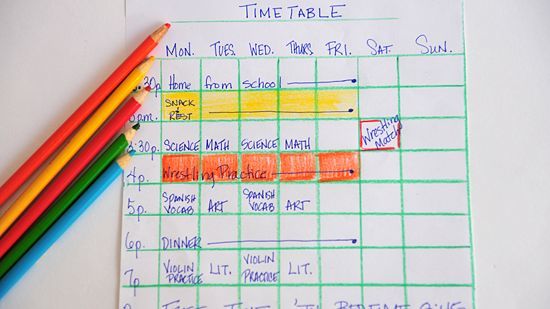
- Create schedules
- as a basic time-management tool, consists of a list of
times at which possible tasks, events, or actions are
intended to take place, or of a sequence of events in
the chronological order in which such things are
intended to take place
- tips
- We look at a blank
seven or eight hours
and think we can
cram them full –
when the reality is
that we never can
- We’re optimistic, even
unrealistic, about how
much work we can really
fit into a day
- Plan for Interruptions
- Don’t schedule every single minute – allow a “spare”
hour or so each day as a bucket for any tasks which
have to be delayed or deferred.
- Don’t schedule every single minute – allow a “spare”
hour or so each day as a bucket for any tasks which
have to be delayed or deferred.
- Don’t Over-Plan
- We look at a blank
seven or eight hours
and think we can
cram them full –
when the reality is
that we never can
- App
- http://www2.asctimetables.com/?gclid=CIui59zB7soCFQqKaQodFPwAWQ
- http://schedulebuilder.org/
- http://www2.asctimetables.com/?gclid=CIui59zB7soCFQqKaQodFPwAWQ
- tips
- as a basic time-management tool, consists of a list of
times at which possible tasks, events, or actions are
intended to take place, or of a sequence of events in
the chronological order in which such things are
intended to take place
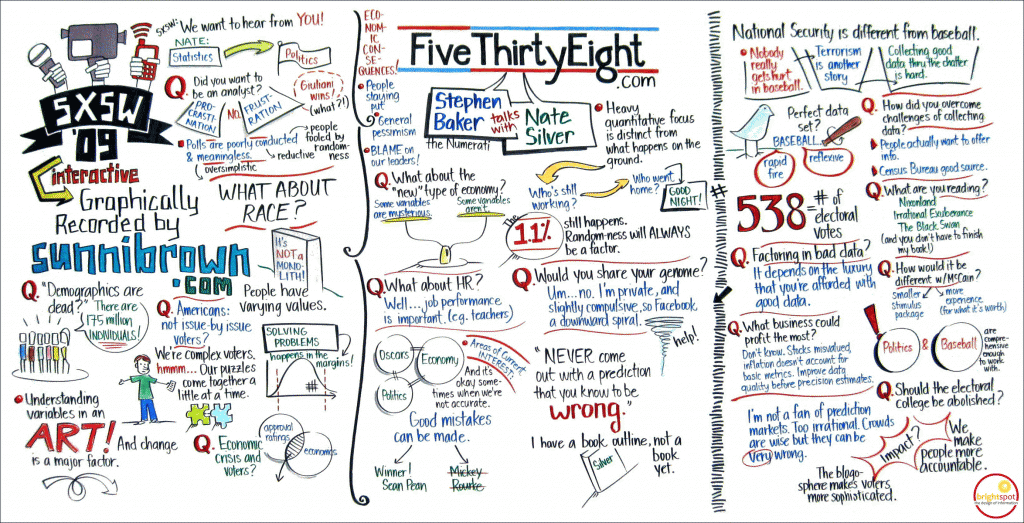
- Note-Taking
- Tips
- Leave spaces in your notes to fill in concepts or
words that you did not write down during lecture.
- REVIEW your notes within 24 hours of taking
them. This will help you retain up to 80% of
information for a test
- Use different colored pens or highlighters to
indicate important concepts.
- Incorporate different learning
styles into notetaking such as
walking while reading your notes,
reading them aloud or to other
people, and organizing words or
concepts into charts or concept
maps.
- Incorporate different learning styles into
notetaking such as walking while
reading your notes, reading them aloud
or to other people, and organizing words
or concepts into charts or concept maps.
- Leave spaces in your notes to fill in concepts or
words that you did not write down during lecture.
- Concept
- is the practice of recording information captured from
another source. By taking notes, the writer records the
essence of the information, freeing their mind from
having to recall everything
- is the practice of recording information captured from
another source. By taking notes, the writer records the
essence of the information, freeing their mind from
having to recall everything
- Tips
Media attachments


Want to create your own Mind Maps for free with GoConqr? Learn more.