
6880080
Description

Mind Map by Ernesto Carvajal Caballero , updated more than 1 year ago

|
Created by Ernesto Carvajal Caballero
over 9 years ago
|
|
STUDY
SKILLS
- DEFINITION
- Abilities, techniques, and strategies
which are used when reading,
writing or listening for study
purposes.
Annotations:
- (Richards, Platt and Platt, 1992)
- Abilities, techniques, and strategies
which are used when reading,
writing or listening for study
purposes.
- STUDY
SITUATION/
ACTIVITY
- Lectures
- Talks
- seminars/tutorials/discussions
- 1.- listening and note taking 2.- asking questions for:
repetition, clarfication and information 3.- answering
questions - explaining 4.- agreeing and disagreeing,
stating points of views, giving reasons, interrupting 5.-
speaking with out notes/ giving a paper/oral
presentation, initiating comments, responding
verbalising data
- 1.- listening and note taking 2.- asking questions for:
repetition, clarfication and information 3.- answering
questions - explaining 4.- agreeing and disagreeing,
stating points of views, giving reasons, interrupting 5.-
speaking with out notes/ giving a paper/oral
presentation, initiating comments, responding
verbalising data
- practicals/laboratory
work/field
work
- 1.- understanding
instructions:
written and
spoken, informal
and formal 2.-
asking questions;
requesting help 3.-
recording results
- 1.- understanding
instructions:
written and
spoken, informal
and formal 2.-
asking questions;
requesting help 3.-
recording results
- Private study
/reading
- journals
and
books
- 1.- reading eficiently: comprehension adn
speed, 2.- scanning and skimming;
evaluating 3.- understanding and
analyzing data (graphs, diagrams,etc.)
- 1.- reading eficiently: comprehension adn
speed, 2.- scanning and skimming;
evaluating 3.- understanding and
analyzing data (graphs, diagrams,etc.)
- journals
and
books
- Reference
material/
library use
- 1.- using the content index pages 2.-
using a dictionary efficiently 3.-
understanding classification systems
4.- using a library catalogue (subject
and author) on cards microfiche and
computer 5.- finding information
quickly (general reference, works
and bibliographies) 6.- collating
information
- 1.- using the content index pages 2.-
using a dictionary efficiently 3.-
understanding classification systems
4.- using a library catalogue (subject
and author) on cards microfiche and
computer 5.- finding information
quickly (general reference, works
and bibliographies) 6.- collating
information
- essays/reports/projects/case
studies/dissertations/theses/research
papers/articles
- 1.- planning, writing
drafts, revising 2.-
summarizing
paraphrasing adn
synthesising 3.- continous
writing in academic style,
organized apropiately
- 1.- planning, writing
drafts, revising 2.-
summarizing
paraphrasing adn
synthesising 3.- continous
writing in academic style,
organized apropiately
- Research
- 1.- conducting
interviews
2.-desining
questionnaires 3.-
undertaking
surveys
- 1.- conducting
interviews
2.-desining
questionnaires 3.-
undertaking
surveys
- examinations
- written
- 1.- preparing
for exams
(techniques)
2.- revision 3.-
understanding
questions/
instructions
3.-
writing
quickly:pressure
of
time
- 1.- preparing
for exams
(techniques)
2.- revision 3.-
understanding
questions/
instructions
3.-
writing
quickly:pressure
of
time
- oral
- 1.- answering
questions:
explicitly,
precisely 2.-
explaining,
describing,
justifying
- 1.- answering
questions:
explicitly,
precisely 2.-
explaining,
describing,
justifying
- written
- study skills needed
- 1.- listening and
understanding 2.- note
taking 3.- asking
questions for
repetition, clarification,
and information
- 1.- listening and
understanding 2.- note
taking 3.- asking
questions for
repetition, clarification,
and information
- Lectures
- ENGLISH FOR ACADEMY PURPOSES (EAP)
- A BRIEF HISTORY
- Broad
interpretation of
study skills
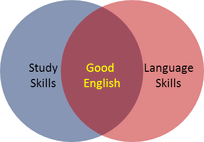
- Tends to unify the language skills
with study skills but decided to
separate according to the
integrated relationship of the skills
showed (Jordan, 1977)
- Tends to unify the language skills
with study skills but decided to
separate according to the
integrated relationship of the skills
showed (Jordan, 1977)
- A more focused vision
refers to study skills as
more mechanical aspects
of study (Robinson, 1991)
- states the study skills are needed to be
taught to the native as well as
the non native students
- states the study skills are needed to be
taught to the native as well as
the non native students
- Broad
interpretation of
study skills
Media attachments
Want to create your own Mind Maps for free with GoConqr? Learn more.