
11181544
Description

Mind Map by Cheryl Lew, updated more than 1 year ago

|
Created by Cheryl Lew
about 8 years ago
|
|
Inner Ear
Pathologies
- due to disorders of
- cochlea
- cranial nerve VIII
- cochlear nuclei
- cochlea
- Classification
- Degree & type
- i.e. profound sensory, mild conductive
- i.e. profound sensory, mild conductive
- Origin
- Hereditary / acquired
- Hereditary / acquired
- Onset
- congenital / delayed
- congenital / delayed
- Structural pathology
- Degree & type
- Characteristics
- irreversible
- except for
- some Meniere's
- HL due to perilymphatic fistula
- obstruction of blood flow to the cochlea
- some Meniere's
- irreversible
- Acquired SNHL
- Meniere's
- watery swelling of
the inner ear
- episodic; gradually
gets worse
- Symptoms
- Vertigo
- Tinnitus
- Hearing loss
- Vertigo
- Usually occurs between 40-60y
- Usually unilateral
- Clinical cause:
- 1. Sudden vertigo & nausea
- 2. Pressure & ear fullness
- 3. Roaring tinnitus
- 4. Hearing sensitivity decreases
(usually undetected)
- 5. Vertigo reduces to unsteadiness
that may last a couple of weeks
- 6. Hearing may improve, and extent
of tinnitus decreases
- 7. Remission period is followed by subsequent
attacks that have a reduce in vertigo but
increased hearing loss and tinnitus
- 7. Remission period is followed by subsequent
attacks that have a reduce in vertigo but
increased hearing loss and tinnitus
- 6. Hearing may improve, and extent
of tinnitus decreases
- 5. Vertigo reduces to unsteadiness
that may last a couple of weeks
- 4. Hearing sensitivity decreases
(usually undetected)
- 3. Roaring tinnitus
- 2. Pressure & ear fullness
- 1. Sudden vertigo & nausea
- Aetiology
- Allergies, diseases, vascular problems,
head trauma, infections etc.
- Increases endolymphatic pressure hence
membrane breaks and endolymph enters
the vestibular system, depolarising it
- Increases endolymphatic pressure hence
membrane breaks and endolymph enters
the vestibular system, depolarising it
- Allergies, diseases, vascular problems,
head trauma, infections etc.
- Management
- Adopting a hypoallergenic diet
- Drugs for vertigo and sedatives
- Bed rest
- Adopting a hypoallergenic diet
- Hearing results
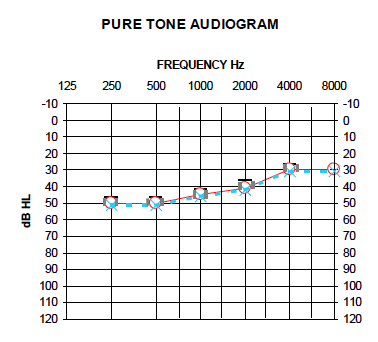
- sensorineural HL with rising audiometric configuration
- As Meniere's progresses, the degree of HL increases over time
- sensorineural HL with rising audiometric configuration
- watery swelling of
the inner ear
- Sudden Ideopathic SNHL
- > 30db hearing loss in
less than 3 days
- Recovery patterns
- Initial rapid recovery but quickly reaches a plateau
- Very gradual and slow recovery and poorer plateau level
- Remaining noticeable balance dysfunction,
tinnitus, some hearing loss, fatigue and
diminished ability to concentrate
- Difficulty walking around in crowds, when
surrounded by movement, in moderate wind
- Cannot distinguish direction of sounds,
difficulty listening to conversation in a crowded
room/ when there is background noise
- Remaining noticeable balance dysfunction,
tinnitus, some hearing loss, fatigue and
diminished ability to concentrate
- delayed recovery
- Initial rapid recovery but quickly reaches a plateau
- Causes
- VIral infection
- Interruption to blood supply
- VIral infection
- > 30db hearing loss in
less than 3 days
- NOise Injury
- Hearing loss due to long
term repeated exposure
to noise levels over
85dB for 8h/day
- NOise is hazardous if:
- it is difficult to communicate in the noise
- TInnitus occurs after exposure to the noise
- Sounds seem muffled after being in the noise
- it is difficult to communicate in the noise
- How does noise injury come about?
- NOise causes metabolic and mechanical exhaustion in the cochlea;
decrease in O2 and blood supply to the cochlea & hair cells swell
- Initially reversible due to the Temporary Threshold Shift (TTS)
- COntinuous exposure results in irreversible and progressive damage
to the cochlea, resulting in a Permanent Threshold Shift (PTS)
- Accompanied by tinnitus and the feeling of fullness in
the ear, as well as sensation of muffled speech
- Initially reversible due to the Temporary Threshold Shift (TTS)
- NOise causes metabolic and mechanical exhaustion in the cochlea;
decrease in O2 and blood supply to the cochlea & hair cells swell
- Hearing results
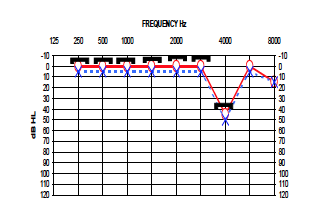
- Characteristic noise notch between 3-6kHz
- Sensorineural and typically bilateral
- Magnitude of loss dependent on:
- Intensity
- Duration
- Spectrum of noise
- Pattern of noise
- Individual differences
- Work place
- Intensity
- Characteristic noise notch between 3-6kHz
- Hearing loss due to long
term repeated exposure
to noise levels over
85dB for 8h/day
- Acoustic Trauma
- Hearing loss due to the impact of sound,
often accompanied by severe tinnitus
- Recovery may take months
- Temporary or permanent
- Hearing loss due to the impact of sound,
often accompanied by severe tinnitus
- Meniere's
- Genetic
Media attachments
Want to create your own Mind Maps for free with GoConqr? Learn more.