
14311544
Description

Mind Map by Zach Ryder, updated more than 1 year ago

|
Created by Zach Ryder
over 7 years ago
|
|
Unit 1- Human Resource Management
- The role of human
resources
management in an
organisation
- Important
resource
- Without the companies
human resources to
plan, work and manage
the business, there
would be no business
- To want to work: Well paid,
happy in environment and
satisfied with work they do
- Important
resource
- The
human
resources
planning
process
- Human
resource
provision
- 1. Human resource
planning
- An organisation’s human resource needs are
not constant. The business therefore needs to
review its human resource needs regularly
- The human resource department must do a complete human resources forecast. The purpose of the forecast is to make sure that the business has sufficient workers at all times. Generally the human resources planning involves understanding the functions, responsibilities and working conditions of vacant posts
- An organisation’s human resource needs are
not constant. The business therefore needs to
review its human resource needs regularly
- 2.
Recruitment
- The process of identifying
and hiring the
best-qualified candidate
for a vacancy. Recruitment
usually comes about as a
result of human resources
planning
- In the planning process the organisation may identify a vacancy that needs to be filled, and this is done by recruitment. It involves all the activities and efforts made by the organisation to find appropriate potential employees and persuade to apply for the available positions. The process of recruitment involves the following:
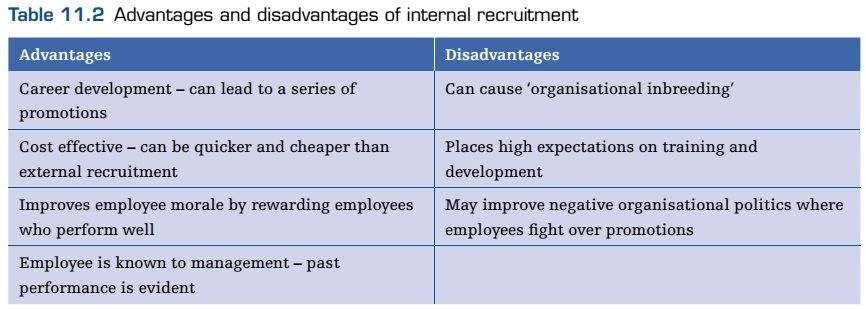
- Deciding on the details of the position
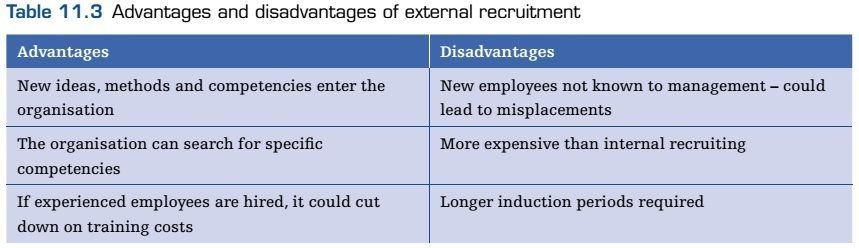
- Deciding whether to recruit internally or externally
- Recruiting
- Deciding on the details of the position
- In the planning process the organisation may identify a vacancy that needs to be filled, and this is done by recruitment. It involves all the activities and efforts made by the organisation to find appropriate potential employees and persuade to apply for the available positions. The process of recruitment involves the following:
- The process of identifying
and hiring the
best-qualified candidate
for a vacancy. Recruitment
usually comes about as a
result of human resources
planning
- 3.
Selection
- Selection is the
process by which
the organisation
chooses the most
suitable person for
a specific position
from a final list of
applicants
- Selection is the
process by which
the organisation
chooses the most
suitable person for
a specific position
from a final list of
applicants
- 4.
Placement
- Placement is therefore
the process through
which new employees
are placed in posts for
which they applied.
The employment
process starts
- Placement is therefore
the process through
which new employees
are placed in posts for
which they applied.
The employment
process starts
- 5.
Induction
- Induction is the process in which the employee is first
introduced to the enterprise, its procedures, the
environment, the work situation, co-workers, subordinates
and superiors. The purpose of induction is to make the
new employee feel welcome and part of the new work
environment
- Induction is the process in which the employee is first
introduced to the enterprise, its procedures, the
environment, the work situation, co-workers, subordinates
and superiors. The purpose of induction is to make the
new employee feel welcome and part of the new work
environment
- 1. Human resource
planning
- Human
resources
retention
- 1. Training and
development
- Development is aimed at
providing an employee
with skills and knowledge
for positions they could
fill in the future
- Development is aimed at
providing an employee
with skills and knowledge
for positions they could
fill in the future
- 2.
Performance
appraisal
- This is a system that
an organization uses
to determine how
well employees are
performing their
duties
- This is a system that
an organization uses
to determine how
well employees are
performing their
duties
- 3.
Remuneration
and benefits
- Remuneration (direct) refers
to the salary of wage an
employee receives
- Benefits (indirect remuneration)
refers to the fringe benefits that
can be added to the
remuneration; includes leave,
housing allowance, etc
- Remuneration (direct) refers
to the salary of wage an
employee receives
- 4. Job design
- Job design refers to the combining of
individual tasks to form jobs that will
enable the organization to achieve its
objectives. The job that the individual
does must be acceptable to him
- Job design refers to the combining of
individual tasks to form jobs that will
enable the organization to achieve its
objectives. The job that the individual
does must be acceptable to him
- 1. Training and
development
- Human
resource
provision
- Challenges in
working with
people
- Managing diversity
in organizations
- Diversity describes a
workforce that has
no single defining
human characteristic
- Diversity describes a
workforce that has
no single defining
human characteristic
- Organizational culture
- The myths, the traditions, the
practices and the customs of a
particular organization are
elements that make up the
organizational culture
- Organizations need clear policies and
support structures to deal with even more
sensitive issues such as sexual harassment,
racial discrimination. The larger the
organization, the more necessary it is to
control and manage the culture through
formal means
- The myths, the traditions, the
practices and the customs of a
particular organization are
elements that make up the
organizational culture
- HIV/AIDS
- Infection levels among employees can affect the the organisation
- Infection levels among employees can affect the the organisation
- Managing diversity
in organizations
- Definition: The organization's
human resource management
function is that part of the
management process that
specializes in the management
of people in the organization. It
consists of practices that help to
achieve the organizations
objectives and thus to gain and
sustain
Media attachments
Want to create your own Mind Maps for free with GoConqr? Learn more.