
1569363
Description

Mind Map by Kristi Brogden, updated more than 1 year ago

|
Created by Kristi Brogden
over 11 years ago
|
|
Simple early pattern from BMP
gradient
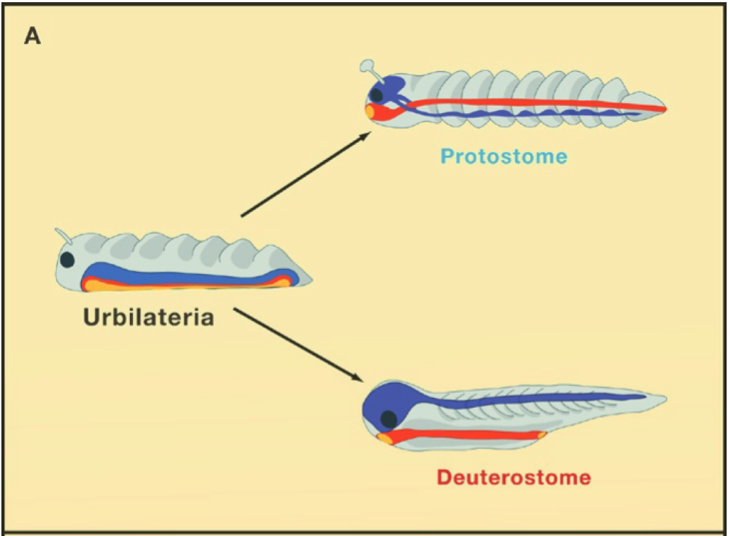
- Urbilateria theory
- suggests the nervous system of all bilaterians
develops through 2 waves of Chordin/BMP/Tolloid
pathway signalling
- suggests the nervous system of all bilaterians
develops through 2 waves of Chordin/BMP/Tolloid
pathway signalling
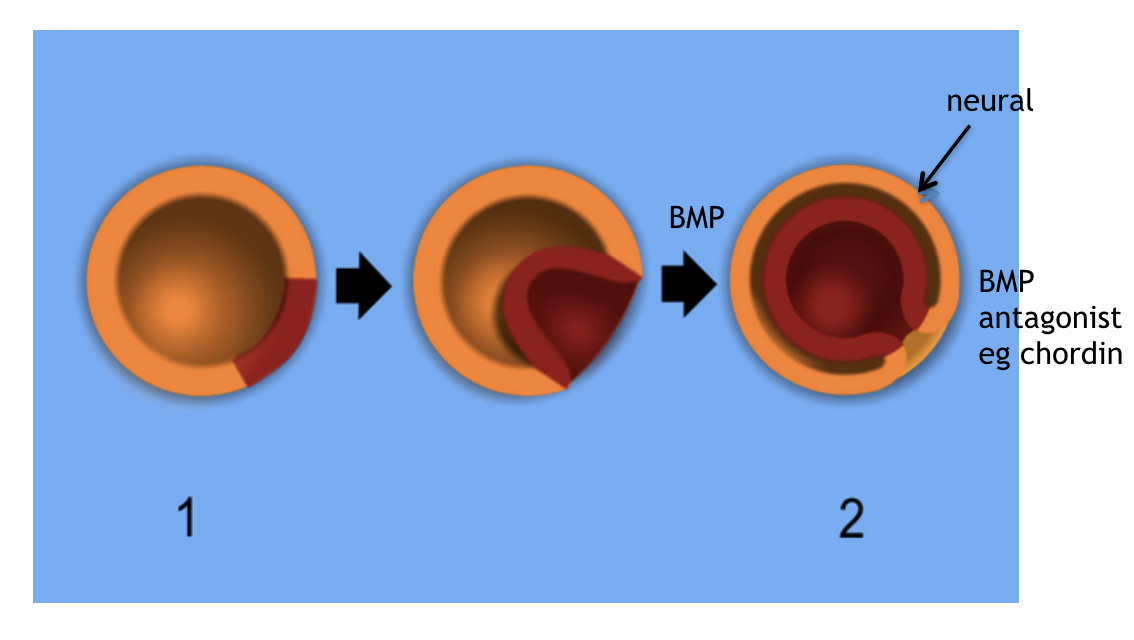
- Gastrulation
- results in mesoderm and endoderm being on
inside, and ectoderm (including future neural
ectoderm/neurogenic ectoderm) being on outside
- results in mesoderm and endoderm being on
inside, and ectoderm (including future neural
ectoderm/neurogenic ectoderm) being on outside
- The Chordin/BMP network
broadly dictates dorsal and
ventral sides of the body.
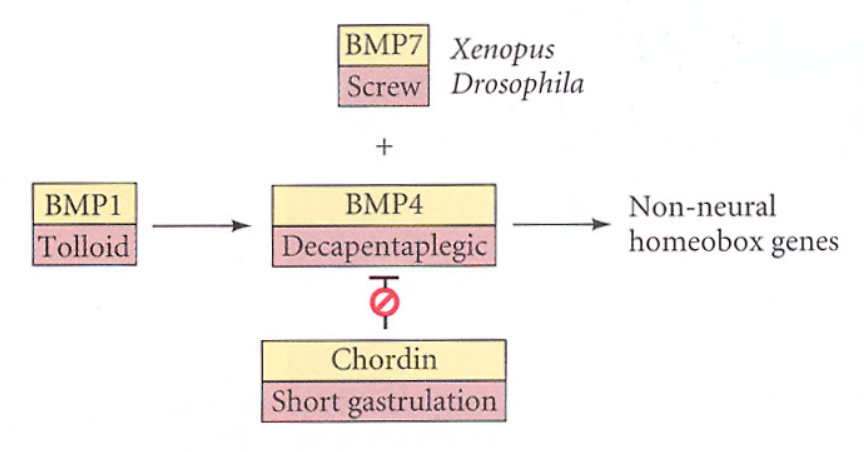
- Invertebrates have homologous
genes to chordin/BMPs
- Different names
- Different names
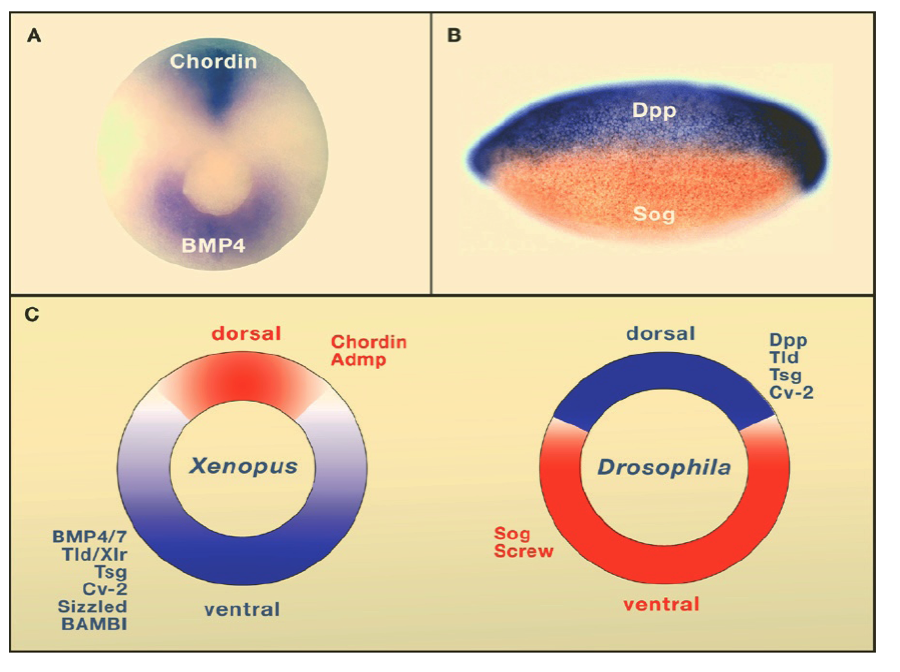
- In vertebrates
- chordin-like gene is expressed on the dorsal side
- chordin-like gene is expressed on the dorsal side
- In invertebrates
- chordin-like gene (Sog) is expressed on the ventral side
- chordin-like gene (Sog) is expressed on the ventral side
- Invertebrates have homologous
genes to chordin/BMPs
- Neurulation
- In vertebrates, dorsally-situated neural ectoderm
undergoes
neurulation, to form the neural tube,
and the organiser undergoes convergent extension
- Results in shift in positions
of
BMP and chordin
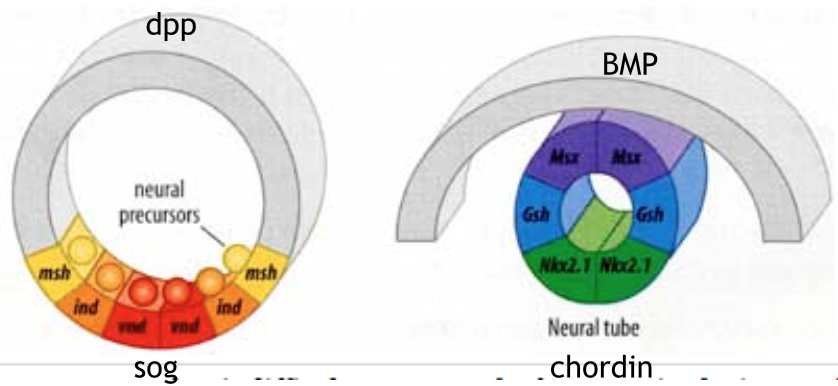
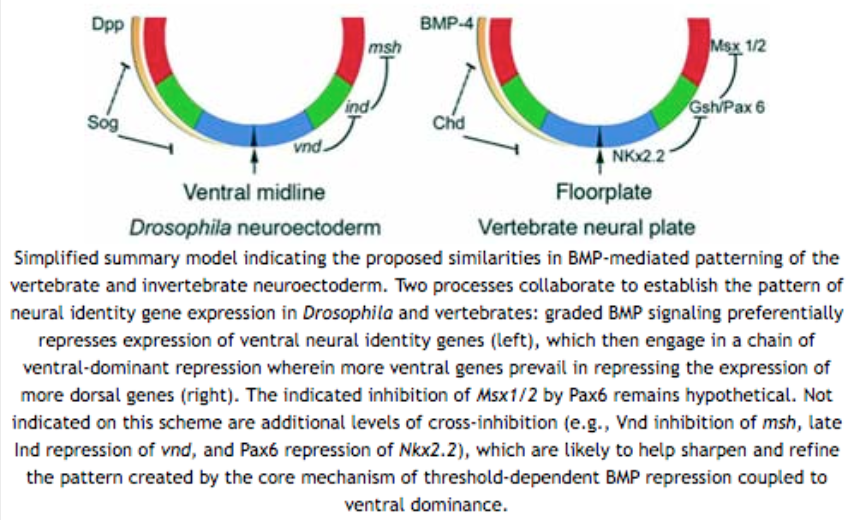
- IN both, the ‘patterning’ genes are induced
by a BMP/dpp gradient that is established due
to the antagonistic action of
chordin/sog, and
then to a series of repressive interactions
- Results in shift in positions
of
BMP and chordin
- But note, relative common positions now of BMP and its
antagonist in vertebrates and invertebrates
AND
homologous genes expressed within those
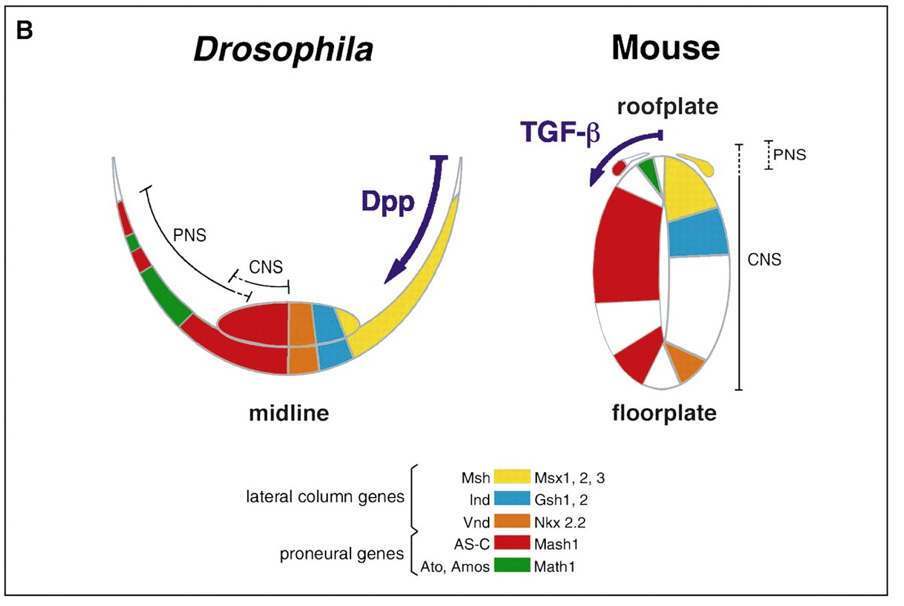
- Crude patterning established that is conserved,
and means there is conservation of CNS and
PNS formation in Drosophila and vertebrates
- Make notes from slide 17
- Make notes from slide 17
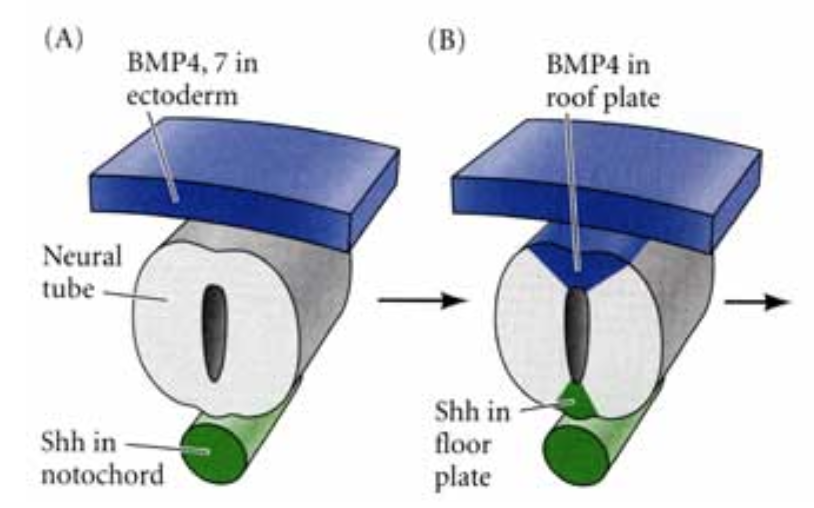
- In vertebrates, dorsally-situated neural ectoderm
undergoes
neurulation, to form the neural tube,
and the organiser undergoes convergent extension
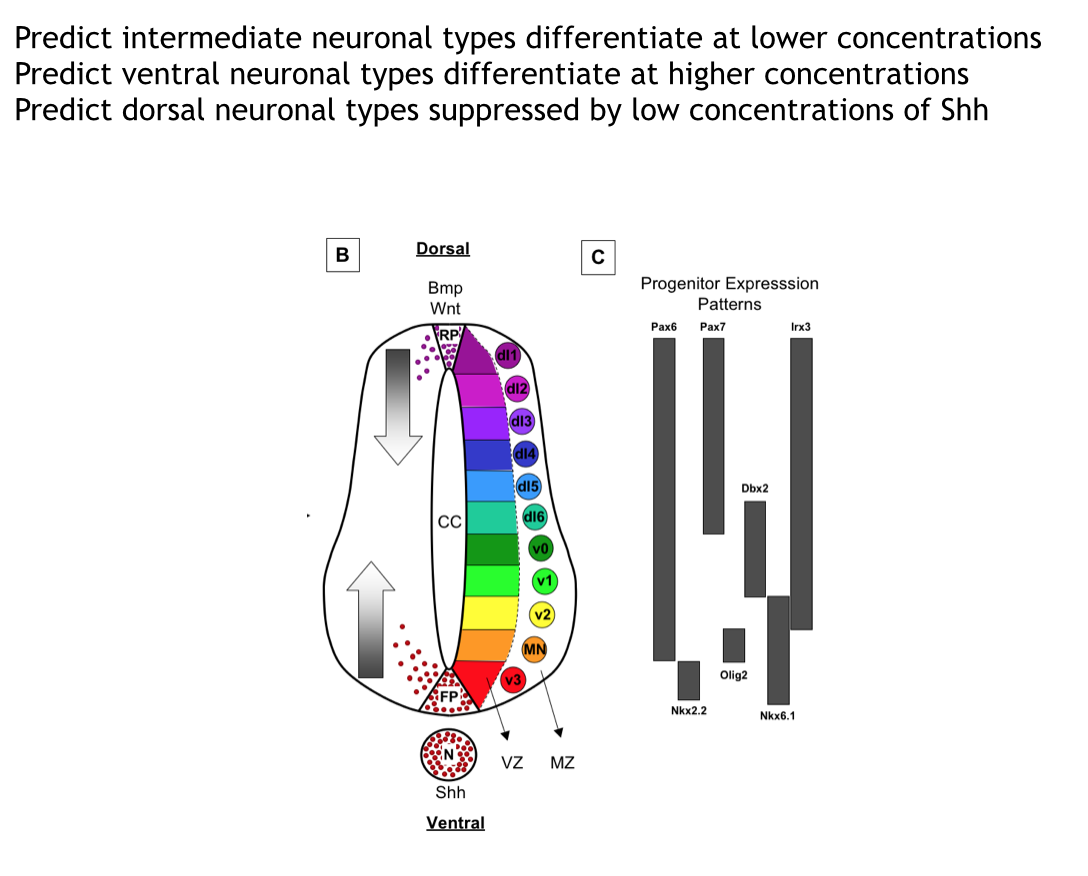
- How do you get complexity in the vertebrate CNS?
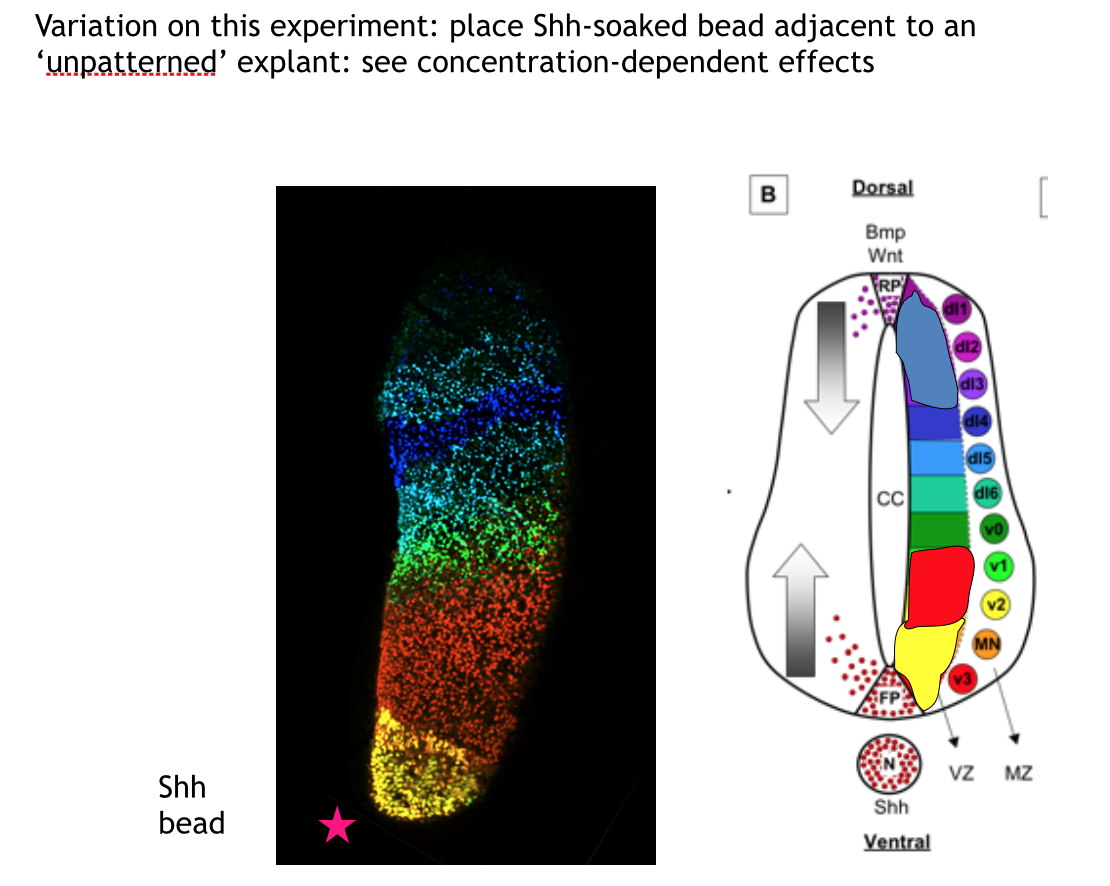
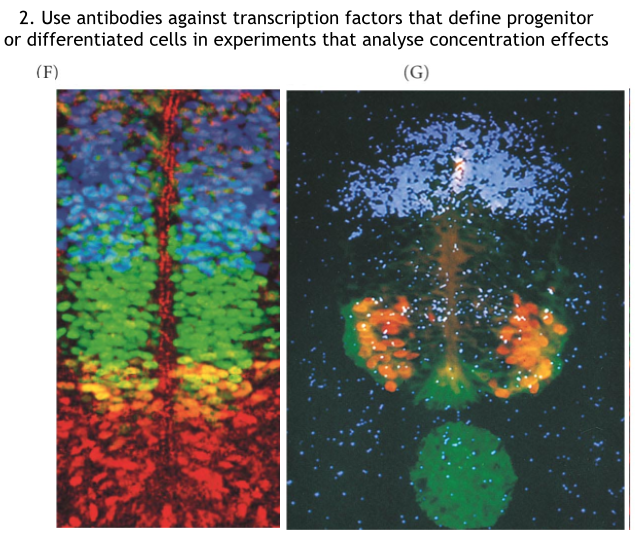
- Shh good candidate
- Evidence that it
is a powerful
morphogen
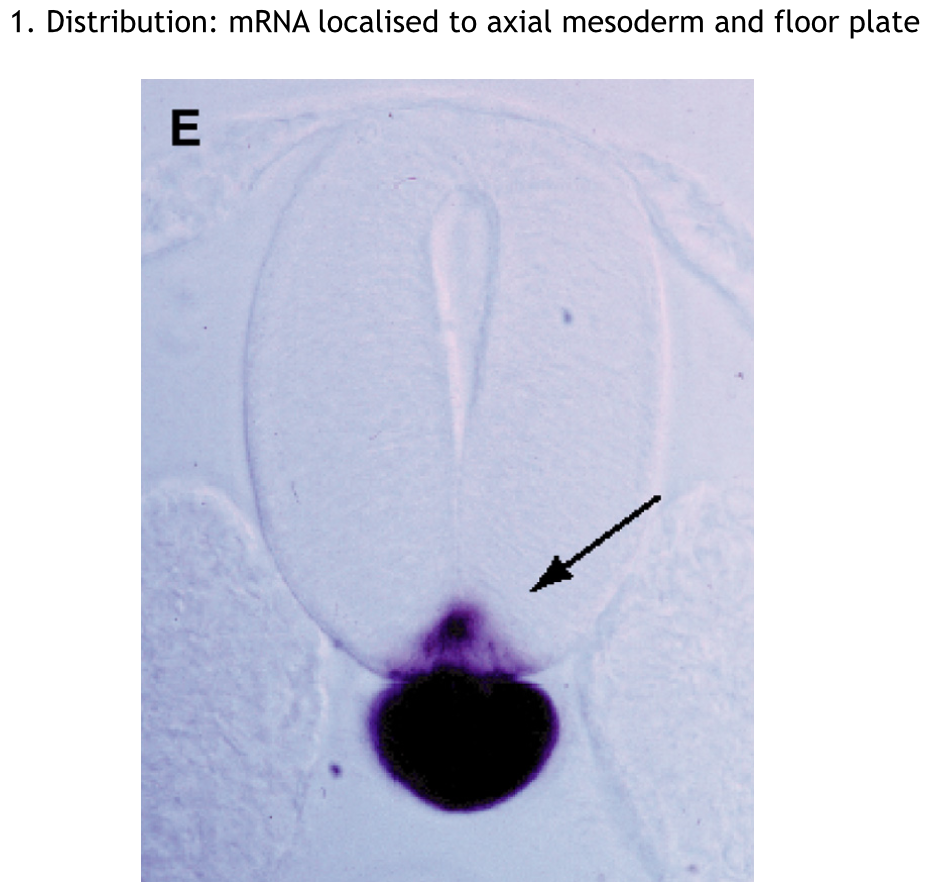
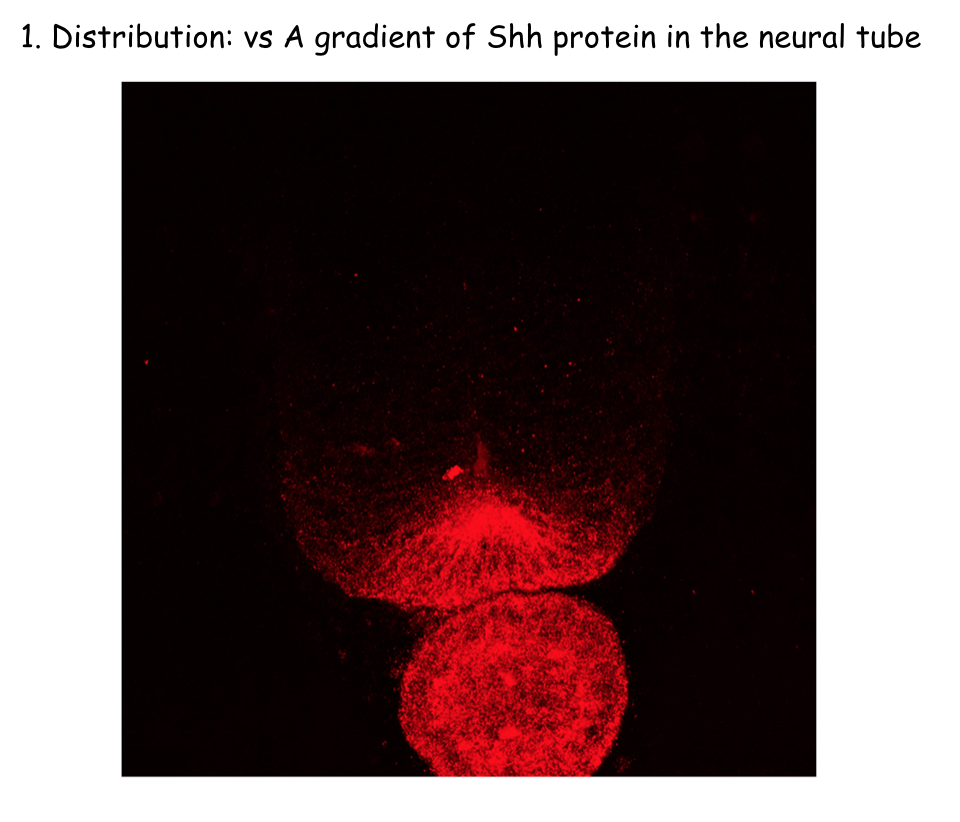
- Distribution
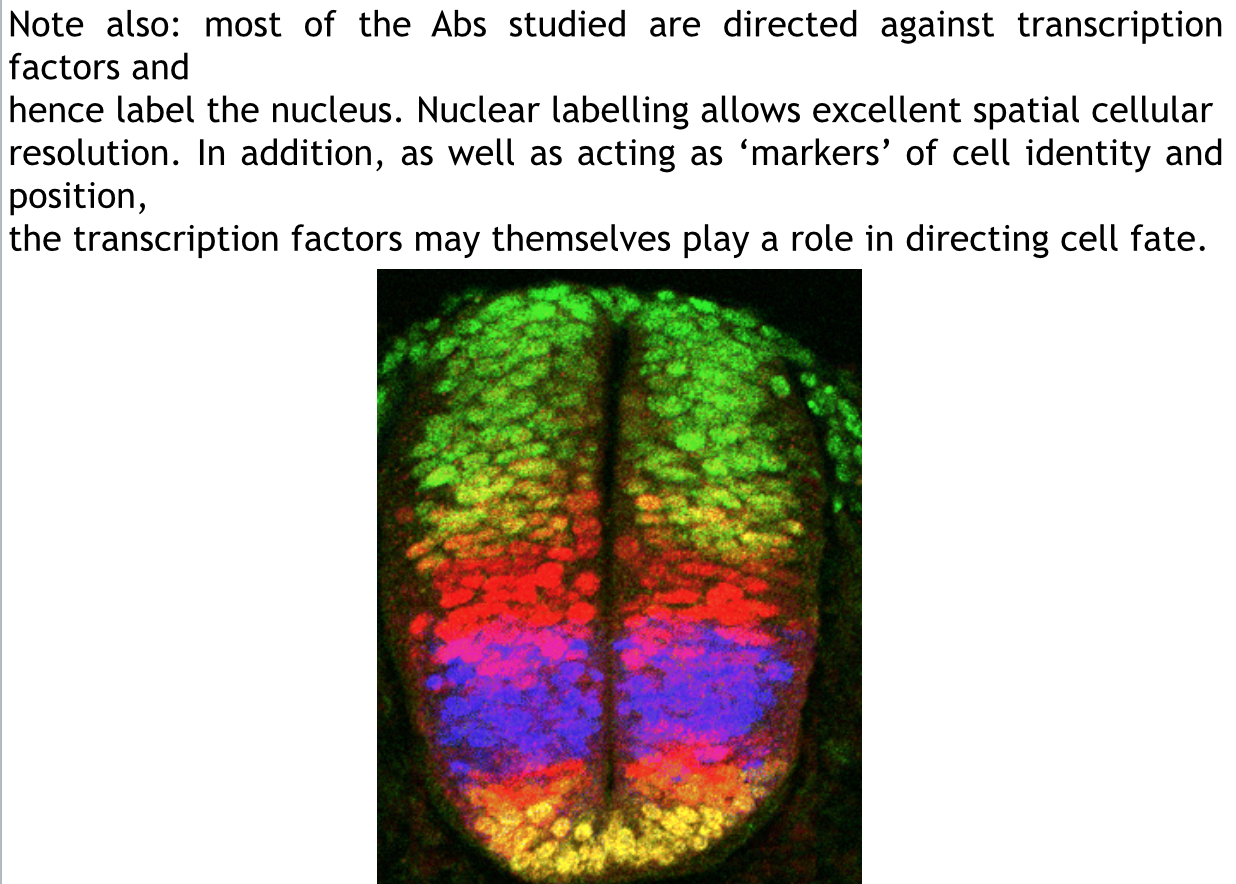
- Concentration-dependent
effects on gene expression and
cell fate (in vitro)
- Concentration-dependent
effects on gene expression
and cell fate (in vivo)
- Knock-out of receptor (ptc) or
receptor-controlled ‘gate’ (smo)
lead to alterations in cell fate at
a distance
- Distribution
- Evidence that it
is a powerful
morphogen
- Shh good candidate
Media attachments
Want to create your own Mind Maps for free with GoConqr? Learn more.