
Mind map
Skeletal and Muscular system
Map content
Skeletal and Muscular system
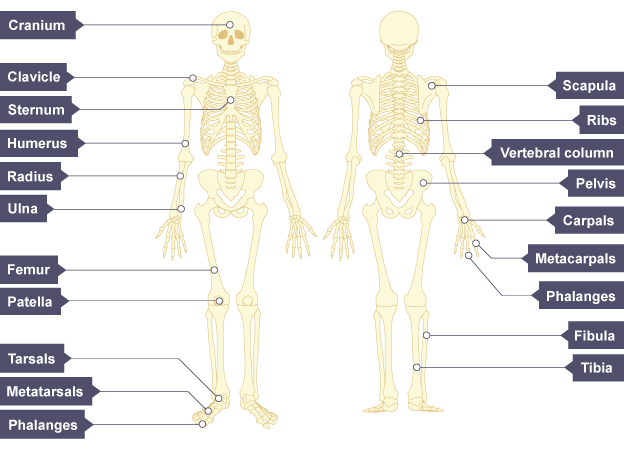
Main roles of the Skeletal System
- Protection to internal organs
- Framework for the body
- Ligament
- Tough band of slightly elastic connective tissues-Connects bone to bone and stablises joints during movement
- Synovial Fluid
- Lubricating liquid in joint cavities-Reduces friction
- Articular Cartilage
- Smooth tissue which covers articulating bones-absorbs shock
- Joint Capsule
- Joint sac in inner synovial membrane it encloses and strengthens the joint
- Bursa
- Closed fluid-filled sac found where tendons rub bones-Reduces friction between tendon and bone
- Ligament
- Crucial for movement
Joint size and shape of articulating bones will allow a specific range of movement at a joint
- Large range-Ball and Socket joint
- Smaller range-Hinge joint
- Large range-Ball and Socket joint
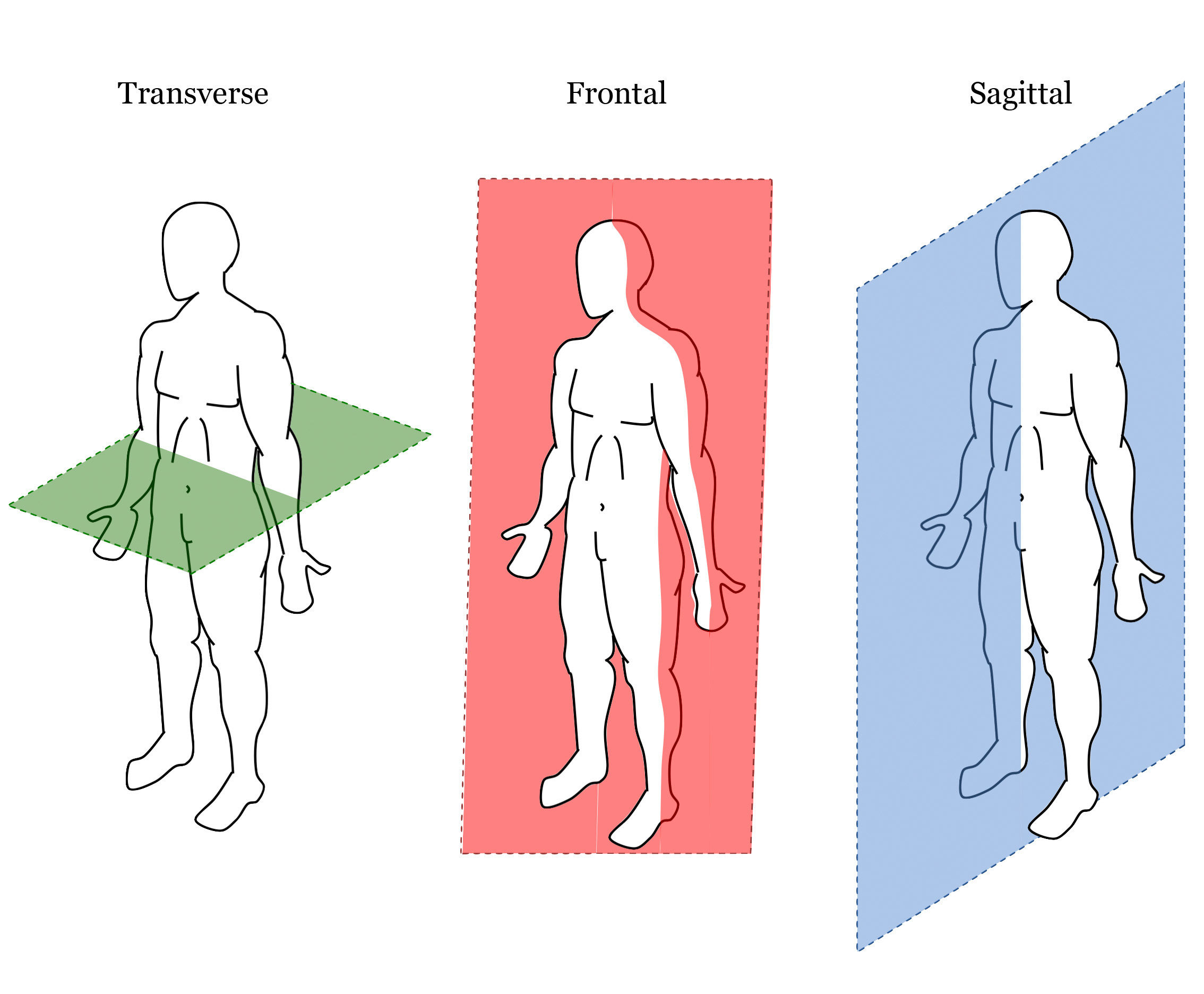
Planes of movement
- Sagittal plane lies vertically-Divides the body Left to Right
- Frontal plane lies vertically-Divides front and back
- Transeverse planelies horizontally-Divides upper and lower
- Horizontal extension
- Horizontal flexion
- Rotation
- Abduction-away from midline
- Adduction-closer to midline
- Transeverse planelies horizontally-Divides upper and lower
- Flexion-Decreases joint angle
- Extension-Increases joint angle
- Dorsi Flexion-toes up
- Plantar Flexion-toes down
- Frontal plane lies vertically-Divides front and back
- Sagittal plane lies vertically-Divides the body Left to Right
Types of joints
- Hinge Joint-Elbow
- Pivot Joint-Radio-Ulnar
- Condyloid Joint-Wrist
- Gliding Joint-Spin
- Ball and Socket-Shoulder
Origin-the point the muscle attaches to a stationary bone
- Insertion-the point muscle attaches to a moveable bone which gets closer to origin as the muscle contracts
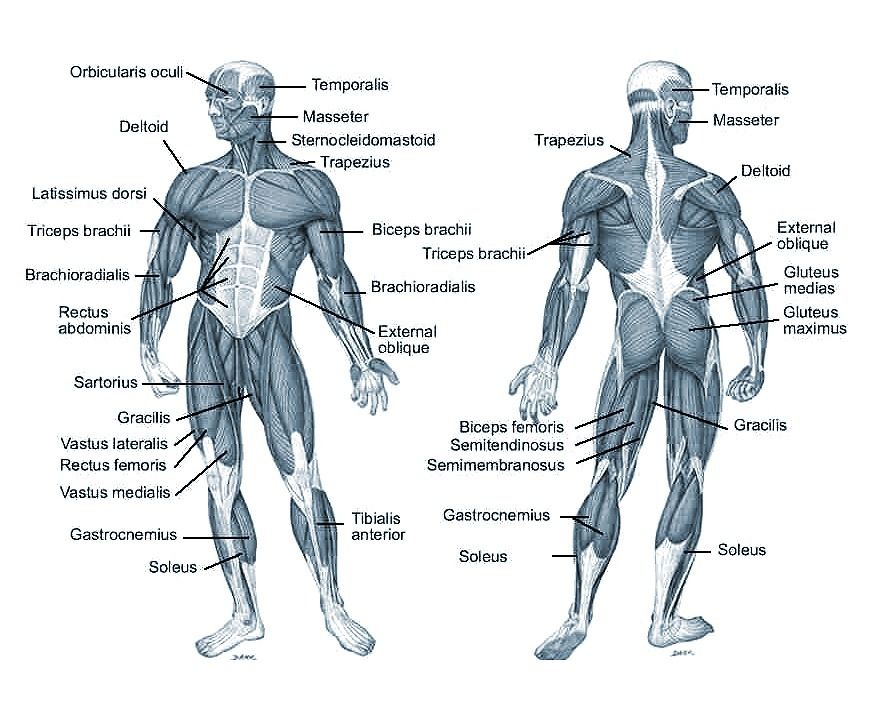
Muscles never work alone they always work in pairs-Antagonistic Pairs
- Agonist-creates movement at a joint-Prime mover
- Antagonist-opposes the agonist providing a resistance
- Fixator-a muscle that stabilises one part of the body while another part moves
- Antagonist-opposes the agonist providing a resistance
- Agonist-creates movement at a joint-Prime mover
Example of a antagonistic pairs
- Flexion at the wrist
- Agonist-Wrist flexors
- Antagonist-Wrist extensors
- Flexion at the wrist
Isotonic contractions-when a muscle changes length
- Concentric-muscle shortens producing tension.This creates a force to pull two bones closer together causing movement
- Eccentric-when muscle lengthens producing tension.This resists force
- Isometric contraction-when a muscle contracts without changing shape
Movement Analysis-assesing the movement of a athlete in a sport.What to consider in a exam question
- Joint type
- Articulating bones
- Movement pattern
- Agonist muscle
- Antagonistic muscle
- Contraction type
Images and files in the map
Information
- Description
- A-level Pe revsion material on skeletal and muscular system
- Created by
- Abby Dance
- Views
- 181
- Tags
- Rating